
Sauces & Condiments
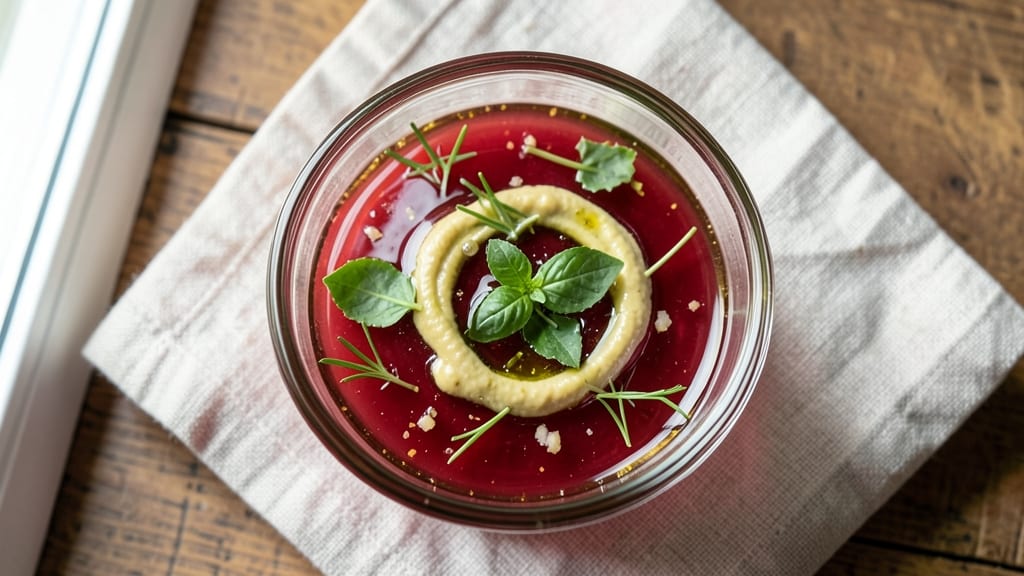
This vinaigrette sauce recipe transforms simple pantry staples into a bright, balanced dressing that elevates every dish it touches. The secret lies in the precise ratio of oil to acid—just enough tang to cut through richness without overpowering the base.
I developed this version after testing dozens of recipes, refining it to deliver restaurant-quality flavor in under five minutes with ingredients you likely already have.
The foundation of a great vinaigrette is simple: high-quality olive oil, sharp vinegar or lemon juice, and a touch of Dijon mustard to emulsify. Fresh herbs like tarragon or basil add aromatic depth, while a pinch of salt and sugar balances the flavors perfectly.
This recipe yields about ½ cup, enough to generously dress a hearty salad or drizzle over grilled proteins for a burst of freshness that lasts.
What sets this vinaigrette apart is its versatility—use it immediately for peak brightness or store it in the refrigerator for up to five days, shaking before each use to redistribute the oil.
The dressing pairs beautifully with mixed greens, roasted vegetables, or even as a finishing touch for tacos and sandwiches. The key to success? Stirring vigorously to combine all ingredients thoroughly before letting it rest for just a few minutes to allow flavors to meld.
For those who prefer customization, swap vinegar for lemon juice or experiment with different herbs like thyme or rosemary. The ratios remain the same, ensuring consistent balance every time.
Whether you're prepping for a weeknight dinner or a weekend gathering, this vinaigrette delivers professional results with minimal effort—proving that the best flavors often come from the simplest techniques.
Ingredients for vinaigrette sauce
Eight essential ingredients create restaurant-quality vinaigrette with perfect balance and brightness.
| Ingredient | Amount | Notes |
|---|---|---|
| Extra-Virgin Olive Oil 🫒 | ½ cup | High-quality, fruity variety preferred |
| Red Wine Vinegar 🍷 | ¼ cup | Sharp, dry variety for balance |
| Dijon Mustard 🥬 | 1 tbsp | For proper emulsification |
| Fresh Tarragon Leaves 🌿 | ¼ cup | Finely chopped, aromatic base |
| Fresh Basil Leaves 🌿 | 0.15 cup | Finely chopped, optional aromatic |
| Granulated Sugar 🍚 | 1 tsp | Balances acidity perfectly |
| Diamond Crystal Kosher Salt 🧂 | ½ tsp | Fine grain for even distribution |
| Garlic Cloves 🧄 | 1 whole | Minced for subtle depth |
The olive oil forms the vinaigrette's backbone, so look for extra-virgin with vibrant green hues and peppery notes. California Olive Ranch or Colavita brands consistently deliver the fruity complexity this recipe demands. Red wine vinegar should be aged at least six months—Bragg or Annie's are reliable choices, but avoid anything with added flavors. Fresh tarragon is ideal for its anise-like aroma, but if unavailable, dried tarragon at one-third the amount works in a pinch. The Dijon mustard acts as an emulsifier, so avoid powdered versions—only whole-grain Dijon will create that silky texture. For the garlic, peel and mince just before mixing to preserve its freshness.
No red wine vinegar? Lemon juice or apple cider vinegar both work beautifully, though lemon adds citrus brightness while apple cider contributes subtle sweetness. Swap tarragon for fresh thyme or rosemary if preferred, adjusting to taste. The sugar can be replaced with honey or agave for floral notes, though granulated maintains perfect balance. For a more robust flavor, add 1/4 teaspoon of capers or 1/2 teaspoon of anchovy paste. If you're sensitive to garlic's intensity, reduce to half a clove or omit entirely—this vinaigrette still shines without it. Always taste as you go; the ratios provide a starting point, but personal preference dictates final adjustments.
This vinaigrette reaches peak flavor after 30 minutes of resting in the refrigerator, allowing all components to meld harmoniously. Store in an airtight glass jar for up to 5 days, shaking vigorously before each use to redistribute the oil. For longer storage, freeze in ice cube trays—each cube equals roughly 1 tablespoon of dressing, perfect for individual portions. When using, always whisk or shake thoroughly before drizzling, as the oil naturally separates. The dressing's versatility makes it ideal for meal prep; double the recipe and keep a jar on hand for quick salads or protein finishes throughout the week.
Why You'll Love This Recipe
- No-Fuss Whisking: I swear by this recipe because it’s just three ingredients plus herbs—no fancy gadgets, no waiting. Toss everything in a jar, give it a shake, and boom, you’re done. That’s right: zero measuring cups, no straining, no mess.
- Herb-Packed Punch: The tarragon and basil? Oh, they’re the stars here. That bright, slightly peppery kick from the tarragon cuts through the richness of the olive oil, while the basil adds this fresh, almost floral note. Honestly, it’s the kind of flavor that makes you pause mid-bite.
- Salad’s Best Friend: Between us, this sauce is my go-to for everything—tossed with greens, drizzled over grilled chicken, even stirred into pasta. The Dijon mustard gives it enough body to cling, so it doesn’t pool at the bottom of your bowl. (Yes, even on a Tuesday night.)
- Jarred Magic: Make a big batch and stash it in the fridge—it keeps for weeks. I’ve had this same jar of vinaigrette last me through three salads, two roasted veggie dinners, and still taste fresh. Plus, the cost? Ridiculously cheap. A few dollars for herbs, a bottle of vinegar, and you’re set.
Step-by-step instructions for vinaigrette sauce
This method delivers a perfectly balanced, emulsified dressing every time—bright, tangy, and herb-forward.
Mince Garlic and Chop Herbs Precisely
Peel the 1 whole garlic clove and finely mince it using a sharp chef's knife. You want tiny, almost paste-like pieces that will dissolve completely into the dressing. Set aside in a small bowl.
Next, stack the 0.25 cup fresh tarragon leaves and 0.15 cup fresh basil leaves, roll them tightly, and slice through the bundle with a single, sharp motion. This creates uniform, confetti-like herb pieces that distribute evenly. Avoid chopping too finely—you want visible flecks of green for texture and visual appeal.
Whisk Vinegar, Mustard, Sugar, and Salt
In a medium bowl, combine the 0.25 cup red wine vinegar, 1 tbsp Dijon mustard, 1 tsp granulated sugar, and 0.5 tsp diamond crystal kosher salt. Whisk vigorously for 30 seconds until the sugar and salt fully dissolve and the mixture becomes smooth and homogeneous.
The Dijon mustard acts as an emulsifier here, helping the oil and vinegar blend seamlessly. If you encounter any lumps, press the mixture through a fine-mesh sieve to ensure a silky texture. This step is critical—skipping it will result in a dressing that separates later.
Gradually Incorporate Olive Oil for Emulsification
With the whisk still in the bowl, slowly drizzle in the 0.5 cup extra-virgin olive oil while whisking continuously. Start with a few drops at a time, then gradually increase the flow as the mixture begins to thicken. The goal is to create a stable emulsion where the oil and vinegar fully integrate.
This process should take about 1-2 minutes. You’ll know you’ve succeeded when the dressing thickens slightly and takes on a creamy, velvety consistency. If it looks too thin, whisk in an additional ½ tsp Dijon mustard. The high-quality olive oil should provide a rich, fruity depth that balances the vinegar’s sharpness.
Fold in Herbs and Adjust Seasoning
Gently fold the minced garlic and chopped herbs into the emulsified dressing using a rubber spatula. Reserve 1 tablespoon of the dressing in a small cup for taste testing. The herbs should be evenly distributed but still visible, adding both flavor and visual contrast.
Taste the reserved dressing and adjust the seasoning if needed. If it tastes too sharp, add a pinch more of the diamond crystal kosher salt. If it needs sweetness, dissolve an additional ¼ tsp granulated sugar in 1 teaspoon water and whisk it in. The dressing should be bright, tangy, and herbaceous with a perfect balance of acidity and richness.
Rest and Serve Immediately
Transfer the dressing to a clean jar or airtight container. Let it rest at room temperature for 5-10 minutes before serving. This brief resting period allows the flavors to meld and the emulsion to stabilize further. The dressing will hold for up to 5 days when refrigerated, though it’s best used within 3 days for peak freshness.
Shake gently before each use to re-emulsify if necessary. This vinaigrette pairs beautifully with mixed greens, grilled vegetables, or roasted proteins. For an extra touch, drizzle it over warm, just-cooked asparagus or toss it with seared scallops.
Pro Tips For Making Vinaigrette Sauce
- STIR SLOWLY AT FIRST: Start by whisking the Dijon mustard and vinegar together without the oil—this emulsifies the mustard first, so it doesn’t turn into a greasy mess when you add the olive oil. Pour in the oil drop by drop at first, then gradually in a thin stream while whisking like you’re trying to polish silver. I learned this the hard way after making a batch that split like a bad salad dressing.
- CHOP HERBS FINE: Stack tarragon and basil leaves, roll them tightly, and slice into thin ribbons with a sharp knife—this keeps the texture consistent and prevents clumps in your dressing. If you’re lazy (like me), a pulse in the food processor works, but don’t overdo it—you want visible flecks, not paste.
- USE COLD INGREDIENTS: Pull the olive oil from the fridge and keep the vinegar chilled too—cold ingredients emulsify better and won’t turn your dressing into a warm, oily puddle. I used to ignore this, and the dressing would always separate within an hour. Now? It stays silky for days.
- SALT THE MUSTARD: Mix a pinch of salt into the Dijon mustard before combining it with vinegar—this balances the acidity and rounds out the flavor. Skipping this step leaves your dressing tasting sharp and unfinished, like a meal missing the last sprinkle of herbs. Trust me, it matters.
Pro cooking tips for great vinaigrette sauce
Emulsification Mastery
The key to a silky, stable vinaigrette lies in proper emulsification. Start by whisking the vinegar, mustard, sugar, and salt until completely dissolved—this creates a smooth base. Then, slowly drizzle in the olive oil while whisking continuously.
The mustard acts as a natural emulsifier, binding the oil and vinegar into a cohesive dressing. I recommend using a balloon whisk for maximum aeration and even distribution. 💫
Herb Texture Matters
Chopping herbs too finely can make your vinaigrette taste muddy. Instead, stack leaves and slice them into confetti-sized pieces—this preserves their aromatic oils while adding visual appeal. For tarragon, I prefer fresh over dried because dried herbs can overpower the delicate balance.
If using dried, reduce to one-third the amount and crush lightly between your fingers before adding.
Temperature Control
Room-temperature ingredients blend more smoothly than cold ones. Let your olive oil and vinegar sit out for 10-15 minutes before mixing. Cold ingredients can cause the emulsion to break, leading to separation.
I also avoid using ice-cold bowls—warm the bowl slightly by rinsing it with hot water and drying it first. This small step makes a noticeable difference in texture.
Mustard Ratio Adjustments
The 1 tbsp Dijon mustard in this recipe is non-negotiable for emulsification, but you can tweak it slightly. If your vinaigrette separates after resting, whisk in an additional ½ tsp mustard and shake vigorously.
For a thicker dressing, reduce the oil by 1 tbsp—this creates a more concentrated flavor. Conversely, add 1 tsp extra oil for a lighter, more fluid consistency.
Salt and Sugar Balance
The ½ tsp salt and 1 tsp sugar are critical for flavor harmony. Taste as you go—if the dressing tastes too sharp, add a pinch more salt. For sweetness, dissolve ¼ tsp sugar in 1 tsp water and whisk it in.
Pro tip: Use kosher salt (like Diamond Crystal) for even distribution—table salt can make the dressing taste overly salty. 🧂
Resting for Flavor Fusion
Never skip the 5-10 minute rest before serving. This allows the flavors to meld and the emulsion to stabilize. I often let mine rest overnight—it develops deeper complexity, almost like a fine wine. If storing, refrigerate in an airtight glass jar (plastic can absorb odors).
Shake well before each use, as the oil naturally rises to the top. For best results, use within 3 days of making it.
Nutrition facts
Frequently asked questions
Can I make this vinaigrette without Dijon mustard?
Yes, but you'll need to use an alternative emulsifier like 1 tbsp whole-grain mustard or 1 tbsp honey. Without it, the oil and vinegar may separate more quickly. For a mustard-free version, whisk in 1 tsp cornstarch dissolved in 1 tsp water to help stabilize the mixture. The texture will be slightly different but still delicious!
How do I fix a vinaigrette that's too thick or too thin?
For a thicker dressing, whisk in 1 tsp extra Dijon mustard or reduce the oil by 1 tbsp. If it's too thin, add 1 tsp more olive oil and whisk vigorously. Always taste as you adjust—balance is key! Remember, the oil-to-vinegar ratio is flexible, so don't be afraid to experiment.
Can I use this vinaigrette on warm dishes like grilled chicken?
This dressing works beautifully as a finishing touch for warm proteins. Drizzle it over grilled chicken, steak, or roasted vegetables just before serving to maintain its bright, fresh flavors. The acidity cuts through richness, making it perfect for hearty dishes. For extra shine, let the dressing sit at room temperature for 5 minutes before using.
What's the best way to store leftover vinaigrette?
Store in an airtight glass jar in the refrigerator for up to 5 days. Shake well before each use to re-emulsify. For longer storage, freeze in ice cube trays—each cube equals about 1 tbsp of dressing. Thaw overnight in the fridge and shake to redistribute the oil. Avoid plastic containers, as they can absorb odors and flavors.
Why did my vinaigrette separate after resting?
Separation usually happens when the emulsion isn't properly stabilized. To fix it, whisk vigorously or shake the jar for 30 seconds to re-emulsify. For future batches, ensure you're using room-temperature ingredients and whisking continuously when adding oil. If it keeps separating, increase the Dijon mustard by ½ tsp or use a blender for 10 seconds to create a smoother texture.