
Main Courses
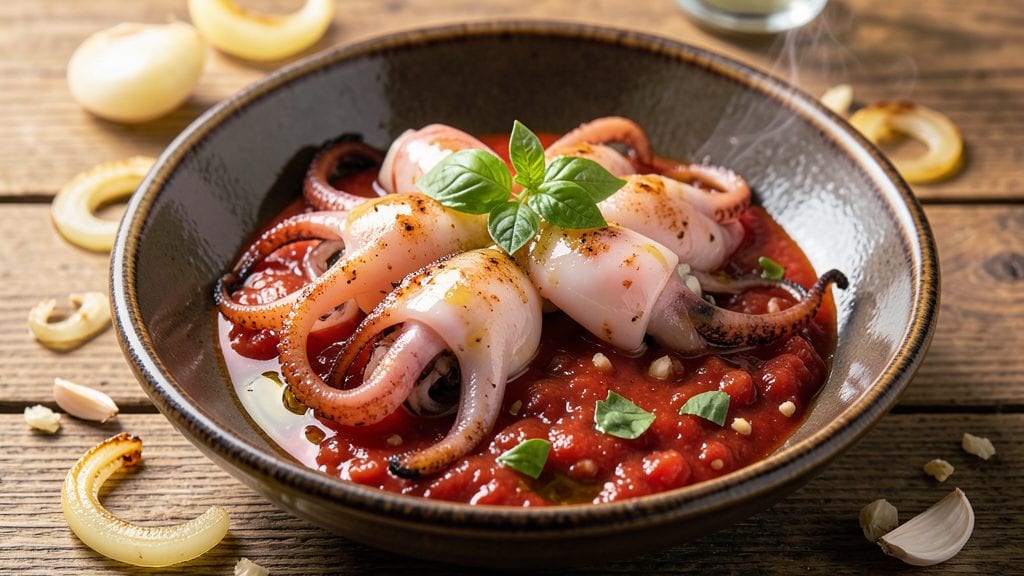
This squid in tomato sauce recipe transforms a simple one-pan dinner into a vibrant Mediterranean masterpiece with minimal effort. The secret lies in quickly searing the squid to lock in its delicate flavor before it melts into a rich, aromatic tomato sauce.
I developed this method after years of perfecting restaurant-style seafood dishes at home—no fancy techniques required, just precise timing and quality ingredients.
The beauty of this dish is its versatility—fresh or canned tomatoes work equally well, and the sauce can be adjusted with white wine, chili flakes, or fresh herbs to suit your taste.
Squid is prepped in just 15 minutes, and the entire meal comes together in under 30 minutes, making it ideal for weeknight dinners that feel special. The result? Tender squid with crispy edges and a sauce that's bright, tangy, and packed with Mediterranean flavors.
What sets this recipe apart is the balance of textures and flavors: the squid's natural sweetness contrasts perfectly with the acidity of the tomatoes, while the aromatics—garlic, onions, and herbs—build depth without overpowering.
Serve it with crusty bread to soak up every last drop of that velvety sauce, or pair it with a simple arugula salad for a complete meal. This is comfort food with a sophisticated twist.
Whether you're cooking for two or feeding a crowd, this recipe scales effortlessly while maintaining its restaurant-quality appeal. The method is foolproof, and the ingredients are simple—no specialty items needed. Let's get cooking and bring the flavors of the Mediterranean to your table tonight.
Ingredients for squid in tomato sauce
Simple Mediterranean ingredients for a restaurant-quality squid dinner in one pan.
| Ingredient | Amount | Notes |
|---|---|---|
| Fresh Squid 🦑 | 1 ½ lb | Cleaned, bodies and tentacles separated |
| Canned San Marzano Tomatoes 🍅 | 2 cans | 28 oz each, crushed by hand |
| Extra-Virgin Olive Oil 🫒 | ½ cup | High-quality, fruity variety |
| Yellow Onion 🧅 | 1 whole | Medium, finely diced |
| Garlic Cloves 🧄 | 4 cloves | Peeled, thinly sliced |
| Fresh Basil Leaves 🌿 | ¼ cup | Packed, torn by hand |
| Dried Oregano 🍃 | 1 tsp | Mediterranean blend preferred |
| Red Chili Flakes 🌶️ | ½ tsp | Adjust for heat preference |
| Dry White Wine 🍷 | ½ cup | Sauvignon Blanc or Pinot Grigio |
| Sea Salt 🧂 | 1 ½ tsp | Kosher or fine sea salt |
| Freshly Ground Black Pepper 🌶️ | ½ tsp | Coarsely ground |
| Crusty Bread 🍞 | 1 loaf | For serving (optional) |
| Lemon 🍋 | 1 whole | Zest and juice for finishing |
The squid is the star, so prioritize freshness. Look for bright, translucent squid with a mild seafood aroma at specialty seafood markets or well-stocked grocery stores like Whole Foods or Trader Joe's. If using frozen, thaw it overnight in the fridge—never under running water, as it can make the meat tough. The San Marzano tomatoes are a game-changer for their sweetness and low acidity. If you can't find them, any high-quality canned tomatoes in heavy syrup will work. For the olive oil, Californian or Italian varieties like Bertolli or Filippo Berio add the best flavor profile, but any extra-virgin will do.
No white wine? Substitute with additional tomato juice or seafood stock—just reduce the liquid by half to maintain balance. Fresh basil is ideal, but dried oregano at one-third the amount works in a pinch. The chili flakes can be omitted entirely if you prefer a milder sauce. For the squid prep, pat the bodies dry with paper towels before searing to get that perfect crispy texture. If you're nervous about handling squid, frozen pre-cleaned squid from Costco or local fishmongers simplifies the process significantly. The lemon zest adds a bright finish—don't skip it, even if you're not using the juice.
This sauce keeps beautifully in the fridge for 4-5 days, with flavors deepening over time. For longer storage, freeze portions in airtight containers for up to 3 months. Reheat gently on the stove with a splash of water to restore its silky texture. The bread is optional but recommended—crusty baguettes or ciabatta work best. If you're prepping ahead, clean and store the squid in the fridge for up to 2 days before cooking. The sauce can be made a day ahead and reheated before adding the squid for a quicker meal.
Why You'll Love This Recipe
- No-Fuss Cleanup: The squid cooks in the same pan where you sauté the onions and garlic—just toss in the tomatoes, simmer, and boom. One sheet pan, one spatula, and you’re done. (Yes, even on a Tuesday night when you’d rather be scrolling than scrubbing.)
- Tomato-Garlic Magic: That first bite—tender squid with the sweetness of San Marzano tomatoes and the punch of garlic? It’s the kind of flavor that makes you pause mid-bite. The acidity cuts through the richness, and the olive oil ties it all together like a perfect hug.
- Weeknight to Weekend: Throw it over pasta for a quick dinner, serve it with crusty bread for a lazy Sunday, or pack it in jars for meal prep. It’s the same simple sauce, but the vibe changes depending on what you pair it with. (Between us, my kids ask for it more than pizza.)
- Budget-Friendly Seafood Win: Fresh squid is cheaper than you’d think, and a can of tomatoes lasts ages. You’re getting restaurant-quality flavor without the price tag—plus, leftovers reheat like a dream. Honestly, it’s the kind of dish that makes grocery day feel like a victory.
Step-by-step instructions for preparing squid in tomato sauce
Here's the method for a vibrant, one-pan dinner that delivers tender squid and rich tomato flavors.
Clean and Prepare the Squid
Start by rinsing the 1.5 lb fresh squid under cold running water to remove any sand or debris. Pat the bodies and tentacles dry with paper towels. Using kitchen shears or a sharp knife, carefully separate the tentacles from the bodies at the small connecting membrane. Discard the quills (the hard, translucent parts) and any remaining internal organs.
Cut the squid bodies into 1-inch rings and leave the tentacles whole. This size ensures even cooking and prevents the squid from curling up during preparation. Set aside the cleaned squid on a plate and keep it covered until ready to use. The squid should look clean and free of any remaining membrane or residue—this ensures a clean, pleasant texture in your dish.
Build the Tomato Sauce Base
Heat 0.5 cup extra-virgin olive oil in a large, deep skillet over medium heat. Add the 1 whole yellow onion, finely diced, and cook for 5-6 minutes until softened and translucent. Stir occasionally to prevent browning. Next, add the 4 cloves garlic cloves, thinly sliced, and cook for 30 seconds until fragrant—this step is crucial for developing the sauce's depth of flavor.
Pour in the 2 cans canned San Marzano tomatoes, crushed by hand, and stir to combine. Add 1.5 tsp sea salt, 0.5 tsp freshly ground black pepper, 1 tsp dried oregano, and 0.5 tsp red chili flakes. Bring the mixture to a gentle simmer, then reduce heat to low. Let it cook uncovered for 10 minutes, allowing the flavors to meld and the sauce to thicken slightly. This step ensures a well-balanced, aromatic foundation for your dish.
Cook the Squid in the Sauce
While the sauce simmers, increase the heat to medium-high. Add the prepared squid bodies and tentacles to the skillet, spreading them evenly in the sauce. Cook for 2-3 minutes until the squid turns opaque and slightly curled—this indicates it's cooked through. Avoid overcrowding the pan, as this can lead to uneven cooking. Stir gently to ensure the squid is coated in the sauce and doesn't stick to the bottom of the pan.
Once the squid is cooked, reduce the heat to medium-low and stir in the 0.5 cup dry white wine. Let the wine simmer for 2-3 minutes until mostly evaporated, allowing its acidity to brighten the sauce. Add the 0.25 cup fresh basil leaves, torn by hand, and stir to incorporate. The basil should wilt slightly, releasing its aromatic oils into the sauce. Taste and adjust seasoning if needed—this ensures a harmonious balance of flavors.
Finish and Serve
Remove the skillet from heat and let the sauce rest for 2-3 minutes. This allows the flavors to settle and the sauce to thicken slightly. Zest and juice the 1 whole lemon and stir into the sauce, adding a bright, citrusy finish that cuts through the richness of the tomatoes and squid. The lemon juice should be added gradually to avoid over-acidifying the dish.
Serve the squid in tomato sauce immediately over 1 loaf crusty bread, if desired, or alongside it for dipping. The bread helps soak up the flavorful sauce, making every bite more enjoyable. The dish should be vibrant, with tender squid swimming in a rich, slightly tangy tomato sauce. Each bite should deliver a perfect balance of briny squid, sweet tomatoes, and aromatic herbs.
Pro Tips For Making Squid In Tomato Sauce
- Clean Squid Thoroughly: Rinse the squid under cold water twice—once to remove any grit, then again after patting dry. I learned this the hard way when a batch tasted off because I skipped the second rinse. Trust me, that sand-like texture in your sauce is avoidable.
- Sear in Batches: Cook the squid in 2-3 batches over medium-high heat, or it’ll steam instead of sear. Crowding the pan lowers the temperature, and you’ll end up with soggy rings instead of crispy edges. Yes, it takes an extra minute, but it’s worth it.
- Crush Garlic Coarse: Smash the garlic cloves with the flat side of your knife instead of mincing them—this releases more flavor without burning. I used to chop it fine, and the sauce would taste one-dimensional. Now it’s bold and aromatic.
- Simmer, Don’t Boil: Once the tomatoes are added, keep the heat at a gentle simmer (tiny bubbles, occasional stir) for 10-12 minutes. Boiling turns the sauce watery and dulls the squid’s flavor. Patience here guarantees a rich, balanced dish.
Troubleshooting your squid in tomato sauce
Uneven Cooking
If your squid ends up rubbery or raw in spots, it’s likely overcrowding the pan or cooking too long. Squid cooks in just 2-3 minutes—any longer and it turns tough.
I recommend cooking it in batches if needed, or using a larger skillet to give each piece room to sear properly. A 12-inch cast-iron skillet works perfectly for this recipe. 🔥
Sauce Too Thin
If your sauce is watery after cooking, it’s probably from adding too much wine or not reducing it enough. Let the sauce simmer uncovered for 10-15 minutes to thicken naturally.
For an instant fix, stir in 1 tsp cornstarch mixed with 1 tbsp water and simmer for 2 minutes. Avoid adding flour—it can make the sauce taste grainy.
Squid Sticking
Sticky squid usually means it wasn’t dry enough before cooking. Pat the squid bodies and tentacles very dry with paper towels—this creates a crispy exterior. Also, ensure your pan is hot enough (medium-high heat) and properly oiled.
If it still sticks, add a splash of white wine or tomato sauce to deglaze the pan before adding the squid.
Bitter Flavor
Bitterness often comes from overcooking the onions or garlic. Sauté them just until soft (5-6 minutes) and fragrant (30 seconds for garlic). If the sauce tastes bitter, balance it with a squeeze of lemon juice or a pinch of sugar (just ½ tsp).
Fresh basil also helps brighten the flavor—add it at the very end.
Sauce Too Acidic
If the tomatoes taste overly tangy, it’s likely from using high-acid canned tomatoes or adding too much wine. Reduce the sauce longer (15 minutes) to mellow the acidity.
A pinch of brown sugar or a splash of heavy cream can also help smooth out sharp flavors. Taste as you go—adjust gradually!
Preventing Overcooked Squid
Squid cooks in seconds, so keep an eye on it! Use a timer for 2-3 minutes max. If your squid turns opaque and curls slightly, it’s done. For extra insurance, cut a small piece open—it should look tender and slightly translucent inside.
If it’s still firm, it needs more time. Never let it sit in the sauce too long after cooking, or it’ll turn rubbery. 💡
Nutrition facts
Frequently asked questions
Can I substitute fresh tomatoes for canned in this recipe?
Use 4-5 ripe Roma tomatoes instead of canned, diced and cooked down until they break into a sauce. For extra depth, roast them at 400°F for 15 minutes before adding to the pan. Fresh tomatoes work beautifully but require more active cooking time.
How do I properly clean and prep squid at home?
Start by rinsing the squid under cold water, then pat dry. Use kitchen shears to cut around the head to remove the internal membrane and quill (discard these parts). Rinse again to remove any remaining sand. For best results, cut bodies into 1-inch rings and keep tentacles whole. Always pat thoroughly dry before cooking to ensure crispy texture.
Is this recipe suitable for beginners?
Yes! The squid cooks in just 2-3 minutes, making timing less critical than with other seafood. The sauce is forgiving—simmering longer won't ruin it. The key is keeping the squid dry before cooking and using medium-high heat. If you're nervous about handling squid, frozen pre-cleaned squid from grocery stores works perfectly.
Can I make this sauce ahead of time?
Prepare the sauce up to 2 days ahead and store it in an airtight container in the fridge. Reheat gently on the stove before adding the squid (cook fresh for best texture). For longer storage, freeze portions for up to 3 months. The flavors actually improve overnight as the tomatoes meld with the aromatics.
What's the best way to serve this dish?
Serve immediately with crusty bread for dipping or alongside a simple arugula salad with lemon vinaigrette. The bread helps soak up the rich sauce, while the salad adds freshness. For a complete meal, pair with roasted potatoes or a side of grilled vegetables to balance the dish.