Why I started Sauce Recipes Swirl
It was a Sunday afternoon, and I was trying to recreate my grandmother’s tomato sauce—the one that made her lasagna taste like a hug. I’d measured everything twice, followed the recipe word for word, and still, it tasted flat.
She called me later, laughed, and said, *‘Dwight, sauce isn’t a science. It’s a feeling.’* That stuck with me.
This site is for anyone who’s ever stood in the kitchen wondering if they’re doing it right. You’ll find recipes that work, sure, but also the ones that don’t—because the best lessons come from the mess.
Whether you’re cooking for one or feeding a crowd, there’s something here to spark joy (or at least a little less frustration).
Meet the founder

My grandmother was the one who taught me that food isn’t just fuel—it’s memory.
She’d scold me for burning the garlic (too much heat, she’d say) but then leave a pan of simmering sauce unattended for hours. *‘Patience,’* she’d mutter, *‘is the secret ingredient.’* I still hear her voice every time I walk into the kitchen.
The one pot I’ll never part with is her old cast-iron Dutch oven. It’s got a dent from the time I dropped it in college, and the handle’s warped from years of oven use.
But it’s the only thing that ever gets her sauce exactly right—thick, deep, and full of whatever she ‘forgot’ to write down.
The failure that changed everything was a batch of risotto I ruined by stirring too much. It turned to glue. Humiliated, I called my uncle, who laughed and said, *‘You’re overworking it.
Let it sit.’* Now I time my stirs like a metronome, and I swear by the ‘resting phase’—even if it means staring at a half-finished dish for 10 minutes while it ‘finds itself.’
I have a habit of tasting everything raw. Yes, even the onions. My roommate still jokes that my kitchen smells like a spice shop exploded, but I can’t help it—I need to know if the basil is fresh or the vanilla is real.
It’s a bad habit, but it’s how I catch mistakes before they become disasters.
Meet the mascot
The first scribble was on a napkin at a diner, after I’d burned the second batch of cookies that week. I was doodling a whisk—just a stick with a loop—when my friend pointed out it looked more like a question mark than a tool.
That’s when I knew it had to stay.
The drawn version got proper arms, a chef’s hat, and a saucepan balanced on its head. But the hat kept falling off, and the pan looked too heavy.
So I simplified it: no hat, just a bandana, and the whisk became a swirl—because that’s what sauce *does* when it’s done right.
It’s called *Swirl* now, because it’s always moving. The final version had to work as a tiny icon, so I stripped away everything but the essentials: the whisk, the bandana, and that little smirk.
It’s still not perfect, but it’s the only mascot that’s ever made me laugh when I look at it.
What I promise you
You’ll never find a recipe here that’s just a list of steps. Every dish comes with the *why* behind it—whether it’s the trick my uncle used or the lesson I learned the hard way.
What you can hold me to
- No vague instructions like ‘cook until done’—I’ll give you the exact time or the telltale sign.
- Every recipe is tested at least twice (and usually three times, because I’m stubborn).
- If I don’t know something, I’ll say so—and point you to someone who does.
- The weird or forgotten dishes get a spot here just as much as the classics.
How I create a recipe
A recipe starts with a question: *‘What’s missing?’* It could be a flavor I can’t quite name, a texture that’s off, or a memory I’m chasing. Sometimes it’s all three. The real work begins when I realize the answer isn’t in the recipe—it’s in the kitchen.
The first step: letting it breathe
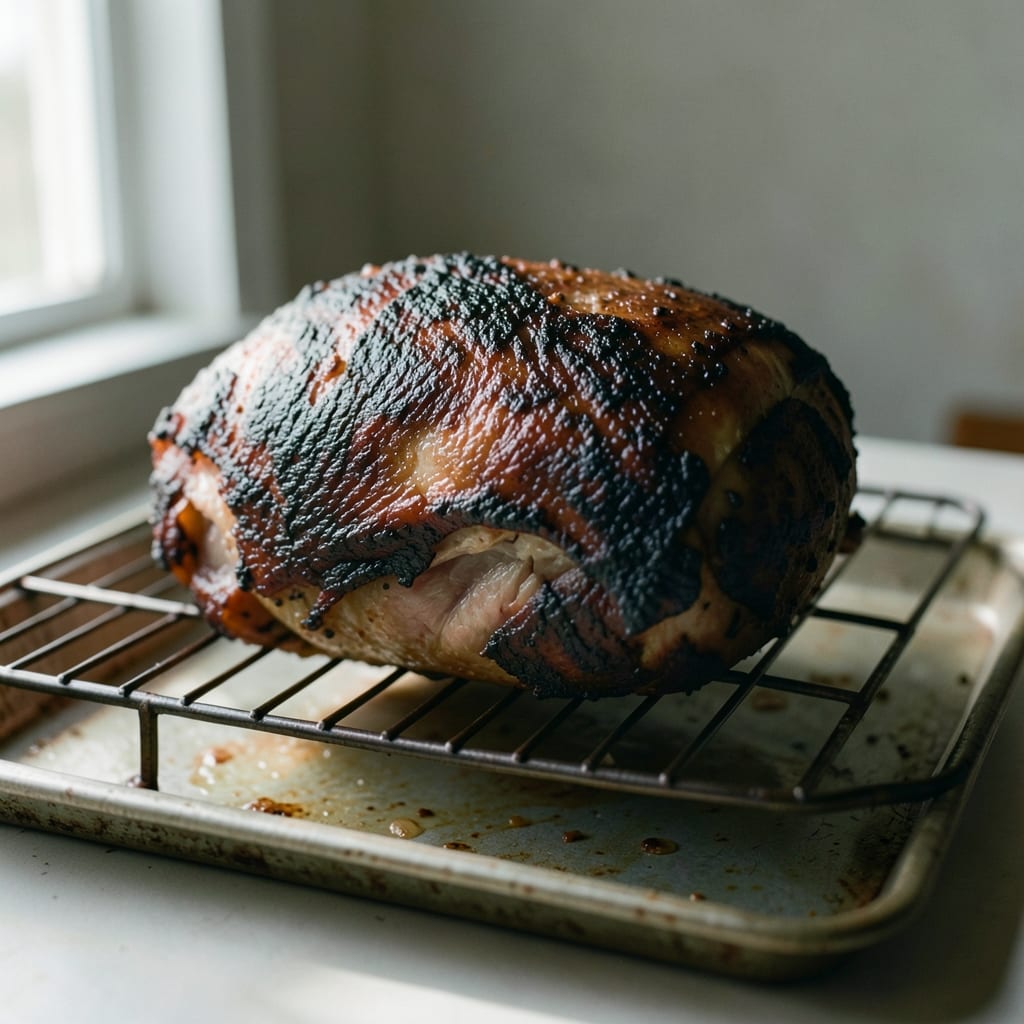
The first thing I do is *not* touch the pan. If it’s a sauce, I’ll walk away for 10 minutes. If it’s dough, I’ll cover it and let it forget I’m there.
The key is watching for the small changes: the way a roux stops hissing, or how a cake pulls away from the edges. Rush it, and you’ll end up with glue or crumbs.
Temperature is everything. Too hot, and you’ll scorch the garlic before it softens. Too cool, and you’ll wait an hour for nothing.
I use a thermometer now, but I still trust my instincts—like knowing when to pull a steak off the grill because the edges are just starting to turn *slightly* darker than medium-rare.
The fix: trusting the process
If something goes wrong (and it always does), I don’t dump it or start over. I ask: *‘What’s the root?’* Is the sauce too thin? Maybe it needs a splash of reduced stock, not more liquid. Is the crust tough? Maybe the butter was cut too small.
The fix is never obvious—it’s in the details, like the time I realized my pie crust needed an extra fold because the oven was running hot.
The one rule I never break is this: *If it tastes wrong, add acid.* A squeeze of lemon, a dash of vinegar, a pinch of salt—something sharp to cut through the flatness. It’s the kitchen’s equivalent of a reset button, and it works 90% of the time. The other 10%?
Well, that’s why we have leftovers.
How a page gets onto this site
While the dish is still warm, I scribble notes on a pad next to the stove—what worked, what didn’t, and what I’d do differently next time. Then I let it sit overnight.
The next day, I read it with fresh eyes: *‘Does this make sense?’ ‘Would this work for someone else?’* If the answer’s no, I rewrite it. Some pages get rewritten months later because I realize I missed a trick—or because someone emails me and says, *‘I tried it, and…’*
Write to me
I love hearing about the dishes you’ve made, the recipes you’ve ruined, or the flavors you’re still trying to crack. Did a recipe here work for you? Did it fail spectacularly? Send me the story—the contact page is where to do it.
And if you’ve got a sauce, a technique, or a family secret you’re dying to share, tell me about it. The best recipes are the ones that come from real people, not just cookbooks.
The recipes are grouped by category: Appetizers, Beverages, Breakfast & Brunch, Desserts, Main Courses and Reviews.