
Sauces & Condiments
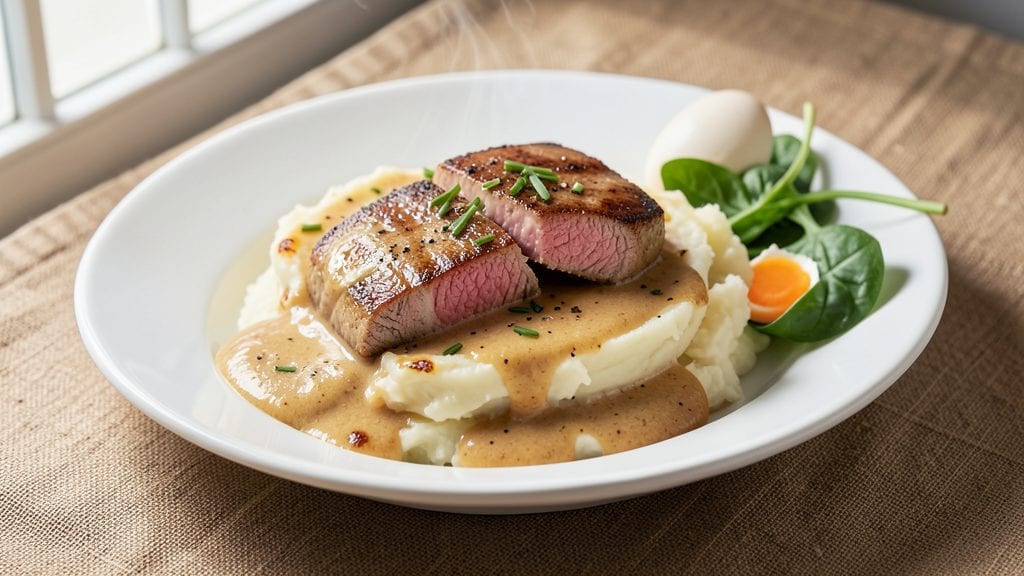
Creating a tuna Mornay sauce transforms simple ingredients into a velvety, herb-infused masterpiece that elevates any dish. This classic béchamel-based sauce combines sharp cheddar with a touch of Gruyère for depth, all while maintaining a smooth, creamy texture that clings perfectly to fish, pasta, or vegetables.
The technique relies on a proper roux and gradual cheese incorporation to avoid lumps, ensuring professional results every time.
What sets this sauce apart is its versatility and speed—ready in just 15 minutes with simple pantry staples like butter, flour, milk, and cream.
The key lies in whisking continuously over medium heat to achieve that signature velvety consistency, while herbs like parsley and chives add freshness without overpowering the rich cheese flavors. This isn’t just a sauce; it’s a game-changer for weeknight meals that feel restaurant-worthy.
The finished sauce delivers a balance of tangy, nutty cheese notes with a silky mouthfeel, making it ideal for drizzling over grilled tuna, creamy pasta, or steamed vegetables. Unlike store-bought versions, this recipe uses real cheese and a homemade roux, resulting in a sauce that’s far more flavorful and customizable.
The best part? It reheats beautifully, so you can make a batch ahead and keep it on hand for spontaneous dinners.
For optimal results, store any leftovers in an airtight container in the refrigerator for up to 3 days or freeze for longer storage. When reheating, warm gently over low heat while stirring constantly to maintain that luxurious texture.
Whether you’re serving it as a standalone condiment or incorporating it into a dish, this tuna Mornay sauce will become a staple in your culinary repertoire.
Ingredients for tuna mornay sauce
Twelve essential ingredients transform into a restaurant-quality tuna Mornay sauce in minutes.
| Ingredient | Amount | Notes |
|---|---|---|
| Unsalted Butter 🧈 | ½ cup | Cold, cut into small cubes |
| All-Purpose Flour 🌾 | ½ cup | Sifted for smooth texture |
| Sharp White Cheddar Cheese 🧀 | 1 ½ cups | Freshly grated, block preferred |
| Gruyère Cheese 🧀 | ½ cup | Finely grated for depth |
| Whole Milk 🥛 | 1 cup | Room temperature preferred |
| Heavy Cream 🥛 | ½ cup | Full-fat for richness |
| Fresh Parsley 🌿 | ¼ cup | Finely chopped, flat-leaf preferred |
| Fresh Chives 🌿 | 2 tbsp | Thinly sliced for brightness |
| Diamond Crystal Kosher Salt 🧂 | ½ tsp | Adjust to taste |
| Freshly Ground Black Pepper 🌶️ | ¼ tsp | Coarsely ground |
| Dry White Wine 🍷 | ¼ cup | Sauvignon Blanc recommended |
| Lemon Zest 🍋 | 1 tsp | From organic lemon |
The cheese selection is critical here. Sharp white cheddar provides the tangy backbone, while Gruyère adds nutty complexity. For optimal results, purchase these cheeses from specialty shops like Whole Foods Market or Murray's Cheese, where they're properly aged and vacuum-sealed. The flour should be sifted to eliminate lumps, and the butter must be cold and cubed for a proper roux. Fresh herbs like parsley and chives are available at most grocery stores, but local farmers markets offer superior quality with more vibrant flavors. The wine should be dry and crisp—Sauvignon Blanc is ideal for balancing the richness without overpowering.
No sharp cheddar? Pepper Jack or Gouda work as substitutes, though the flavor profile shifts slightly. Running out of Gruyère? Parmesan or Comté can provide a similar depth, though Gruyère's melt is unmatched. Short on fresh herbs? Dried parsley at one-third the amount suffices, but the sauce will lack brightness. For the wine, dry white vermouth or even chicken broth can stand in if necessary. The flour can be swapped for cornstarch if gluten-free is required, though the texture will differ slightly. Always whisk the cheese gradually to maintain that velvety consistency—adding too quickly causes clumping.
This sauce reheats beautifully, maintaining its luxurious texture when warmed gently over low heat. Store any leftovers in an airtight container in the refrigerator for up to 3 days, or freeze for up to 3 months in a sealed container. To extend freshness, add a thin layer of plastic wrap directly to the sauce's surface before sealing the container, preventing a skin from forming. The sauce can be made ahead and kept at room temperature for up to 2 hours before serving, making it ideal for meal prep. For best results, use within 48 hours of preparation.
Why You'll Love This Recipe
- Same sauce, endless uses: toss with pasta, dollop over grilled fish, or slather on toasted bread. I’ve served it at 6 PM in sweatpants and at 7 PM with candles—both times, no one cared how little effort it took.
- Five-Ingredient Magic: I swear by this—just butter, flour, two cheeses, and milk. No fancy gadgets, no stress. The roux builds itself while you grate cheese, and honestly? That’s my kind of cooking.
- Creamy Cheese Obsession: Sharp cheddar and Gruyère melt into something ridiculously smooth, with just enough tang to cut through the richness. It’s the kind of sauce that makes you pause mid-bite and think, “Wait, I made this?”
- Weeknight to Dinner Party: Same sauce, endless uses: toss with pasta, dollop over grilled fish, or slather on toasted bread. I’ve served it at 6 PM in sweatpants and at 7 PM with candles—both times, no one cared how little effort it took.
Step-by-step instructions for tuna Mornay sauce
Master this velvety sauce with precise technique and professional timing.
Create the Roux Foundation
Melt the 0.5 cup unsalted butter in a medium saucepan over medium-low heat. Once fully melted and foaming subsides, immediately whisk in the 0.5 cup all-purpose flour to form a smooth, pale roux. Cook for 2-3 minutes, stirring constantly with a wooden spoon, until the mixture turns a pale golden color and smells nutty.
This roux forms the backbone of your sauce—don't rush this step. If it darkens too quickly, reduce the heat slightly. The proper roux should coat the back of a spoon and leave a clean streak when dragged across the pan. This ensures your sauce will thicken properly without developing a raw flour taste.
Deglaze and Incorporate Cheeses
Pour in the 0.25 cup dry white wine and whisk vigorously to incorporate, scraping up any browned bits from the bottom of the pan. Allow the wine to simmer for 1-2 minutes until nearly evaporated. Gradually add the 1 cup whole milk and 0.5 cup heavy cream, whisking continuously to prevent lumps.
Reduce heat to low and whisk in the 1.5 cups sharp white cheddar cheese and 0.5 cup gruyère cheese until completely melted and smooth. The sauce should begin to thicken noticeably. If it seizes up, add 1-2 tablespoons of the reserved milk mixture to smooth it out. This cheese combination creates the signature Mornay richness while maintaining balance.
Finish with Herbs and Acid
Stir in the 1 tsp lemon zest, 0.25 cup fresh parsley, and 2 tbsp fresh chives, mixing until evenly distributed. Season with 0.5 tsp diamond crystal kosher salt and 0.25 tsp freshly ground black pepper. The sauce should now be silky smooth with a vibrant green hue from the herbs.
For optimal texture, continue simmering gently for 3-4 minutes until the sauce reaches 170°F internally. This final cooking step ensures all flavors meld completely and the sauce achieves proper body. If it becomes too thick, thin with additional milk 1 tablespoon at a time—the sauce should coat the back of a spoon but still flow smoothly.
Rest and Serve
Remove the sauce from heat and let it rest for 5 minutes at room temperature. This resting period allows the starches to fully hydrate and the sauce to thicken slightly, resulting in a luxuriously velvety consistency. Taste and adjust seasoning if needed—Mornay sauce should be rich but balanced, with bright citrus notes cutting through the cheese.
Serve immediately over your choice of protein or vegetables, or hold in a double boiler over simmering water if needed. The sauce will maintain its perfect texture for 1 hour if kept warm gently. For best results, pair with grilled fish, steamed vegetables, or crusty bread to enjoy the full flavor profile.
Pro Tips For Making Tuna Mornay Sauce
- Whisk Like You Mean It: The roux is where the magic happens—don’t stir it like you’re folding laundry. High heat for 2-3 minutes until it’s a deep golden color (not brown, not pale). I learned this the hard way after making three batches that tasted flat because I played it safe.
- Grate Cheese Fresh: Pre-shredded cheese has anti-caking agents that make your sauce grainy. Use a box grater for sharp white cheddar and Gruyère, then pulse the Gruyère in a food processor for a finer texture—just don’t overdo it, or you’ll end up with glue. (Yes, even if you’re impatient like me.)
- Temper the Milk Slowly: Dumping cold milk into hot butter? That’s a lumpfest waiting to happen. Warm the milk in a separate saucepan until it’s steaming (not boiling), then add it to the roux in a thin, steady stream while whisking like your life depends on it. Trust me, your sauce will thank you.
- Salt the Cheese First: Cheese loses flavor when melted, so season it before adding it to the sauce. Toss the grated cheddar and Gruyère with a pinch of salt and a splash of milk while you’re heating the roux—this guarantees every bite will taste rich, not bland. (Your future self will notice the difference.)
Flavor customization for these flavors
Cheese Swap Options
For a nutty depth, keep the original Gruyère and sharp white cheddar combo, but try Comté or Parmesan (½ cup each) for a more aged, complex flavor. If you prefer milder cheese, swap in Fontina or Monterey Jack—both melt beautifully and add creaminess without overpowering.
For a spicy kick, replace ¼ cup of cheddar with sharp cheddar mixed with 1 tsp smoked paprika or ½ tsp cayenne. 🧀
Herb Variations
Swap parsley and chives for tarragon (2 tbsp) and lemon zest (1 tsp) for a French-inspired twist—tarragon adds an anise-like brightness that pairs perfectly with tuna. For a Mediterranean flair, use dill (2 tbsp) and fresh oregano (1 tsp) instead.
If you love heat, add ½ tsp chopped jalapeño or 1 tsp hot honey at the end for a sweet-spicy finish. 🌿
Dairy Adjustments
For a lighter version, replace half the heavy cream with Greek yogurt (¼ cup) or crème fraîche—this adds tanginess while reducing richness. If you’re lactose intolerant, use lactose-free milk and cream (like Organic Valley brands) without compromising texture.
For extra decadence, stir in 1 tbsp mascarpone cheese at the end for a silky, luxurious mouthfeel.
Acid and Umami Boosters
Enhance brightness with 1 tbsp capers or 1 tsp Dijon mustard—these cut through the cheese’s richness and add briny depth. For umami, add 1 tsp fish sauce (like Red Boat) or ½ tsp Worcestershire sauce—trust me, it elevates the sauce without overpowering.
A splash of white wine vinegar (1 tsp) at the end adds tangy lift if your wine didn’t fully evaporate.
Spicy and Smoky Twists
For smoky heat, stir in ½ tsp chipotle powder or 1 tsp adobo sauce with the cheese. If you love fiery flavors, add 1 tsp gochujang (Korean chili paste) for a sweet-spicy-savory profile.
For a mild smokiness, top with crumbled bacon (2 tbsp) or smoked gouda crumbles (¼ cup) just before serving. 🔥
Global Fusion Ideas
Turn this into a Thai-inspired sauce by adding 1 tsp fish sauce, ½ tsp lime zest, and 1 tsp Thai basil. For a Mexican twist, swap the wine for ½ cup chicken broth and add ½ tsp cumin and 1 tbsp cotija cheese.
A Middle Eastern version uses 1 tsp za’atar and 2 tbsp labneh instead of cream—trust me, it’s a game-changer. 🌍
Nutrition facts
Frequently asked questions
What makes this sauce different from regular Mornay?
This recipe incorporates fresh herbs like parsley and chives plus lemon zest for brightness, while traditional Mornay relies on just cheese and cream. The white wine deglazing adds depth that store-bought versions often lack, and the Gruyère-cheddar combo creates a more complex flavor profile than single-cheese sauces. The key difference is the balance of richness with fresh, vibrant notes.
Can I make this sauce without wine?
Replace the 0.25 cup dry white wine with 0.25 cup chicken broth or apple cider vinegar for acidity. For extra flavor, add 1 tsp Dijon mustard or ½ tsp smoked paprika to compensate for the wine's depth. The sauce will still thicken properly—just taste and adjust seasoning at the end.
Why did my sauce get lumpy?
Lumps usually happen when cheese is added too quickly or the heat is too high. Always whisk in cheese gradually over low heat, and if it seizes, immediately thin with 1-2 tablespoons of warm milk while whisking vigorously. For prevention, make sure your cheese is freshly grated and your milk is room temperature.
How can I use this sauce beyond fish dishes?
This versatile sauce works beautifully over grilled vegetables, steamed broccoli, or mashed potatoes. Try it as a dip with crudités or as a creamy pasta sauce with linguine. For a hearty meal, layer it with roasted potatoes and caramelized onions. The cheese richness pairs well with almost any protein or veggie!
Can I freeze this sauce?
Yes, but freeze it in airtight containers with plastic wrap pressed directly on the sauce's surface to prevent freezer burn. Thaw overnight in the refrigerator and reheat gently over low heat, stirring constantly to restore its velvety texture. For best quality, use within 3 months of freezing.