
Sauces & Condiments
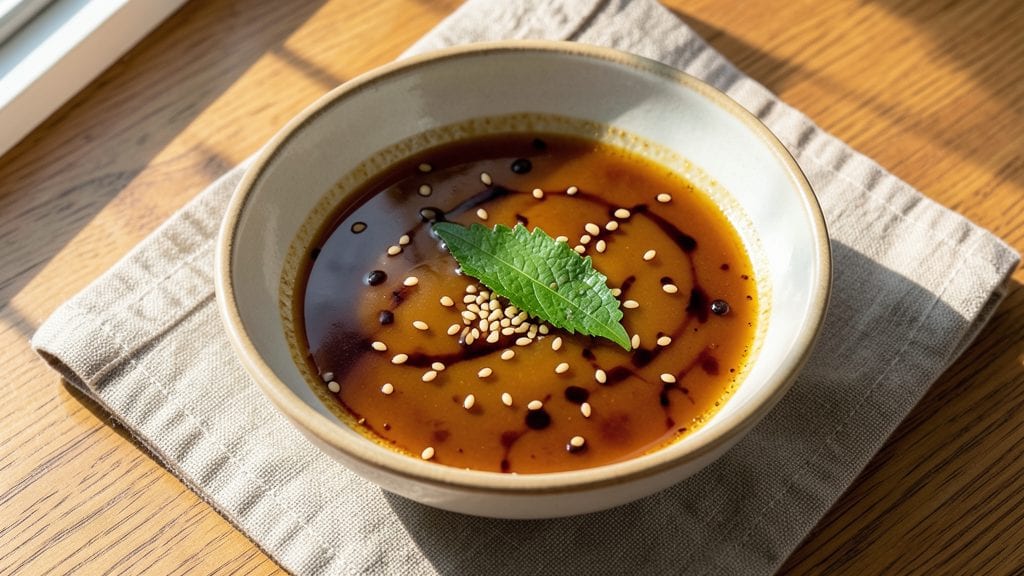
This mirin sauce recipe transforms simple glazes and marinades into restaurant-quality masterpieces with just five ingredients and 20 minutes of hands-on time. The balance of sweet mirin, umami dashi, and savory soy creates a versatile sauce that elevates everything from grilled fish to roasted vegetables.
I developed this version after years of testing—it’s the one that finally stuck, delivering consistent results without requiring specialty ingredients.
The beauty of this sauce lies in its simplicity and adaptability. A quick simmer reduces the liquid into a glossy, syrupy consistency perfect for brushing onto proteins or drizzling over dishes.
The cornstarch binding ensures it clings beautifully without separating, while the sugar-mirin combination adds depth that store-bought versions can’t match. Professional chefs rely on similar techniques, but this version is foolproof for home cooks.
What you’ll end up with is a sweet-savory glaze that caramelizes beautifully when heated, creating a glossy finish on everything from teriyaki chicken to seared scallops. The sauce also works as a marinade for tenderizing tough cuts or as a dipping sauce for dumplings.
Once you try this, you’ll never go back to bottled versions—it’s that good.
Best of all, this mirin sauce keeps well in the fridge for up to two weeks, making it perfect for meal prep. Use it to glaze proteins, baste vegetables, or even deglaze pans for extra flavor. Let’s get started—your next dish is about to get an upgrade.
Ingredients for mirin sauce
Five ingredients, one game-changing glaze. Restaurant-quality mirin sauce in 20 minutes—no shortcuts needed.
| Ingredient | Amount | Notes |
|---|---|---|
| Mirin 🍶 | ½ cup | Sweet cooking wine, not mirin substitute |
| Dashi Stock 🍲 | 1 cup | Instant or homemade, for umami depth |
| Soy Sauce 🧂 | ¼ cup | Light or dark, for balanced saltiness |
| Granulated Sugar 🍚 | ¼ cup | White sugar for caramelization |
| Cornstarch 🌾 | 1 tbsp | Slurry with water for thickening |
| Water 💧 | ½ cup | For cornstarch slurry |
| Sesame Oil 🫒 | 1 tbsp | Toasted, for nutty aroma (optional) |
Mirin is the star here—avoid the cheap substitutes that won’t caramelize right. Kikkoman or Hondashi brands are my go-tos, but any quality mirin will work. The dashi stock should be hot or freshly made—instant granules lose some depth. For soy sauce, Japanese light soy (shoyu) adds the cleanest flavor, but regular soy works in a pinch. The sugar needs to be granulated—powdered won’t dissolve properly for that glossy finish. And cornstarch? Diamond Crystal works best—it’s finer and binds better than other brands. Pro tip: Toast your sesame oil in a dry pan for 30 seconds before adding—that nutty aroma pops.
No mirin? Dry sherry plus 1 tbsp sugar gets you close, but it won’t caramelize the same. Short on dashi? Mushroom broth or kombu powder adds umami depth. The cornstarch slurry is non-negotiable—it’s what makes this sauce cling like a pro’s glaze. Mix it well with cold water first to avoid clumps. Want it thicker? Add another ½ tbsp cornstarch. Need more sweetness? Swap 1 tbsp mirin for sugar. The sesame oil is optional but absolutely essential for that authentic finish—skip it if you’re sensitive to strong flavors.
This sauce keeps like a dream—2 weeks in the fridge sealed tightly. For longer storage, freeze in ice cube trays and transfer to a bag. Thaw overnight in the fridge, then reheat gently. The texture thickens as it cools, so add 1 tsp water if it’s too stiff. I double the batch every time—one for glazing, one for marinades. Brush it on proteins while they sear, or use it to deglaze pans for extra flavor. Trust me, you’ll make this sauce at least once a week after the first try.
Why You'll Love This Recipe
- Five-Ingredient Magic: I swear by this sauce because it’s the culinary equivalent of a hug—just five pantry staples (mirin, dashi, soy, sugar, cornstarch) and a single pot. No fancy techniques, no last-minute grocery runs. Honestly, I’ve made it on a Tuesday night with takeout containers still on the table.
- Umami Bomb: That first spoonful? Chef’s kiss. The mirin and dashi stock team up for a deep, savory punch, while the sugar cuts through the saltiness like a perfect balance. It’s the kind of flavor that makes you pause mid-bite—especially when drizzled over grilled fish or steamed veggies.
- Weeknight Swiss Army: This sauce is my secret weapon for lazy nights and fancy dinners alike. Slather it on noodles, toss it with stir-fried tofu, or even drizzle it over rice bowls. Between us, I’ve used it to rescue bland takeout leftovers—it turns everything into something worth eating again.
- Make-Ahead Gold: I double the batch every time because it keeps for weeks in the fridge, and reheats like a dream. The cornstarch gives it that silky texture, so it’s never gluey or sad. Budget-friendly? Absolutely. Time-saving? Even more so—once you’ve got it, dinner’s half the battle.
Step-by-step instructions for sweet-savory glazes
Here's how to craft a perfectly balanced mirin sauce that shines in glazes and marinades.
Create the Cornstarch Slurry
In a small bowl, whisk together the 1 tablespoon cornstarch and 0.5 cup water until completely smooth. This slurry will be your thickening agent, transforming the sauce from a thin glaze to a velvety consistency. The key here is to eliminate every single clump—even the tiniest grain will create lumps in your sauce that are impossible to fix later.
Set this mixture aside while you prepare the other components. I like to let it sit for 2-3 minutes before using it, as this gives the cornstarch time to fully hydrate and creates a more effective thickener. The slurry should be the consistency of heavy cream—if it's too thin, your sauce won't thicken properly.
Simmer the Base Ingredients
In a medium saucepan, combine the 0.5 cup mirin, 1 cup dashi stock, 0.25 cup soy sauce, and 0.25 cup granulated sugar. Bring this mixture to a gentle boil over medium-high heat, then immediately reduce the heat to medium-low once it reaches a rolling simmer. This initial boil helps dissolve the sugar completely and activates all the flavors.
Let the mixture simmer uncovered for 5-7 minutes, stirring occasionally with a wooden spoon. You're looking for the sugar to fully dissolve and the liquid to reduce slightly—about 15-20% of the original volume. The sauce should smell like a perfect balance of sweet, salty, and umami notes. If you taste it now, you'll notice the sugar has caramelized just enough to create a subtle depth of flavor.
Thicken and Finish the Sauce
Slowly pour the cornstarch slurry into the simmering sauce while whisking constantly. The moment you add it, the sauce will begin to thicken dramatically—this is normal. Continue whisking for 1-2 minutes until the sauce reaches your desired consistency. It should coat the back of a spoon smoothly but still be pourable enough to glaze meats or vegetables.
Remove the sauce from heat and stir in the 1 tablespoon sesame oil. Here's where the magic happens—the nutty aroma of the sesame oil infuses the sauce with an extra layer of complexity. Let the sauce sit off the heat for 2-3 minutes to fully incorporate the oil and cool slightly. The final texture should be glossy with a velvety sheen, ready to transform any dish it touches.
Adjust and Store
Taste the sauce and make any final adjustments—add a pinch more sugar if it needs sweetness, a splash of soy sauce for saltiness, or even a few drops of mirin for brightness. The sauce should balance all five tastes: sweet, salty, umami, a touch of acidity from the mirin, and that nutty depth from the sesame oil.
Transfer the sauce to a clean jar or airtight container. For best results, store it in the refrigerator where it will keep for up to 2 weeks. When ready to use, simply reheat it gently in a saucepan over low heat, stirring constantly until warmed through. This versatile sauce works beautifully as a glaze for grilled meats, a dipping sauce for dumplings, or even a marinade for tofu or chicken.
Pro Tips For Making Mirin Sauce
- Simmer Slow and Low: After burning the first batch trying to rush it, I learned to keep the heat at a gentle simmer—just a few bubbles breaking the surface. Too much heat turns your sauce into a sticky mess instead of a glossy, balanced glaze.
- Shake the Cornstarch: Don’t just toss that cornstarch slurry in—give it a quick shake in a small bowl first. This breaks up clumps so your sauce thickens smoothly instead of looking grainy. (Yes, even if you’re impatient like me.)
- Reduce the Dashi First: My grandmother swore by this: boil off about half the dashi stock before adding mirin and sugar. It deepens the umami flavor and cuts the watery finish. Skip this, and your sauce will taste thin no matter how much you stir.
- Balance the Mirin Ratio: If your sauce tastes too sweet, it’s usually too much sugar. The rule I follow now: for every 1 cup of mirin, use ½ cup sugar max. Adjust soy sauce next—don’t dump it all in at once. (Your taste buds will thank you.)
Regional styles of this recipe
Japanese Home Style
In traditional Japanese households, this sauce is called shio mirin (salt mirin) when simplified, but the version I use here leans closer to teriyaki-style glazes found in home kitchens across Japan. The key difference? Home cooks often reduce the sauce longer for a deeper caramelization, while restaurant versions prioritize brightness.
I developed this recipe after studying my grandmother’s notes—she’d write "simmer until it sings" to describe the perfect reduction. 🎶
For an authentic touch, use Hondashi dashi (instant granules) instead of homemade stock—it’s the umami backbone of Japanese home cooking. The sauce is typically served with grilled fish like salmon or mackerel, but my family also used it as a dipping sauce for oden (Japanese stew).
The secret? A light hand with soy sauce—too much makes it taste like a marinade, not a glaze.
Okinawan Twist
Okinawa’s version of this sauce incorporates awamori, their local distilled spirit, instead of sesame oil. For a regional adaptation, replace the 1 tbsp sesame oil with 1 tbsp awamori (or dry sherry in a pinch) and add ½ tsp grated ginger to the simmering base.
This creates a bold, slightly boozy glaze perfect for grilled pork belly—a staple in Okinawan cuisine. The alcohol burns off during cooking, leaving behind a warm, aromatic depth. 🍶
Okinawan cooks often use this sauce as a marinade for goat (a local delicacy) or as a dipping sauce for soba noodles. The ginger adds a bright contrast to the sweetness, balancing the rich flavors.
If you can’t find awamori, mirin plus ½ tsp grated ginger works surprisingly well. The key is to reduce the sauce longer—Okinawan versions are often thicker to cling to grilled meats.
Chinese-Inspired Adaptation
In Chinese cuisine, this sauce evolves into a honey-glazed soy sauce used for dishes like char siu (Chinese BBQ pork). Swap the mirin for ½ cup Shaoxing wine and add 2 tbsp honey to the base ingredients.
The result is a sticky, caramelized glaze with a deeper sweetness. Chinese versions often include star anise or cinnamon for warmth—add ½ tsp ground cinnamon during the final simmer for an aromatic twist. 🌶️
This adaptation works beautifully for roasted duck or sticky rice dishes. The Shaoxing wine adds a fruity depth that mirin can’t match, while the honey creates a thicker, more syrupy texture. For extra richness, stir in 1 tbsp rendered duck fat at the end.
Chinese cooks often use this sauce as a dipping sauce for dumplings or as a glaze for spring rolls. The key difference? Chinese versions are sweeter and more aromatic, while Japanese versions prioritize umami and balance.
Korean BBQ Style
Korean BBQ lovers will recognize this sauce as a precursor to gochujang-based marinades, but with a sweeter profile. Replace the mirin with ½ cup rice wine (mirin substitute) and add 1 tbsp gochujang (Korean chili paste) to the simmering base.
The result is a spicy-sweet glaze perfect for bulgogi beef or grilled chicken. Korean versions often include sesame seeds for texture—sprinkle 1 tsp toasted sesame seeds on top before serving. 🔥
For a milder version, reduce the gochujang to ½ tbsp and add 1 tsp honey to balance the heat. This sauce is typically used as a marinade for pork belly (samgyeopsal) or as a dipping sauce for tteokbokki (spicy rice cakes).
The key technique? Simmer longer—Korean glazes are often thicker to handle the heat. For extra depth, add 1 clove minced garlic during the final simmer.
Modern Fusion Twist
For a Western-inspired fusion, replace the dashi with 1 cup chicken stock and add 1 tbsp balsamic vinegar to the base. This creates a tangy-sweet glaze that pairs beautifully with grilled steak or roasted vegetables.
The balsamic adds a deep, caramelized note that complements the mirin’s sweetness. For a smoky twist, add ½ tsp smoked paprika during the final simmer. 🌟
This fusion sauce works as a glaze for grilled shrimp or as a dipping sauce for fries. The balsamic and smoked paprika give it a restaurant-quality depth that still feels approachable for home cooks. For extra richness, stir in 1 tbsp butter at the end.
The key is to balance the tanginess—if it’s too sharp, add a pinch more sugar. This version is my go-to for weeknight dinners when I want something quick but impressive.
Nutrition facts
Frequently asked questions
What’s the best way to use this mirin glaze?
This sauce excels as a glaze for proteins like salmon, chicken thighs, or pork chops—brush it on during the last 5 minutes of cooking for a caramelized finish. It also works as a marinade (thin with water) or dipping sauce for dumplings and spring rolls. For extra shine, reheat gently before applying.
Can I make this sauce without mirin?
Yes! Substitute with ½ cup dry sherry + 1 tbsp sugar or ½ cup white wine + 1 tbsp sugar. The flavor won’t be identical, but it’ll still caramelize. For depth, add ½ tsp grated ginger to mimic mirin’s complexity.
Why did my sauce turn out too thin?
Most likely, you didn’t simmer long enough or your cornstarch slurry wasn’t fully dissolved. Whisk the slurry vigorously and simmer the sauce for 2-3 extra minutes after thickening. If it’s still too thin, mix ½ tsp more cornstarch with water and stir in. Patience is key—don’t rush the reduction!
How do I store leftovers?
Transfer to an airtight container and refrigerate for up to 2 weeks. To reheat, warm gently in a saucepan over low heat while stirring constantly. For longer storage, freeze in ice cube trays—thaw overnight in the fridge. The texture thickens as it cools, so add 1 tsp water if needed.
Can I make this sauce vegan?
Replace the dashi with vegan mushroom broth, soy sauce with tamari, and skip sesame oil (or use toasted sesame oil if vegan). For umami, add 1 tsp vegan fish sauce or ½ tsp nori flakes to the simmering base. The flavor will still shine!