
Sauces & Condiments
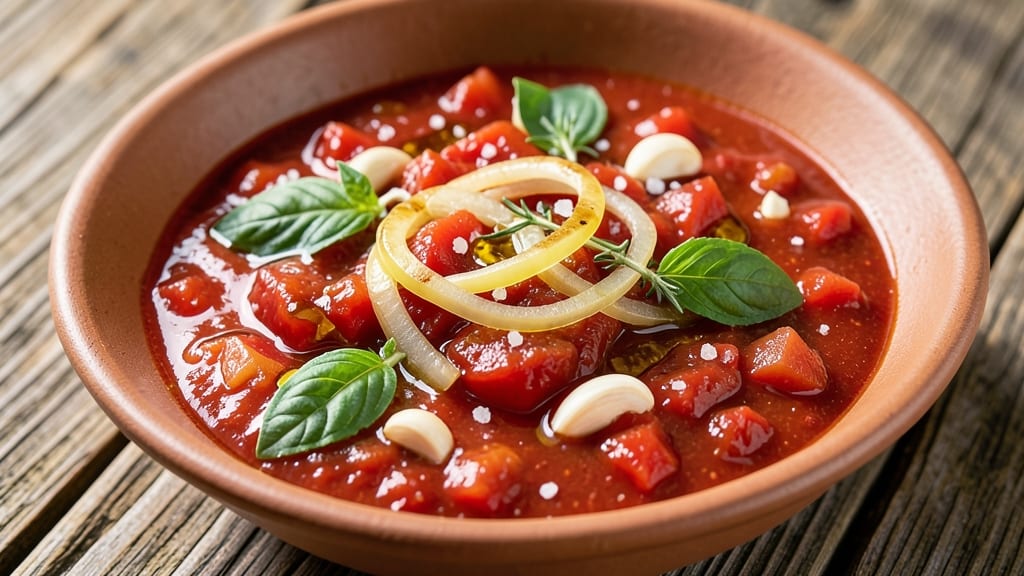
This cooked tomato salsa sauce transforms simple canned tomatoes into a rich, velvety sauce with layers of herbaceous depth—perfect for dips, marinades, or pasta toppings. 💛 I developed it after years of experimenting with tomato-based sauces, seeking that perfect balance between sweetness and acidity that makes every bite unforgettable.
The secret lies in simmering the tomatoes with aromatics until they break down into a luscious, jammy consistency, then finishing with fresh herbs for brightness.
What sets this sauce apart is its versatility and foolproof technique—no fancy equipment required, just a pot and a few pantry staples. You’ll start with canned tomatoes (or fresh if you’re feeling ambitious), then build flavor through slow simmering with onions, garlic, and spices.
The result is a sauce that’s smooth yet vibrant, with a natural sweetness that caramelizes beautifully as it cooks. It’s the kind of sauce that elevates simple dishes into something restaurant-worthy.
By the time you’re done, you’ll have a versatile condiment that works as a dip for chips, a marinade for grilled meats, or a silky pasta sauce. The herbs stay fresh and bright, cutting through the richness of the tomatoes, while the spices add warmth without overpowering.
This isn’t just a sauce—it’s a flavor booster that turns ordinary meals into something extraordinary. Let’s get started!
One of the best things about this recipe is how it improves with time. The flavors deepen as it sits, making it ideal for meal prep or gifting. Store it in the refrigerator for up to a week, or freeze it for longer storage.
Whether you’re serving it at a backyard barbecue or using it to elevate a weeknight dinner, this sauce delivers professional results every time.
Ingredients for cooked tomato salsa sauce
Pantry staples meet fresh herbs for this velvety tomato sauce that transforms ordinary meals into restaurant-worthy dishes.
| Ingredient | Amount | Notes |
|---|---|---|
| San Marzano Whole Canned Tomatoes 🍅 | 28 oz | Crushed by hand for texture |
| Yellow Onion 🧅 | 1 whole | Diced, medium size preferred |
| Garlic Cloves 🧄 | 4 cloves | Minced, fresh preferred |
| Extra-Virgin Olive Oil 🫒 | ½ cup | High-quality, fruity variety |
| Fresh Basil Leaves 🌿 | ½ cup | Packed, stems removed |
| Fresh Oregano Leaves 🍃 | ¼ cup | Packed, stems removed |
| Tomato Paste 🍅 | 2 tbsp | High-quality, no sugar added |
| Granulated Sugar 🍚 | 1 tbsp | Adjust to taste |
| Red Wine Vinegar 🍷 | 1 tbsp | Balances sweetness |
| Diamond Crystal Kosher Salt 🧂 | 1 ½ tsp | Adjust to taste |
| Ground Black Pepper 🌶️ | ½ tsp | Freshly cracked preferred |
| Red Bell Pepper 🌶️ | ¼ cup | Diced, optional for sweetness |
The tomatoes are non-negotiable—San Marzano is the gold standard, but any high-quality canned tomatoes work. Look for ones with vibrant color and minimal additives. Trader Joe's and Whole Foods carry excellent options, but don't overlook the store brand if it's fresh. The basil and oregano should be bright green and fragrant—wilted herbs will make your sauce taste flat. For the tomato paste, Bertolli or Mutti are my go-tos, but any good-quality paste will do. The red bell pepper adds subtle sweetness, but skip it if you prefer a more traditional flavor profile.
No fresh basil? Dried basil at one-third the amount works in a pinch, though it won't have the same brightness. Running low on red wine vinegar? Balsamic vinegar gives a slightly different but still delicious result. The sugar can be swapped for honey or maple syrup if you prefer, though granulated is most reliable for balancing acidity. If you can't find Diamond Crystal kosher salt, Morton or any fine sea salt will work—just taste as you go. The olive oil should be extra-virgin and fruity, not bitter or overly peppery, as it carries the sauce's richness.
This sauce tastes even better the next day as the flavors meld together. Store it in an airtight container in the fridge for up to 1 week, or freeze for 6 months in portions. I love using it as a marinade for grilled chicken or drizzled over wood-fired pizza—it's the kind of sauce that makes everything taste like you put in serious effort. For extra depth, let it reduce slightly before serving, especially if using it as a dip.
Why You'll Love This Recipe
- No-Fuss Pantry Hero: I swear by this sauce because it uses what I always have—San Marzano tomatoes, olive oil, and garlic—and still tastes like I slaved over it. The onions caramelize just enough to add depth, but I’m not standing there stirring for hours.
- Umami Bomb: That burst of fresh basil against the sweet, slow-cooked tomatoes? It’s the kind of flavor that makes you pause mid-bite. Honestly, the garlic doesn’t overpower—it just lingers in the background like a good friend.
- Weeknight Swiss Army: Slap it on pasta, spoon it over grilled chicken, or use it as a dip for crusty bread. I’ve even frozen batches for lazy Mondays when I need something fast. It’s the one sauce that does it all without apology.
- Leftovers That Don’t Suck: Unlike fresh salsa, this sauce actually improves over time—more concentrated, richer, and still bright. I make a big batch on Sundays, and by Wednesday, it’s my secret weapon for turning mediocre meals into something special.
Step-by-step instructions for cooked tomato salsa sauce
Here's how to craft this velvety tomato sauce with layers of sweetness and aromatic herbs.
🍳 Step 1: Sauté the Aromatics Until Fragrant
Heat the 0.5 cup extra-virgin olive oil in a heavy-bottomed saucepan over medium heat. Add the 1 whole yellow onion and 0.25 cup diced red bell pepper, cooking for 5-6 minutes until softened and translucent. Here's the thing—don't rush this step. You want them to caramelize slightly, building deep flavor.
Add the 4 cloves minced garlic and cook for 30 seconds until fragrant but not browned. The moment garlic turns golden, it burns quickly—watch carefully. Stir in the 2 tbsp tomato paste and cook for 1 minute, stirring constantly. This creates a rich, concentrated base that will anchor your sauce's flavor profile.
🍳 Step 2: Build the Tomato Base with Sweet Balance
Pour in the 28 oz crushed San Marzano whole canned tomatoes, scraping up any browned bits from the bottom of the pan. Add the 1 tbsp granulated sugar and 1 tbsp red wine vinegar, then sprinkle with the 1.5 tsp diamond crystal kosher salt and 0.5 tsp ground black pepper. The sugar will enhance the tomatoes' natural sweetness while the vinegar adds bright acidity.
Bring the mixture to a gentle simmer over medium-low heat, then reduce heat to low. Here's where patience pays off—let it cook uncovered for 20-25 minutes, stirring occasionally. You're looking for the sauce to thicken noticeably and develop a rich, concentrated tomato flavor. The sauce should coat the back of a spoon with a velvety texture.
🥘 Step 3: Infuse with Herbs and Finish to Perfection
Remove the pan from heat and stir in the 0.5 cup packed fresh basil leaves and 0.25 cup packed fresh oregano leaves. Let the mixture steep for 5 minutes—this allows the herbs to release their essential oils and fully infuse the sauce. The leaves will soften and meld beautifully into the tomato base, creating that signature herbaceous depth.
For the final touch, taste and adjust seasoning. You might need a pinch more salt or a splash of vinegar to balance the flavors. The sauce should be vibrant, sweet, and complex—like a perfect harmony of summer's freshest ingredients. Serve immediately over pasta, drizzled over grilled meats, or spooned alongside crusty bread for an incredible experience.
Pro Tips For Making Cooked Tomato Salsa Sauce
- CUT TOMATOES FIRST: Slash those San Marzano tomatoes lengthwise before adding them to the pot—it’s the fastest way to break them down evenly. I used to crush them with my hands, but this method guarantees consistent texture without the mess.
- SWEAT ONIONS LOW: Cook the onion in olive oil over medium-low heat until it’s soft but not browned—about 8-10 minutes. Rushing this step turns your sauce bitter, and nobody wants that.
- SALT THE TOMATOES: Sprinkle a pinch of salt directly into the canned tomatoes before adding them to the pot. It draws out excess water and concentrates the flavor—no one ever notices you did it, but they’ll taste the difference.
- BASIL AT THE END: Toss in the fresh basil leaves when the sauce is done and off the heat—just a minute before serving. Heat wilts them into oblivion, and you want those bright, peppery notes to shine.
Best sauces and condiments for cooked tomato salsa sauce
Herb-Infused Oil Drizzle
Elevate your sauce by finishing it with a drizzle of herb-infused olive oil just before serving. Heat 2 tbsp extra-virgin olive oil with 1 tbsp chopped fresh basil and 1 tbsp chopped fresh oregano over low heat for 2 minutes.
Strain through a fine-mesh sieve to remove herb bits, then drizzle over the sauce. This adds a luxurious, aromatic finish that makes your dish feel restaurant-quality. 🌿
Spicy Kick with Chili Flakes
For a smoky, spicy twist, stir in 1 tsp smoked paprika and ½ tsp red pepper flakes during the simmering phase. If you prefer heat, add 1 tbsp chipotle powder or a pinch of cayenne for depth.
I love this variation when serving with grilled shrimp or tacos—it adds a slow-building warmth that lingers. 🌶️
Creamy Yogurt Swirl
Transform your sauce into a creamy dip by stirring in ¼ cup plain Greek yogurt at the end. The yogurt cools the sauce slightly and adds a velvety texture perfect for dipping chips or pairing with roasted vegetables.
For extra tang, add 1 tsp lemon juice and a pinch of salt. This version is a crowd-pleaser at summer gatherings. 🥄
Umami Boost with Mushrooms
Add depth by sautéing ½ cup finely chopped cremini mushrooms with the onions in Step 1. Their earthy flavor complements the tomatoes beautifully, creating a richer, more complex sauce. For an extra umami punch, stir in 1 tsp soy sauce or ½ tsp fish sauce during the simmering phase.
This works wonderfully with Asian-inspired dishes or hearty pasta. 🍄
Sweet & Tangy Fruit Addition
Brighten the sauce with ½ cup diced peaches or mango during the final 5 minutes of simmering. The fruit’s natural sweetness balances the acidity, creating a tropical-inspired sauce that pairs perfectly with grilled chicken or fish.
For a smoky touch, add ½ tsp liquid smoke at the same time. This variation is a summer favorite in Portland. 🍑
Nutty Crunch Topping
For texture contrast, sprinkle 2 tbsp toasted pine nuts or walnuts over the finished sauce. Toast the nuts in a dry pan over medium heat for 2-3 minutes until fragrant, then chop coarsely.
This adds a satisfying crunch that’s perfect for drizzling over pasta or using as a dip for crusty bread. 🌰
Nutrition facts
Frequently asked questions
Can I use fresh tomatoes instead of canned?
For fresh tomatoes, use about 3-4 pounds of ripe, vine-ripened varieties like Roma or San Marzano. Peel, seed, and chop them before simmering. You may need to add 1 extra tablespoon of vinegar to balance the acidity, as fresh tomatoes often lack the concentrated sweetness of canned. Simmer for 30-40 minutes instead of 20-25 to achieve the same jammy texture.
How do I adjust the sauce for spicy preferences?
For mild heat, add ½ teaspoon of red pepper flakes during the final 5 minutes of simmering. For medium heat, increase to 1 teaspoon. For a smoky kick, stir in 1 teaspoon smoked paprika with the garlic. Always taste as you go—you can reduce heat by adding a pinch of sugar to balance the spice.
Why did my sauce turn out too thick?
Sauces thicken when simmered too long or reduced too much. To fix it, whisk in 2-3 tablespoons of warm water or broth and return to low heat for 2-3 minutes. For prevention, monitor the sauce closely and remove it from heat when it reaches your desired consistency. If using canned tomatoes, opt for diced tomatoes instead of crushed for a thinner base.
Can I make this sauce in a slow cooker?
Yes! Combine all ingredients in your slow cooker and cook on low for 4-5 hours, stirring occasionally. The low-and-slow method enhances the sweetness and depth of flavor. For a quicker version, use high for 2-3 hours. Just be sure to stir in the fresh herbs at the end and let them steep off the heat, as prolonged cooking will turn them bitter.
What are the best ways to use leftover sauce?
This versatile sauce works as a marinade for grilled meats, a pasta topping, or a dip for chips and bread. Freeze portions for future use—it keeps well for up to 6 months. Try drizzling it over pizza, mixing into soups, or using it as a base for homemade tomato juice. The flavors only improve with time, so don't hesitate to experiment!