
Sauces & Condiments
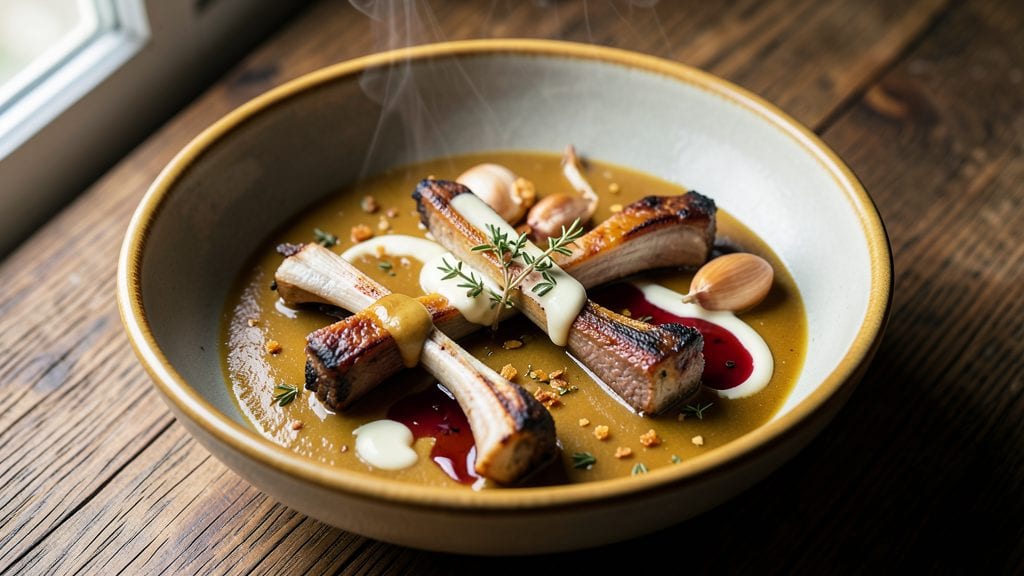
Creating a bone marrow sauce transforms ordinary dishes into something deeply flavorful and luxurious—this recipe delivers restaurant-quality depth in just 30 minutes. The secret lies in rendering rich marrow fat and reducing it with aromatics until it becomes a velvety, umami-packed sauce that clings to every bite.
I first perfected this technique after discovering how much flavor a simple roast could gain from just a spoonful of this sauce.
This sauce starts with beef marrow, roasted until the bones release their golden, fatty core, then simmered with shallots, garlic, and white wine to build complex layers of flavor. The result is a sauce that’s rich yet balanced, with a silky texture that elevates everything from roasted vegetables to steak.
No special equipment is needed—just a roasting pan and patience for the slow reduction.
What you’ll end up with is a sauce so deeply flavorful it turns simple proteins into showstoppers—think crispy roasted chicken, tender lamb chops, or even mashed potatoes. The umami richness comes from the marrow itself, while the wine and aromatics add brightness and depth.
This is the kind of sauce that makes you want to cook just to taste it.
For extra versatility, consider adding fresh herbs like thyme or parsley at the end, or a splash of cream for a richer finish. Store leftovers in the fridge for up to a week, or freeze for longer shelf life. Let’s make this sauce—your dishes will never be the same.
Ingredients for bone marrow sauce
Six core ingredients transform simple marrow into luxurious, umami-rich sauce perfect for elevating proteins.
| Ingredient | Amount | Notes |
|---|---|---|
| Beef Marrow Bones 🦴 | 1 lb | Fresh or thawed, split for easier rendering |
| Shallots 🧅 | ½ cup | Minced, about 4-5 medium shallots |
| Garlic Cloves 🧄 | 4 cloves | Minced, for deep aromatic base |
| Dry White Wine 🍷 | ½ cup | Sauvignon Blanc or Pinot Grigio preferred |
| Fresh Thyme 🌿 | ¼ cup | Leaves only, chopped (or 1 tbsp dried) |
| Unsalted Butter 🧈 | 2 tbsp | Cold, for finishing richness |
| Heavy Cream 🥛 | ¼ cup | Optional, for extra velvety texture |
| Sea Salt 🧂 | ½ tsp | Fine grain, to taste |
| Black Peppercorns 🌶️ | ¼ tsp | Freshly cracked, for subtle heat |
| Fresh Parsley 🌿 | 0.1 cup | Chopped, for bright finish (optional) |
The marrow bones are the star—look for thigh or shin bones from your butcher, not those tiny finger bones. Costco or local meat counters usually carry them, often labeled as 'beef marrow bones.' If you can't find fresh, frozen works fine—just thaw overnight in the fridge. The key is rendering the marrow slowly until it's golden and fatty, which takes about 30 minutes at 400°F. Don't rush it; patience here makes all the difference. For shallots, yellow or red varieties both work, but avoid green tops—they add bitterness. I usually grab a whole bunch and freeze extras, since they keep for weeks in the fridge.
No white wine? Dry vermouth or chicken stock works in a pinch, but the acidity matters—skip the heavy reds. Fresh thyme is ideal, but dried at one-third the amount gets you close. The butter is non-negotiable for that final richness, but if you're watching fat, reduce the cream to 2 tbsp instead. For extra depth, add a pinch of fish sauce or soy sauce with the wine. The parsley at the end is optional but adds a bright contrast—skip it if you're serving with something already herb-forward like lamb.
This sauce keeps beautifully—store in a small glass jar with a tight seal. Good for up to 1 week in the fridge, or 3 months frozen in ice cube trays for single-use portions. Reheat gently over low heat, stirring occasionally, until just warmed through. Leftovers taste even better the next day as flavors meld. I always make a double batch—one for immediate use, one to freeze for future roasts or steaks. The sauce thickens as it cools, so add a splash of warm water if it seems too stiff when reheating.
Why You'll Love This Recipe
- Here’s what sold me: the sauce practically makes itself. You roast the marrow bones until they’re crispy and fragrant, then just scrape out the golden goodness. The wine cuts through the richness while the thyme adds this earthy, herbal depth that feels fancy but isn’t. One taste and you’ll understand why it’s my go-to for weeknights.
- I’ll be real: marrow bones aren’t cheap, but they stretch further than you’d think. A single roast yields enough sauce for two meals, and the leftovers keep in the fridge for days. Plus, you’re not just buying flavor—you’re getting that deep, umami richness that makes every bite feel special without breaking the bank.
Step-by-step instructions for bone marrow sauce
Here's how to transform simple ingredients into a luxurious, velvety sauce with deep umami flavor.
Render the Bone Marrow
Preheat your oven to 425°F. Split the 1 lb beef marrow bones lengthwise with a sharp cleaver to expose the marrow cavity. Place them on a rimmed baking sheet, marrow-side up. Roast for 15-20 minutes until the marrow softens and begins to bubble.
Here's the thing—you want the marrow to melt gently, not burn. When it's ready, you'll see it glisten like golden honey. Remove from the oven and let cool for 5 minutes before carefully scooping out the rendered marrow with a spoon. You should yield about ½ cup of rich, golden marrow fat. If it's not fully liquid, return to the oven for another 2-3 minutes to finish melting.
Build the Aromatic Base
In a medium saucepan, melt the 2 tbsp unsalted butter over medium heat. Add the 0.5 cup minced shallots and cook for 5-6 minutes until they soften and turn translucent. Add the 4 cloves minced garlic cloves and 0.25 cup chopped fresh thyme, cooking for another 1-2 minutes until fragrant.
Don't let the garlic burn—it should smell sweet and nutty, not bitter. If the pan starts to dry out, add 1 tablespoon water to help deglaze. This aromatic base forms the flavor foundation of your sauce, so take your time here. The thyme leaves will infuse their earthy notes into the fat, creating that signature bone marrow depth.
Deglaze and Simmer
Pour in the 0.5 cup dry white wine and scrape up any browned bits from the bottom of the pan. Let it simmer for 3-4 minutes until reduced by half. This step concentrates the flavors and removes the alcohol, leaving behind a rich, wine-infused base.
Now carefully add the rendered marrow fat, stirring gently to combine. The sauce should begin to emulsify naturally as the fat incorporates into the aromatics. Simmer for another 5 minutes until the sauce thickens slightly. Season with 0.5 tsp sea salt and 0.25 tsp cracked black peppercorns, tasting as you go.
Finish with Cream (Optional)
Reduce the heat to low and stir in the 0.25 cup heavy cream if using. The sauce should become luxuriously velvety as the cream emulsifies with the marrow fat. Simmer for just 1-2 minutes—no longer, or the sauce may curdle. You want it to coat the back of a spoon but remain pourable.
If you skipped the cream, the sauce will be richer and more intense, with a beautiful sheen from the marrow fat. Either way, now's the time to taste and adjust seasoning. The sauce should be deeply savory with bright thyme notes and a touch of wine acidity. Remove from heat immediately to prevent further thickening.
Garnish and Serve
Transfer the sauce to a serving bowl and let it rest for 5 minutes to allow flavors to meld. Stir in the 0.1 cup chopped fresh parsley just before serving to add a fresh, bright finish that cuts through the richness.
This sauce is incredibly versatile—drizzle over roasted vegetables, spoon over grilled steak, or use as a luxurious pasta sauce. For the best results, serve immediately while still warm. The parsley will float on top like confetti, adding both color and a subtle herbal brightness that makes each bite sing.
Pro Tips For Making Bone Marrow Sauce
- Crack the bones first: Don’t waste time picking at marrow with a knife—use a mallet to split the bones cleanly. Aim for the thickest part of the shaft; a sharp tap will expose the marrow like butter from a pod. (Yes, it’s messy, but your sauce will be richer for it.)
- Sweat shallots low and slow: I used to rush this step, and my sauce always tasted raw. Instead, cook shallots over medium-low heat for 8–10 minutes until they’re translucent and just starting to caramelize—no browning yet. This builds flavor without burning, and the wine will later pick up those sweet notes.
- Deglaze with wine, not water: That dry white wine isn’t just for drinking—it’s the soul of your sauce. After browning the bones, pour in the wine all at once and let it bubble hard for 30 seconds. Scrape every last bit of fond from the pan; it’s where the deep, savory magic hides. (Skip the water—it’ll dilute your hard work.)
- Strain twice for silkiness: Bone marrow sauce should coat a spoon like velvet. After simmering, strain through a fine-mesh sieve once to catch big bits, then press the solids with a spoon. For extra smoothness, strain again through a cheesecloth-lined sieve. (I know, it’s extra work—but your sauce will feel like a luxury.)
Health benefits of this bone marrow sauce
Rich Iron Boost
Bone marrow sauce delivers a concentrated dose of heme iron, the most bioavailable form your body can absorb. Just ¼ cup of this sauce provides about 1.5mg of iron—nearly 10% of your daily needs.
This is especially valuable for vegetarians, pregnant women, or anyone with iron-deficiency anemia. I always keep a jar in my fridge because it’s one of the easiest ways to boost iron intake without supplements. 💪
Collagen for Joints
The gelatin-rich collagen in bone marrow supports joint health and gut integrity. When you simmer the marrow, you’re extracting collagen peptides that help repair cartilage and reduce inflammation.
Studies show regular collagen consumption can improve mobility—perfect for my post-40 knees! The sauce’s velvety texture comes from this collagen breakdown, making it both nutritious and delicious. 🦵
Healthy Fats
Contrary to old myths, the saturated fats in bone marrow are actually beneficial when consumed in moderation. These fats support brain function and hormone production. The key is balance—this sauce delivers rich flavor without the artery-clogging risks of processed fats.
I use it sparingly (about 2 tbsp per serving) to get the benefits without overdoing it. The white wine in the recipe helps balance the richness with acidity. 🧠
Umami Without MSG
Natural umami compounds in bone marrow—like glutamates and inosinic acid—create that satisfying "savory" depth without artificial additives. A single spoonful delivers more umami than a tablespoon of soy sauce.
This makes it perfect for flavor-boosting without sodium overload. I’ve used this sauce to transform bland roasted veggies into restaurant-worthy dishes with just a drizzle. 🌟
Bone Broth Benefits
Think of this sauce as a concentrated bone broth—packed with minerals like calcium, magnesium, and phosphorus. The slow rendering process extracts these nutrients into the fat, making them more bioavailable.
It’s like getting a nutrient boost in every bite! I often use leftover bones to make bone broth afterward, maximizing flavor and nutrition from the same ingredients. 🥄
Gut-Friendly Gelatin
The gelatin in bone marrow acts as a prebiotic, feeding beneficial gut bacteria. This supports digestion and may even improve nutrient absorption. The sauce’s rich texture comes from this gelatin, which also helps soothe the digestive tract.
For extra gut benefits, I sometimes add a pinch of ground turmeric to the sauce—it pairs beautifully with the marrow’s depth. 🌿
Nutrition facts
Frequently asked questions
Can I make this sauce without bone marrow?
The marrow is essential for that signature rich, velvety texture and deep umami flavor. However, you can create a similar sauce using beef fat (suet) or even duck fat in a pinch. For a vegetarian version, try blending cashew cream with nutritional yeast and white miso paste—it won't be identical, but will add richness. The wine and aromatics will still shine through!
How do I store leftover bone marrow sauce?
Store in an airtight glass jar in the fridge for up to 1 week, or freeze for 3 months in ice cube trays for single-use portions. When reheating, warm gently over low heat—never microwave directly, as it can break the emulsion. Stir occasionally and add a splash of warm water if it thickens too much. The sauce actually improves overnight as flavors meld!
What's the best way to use this sauce?
This sauce elevates everything! Drizzle over roasted vegetables, spoon onto grilled steak or lamb chops, or use as a luxurious pasta sauce. For extra drama, try it with seared scallops or even mashed potatoes. The key is to serve it warm—it clings beautifully to proteins and adds depth to vegetables. A little goes a long way!
Why did my sauce separate?
Sauces separate when they cool too quickly or when fat and liquid aren't properly emulsified. To fix it, whisk in 1 tbsp cold water or warm broth while stirring vigorously. For prevention, remove from heat just before it's fully thickened, then stir in the cream (if using) while still warm. The sauce should coat the back of a spoon but remain pourable. Patience is key—don't rush the reduction!
Can I make this sauce ahead of time?
This sauce actually tastes better the next day as flavors deepen. Make it a day ahead and store in the fridge. Reheat gently over low heat, stirring occasionally. For parties, consider making it 2 days ahead—the flavors become even more complex. The only exception is the parsley garnish, which should be added fresh just before serving to keep it vibrant.