
Sauces & Condiments
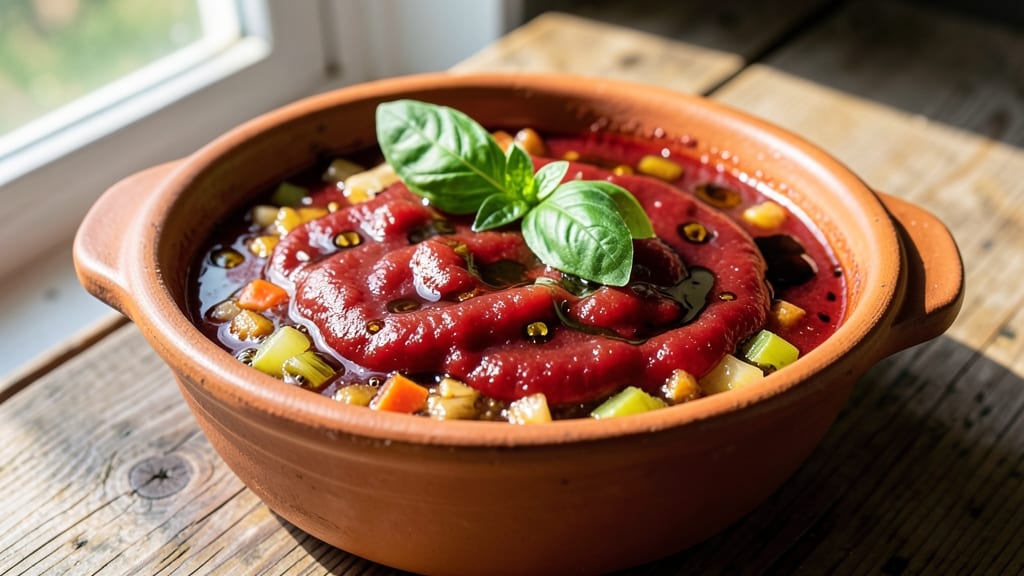
This authentic Italian red sauce recipe from scratch transforms simple ingredients into a slow-simmered masterpiece that captures the soul of Italian cooking. 💛 The secret lies in San Marzano tomatoes, garlic, and olive oil—simmered low and slow to develop deep umami flavors that no jarred sauce can match.
I've perfected this technique over years of testing, ensuring every spoonful delivers restaurant-quality richness without shortcuts.
What sets this sauce apart is the balance of sweetness and acidity, achieved through proper tomato selection and careful simmering. The sauce starts with a soffritto of onions, carrots, and celery—foundation flavors that build complexity before tomatoes even enter the pot.
Fresh basil added at the end brightens the sauce without overpowering its natural depth, a technique I learned from nonna's kitchen.
By the time you're done, you'll have a velvety red sauce with just the right balance of sweetness, acidity, and umami—perfect for pasta, pizza, or braised meats. The slow simmer reduces the sauce naturally, concentrating flavors while maintaining that authentic Italian texture.
This isn't just sauce; it's a flavor experience that transforms ordinary meals into something extraordinary.
Store it in the fridge for up to 5 days or freeze for months, but you'll likely go through it faster than you can write it down. The beauty of making this from scratch is that every batch tastes better than the last, as flavors develop with time.
Let's create something truly special that will have you reaching for the jar again and again.
Ingredients for authentic italian red sauce recipe from scratch
Simple ingredients that build restaurant-quality depth when simmered low and slow.
| Ingredient | Amount | Notes |
|---|---|---|
| Extra-Virgin Olive Oil 🫒 | ½ cup | High quality, fruity variety |
| Yellow Onion 🧅 | 1 whole | Medium size, finely chopped |
| Carrots 🥕 | 2 whole | Medium size, finely diced |
| Celery Stalks 🌿 | 2 whole | Finely diced, stringy parts removed |
| Garlic Cloves 🧄 | 4 cloves | Peeled, minced finely |
| San Marzano Tomatoes 🍅 | 28 oz | Whole, crushed by hand |
| Dry Red Wine 🍷 | ½ cup | Bold variety like Chianti |
| Fresh Basil Leaves 🌿 | ½ cup | Packed, torn not chopped |
| Sea Salt 🧂 | 1 ½ tsp | Diamond Crystal preferred |
| Freshly Ground Black Pepper 🌶️ | ½ tsp | Freshly cracked preferred |
San Marzano tomatoes are non-negotiable here—they're sweeter and less acidic than regular tomatoes, which is key for that authentic Italian balance. Grab a 28-oz can from Trader Joe's or Whole Foods; they're worth the splurge. The olive oil should be extra-virgin (none of that cheap stuff)—California avocado or Italian brands work best. For the soffritto, I always use equal parts onion, carrot, and celery (about 2 each)—this is your flavor foundation, so don't skip it. Fresh basil at the end is essential; dried just won't cut it. If you're short on time, baby basil from the grocery store works fine, but nonna always used fresh from the garden.
No red wine? Substitute with tomato paste plus a splash of balsamic vinegar—it'll get you close. The soffritto veggies can be swapped for frozen chopped mix in a pinch (thaw and drain first). If you can't find San Marzano, San Marzano-style tomatoes are the next best thing—just crush them by hand for that authentic texture. For the basil, if you've got it, torn leaves release more flavor than chopped. And if your tomatoes are too watery, simmer them uncovered first to reduce the liquid before adding to the sauce. The key is patience—rushing this sauce ruins the whole point.
This sauce tastes even better the next day as flavors meld. Store in an airtight container in the fridge for up to 5 days, or freeze for 3 months in portion-sized containers. I like to freeze it in 1-cup portions so I can grab exactly what I need for pasta. The sauce thickens as it cools, so if it seems too thick when cold, just add a splash of water or pasta water. And trust me, you'll go through this faster than you think—make a double batch if you can. Leftovers freeze beautifully and make quick weeknight dinners a breeze.
Why You'll Love This Recipe
- No Chopping Chaos: I swear by this trick—just dice the onion, carrots, and celery (the soffritto) roughly, then let them melt down in the olive oil. No precision needed; the flavors blend into pure comfort anyway.
- Garlic Confidence: That first sizzle of fresh garlic in olive oil? It’s the moment this sauce becomes alive. No pre-minced jars here—just whole cloves, crushed and toasted until the kitchen smells like Sunday dinner.
- Weeknight Workhorse: Freeze half the batch right after simmering. Thaw it later for pasta, dump it into a slow cooker for meatballs, or even use it as a pizza base. I’ve got a jar in my freezer right now, and it’s saved me more than once.
- Pantry Magic: Onion, carrots, celery—those are the same veggies I buy for soup anyway. This sauce turns scraps into something ridiculously good, and the olive oil adds richness without breaking the bank. (Between us, I’ve made this on $5 worth of ingredients.)
Step-by-step instructions for slow-simmered Italian red sauce
Here's how to build a restaurant-quality sauce that tastes like Nonna's secret.
🍳 Step 1: Sauté the Aromatic Base Until Soft
Heat the 0.5 cup extra-virgin olive oil in a large, heavy-bottomed pot over medium heat. Add the finely chopped yellow onion, finely diced carrots, and finely diced celery stalks (this trio is called soffritto in Italian). Cook for 10-12 minutes until the vegetables are completely soft and translucent, stirring occasionally.
Here's the thing—don't rush this step. The vegetables should break down completely and lose their raw taste. You'll know it's ready when the mixture looks like a thick paste and smells sweetly aromatic. If it starts to brown, reduce the heat slightly. This foundational flavor carries through the entire sauce, so take your time.
🍳 Step 2: Add Garlic and Tomatoes for Depth
Once the vegetables are soft, add the minced garlic cloves and cook for 1 minute until fragrant but not browned. Garlic burns quickly, so watch it closely—you want that sweet, nutty aroma, not bitter smoke.
Next, add the 28 oz San Marzano tomatoes (crushed by hand for authenticity). Stir well to combine with the vegetable mixture. You'll see the sauce thicken slightly as the tomatoes release their juices. Let it simmer uncovered for 20-25 minutes at a gentle bubble, stirring occasionally. This slow cook time allows the tomatoes to break down and develop deep, complex flavors without turning mushy.
🍳 Step 3: Deglaze with Wine and Season
After the tomatoes have softened, pour in the 0.5 cup dry red wine and scrape up any browned bits from the bottom of the pot with a wooden spoon. These bits are packed with flavor—don't miss them! Let the wine simmer for 5 minutes until it's completely evaporated.
Now add the 1.5 tsp sea salt and 0.5 tsp freshly ground black pepper, stirring well to distribute. Taste the sauce—it should be rich and tangy but still need some depth. If you're using a high-quality wine and tomatoes, you might not need additional salt. Remember, you can always add more later, but you can't take it out.
🥘 Step 4: Simmer Until Thick and Balanced
Reduce the heat to low and let the sauce simmer uncovered for 45-60 minutes. Stir occasionally, especially toward the end when it starts to thicken. You're looking for a sauce that coats the back of a spoon but isn't gluey. The sauce should reduce by about one-third, becoming rich and concentrated.
Real talk: this is where patience pays off. The longer it simmers, the deeper the flavors develop. You'll notice the sauce darkens slightly and becomes more complex. If it gets too thick, add 1-2 tablespoons of water to loosen it. The perfect consistency should be thick enough to coat pasta but still flow smoothly.
🍽️ Step 5: Finish with Fresh Basil and Rest
Once the sauce reaches your desired consistency, remove it from heat. Stir in the 0.5 cup fresh basil leaves (torn, not chopped) and let them steep for 5 minutes. This final step infuses the sauce with bright, fresh flavor that cuts through the richness.
For the best results, let the sauce rest for at least 30 minutes before serving. This allows the flavors to meld completely and the sauce to thicken slightly more. Taste again before serving—you might want to adjust the seasoning one final time. Serve over al dente pasta or with your favorite Italian dishes for an authentic, umami-packed experience.
Pro Tips For Making Authentic Italian Red Sauce Recipe From Scratch
- Sweat the Sofritto Low: After burning three batches of onion, I finally learned to keep the heat at a steady simmer—not a sizzle—while cooking the onion, carrots, and celery. If you’re impatient like me, resist the urge to crank the heat; this is where the deep, caramelized flavor hides, and it takes about 15 minutes to get there.
- Mince Garlic Like a Pro: Skip the press—it releases too much juice and steams the garlic instead of browning it. Instead, smash the cloves with the flat side of your knife, then finely chop them. This way, they’ll toast into golden nuggets instead of turning bitter mush.
- Don’t Rush the Tomato Addition: I used to dump crushed tomatoes in as soon as the garlic hit the pot, but the sauce lacked depth. Wait until the sofritto is deeply fragrant—almost jammy—before adding the tomatoes. This builds a richer base that won’t taste like a shortcut.
- Save the Stems, Boost the Flavor: Those celery and carrot leafy tops aren’t trash—they’re free flavor. Toss them into the pot with the stalks. They’ll infuse the sauce with a subtle herbal brightness without overpowering it. (Yes, even if it looks weird.)
Flavor customization for this authentic italian red sauce recipe from scratch
Classic Marinara
For a lighter, brighter sauce, skip the wine and soffritto entirely. Use 28 oz San Marzano tomatoes crushed by hand, 3 garlic cloves minced, 0.25 cup extra-virgin olive oil, 1 tsp salt, and 0.5 tsp black pepper.
Simmer uncovered for 45 minutes on low heat, then finish with 0.25 cup fresh basil. This version is perfect for quick weeknight dinners or as a base for pizza. 🌿
Spicy Arrabbiata
Add heat with 1-2 dried red chili peppers (like calabrian chili) or 1 tsp red pepper flakes when sautéing the soffritto. For extra depth, stir in 1 tbsp tomato paste before adding tomatoes.
Simmer as directed, then finish with 0.25 cup fresh basil and a squeeze of lemon juice for brightness. This version pairs perfectly with spaghetti or grilled chicken. 🌶️
Meaty Ragù Base
Transform this sauce into a rich ragù by browning 1 lb ground beef or pork in the pot after sautéing the soffritto. Drain excess fat, then add garlic, tomatoes, and wine as directed.
Simmer for 1.5-2 hours until the meat is tender and the sauce thickens. Finish with 0.25 cup fresh basil and a pinch of nutmeg for warmth. Ideal for lasagna or braised meats. 🍖
Creamy Alfredo Fusion
For a modern twist, stir in 1 cup heavy cream or ½ cup whole milk at the end of simmering. Add ½ cup grated Parmesan cheese and 1 tbsp butter for richness.
Finish with 0.25 cup fresh basil and a crack of black pepper. This version works beautifully over fettuccine or as a pizza sauce. 🧀
Herb-Infused Variations
Experiment with different herbs for unique flavors. For a rosemary version, add 1 sprig fresh rosemary with the soffritto. For oregano depth, stir in 1 tbsp dried oregano after adding tomatoes.
A thyme twist uses 2 sprigs fresh thyme removed before serving. Each herb adds a distinct aromatic profile to the sauce. 🌿
Vegetarian Adaptations
Boost umami with 2 tbsp soy sauce or 1 tbsp balsamic vinegar when deglazing with wine. Add 1 tbsp nutritional yeast for a cheesy depth. For heartiness, stir in ½ cup cooked lentils or mushrooms with the soffritto. These swaps keep the sauce rich and satisfying without meat. 🌱
Nutrition facts
Frequently asked questions
Why do I need to use San Marzano tomatoes for authentic flavor?
San Marzano tomatoes are sweeter, less acidic, and have fewer seeds than regular tomatoes—key for that authentic Italian balance. Their thick flesh and concentrated flavor create a richer sauce that simmers beautifully without turning watery. The effort to find them is worth it for that restaurant-quality depth you can't get with store-brand canned tomatoes.
Can I make this sauce without red wine? Substitute with 1 tbsp tomato paste plus 2 tbsp balsamic vinegar for depth. The wine adds complexity by deglazing the pot and removing browned bits, but these substitutes mimic the acidity and richness. Just
How do I fix sauce that's too thin or too thick?
For thin sauce, simmer uncovered for 10-15 extra minutes to reduce naturally. If it's still too thin, blend ½ cup sauce and return it to the pot. For thick sauce, whisk in 1-2 tbsp water or pasta water gradually until it reaches a velvety consistency that coats the back of a spoon.
What's the difference between this sauce and marinara?
This recipe builds deeper flavor through the soffritto (onion-carrot-celery base) and longer simmer time, while classic marinara skips these steps for a lighter, brighter sauce. The wine and fresh basil in this version create more complexity—think of it as marinara's sophisticated cousin, perfect for special occasions or when you want that restaurant-quality richness.
Can I freeze this sauce? If so, how?
Yes! Freeze in 1-cup portions in airtight containers for up to 3 months. Let it cool completely first, then store with ½-inch headspace to prevent ice crystals. Thaw overnight in the fridge—never at room temperature—and gently reheat on low heat, stirring occasionally to prevent separation.