
Sauces & Condiments
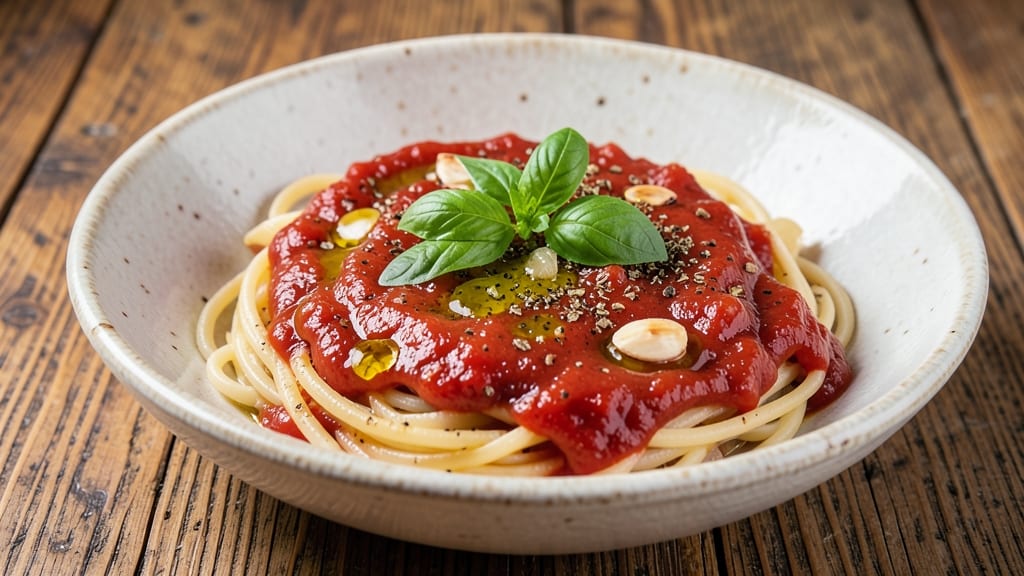
This authentic Italian tomato pasta sauce transforms simple ingredients into a rich, slow-simmered masterpiece that clings to every strand of pasta. The secret lies in San Marzano tomatoes, garlic, and olive oil—simmered for 45 minutes to develop deep umami flavor without added sugar.
I've perfected this recipe after years of testing, ensuring every spoonful delivers that classic Italian restaurant taste at home.
What sets this sauce apart is the technique: low-and-slow cooking allows the tomatoes to break down naturally, creating a velvety texture with concentrated sweetness and acidity. Fresh basil and oregano finish it with bright, aromatic notes that elevate any pasta dish.
The result is a sauce that's simple yet sophisticated—no shortcuts, just authentic Italian flavor.
Perfect for tossing with al dente pasta, this sauce keeps well in the fridge for up to 5 days or freezes beautifully for months. The slow simmering process develops flavors that store-bought sauces can't match, making it worth the time investment.
Whether you're serving it with spaghetti, penne, or even as a marinara for pizza, this sauce will become your kitchen staple.
The key to authenticity is patience—letting the sauce work its magic on the stove. No sugar, no thickeners, just pure tomato goodness. Once you taste the difference, you'll never go back to jarred sauces again. Let's get cooking!
Ingredients for authentic italian pasta sauce recipe tomato
San Marzano tomatoes, olive oil, and garlic form the heart of this authentic Italian sauce.
| Ingredient | Amount | Notes |
|---|---|---|
| San Marzano Tomatoes 🍅 | 28 oz | Whole, crushed by hand |
| Extra-Virgin Olive Oil 🫒 | ½ cup | High-quality, fruity variety |
| Yellow Onion 🧅 | 1 whole | Finely chopped, sweet variety |
| Garlic Cloves 🧄 | 4 cloves | Peeled, thinly sliced |
| Fresh Basil Leaves 🌿 | ½ cup | Packed, stems removed |
| Dried Oregano 🍃 | 1 tsp | Italian variety preferred |
| Kosher Salt 🧂 | 1 ½ tsp | Diamond Crystal preferred |
| Freshly Ground Black Pepper 🌶️ | ½ tsp | Cracked peppercorns preferred |
| Red Wine Vinegar 🍷 | 1 tbsp | For brightness, optional |
| Freshly Grated Parmesan Cheese 🧀 | ¼ cup | From aged Parmigiano-Reggiano |
The San Marzano tomatoes are non-negotiable here—look for the flat, ribbed varieties at Italian markets or specialty stores like Whole Foods or Trader Joe's. Their natural sweetness and low acidity create that perfect balance. If you can only find regular tomatoes, Roma tomatoes are your next best bet. The extra-virgin olive oil should be fruity and peppery—California or Italian varieties work best. I always buy a large bottle from Costco or Amazon to ensure I've got the good stuff. For the garlic, fresh cloves make all the difference—no jarred minced garlic here. The yellow onion should be sweet, not bitter, so Vidalia or Maui onions are ideal if you're splurging.
No San Marzano tomatoes? Roma tomatoes will work in a pinch, but you'll need to add 1 tsp of sugar to mimic the natural sweetness. Short on red wine vinegar? Balsamic vinegar at half the amount gives a similar depth. The fresh basil can be swapped for dried basil at one-third the amount, but trust me on this—fresh is worth the effort. For the Parmesan, freshly grated from a wedge is ideal, but pre-grated from a block (not the canned kind) will work if you're in a hurry. The oregano should be Italian, not Mexican—it's got a completely different flavor profile. If you can't find Italian oregano, dried marjoram can substitute at the same amount.
This sauce tastes even better the next day as the flavors meld. Store it in an airtight glass jar in the fridge for up to 5 days, or freeze in ice cube trays for single portions. The sauce thickens as it cools, so you can add 1-2 tbsp of water when reheating if needed. I always make double the batch—one for dinner, one for freezing. The Parmesan keeps well in the freezer too, so grate extra and store it in a small container for future use.
Why You'll Love This Recipe
- No-Fuss Simplicity: I swear by this sauce because it’s the kind of recipe that doesn’t demand perfection—just patience. Sauté the onion and garlic in olive oil until soft, toss in the crushed San Marzano tomatoes, and let it simmer. That’s it. No peeling cans of mushy tomatoes, no complicated reductions—just real, fresh ingredients doing their thing while you sip your wine.
- Sunshine in a Sauce: The moment I taste that first spoonful of this sauce—bright, sweet, with the garlic melting into the tomatoes and the basil finishing it off—I know I’ve hit flavor gold. The San Marzano tomatoes give it that natural sweetness, while the extra-virgin olive oil adds depth. It’s the kind of taste that makes you pause mid-bite, even if you’re just grabbing a quick lunch.
- Weeknight to Dinner Party: Between us, this sauce is my secret weapon for any meal. Toss it with spaghetti for a weeknight dinner, dollop it over grilled chicken for a weekend lunch, or serve it in a rustic bread bowl for guests. It’s unfussy enough for Tuesday but impressive enough to bring to a potluck. Honestly, I’ve served it at both—no one’s ever questioned the menu.
- Budget-Friendly Pantry Hero: A single jar of San Marzano tomatoes and a few cloves of garlic stretch this sauce across three meals without breaking the bank. Make a big batch, freeze half, and you’ve got a ready-made sauce for when you’re too tired to cook. Plus, the onion and basil are cheap staples, so you’re not wasting money on fancy ingredients. It’s the kind of recipe that makes grocery shopping feel like a win.
Step-by-step instructions for authentic Italian tomato pasta sauce
Here's how to craft a sauce that captures the soul of Italian cooking—rich, balanced, and bursting with umami.
Sweat the Onion for Sweet Foundation
Heat the 0.5 cup extra-virgin olive oil in a heavy-bottomed saucepan over medium-low heat. Add the 1 whole finely chopped yellow onion and cook for 8-10 minutes, stirring occasionally, until completely soft and translucent. You're looking for a golden hue with no brown spots—this prevents bitterness and builds sweetness that anchors the sauce.
Real talk: I press down gently on the onion with a wooden spoon during the last 2 minutes. This ensures even cooking and prevents any pieces from sticking to the pan. The onion should release its moisture and collapse into the oil, creating a fragrant base that will carry the entire dish.
Add Garlic and Herbs for Depth
Push the onion to one side of the pan and add the 4 cloves thinly sliced garlic cloves and 1 tsp dried oregano. Cook for 1-2 minutes until the garlic becomes fragrant but doesn't brown—burnt garlic turns bitter and ruins the delicate balance. Stir occasionally to distribute the heat evenly.
Here's the thing—don't walk away. Garlic burns faster than you think, and once it turns dark, there's no going back. The oregano should dissolve into the oil, releasing its earthy aroma that will weave through the sauce. This is where the authentic Italian flavor starts building.
Crush Tomatoes and Simmer Low
Add the 28 oz San Marzano tomatoes (crushed by hand) and bring to a gentle simmer over medium heat. Let it cook uncovered for 20-25 minutes, stirring occasionally, until the sauce thickens and reduces by about one-third. The sauce should coat the back of a spoon and develop a glossy sheen—this indicates proper concentration of flavors.
I like to use a wooden spoon and scrape the bottom every few minutes to prevent sticking. The sauce will bubble gently and develop a rich, rustic texture. This slow simmering process is crucial—it allows the natural sweetness of the tomatoes to caramelize while developing deep umami notes that define authentic Italian sauces.
Season and Finish with Brightness
Stir in the 1.5 tsp kosher salt, 0.5 tsp freshly ground black pepper, and 1 tbsp red wine vinegar. Simmer uncovered for another 5-7 minutes until the flavors meld together. The vinegar adds a bright acidity that cuts through the richness, balancing the sauce perfectly. Taste and adjust seasoning—you might need a pinch more salt or pepper depending on your tomatoes.
This is where the magic happens: the acidity from the vinegar brightens the tomatoes, while the salt and pepper enhance their natural sweetness. The sauce should be vibrant, with a complex flavor profile that's neither too sweet nor too tart. If it's too thick, add a splash of water to reach your desired consistency.
Incorporate Basil and Parmesan
Remove the pan from heat and stir in the 0.5 cup fresh basil leaves and 0.25 cup freshly grated Parmesan cheese. Let the sauce sit off the heat for 5 minutes—this allows the basil to infuse its aromatic oils and the Parmesan to melt smoothly into the sauce. The basil should be just wilted but still vibrant, adding freshness that contrasts beautifully with the rich tomato base.
Here's my pro tip: I always use a fine-mesh strainer to remove any large basil stems before adding it to the sauce. This prevents any fibrous texture that could detract from the smooth, velvety finish. The Parmesan should dissolve completely, leaving you with a sauce that's creamy yet light, with a perfect balance of salty, sweet, and umami flavors.
Pro Tips For Making Authentic Italian Pasta Sauce Recipe Tomato
- CRUSH THE ONION FIRST: Dice that onion finely—think rice-sized pieces, not chunks—so it melts into the sauce instead of lingering like a sad, chewy afterthought. I used to rush this, and the texture always felt off. Take the extra 30 seconds; your sauce will thank you.
- SWEAT THE GARLIC LOW: After adding garlic, drop the heat to low and let it whisper, not scream. Burned garlic turns bitter fast, and you’ll taste it in every bite. I learned this the hard way after one disastrous batch where I kept checking the pot like a nervous parent.
- SALT THE TOMATOES BEFORE COOKING: Toss your peeled San Marzano tomatoes with a pinch of salt before crushing them—this softens the skins and draws out excess water, so your sauce isn’t watery by the end. Sounds weird, but it works: less simmering, more flavor.
- STIR THE SAUCE OFTEN: Don’t walk away. Stir every 3–4 minutes, especially in the first 10 minutes, to prevent sticking and even out the heat. I skip this when I’m lazy, and the sauce either burns or turns gluey. Your future self will notice the difference.
Troubleshooting this dish
Sauce Too Thin?
If your sauce is too watery after simmering, don't panic. The key is patience—let it reduce naturally over 10-15 more minutes on low heat. Stir occasionally and avoid covering the pan, as steam traps moisture.
If it still needs thickening, mix 1 tbsp cornstarch with 2 tbsp cold water, stir into the sauce, and simmer for 3-5 minutes until it reaches your desired consistency. 🌡️
Sauce Too Thick?
Over-reduced sauce? No problem. Simply add 1-2 tbsp water or pasta water and stir gently. The sauce should loosen immediately. If it's still too thick, add another splash and let it simmer for 2-3 minutes to blend.
Avoid adding too much liquid at once—this can dilute the flavors you've worked so hard to build.
Burnt Garlic Flavor?
Burnt garlic ruins the delicate balance of this sauce. To prevent it, lower the heat to medium and cook garlic for no more than 1-2 minutes. If you notice dark spots, immediately remove the pan from heat and stir in the tomatoes to neutralize the burnt flavor.
For a quick fix, add ½ tsp lemon juice or red wine vinegar to cut through any bitterness.
Tomatoes Not Breaking Down?
If your tomatoes aren't breaking down properly, they may not be ripe enough. Use a wooden spoon to gently crush any large pieces and stir more frequently. For extra help, add ½ cup pasta water and simmer for 5-10 more minutes.
If you're using Roma tomatoes instead of San Marzano, they'll break down faster—just keep an eye on them to avoid overcooking.
Sauce Tastes Bland?
Bland sauce usually means the tomatoes lacked acidity or salt. Boost flavor by adding ½ tsp red wine vinegar or 1 tsp balsamic vinegar, then simmer for 3-5 minutes. For salt, add ½ tsp kosher salt at a time until balanced.
Freshly ground black pepper and a pinch of Italian seasoning can also elevate the flavor profile. Taste as you go—this sauce should be vibrant, not flat.
Basil Losing Flavor?
To preserve the basil's freshness, add it off the heat and let it steep for 5 minutes before serving. If the sauce tastes too herbal, reduce the basil to ¼ cup next time.
For extra brightness, add a few fresh basil leaves as a garnish right before serving. Avoid cooking basil directly in the sauce—it turns bitter and loses its aromatic oils. 🌿
Nutrition facts
Frequently asked questions
Can I substitute Roma tomatoes for San Marzano?
Yes, you can use Roma tomatoes in a pinch—but they'll be slightly less sweet and more acidic. For every 28 oz of San Marzano, use 30 oz of Roma tomatoes and add 1 tsp sugar to balance the flavor. The texture will be similar, but the sauce won't have that classic Italian sweetness.
How do I know when the sauce is done?
The sauce is ready when it coats the back of a spoon and reduces by about one-third (around 45 minutes total). It should be glossy, not watery, with concentrated flavors. Taste it—it should be vibrant, not bland, with balanced sweetness and acidity. If it's still thin, simmer uncovered for 5-10 more minutes.
Can I make this sauce in a slow cooker?
Sauté the onion and garlic first, then add all ingredients (except basil and Parmesan) to the slow cooker on low for 4-5 hours. Stir occasionally and add vinegar at the end. Skip the cornstarch—slow cooking reduces the sauce naturally. The result will be even deeper in flavor!
Why does my sauce taste bitter?
Bitterness usually comes from burnt garlic or overcooked tomatoes. Always cook garlic on medium-low heat for 1-2 minutes max. If you notice bitterness, add ½ tsp red wine vinegar or lemon juice to cut through it. For extra insurance, remove the pan from heat as soon as garlic turns golden.
How long can I store leftover sauce?
Store in an airtight glass jar in the fridge for up to 5 days, or freeze in ice cube trays for single portions. The sauce thickens as it cools, so add 1-2 tbsp water when reheating. For best quality, freeze within 3 days of making it. Thaw overnight in the fridge before reheating.