
Sauces & Condiments
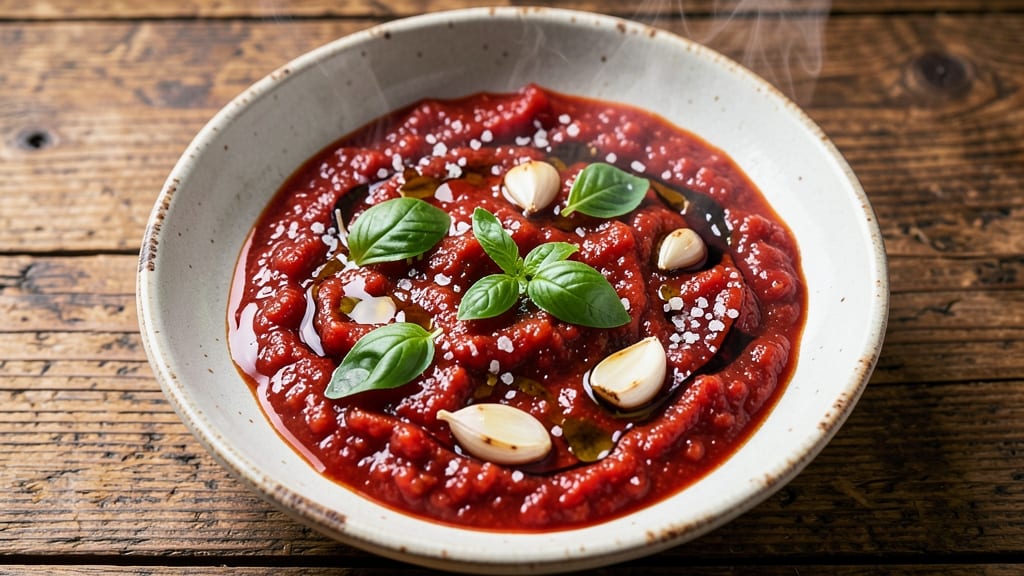
This authentic homemade pizza sauce transforms your pizza night from ordinary to extraordinary with just a few simple ingredients and a slow-simmered approach. The key lies in balancing fresh tomatoes, aromatic garlic, and bright herbs—no canned shortcuts here.
I developed this recipe after years of testing, and the difference between store-bought and this version is night and day.
The secret to depth of flavor is simmering the sauce low and slow, allowing the natural sweetness of the tomatoes to concentrate while the garlic and herbs infuse the oil. No blender required—just a fork for crushing, and you’ll achieve that perfect, rustic texture.
This sauce keeps beautifully in the fridge, so you can make a batch and have it ready for your next pizza night.
What sets this sauce apart is its herby brightness and balanced acidity, thanks to a touch of red wine vinegar and fresh basil at the end. It’s the kind of sauce that makes every bite taste like you’ve been to Italy—without the jet lag.
Once you try this, you’ll never go back to jarred sauce again.
Use it on classic margherita, meat lovers, or even as a marinara for pasta. The possibilities are endless, and the flavor is always exceptional. Let’s get started on making sauce that tastes like it came from a Neapolitan kitchen.
Ingredients for authentic homemade pizza sauce
Fresh tomatoes and aromatic herbs create sauce that tastes like Italy—no shortcuts here.
| Ingredient | Amount | Notes |
|---|---|---|
| Fresh Roma Tomatoes 🍅 | 2 lb | Crushed by hand for rustic texture |
| Extra-Virgin Olive Oil 🫒 | ½ cup | High-quality, fruity variety preferred |
| Garlic Cloves 🧄 | 6 cloves | Minced for aromatic depth |
| Fresh Basil Leaves 🌿 | ½ cup | Torn, not chopped, for best flavor |
| Red Wine Vinegar 🍷 | 1 tbsp | Balances sweetness and acidity |
| Salt 🧂 | 1 ½ tsp | Diamond Crystal preferred for purity |
| Black Pepper 🌶️ | ½ tsp | Freshly ground for subtle heat |
| Dried Oregano 🍃 | 1 tsp | Mexican oregano for authentic flavor |
| Sugar 🍬 | 1 tsp | Balances acidity naturally |
The tomatoes make or break this sauce. Roma tomatoes are ideal—they're meaty and sweet, with fewer seeds. Grab them at Whole Foods or your local farmers market if you can, but the regular grocery store ones work too. Avoid the squishy ones, and if they're not in season, San Marzano canned tomatoes are the next best thing (no salt added). The garlic? Fresh is non-negotiable—jarred garlic has no flavor. I usually grab a whole head and keep it in the freezer for quick access. For the basil, fresh is best, but if you're in a pinch, dried works at one-third the amount.
No red wine vinegar? Balsamic vinegar or lemon juice will work in a bind, but the acidity won't be quite the same. Short on sugar? Honey or maple syrup can substitute, but use half the amount. Want to skip the dried oregano? Fresh thyme or rosemary adds a different but delicious depth. The olive oil matters too—use something fruity and peppery, like California Extra Virgin. If you're making a big batch, divide the sauce into jars and freeze half—it keeps for up to 6 months that way. The sauce thickens as it cools, so don't worry if it looks runny right after simmering.
This sauce tastes even better the next day as the flavors meld. Store it in the fridge for up to 5 days, covered with a thin layer of olive oil to keep it vibrant. For freezing, portion into ice cube trays—perfect for single-use portions. When reheating, warm gently on the stove or microwave until just hot. The basil wilts fast, so add it last—just before serving or using. If you're making a big batch, consider doubling the recipe. You'll thank yourself later when you're ready for another pizza night.
Why You'll Love This Recipe
- No-Chop Chaos: I swear, this sauce comes together with zero fuss—just blitz those Roma tomatoes with a splash of vinegar and a glug of olive oil, then let the blender do the work. No peeling, no seeding, no stress. (Yes, even on a Tuesday night when the kids are begging for pizza.)
- Garlic-Basil Magic: That first bite of warm crust with this sauce? The garlic sizzles just enough to wake up your taste buds, while the fresh basil—actual leaves, not dried crumbs—adds that bright, herby punch. It’s the kind of flavor that makes you pause mid-slice and go, “Wait, I made this?”
- Pantry Stash Hero: Here’s what sold me—this sauce keeps like a champ. Stash it in the fridge for up to 5 days, or freeze it in ice cube trays for single-serving portions. Need a quick marinara for pasta? Done. Craving a last-minute pizza? Done. It’s my go-to for lazy days and busy weeks alike.
- Budget-Friendly Luxury: Fresh tomatoes and basil might sound fancy, but they’re way cheaper than jarred sauce—and they taste like you actually put effort in. A few cloves of garlic and a splash of vinegar turn grocery-store produce into something restaurant-quality. Honestly, it’s the kind of recipe that makes you feel like a cooking genius without breaking the bank.
Step-by-step instructions for authentic homemade pizza sauce
Here's how to craft a vibrant, authentic pizza sauce with fresh tomatoes and aromatic herbs.
Prepare the Fresh Tomato Base
Begin by washing the 2 lb fresh Roma tomatoes thoroughly and removing the stems. Cut each tomato in half crosswise and carefully scoop out the seeds using a small spoon, being sure to leave the juicy flesh intact. For that rustic texture, I like to crush the tomatoes by hand—simply place the halved tomatoes in a large bowl and gently press down with your fingers until they break apart into chunky pieces.
Transfer the crushed tomatoes to a medium-sized saucepan and place it over medium-high heat. Let the mixture simmer uncovered for 10-15 minutes, stirring occasionally, until it begins to soften and release its natural juices. You'll know it's ready when the tomatoes have collapsed slightly and the mixture takes on a deeper, richer color. This step develops the tomato's natural sweetness and intensifies its flavor.
Build Flavor with Aromatics and Seasonings
While the tomatoes are simmering, finely mince the 6 cloves garlic using a sharp knife or a garlic press. In a small bowl, combine the minced garlic with the 1 tsp dried oregano, 1.5 tsp salt, 0.5 tsp black pepper, 1 tsp sugar, and 1 tbsp red wine vinegar. The vinegar and sugar work together to balance the acidity and enhance the natural sweetness of the tomatoes.
Once the tomatoes have softened, stir in the garlic mixture and let the sauce simmer for another 5-7 minutes. This allows the garlic to infuse its aromatic depth without becoming bitter. Keep the heat at medium-low to prevent the garlic from burning. You'll notice the sauce thickening slightly as the flavors meld together—this is when the magic happens.
Finish with Olive Oil and Fresh Basil
Reduce the heat to low and stir in the 0.5 cup extra-virgin olive oil. The oil should coat the tomatoes evenly, creating a silky texture that's essential for authentic pizza sauce. Let the mixture simmer gently for 3-5 minutes, stirring occasionally, until the oil is fully incorporated and the sauce reaches a smooth, velvety consistency.
Remove the saucepan from heat and stir in the 0.5 cup fresh basil leaves, torn into small pieces. The basil adds a bright, herbal note that elevates the sauce from ordinary to extraordinary. Taste the sauce and adjust the seasoning if needed—you might want to add a pinch more salt or a splash of vinegar to refine the balance of flavors. Let the sauce cool slightly before using it on your pizza.
Rest and Use for Maximum Flavor
For the best results, let the pizza sauce rest at room temperature for at least 30 minutes before using it. This allows the flavors to fully develop and meld together, resulting in a sauce that's rich, balanced, and bursting with authentic taste. If you're making the sauce ahead of time, you can store it in an airtight container in the refrigerator for up to 5 days or freeze it for up to 3 months. When ready to use, simply reheat the sauce gently over low heat, stirring occasionally, until warmed through.
The key to this authentic pizza sauce lies in its simplicity and freshness. By using high-quality ingredients and allowing the flavors to develop naturally, you'll create a sauce that's far superior to anything you can buy in a jar. Spread it generously on your pizza dough, and you'll taste the difference in every bite.
Pro Tips For Making Authentic Homemade Pizza Sauce
- Blister the Garlic: I learned this the hard way—when I minced garlic and sautéed it gently, the sauce tasted flat. Now I crush 2-3 cloves with the flat side of my knife, toss them in a dry pan over medium-high heat, and let them sizzle until they’re deep golden and almost burning. That caramelized bitterness cuts through the sweetness of the tomatoes and makes the whole sauce sing.
- Seed and Crush Tomatoes: Skip the blender for this one. Halve the Roma tomatoes, scoop out seeds with a spoon, then crush them with your hands—no knife, no food processor. The broken-down flesh releases more juice and flavor, and you avoid the watery, mushy texture that comes from blending. (Yes, even if you’re impatient like me.)
- Simmer Low and Slow: After cooking the garlic and tomatoes, reduce heat to the lowest setting you can tolerate. I’m talking barely there, where the sauce barely bubbles. Let it cook for 20-25 minutes uncovered—this evaporates excess water and deepens the flavor. Rushing this step means a sauce that tastes like raw tomato, not the rich, concentrated base you want.
- Finish with Vinegar Last: Toss in the red wine vinegar after the sauce has simmered and just before you add the basil. A splash (about 1 teaspoon) brightens the acidity and balances the sweetness, but adding it too early can make the sauce taste sharp and underdeveloped. Save it for the end—it’s the final touch that ties everything together.
Pro cooking tips for this dish
Low-and-Slow Simmering
This sauce thrives on patience—simmering at medium-low heat for 20-25 minutes total builds deep, complex flavors without burning the garlic. I use a heavy-bottomed saucepan like my All-Clad Stainless Steel to prevent hot spots.
If you notice the sauce reducing too quickly, add 1-2 tablespoons of water to maintain gentle bubbling. 🌡️
Garlic Timing Matters
Add garlic only after tomatoes have softened (10-15 minutes of simmering) to prevent bitterness. I mince it extra fine using a microplane for even distribution.
For stronger flavor, let the minced garlic sit in the olive oil for 5 minutes before adding tomatoes—this infuses the oil with aromatic compounds. 🧄
Acid Balance Trick
The red wine vinegar and sugar combo is non-negotiable for authentic taste. Start with 1 tbsp vinegar and 1 tsp sugar, then adjust to taste—some tomatoes need more acidity.
I keep a small bowl of vinegar on hand to tweak while simmering. For a brighter finish, add ½ tsp lemon zest with the basil. 🍋
Olive Oil Emulsion
Stir in olive oil off the heat to prevent overheating, which can make the sauce taste raw. I use a whisk to emulsify it thoroughly, creating that signature silky texture. For extra richness, finish with 1 tsp butter (optional) and let it melt into the sauce. 🫒
Basil Integration
Add basil at the very end—it wilts quickly and loses flavor when cooked. I tear leaves by hand (not chopping) to preserve their delicate oils. For a more intense flavor, use ¼ cup basil and add 1 tbsp chopped parsley for balance.
Store any leftover basil in olive oil in the fridge for up to 3 days. 🌿
Flavor Development
Let the sauce rest 30 minutes before using—this allows flavors to meld. I often make it the night before and let it sit overnight in the fridge. The acidity mellows slightly, and the basil's aroma intensifies. For extra depth, add ½ tsp smoked paprika when reheating. 💫
Nutrition facts
Frequently asked questions
Can I use canned tomatoes instead of fresh?
Yes, but choose San Marzano canned tomatoes (no salt added) for the best results. Simmer them for 15-20 minutes to concentrate flavors, then proceed with the recipe. Avoid regular canned tomatoes—they're often watery and lack depth. For extra richness, add 1 tbsp tomato paste with the garlic.
How do I prevent the garlic from burning?
Add minced garlic only after the tomatoes have softened (10-15 minutes of simmering). Keep heat at medium-low and stir frequently. For extra insurance, sauté garlic in olive oil for 1 minute before adding tomatoes. Burnt garlic tastes bitter—this trick prevents it completely!
What if my sauce is too thick or too thin?
For thin sauce, simmer uncovered for 5-10 more minutes to reduce. For thick sauce, stir in 1-2 tbsp water or broth while simmering. The ideal consistency should coat the back of a spoon but still be pourable. Adjust gradually—you can always fix it later!
Can I make this sauce in a slow cooker?
Combine all ingredients (except basil) in the slow cooker and cook on LOW for 4-5 hours or HIGH for 2-3 hours. The low-and-slow method enhances flavors even more. Add basil at the very end—it wilts quickly in prolonged heat. This works perfectly for meal prep!
How much sauce should I make for a pizza?
A standard 12-inch pizza needs about ½ cup sauce. For a 16-inch pizza, use ¾ cup. This recipe yields about 2 cups, perfect for 4 slices. Store extras in the fridge for up to 5 days or freeze in 1-tbsp portions for single-use servings.