
Sauces & Condiments
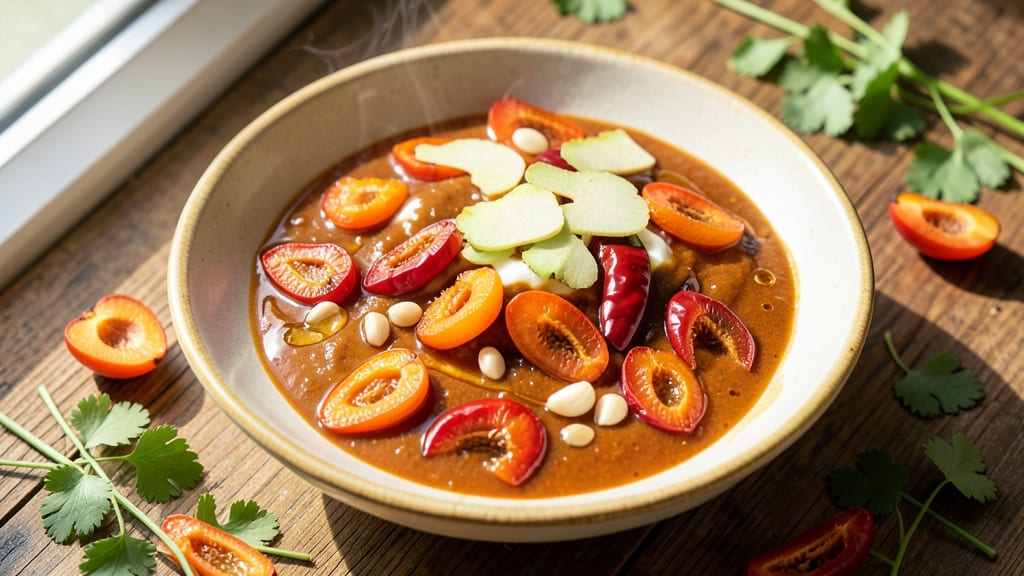
This apricot chili sauce transforms ordinary dishes into something extraordinary with its perfect balance of sweet, tangy, and spicy flavors. 🌶️ The secret lies in simmering fresh apricots with chili peppers, garlic, and ginger until they create a rich, velvety sauce that's versatile enough for glazing meats, drizzling over yogurt, or pairing with cheese.
I developed this recipe after years of experimenting with fruit-based sauces, and the result is a condiment that adds depth to everything it touches.
The process is straightforward but rewarding: you'll simmer the ingredients until the flavors meld into a harmonious blend, then blend it smooth for that restaurant-quality texture. The key is patience—letting the sauce reduce slowly intensifies the flavors and creates a sauce that's thicker than ketchup but lighter than BBQ.
With just a few simple ingredients, you'll have a sauce that's far more complex than anything store-bought.
What makes this sauce truly special is its versatility. Use it as a glaze for grilled chicken or pork, a tangy dip for fries, or a bold topping for ice cream and cheese platters.
The sweetness of the apricots tames the heat from the chili peppers, creating a perfect balance that's addictive. Once you try it, you'll never go back to generic store-bought sauces again.
Best of all, this sauce keeps well in the refrigerator for up to two weeks, so you can make a big batch and enjoy it throughout the week.
Whether you're hosting a dinner party or simply craving something with a little extra flavor, this apricot chili sauce is the perfect addition to your cooking repertoire. Let's get started!
Ingredients for apricot chili sauce
Fruity heat meets velvety texture—just these ten ingredients transform into addictive sauce.
| Ingredient | Amount | Notes |
|---|---|---|
| Fresh Apricots 🍑 | 1 ½ lb | Pitted, peeled, and sliced |
| Red Chili Peppers 🌶️ | 4 whole | Fresh, stems removed |
| Garlic Cloves 🧄 | 6 cloves | Fresh, minced |
| Fresh Ginger 🌿 | 2 tbsp | Grated, aromatic |
| Apple Cider Vinegar 🍎 | ¼ cup | For tangy depth |
| Granulated Sugar 🍬 | ½ cup | Balances sweetness |
| Extra-Virgin Olive Oil 🫒 | ¼ cup | For richness |
| Salt 🧂 | 1 tsp | Kosher or sea salt |
| Black Pepper 🌶️ | ½ tsp | Freshly ground |
| Water 💧 | ½ cup | For thinning if needed |
Apricots are the star here—fresh, ripe ones from the farmers market make all the difference. Trader Joe's or Whole Foods usually have perfect ones in summer, but frozen work too (thaw first). The chili peppers? Fresh red jalapeños or serranos give the best heat, but dried will work if you adjust the amount to taste. Ginger and garlic are non-negotiable for that signature depth—freshly grated ginger has more punch than powdered, and minced garlic (not pre-minced) adds real flavor. I always double-check my spices are fresh—if they smell dusty, toss them.
No fresh apricots? Dried apricots soaked in warm water work in a pinch (drain well). Ran out of fresh chili peppers? Red pepper flakes at half the amount will give you heat, though it won't be as smooth. The vinegar is key for tang—balsamic vinegar adds extra depth if you're feeling fancy. Sugar can be swapped for maple syrup or honey (though honey isn't vegan). For a smoother sauce, blend in water or apricot juice after cooking—just enough to reach your desired consistency. Pro tip: Toast the spices in olive oil for 30 seconds before adding to the sauce for extra aroma.
This sauce gets better as it sits—3-4 days in the fridge lets the flavors meld perfectly. Store it in a glass jar with a tight seal to keep it fresh. Freezes beautifully for up to 6 months—portion into ice cube trays for single-use servings. The texture thickens as it cools, so thin with a splash of water if needed. I always make a big batch—it disappears fast on grilled chicken, tacos, or even drizzled over vanilla ice cream (trust me on that one).
Why You'll Love This Recipe
- Fruit Meets Fire: The sweetness of fresh apricots and the kick of red chili peppers play off each other like a perfect duet—no fancy balance required. Honestly, the first time I tasted this, I grabbed the jar and forgot I was supposed to be cooking dinner.
- One-Pot Magic: Simmer those apricots, garlic, and ginger in a single pot until everything softens—no blending, no straining, just flavor building. I’ll be real: my kitchen counter stays cleaner than it ever does with store-bought sauces.
- Dinner Party Secret: Slather it on grilled chicken, drizzle over roasted veggies, or toss with noodles—it’s the kind of sauce that makes even simple meals feel special. Between us, I’ve used it to impress guests who still think I’m “just a home cook.”
- Pantry Stays Stocked: A batch keeps for weeks in the fridge, and the ingredients—ginger, garlic, vinegar—are things I always have lying around. That first jar lasted me six weeks, and I still had to fight my roommate for the last spoonful.
Step-by-step instructions for apricot chili sauce
Here's the method—simple, flavor-packed, and perfect for balancing sweet and spicy notes.
🍳 Step 1: Char the Apricots and Chilies for Depth
Heat a large skillet over medium-high heat and add the 1.5 lb fresh apricots and 4 whole red chili peppers (stems removed). Let them char for 8-10 minutes, turning occasionally, until the apricots blister and the chilies blacken in spots. This step caramelizes natural sugars and intensifies the chili's heat—don't rush it.
Real talk: the skin should be deeply charred in places, not just lightly browned. Once they're ready, transfer the charred apricots and chilies to a cutting board. I like to peel off the apricot skins while they're warm—they'll slide right off. Discard the chili stems and seeds if you prefer less heat, or leave them for a spicier kick.
🍳 Step 2: Sauté Aromatics in Olive Oil
Return the skillet to medium heat and add the 0.25 cup extra-virgin olive oil. Once the oil shimmers, add the 6 cloves minced garlic cloves and 2 tbsp grated fresh ginger. Sauté for 1-2 minutes until fragrant—you'll smell that bright, zesty aroma. Be careful not to burn the garlic; it should smell amazing but not bitter.
Here's the thing—this is where the sauce's complexity builds. The ginger and garlic mellow out the chili's heat while adding their own warmth. Stir constantly so the garlic doesn't brown too quickly. Once fragrant, add the 0.25 cup apple cider vinegar and let it simmer for 30 seconds to cook off the raw acidity.
🍳 Step 3: Combine and Simmer the Sauce
Add the charred apricots (peeled and roughly chopped) and 0.5 cup granulated sugar to the skillet. Stir well to combine, then pour in the 0.5 cup water. Bring to a gentle simmer over medium-low heat and let it cook for 15-20 minutes, stirring occasionally, until the sauce thickens slightly.
You're looking for a balance here—the sauce should coat the back of a spoon but still be pourable. If it thickens too quickly, add a splash of water 1 tablespoon at a time until you reach the right consistency. The sugar will help caramelize the apricots further, deepening their flavor.
🥘 Step 4: Season and Finish
Remove the skillet from heat and stir in the 1 tsp salt and 0.5 tsp black pepper. Taste and adjust the seasoning—you might need a touch more salt to balance the sweetness and heat. Let the sauce cool for 5 minutes to allow the flavors to meld.
Here's the moment that matters: the sauce should sing with both sweet and spicy notes. The apricots should be tender but still hold their shape slightly, and the chilies should add a lingering heat. If you prefer a smoother texture, blend the sauce briefly with an immersion blender—just until it reaches your desired consistency.
Pro Tips For Making Apricot Chili Sauce
- CHAR THE APRICOTS FIRST: Peel and pit those apricots before tossing them in—no one wants to fish out skins mid-simmer. I learned this the hard way when a stubborn pit got stuck in my blender blade. Cut them into even chunks so they cook uniformly; uneven pieces turn to mush while others stay raw.
- PEEL GINGER LIKE A PRO: Use a spoon to scoop out the ginger’s fibrous center before grating—it’s the only way to avoid a gritty, stringy texture. Skip the peeler unless you enjoy chewing on fibers; a microplane or fine grater works best, and aim for about 1 tablespoon of fresh ginger. Too much, and the sauce tastes like a spicy soap.
- CONTROL THE HEAT GRADUALLY: Start your chili sauce on medium heat, then lower it to a gentle simmer once everything’s in. High heat burns the garlic and ginger before they release their flavor, and it scorches the apricots into a bitter sludge. You want a slow dance, not a blaze—patience here makes all the difference.
- RESERVE THAT VINEGAR: Stir in the apple cider vinegar at the very end—just before you remove the sauce from heat. Adding it early makes the acid fight with the ginger and garlic, dulling their sharpness. Taste as you go, and add a splash more if the sauce tastes flat. Trust me, your taste buds will notice the difference.
Flavor customization for this dish
Sweet-to-Heat Ratio
Adjust the sweetness by swapping ½ cup granulated sugar for ¼ cup honey or ⅓ cup maple syrup—both add depth while keeping the sauce vegan-friendly. For extra heat, add 1 tsp cayenne pepper or ½ tsp smoked paprika during simmering.
I once doubled the chili peppers for a spicy batch, then balanced it with extra apricots—trust me, the contrast is addictive. 🌶️
Smoky Depth Boost
Infuse smokiness by adding 1 tsp liquid smoke (like Colonial Liquid Smoke) or charring 2 slices of bacon in the skillet first, then removing them before adding the apricots.
For a deeper umami note, stir in 1 tbsp soy sauce or 1 tsp fish sauce (if not vegetarian) during the final simmer. This works especially well for glazing grilled meats.
Creamy Variations
Blend in ¼ cup Greek yogurt or 2 tbsp coconut cream after cooking for a tangy, creamy twist—perfect for drizzling over roasted veggies or yogurt bowls.
For a richer version, whisk in 2 tbsp tahini or 1 tbsp almond butter while warm. The fat content helps balance the acidity beautifully. 🥄
Herb Infusions
Brighten the sauce with fresh herbs like cilantro, mint, or basil. Add 2 tbsp chopped cilantro at the end for a Middle Eastern-inspired touch, or 1 tbsp mint leaves for a refreshing contrast.
For a Mediterranean flair, stir in 1 tsp dried oregano or ½ tsp za'atar during the final simmer. These herbs elevate the sauce’s complexity without overpowering the apricot-chili base.
Spiced Up
Warm the sauce with ½ tsp ground cinnamon, ¼ tsp cardamom, or 1 star anise pod (remove after simmering). These spices pair surprisingly well with the chili’s heat and the apricot’s sweetness.
I love adding a pinch of cinnamon to my batch—it reminds me of Moroccan tagines. For a cooler climate, a dash of black cardamom adds an earthy depth that’s unforgettable.
Texture Adjustments
For a chunkier sauce, leave the apricots and chilies whole or roughly chopped after blending. For a smoother finish, strain the sauce through a fine-mesh sieve after simmering. If you prefer a thicker glaze, simmer uncovered for an extra 5-10 minutes to reduce it further.
I often adjust the texture based on how I plan to use it—thicker for glazes, thinner for dipping or drizzling. 💫
Nutrition facts
Frequently asked questions
Can I use dried apricots instead of fresh?
Yes, but you'll need to soak ½ cup dried apricots in warm water for 15 minutes first, then drain well before using. For best results, chop them finely to mimic fresh texture. The flavor will be concentrated, so you might reduce the sugar slightly to ¼ cup to balance the sweetness.
How do I make this sauce less spicy?
Remove the seeds and membranes from the chili peppers before cooking to reduce heat. For an even milder sauce, use 2 peppers instead of 4 or swap them for 1-2 mild jalapeños. After blending, taste and add 1-2 tbsp apricot jam to mellow the spice further.
What's the best way to store and reheat?
Store in a glass jar in the fridge for up to 2 weeks. For reheating, warm in a saucepan over low heat for 2-3 minutes until just hot—never boil or the texture will break down. For microwave reheating, use 20-second intervals on low power, stirring between each.
Can I make this sauce without vinegar?
Yes, but the sauce will be less tangy. Replace the ¼ cup apple cider vinegar with ¼ cup lemon juice or 2 tbsp balsamic vinegar for depth. If using neither, add ½ tsp citric acid (found in baking sections) to mimic the bright acidity that balances the sweetness.
What are the best ways to use this sauce?
Use it as a glaze for grilled chicken or pork, a dip for spring rolls, or a topping for yogurt and flatbreads. Drizzle over roasted vegetables, mix into hummus, or even use as a sweet-spicy marinade for tofu. The sauce's versatility makes it perfect for both savory and slightly sweet applications—don't be afraid to experiment!