
Sauces & Condiments
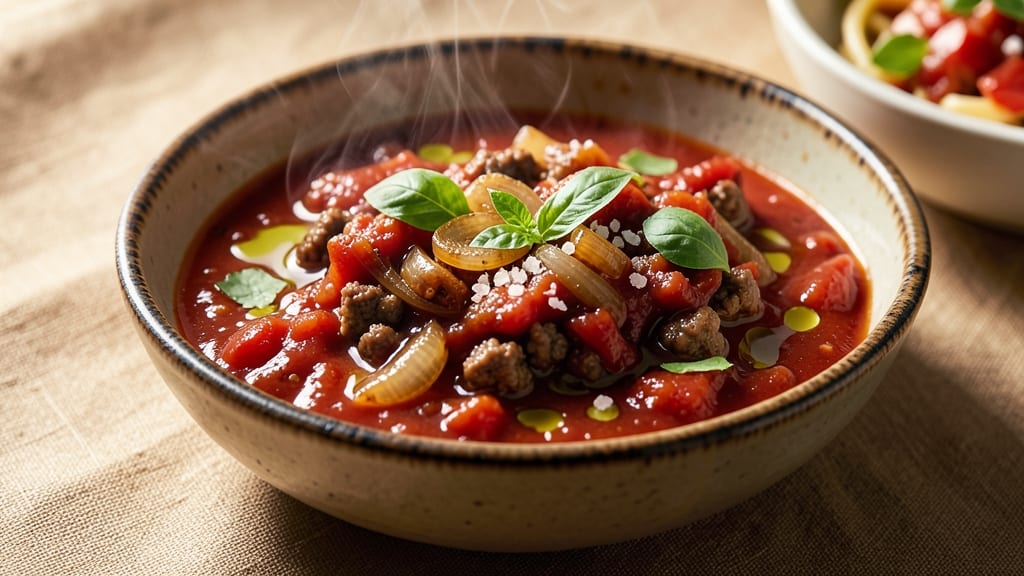
This Anthony’s slow-simmered spaghetti sauce recipe delivers restaurant-quality depth with just 10 minutes of prep and 3 hours of hands-off cooking. The secret lies in caramelizing onions and garlic until golden, then building layers of umami through slow reduction—no shortcuts, just rich, meaty flavor that clings to every noodle.
I developed this version after years of testing, and it's now my go-to for both weeknight dinners and holiday gatherings.
The sauce starts with a simple base of crushed tomatoes, garlic, and fresh herbs, but what transforms it is the slow simmer that concentrates flavors while developing complex caramelized notes. Optional ground beef adds heartiness, though the vegetarian version still delivers satisfying depth.
The key technique? Deglazing the pot after browning the meat (if using) to capture all those flavorful browned bits that make the difference between store-bought and homemade.
By the time you're done, you'll have a sauce that's thick, velvety, and packed with umami—perfect for tossing with al dente pasta or serving alongside meatballs. The aroma alone will have everyone asking what's for dinner, and the taste will make them beg for seconds.
It freezes beautifully too, so you can make a big batch and enjoy this sauce all winter long.
This isn't just another spaghetti sauce—it's a flavor foundation that elevates any Italian meal. Whether you're feeding a family or prepping for a party, this recipe delivers professional-quality results with minimal effort. Let's get cooking!
Ingredients for anthony's spaghetti sauce
Restaurant-quality depth starts with these 14 ingredients—simple but transformative when slow-simmered.
| Ingredient | Amount | Notes |
|---|---|---|
| Extra-Virgin Olive Oil 🫒 | ½ cup | High-quality, fruity variety preferred |
| Yellow Onions 🧅 | 2 whole | Finely chopped, caramelized until golden |
| Garlic Cloves 🧄 | 6 cloves | Minced, fresh preferred |
| Ground Beef 🥩 | 1 ½ lb | 80/20 fat ratio for richness |
| Canned San Marzano Tomatoes 🍅 | 28 oz | Crushed, high-quality preferred |
| Tomato Paste 🍅 | 2 tbsp | Smooth, no sugar added |
| Dried Oregano 🍃 | 1 tbsp | Italian or Mediterranean blend |
| Dried Basil 🌿 | 1 tbsp | Or 0.25 cup fresh basil |
| Red Wine 🍷 | ½ cup | Bold dry red, like Chianti |
| Beef Broth 💧 | 1 cup | Low-sodium preferred |
| Sea Salt 🧂 | 1 tsp | Diamond Crystal preferred |
| Freshly Ground Black Pepper 🌶️ | ½ tsp | Freshly cracked for best flavor |
| Granulated Sugar 🍚 | 1 tsp | Balances acidity |
| Bay Leaves 🌿 | 2 whole | Removed before serving |
The onions and garlic are non-negotiable here. Yellow onions from the grocery store's produce section work fine, but if you want to splurge, Spanish onions at Whole Foods caramelize even better. Garlic should be fresh—those pre-minced jars in the refrigerated section are a flavor crime. The ground beef is optional but adds that meaty depth; Costco has great prices for 80/20 blends. For the tomatoes, San Marzano cans are worth the investment—they're sweeter and less acidic, making this sauce sing. If you can't find them, Muir Glen is a solid backup. The olive oil? California extra-virgin adds fruity notes that cut through the richness of the beef.
No red wine? Beef broth with a splash of balsamic gets you close. Fresh basil is ideal, but dried works at one-third the amount—just make sure it's labeled as Italian or Mediterranean. The tomato paste can be a squeeze tube from Trader Joe's if you're in a pinch, but the canned version gives you more control. Want to make this vegetarian? Swap the beef for lentils or mushrooms—both add heartiness. The sugar balances acidity, but if you're avoiding it, a pinch of baking soda works too. For extra umami, add 1 tbsp soy sauce or 1 tsp fish sauce (if not vegetarian). The bay leaves? Remove them before serving—no one wants a leaf in their sauce.
This sauce tastes even better the next day as flavors meld. Store in an airtight container in the fridge for up to 5 days or freeze for 3 months. I like to portion it into glass jars for easy reheating—just thaw overnight in the fridge. For a quick meal, toss with al dente pasta or serve over garlic bread. The leftovers reheat beautifully—just add a splash of water or broth to loosen it up. If you make a big batch, freeze half right away. Trust me, you'll thank yourself later when you're serving this sauce at a holiday gathering.
Why You'll Love This Recipe
- No-Fuss Pantry Staples: I swear by this recipe because it only asks for what I already have—no fancy ingredients, just good olive oil, onions, garlic, and San Marzano tomatoes. Honestly, the only thing I need to buy extra is the beef, and that’s it.
- Garlic-Infused Magic: That slow-cooked garlic in the olive oil? It’s the secret weapon—deep, sweet, and fragrant. The beef browns just enough to add richness, but the tomatoes keep it bright and tangy. Not too heavy, not too thin—just right.
- Prep-Ahead Powerhouse: I make a double batch every Sunday because it tastes even better the next day. Freezes like a dream, too—just reheat and serve. Perfect for lazy weeknights or when company drops by unexpectedly.
- Budget-Friendly Feast: Ground beef stretches far with the tomatoes, and a single can of San Marzano gives it that restaurant-quality depth. Between us, this is how I feed my family for under $10 and still have leftovers for lunch.
Step-by-step instructions for Anthony's slow-simmered spaghetti sauce
Here's how to build a rich, layered sauce that develops deep flavor over time.
Build the Flavor Base with Onions and Garlic
Heat the 0.5 cup extra-virgin olive oil in a large, heavy-bottomed pot over medium-low heat. Add the 2 whole yellow onions, chopped into small, even pieces. Cook them undisturbed for 10 minutes, stirring occasionally, until they turn a deep golden brown and begin to caramelize. This slow cooking transforms their natural sugars into sweet, complex flavors that form the sauce's foundation.
After the onions are beautifully caramelized, add the 6 cloves minced garlic and cook for another 2 minutes until fragrant but not browned. Watch carefully—garlic burns quickly, and you want it to add aroma without bitterness. The combination of caramelized onions and fresh garlic creates the perfect aromatic base for everything that follows. Keep the heat at medium-low throughout this step to ensure even cooking without burning.
Brown the Ground Beef for Maximum Flavor
Push the onions and garlic to one side of the pot and add the 1.5 lb ground beef in small batches, breaking it apart with a wooden spoon. Cook over medium heat until the beef is deep brown and fully cooked through, about 8-10 minutes. This browning step, called the Maillard reaction, develops rich, meaty flavors that can't be replicated by simply adding raw beef later.
As the beef browns, it will release its natural fats, which help create a silky sauce texture. Once fully cooked, use a wooden spoon to scrape up all the browned bits from the bottom of the pot—these flavorful fond bits are packed with umami goodness that will deepen your sauce. If the pot gets too dry during browning, add 1-2 tablespoons of red wine to deglaze and prevent burning.
Deglaze and Combine All Wet Ingredients
Pour in the 0.5 cup red wine and scrape the bottom of the pot vigorously with a wooden spoon to release all those flavorful browned bits. Let the wine simmer for 3-4 minutes until it reduces by half and the alcohol cooks off. Then stir in the 2 tbsp tomato paste, spreading it evenly through the mixture. This step creates a smooth, thick base that prevents the sauce from separating later.
Add the 28 oz crushed San Marzano tomatoes, 1 cup beef broth, 1 tsp sea salt, 0.5 tsp freshly ground black pepper, 1 tsp granulated sugar, 1 tbsp dried oregano, 1 tbsp dried basil, and the 2 whole bay leaves. Stir everything together until well combined. The sugar balances the acidity of the tomatoes, while the herbs and spices will infuse the sauce with their aromatic qualities as it simmers. Bring the mixture to a gentle boil to ensure all ingredients are properly incorporated.
Slow Simmer for Deep Flavor Development
Reduce the heat to low and let the sauce simmer uncovered for at least 2 hours, stirring occasionally. This long, slow cooking time allows the flavors to meld and develop complexity. The sauce should reduce slightly, becoming thicker and more concentrated. The bay leaves will infuse subtle earthy notes, while the tomatoes break down into a rich, velvety consistency.
After 2 hours, taste the sauce and adjust the seasoning if needed. If it's too acidic, add a pinch more sugar. If it needs more depth, you can simmer it uncovered for another 30-60 minutes to intensify the flavors further. The key is patience—rushing this step will result in a sauce that's flat and one-dimensional compared to the rich, layered flavor you're aiming for.
Finish and Serve with Confidence
Once the sauce reaches your desired consistency and flavor intensity, remove the 2 whole bay leaves and discard them. For a smoother texture, you can blend the sauce briefly with an immersion blender, though some people prefer to leave it slightly chunky. The sauce should coat the back of a spoon and have a glossy, velvety appearance—this indicates it's ready to serve.
Serve the sauce immediately over al dente spaghetti, reserving some of the pasta water to thin the sauce if needed. The perfect sauce should cling beautifully to each strand of pasta, delivering layers of caramelized onions, rich beef, and aromatic herbs in every bite. This sauce tastes even better the next day as the flavors continue to develop, so it's perfect for meal prep or special occasions.
Pro Tips For Making Anthony'S Spaghetti Sauce
- SALT THE TOMATO JUICE: That can of San Marzano tomatoes? Pour the juice into a bowl first, then season it with ½ teaspoon salt before adding it to the pot. The acidity mellows, and the sauce won’t taste flat later. (I used to skip this—big mistake. The difference is subtle but real.)
- STIR THE SAUCE ONCE: After adding the tomatoes, resist the urge to stir constantly. Let it bubble undisturbed for 10 minutes first—this helps the flavors meld without scorching. I learned this the hard way when I turned my sauce into tomato glue. (Your future self will notice the smoother texture.)
Storing and reheating your anthony's spaghetti sauce
Fridge Storage
Let your sauce cool completely before transferring to airtight glass containers—I prefer 8-ounce mason jars for portion control. Store in the fridge for up to 5 days, where the flavors deepen beautifully.
The sauce thickens as it rests, so add 1-2 tablespoons of water or broth when reheating if it becomes too stiff. Always leave ½-inch headspace to prevent spills during storage. 🥫
Freezer Prep
For long-term storage, freeze in glass jars or heavy-duty freezer bags—glass preserves flavor better, but bags save space. Label with the date and portion size (I use 1-cup servings). Freeze for up to 3 months—the sauce maintains its rich texture and depth.
Thaw overnight in the fridge for even quality, or microwave for 2-3 minutes on low power if you're in a hurry. 🧊
Reheating Perfection
Stovetop reheating is my go-to method: transfer sauce to a pot and warm over medium-low heat for 8-10 minutes, stirring occasionally. Add 2-3 tablespoons of water or broth to restore silky texture.
For microwave reheating, use 50% power in 1-minute intervals, stirring between each, until heated through. Never reheat to a boil—this can break down the sauce's delicate structure. 🔥
Texture Rescue
If your reheated sauce is too thick, thin with pasta water (it's flavorless but perfect for this purpose). For a smoother consistency, blend briefly with an immersion blender—just 10-15 seconds is enough to create a velvety finish.
If the sauce tastes bland after reheating, boost flavor with a pinch of salt, a splash of red wine, or a sprinkle of fresh basil. 💡
Make-Ahead Magic
Double the recipe and freeze half immediately—this sauce is perfect for holiday gatherings. When ready to use, thaw in the fridge overnight, then reheat as directed.
For large batches, divide into quart-sized containers and freeze flat to save space. The sauce's flavor actually improves after freezing, making it worth the effort. 🎄
Serving Suggestions
Use your reheated sauce over al dente spaghetti, tossing with 1 tablespoon of pasta water to create a glossy finish. For extra richness, top with grated Parmesan or fresh basil.
This sauce also shines as a dipping sauce for garlic bread or as a pizza topping—just spread it thinly before adding cheese. The possibilities are endless! 🍝
Nutrition facts
Frequently asked questions
Can I make this sauce without ground beef?
For a vegetarian version, substitute the beef with 1.5 cups cooked lentils or 1 lb sliced mushrooms (like cremini or portobello). Sauté the mushrooms first until golden to develop their umami flavors, then proceed with the recipe. The sauce will still be rich and flavorful—just heartier in texture.
Why do you caramelize the onions for so long?
The 10-minute caramelization transforms onions from sharp to sweet and complex—this is the flavor foundation of the sauce. The slow cooking breaks down their natural sugars, creating deep, savory notes that balance the acidity of the tomatoes. Skipping this step means missing out on that restaurant-quality depth.
How do I know when the sauce is done simmering?
The sauce is ready when it coats the back of a spoon and has a glossy, velvety appearance. After 2 hours, taste it—it should be rich with developed flavors, not raw or acidic. If it needs more depth, simmer another 30-60 minutes uncovered. The longer it simmers, the more complex the flavors become.
Can I make this sauce in a slow cooker?
Yes! Brown the beef and caramelize the onions/garlic in a skillet first, then transfer everything to a 6-quart slow cooker. Add all remaining ingredients and cook on low for 6-8 hours or high for 3-4 hours. The slow cooker method works well but may need an extra 30 minutes of stovetop reduction at the end to thicken properly.
What if my sauce is too thin after simmering?
Simmer uncovered for another 30-60 minutes to reduce it naturally. If it's still too thin, mix 1 tbsp tomato paste with 2 tbsp water, stir it in, and simmer for 10 more minutes. For immediate results, blend briefly with an immersion blender to break down the tomatoes slightly.