
Sauces & Condiments
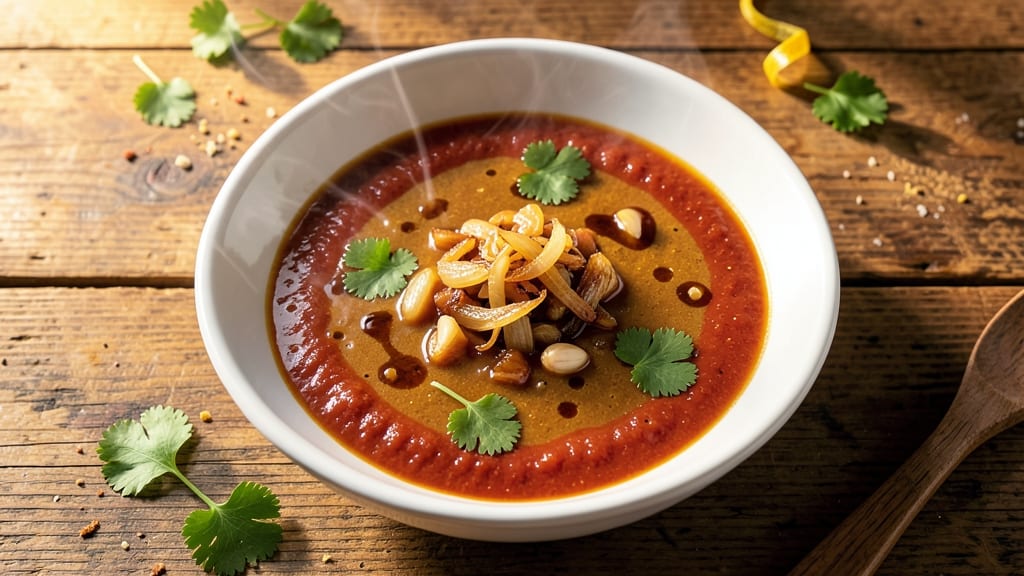
This authentic UK curry sauce recipe delivers the rich, aromatic depth that makes British curries legendary—slow-simmered to perfection with just the right balance of spices and Worcestershire sauce. 🌟 The secret lies in building layers of flavor through gentle cooking, allowing the spices to bloom and meld into a velvety, gravy-like consistency that clings to every bite of rice or meat.
Traditional British curry sauces rely on a few key ingredients: mild curry powder, tomato paste, and a splash of Worcestershire sauce for that signature umami kick. Chicken stock forms the base, while onions and garlic provide the aromatic foundation.
Unlike many global curries, this version prioritizes mild warmth with optional adjustments for heat, making it perfect for family meals or those new to spicy dishes.
The result is a smooth, deeply flavorful sauce that transforms simple proteins and vegetables into restaurant-quality meals. The slow simmer develops complex notes—sweet, tangy, and slightly smoky—while the sauce thickens naturally, creating that perfect balance between richness and lightness.
This isn’t just a sauce; it’s the heart of a proper British curry night.
Whether you’re making a classic chicken tikka masala or a hearty lamb curry, this sauce is your foundation. It reheats beautifully, too, so you can batch-cook and enjoy leftovers without sacrificing flavor. Let’s get started on creating something truly special.
Ingredients for curry sauce recipe uk
Twelve ingredients, slow-simmered to velvety perfection—this is the heart of every proper British curry night.
| Ingredient | Amount | Notes |
|---|---|---|
| Onions 🧅 | 1 ½ cups | Yellow or white, finely chopped |
| Garlic Cloves 🧄 | 6 cloves | Peeled and minced finely |
| Mild Curry Powder 🌶️ | 3 tbsp | Traditional British blend preferred |
| Tomato Paste 🍅 | ½ cup | Smooth, not chunky |
| Chicken Stock 💧 | 3 cups | Homemade or quality store-bought |
| Worcestershire Sauce 🍯 | 2 tbsp | For authentic umami depth |
| Extra-Virgin Olive Oil 🫒 | ¼ cup | For gentle simmering |
| Ginger Root 🌿 | 1 tbsp | Freshly grated, aromatic |
| Honey 🍯 | 1 tbsp | Balances acidity naturally |
| Salt 🧂 | 1 tsp | Diamond Crystal preferred |
| Black Peppercorns 🌶️ | ½ tsp | Freshly cracked for warmth |
| Lemon Juice 🍋 | 1 tbsp | Freshly squeezed, brightens flavors |
The mild curry powder is non-negotiable here—Schwartz or Mitchell's are the gold standards for that authentic British warmth. Grab the whole jar if you can; once opened, it keeps its punch for 6-12 months in an airtight container. For the onions, yellow or white work best—they caramelize beautifully during the slow simmer. Fresh ginger is worth the extra minute to grate; pre-shredded loses its aromatic oils fast. If you're short on time, powdered ginger works at half the amount, but trust me on the fresh version. The Worcestershire sauce? Lea & Perrins is the classic choice—no substitutions here, that tangy umami is the soul of British curries.
No mild curry powder? Start with garam masala and add turmeric—about half the amount of garam masala, plus 1 tsp turmeric. Short on honey? Maple syrup works beautifully, though it leans slightly sweeter. Prefer less acidity? Cut the lemon juice to 1 tsp and add an extra pinch of salt. The tomato paste can be swapped for crushed tomatoes (1 cup), but you'll need to simmer longer to thicken. For a deeper color, add 1 tsp paprika—smoked if you want that subtle campfire note. The chicken stock? Homemade is ideal, but Kettle brand or Swanson are solid grocery store options. Just avoid anything with added salt—you're controlling that here.
This sauce is a reheating machine—tastes even better the next day as flavors meld. Store in glass jars in the fridge for up to 5 days, or freeze in ice cube trays for 3 months. The oil on top? Leave it there—it's your flavor insurance. When reheating, add a splash of water or stock to loosen it up. Double the batch if you can—it disappears fast. The sauce thickens as it cools, so if it seems too stiff when cold, just stir in a teaspoon of water or stock. Perfect for batch-cooking ahead of your curry nights.
Why You'll Love This Recipe
- Pantry Magic: I swear by this sauce—no fancy ingredients, just what’s already lurking in my cupboard. That mild curry powder and tomato paste? They’re the unsung heroes here, building depth without needing a spice rack.
- Garlic Bomb: Between us, the garlic cloves fried until golden? Absolute flavor payoff. It’s that crispy edge with the creamy center—every spoonful tastes like you slaved over it for hours.
- Leftovers Win: This sauce doubles as a base for curries, stir-fries, or even a quick pasta. I make a big batch on Sundays and freeze portions—because nothing beats reheating something that tastes fresh.
- Budget-Friendly Boost: Onions, garlic, and stock? Cheap as chips. Yet somehow, it transforms the simplest chicken breast or rice into something that feels special—no takeaway needed. Honestly, it’s my secret weapon.
Step-by-step instructions for slow-simmered curry sauce
Here's how to build rich, layered curry sauce with British authenticity—every spoonful packed with depth.
🍳 Step 1: Sauté Aromatics Until Fragrant
Heat the 0.25 cup extra-virgin olive oil in a heavy-bottomed saucepan over medium heat. Add the 1.5 cups finely chopped onions and cook for 8-10 minutes until soft and translucent, stirring occasionally. This slow cooking draws out their sweetness—the foundation of your sauce.
Add the 6 cloves minced garlic and 1 tbsp freshly grated ginger root and cook for another 2 minutes until the raw aroma disappears. I press the ginger through a fine grater for maximum aromatic punch—this is where the sauce gets its bright, zesty character. Watch closely; garlic burns faster than you'd think.
🍳 Step 2: Toast Spices for Maximum Flavor
Reduce heat to low and stir in the 3 tbsp mild curry powder. Toast for 1-2 minutes until the spices release their oils and the mixture smells deeply aromatic. You'll see the powder darken slightly—that's your cue it's ready. This step develops the complex, toasty notes that define authentic British curry.
Here's the thing—don't rush this. The spices need time to bloom properly. If you smell any bitterness, you've gone too far. Immediately add 1 tbsp honey to balance and prevent harshness. The honey also helps caramelize the spices for extra depth.
🥘 Step 3: Build the Sauce Base
Increase heat to medium-high and stir in the 0.5 cup tomato paste and 2 tbsp Worcestershire sauce. Cook for 3-4 minutes until the mixture thickens slightly and the raw tomato flavor mellows. This is where the sauce starts to come together—you'll notice it darken and develop a rich, glossy appearance.
Pour in the 3 cups chicken stock and bring to a gentle simmer. Add the 1 tsp salt and 0.5 tsp freshly cracked black peppercorns. The peppercorns should be whole and crushed between your fingers just before adding—they'll infuse warmth without bitterness. Let the sauce bubble gently for 15-20 minutes, stirring occasionally.
⏰ Step 4: Finish with Bright Acid Balance
After simmering, taste and adjust seasoning. The sauce should be rich but balanced. Add 1 tbsp freshly squeezed lemon juice and simmer for another 5 minutes. This acidity cuts through the richness, brightens the flavors, and prevents the sauce from tasting flat. You'll notice the sauce thicken slightly as it reduces.
For maximum authenticity, I strain the sauce through a fine-mesh sieve to remove any peppercorns or onion bits. This gives you a silky, restaurant-quality finish. The sauce should coat the back of a spoon with a velvety texture—neither too thick nor too thin. If it's too thick, whisk in 1-2 tablespoons of water to reach your desired consistency.
Pro Tips For Making Curry Sauce Recipe Uk
- Sweat the Onions Properly: I learned this the hard way—low heat and patience win every time. Golden onions make the sauce sing, but rushing turns them bitter. Use about 2 tablespoons of oil, spread them out, and let them cook for 8-10 minutes until soft and translucent, stirring occasionally. No crowding, or you’ll steam them instead of caramelizing.
- Toast the Curry Powder: That mild curry powder needs a quick toast to wake up its flavors. After frying the onions, dump in the powder and stir for 30 seconds on medium heat—just until it smells earthy and fragrant. Skipping this step leaves the sauce tasting flat, like someone forgot to turn on the oven.
- Stir the Tomato Paste: Don’t just dump it in and walk away. Spread that tomato paste into a thin layer with a spoon, then let it cook for 2-3 minutes until it darkens slightly. This builds depth and prevents clumps from forming later. I used to just stir it in, and the sauce always ended up looking (and tasting) uneven.
- Simmer the Stock Gently: After adding the chicken stock, resist the urge to boil it hard. A gentle simmer—just small bubbles breaking the surface—keeps the sauce smooth and prevents the curry powder from separating. I was skeptical until I tried it: the texture is noticeably richer, and the flavors meld better.
Wine and beer pairings for these flavors
Classic British Ale
For a proper British curry night, there’s nothing quite like pairing this sauce with a pale ale or bitter. I reach for Fuller’s ESB or Timothy Taylor’s Landlord—both have that malty backbone and subtle hoppiness that cut through the sauce’s richness without overpowering it.
The slight bitterness in these ales balances the sweetness of the honey and caramelized onions beautifully. 🍺
Crisp White Wine
If you prefer white, go for something with bright acidity to complement the lemon in the sauce. A chilled Chardonnay from the Yorkshire region (like Harlingstone) works wonderfully—its crisp notes mirror the sauce’s fresh ginger and Worcestershire tang.
For something lighter, Pinot Grigio from Italy provides a clean, refreshing contrast that won’t clash with the curry’s depth.
Spiced Rum Cocktail
For a festive twist, mix 1.5 oz dark rum (like Captain Morgan) with 0.5 oz lime juice and a dash of Angostura bitters. Serve over ice with a sprinkle of ground cinnamon—the warm spices echo the curry’s flavors while the rum’s caramel notes harmonize perfectly.
This is my go-to for weekend curry nights with friends. 🍹
Non-Alcoholic Options
Don’t overlook sparkling ginger beer—the effervescence and ginger notes create a refreshing contrast to the sauce’s richness. For something richer, try chilled hibiscus tea (like Mexican jamaica) sweetened with honey. The tartness and floral notes complement the curry’s complexity without alcohol. 💧
Beer for Bold Flavors
If you’re serving a spicier version of this sauce, opt for a porter or stout like Guinness. The roasted malt flavors stand up to the heat while adding a smoky depth that enhances the curry’s warmth.
Just avoid overly sweet stouts—they’ll make the sauce taste cloying. A Belgian witbier (like Hoegaarden) also works for a lighter, citrusy contrast.
Nutrition facts
Frequently asked questions
Can I make this sauce without Worcestershire sauce?
Yes! Worcestershire adds that signature umami depth, but you can substitute with 1 tbsp soy sauce plus 1 tsp apple cider vinegar for tang. For extra richness, add 1/2 tsp smoked paprika—it mimics the caramelized notes. The sauce will still be delicious, though slightly less complex.
How do I adjust the spice level for a hotter sauce?
Start by adding 1/2 tsp cayenne pepper or 1/2 tsp chili flakes when toasting the spices. For deeper heat, stir in 1 tsp garam masala at the end and simmer for 5 extra minutes. If using fresh chili, reduce the simmer time to 10 minutes to preserve heat. Always taste as you go!
Can I use this sauce for vegetarian curries?
This sauce works perfectly with vegetables like chickpeas, mushrooms, or eggplant. For extra umami, add 1 tbsp miso paste when simmering. The sauce's mild warmth pairs beautifully with tofu or paneer too. Just skip any meat-based stock and use vegetable stock instead.
Why does my sauce taste bitter?
Bitter flavor usually means the spices toasted too long or the sauce reduced too much. To fix it, stir in 1 tsp honey or 1 tbsp lemon juice and simmer for 2-3 minutes. If the sauce is too thick, thin it with 2 tbsp water or stock. For future batches, reduce heat when toasting spices and stop when you smell aromatic, not burnt.
How long can I store this sauce?
Store in an airtight glass jar in the fridge for up to 5 days. For longer storage, freeze in ice cube trays for 3 months—perfect for batch cooking! When reheating, add 1 tbsp water per 1 cup of frozen sauce to restore texture. The flavors actually improve after 24 hours as ingredients meld.