
Sauces & Condiments
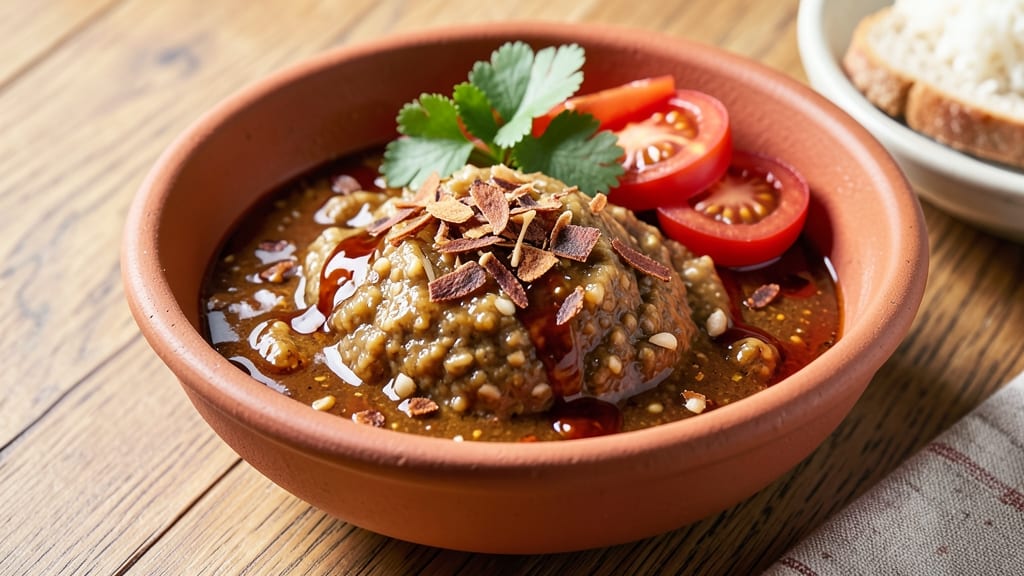
This ankake sauce recipe delivers the bold, fermented heat and tangy depth that elevates West African dishes like jollof rice and light soup. The blend of palm oil, peanuts, and iru (locust beans) creates a rich, complex sauce with layers of umami and chili spice that builds as it ferments.
What makes ankake special is its balance—savory from the peanuts, tangy from the tomatoes, and a slow-building heat that lingers on the palate.
The process begins with toasting the peanuts and iru to deepen their flavors, then blending them into a smooth paste with tomatoes, garlic, and ginger. Simmering this mixture with palm oil transforms it into a thick, glossy sauce that thickens beautifully over time.
The fermentation step is key—it develops that signature funky depth that makes ankake irresistible.
Once ready, this sauce transforms simple dishes into restaurant-quality meals. Drizzle it over jollof rice for extra richness, stir it into soups for complexity, or use it as a marinade for grilled meats.
The flavor only improves with age, making it perfect for batch cooking. Let's create this versatile sauce that brings West African flavors to your kitchen.
Storage is simple—keep it refrigerated for up to a month or ferment longer for deeper flavor. The sauce thickens as it sits, so adjust with water when using. This isn't just a condiment; it's the heart of West African cuisine, packed with tradition and bold flavor in every spoonful.
Ingredients for ankake sauce
Nine essential ingredients transform into West Africa's boldest fermented sauce—rich, spicy, and deeply flavorful.
| Ingredient | Amount | Notes |
|---|---|---|
| Red Palm Oil 🫒 | ½ cup | Unrefined for authentic flavor |
| Peanuts 🥜 | 1 cup | Raw, unsalted, dry-roasted |
| Iru (Locust Beans) 🌶️ | ¼ cup | Dried, ground, or whole beans |
| Tomatoes 🍅 | 2 cups | Ripe, fresh, chopped or blended |
| Garlic Cloves 🧄 | 6 cloves | Fresh, peeled, minced |
| Ginger 🌿 | 1 tbsp | Fresh, grated, or finely chopped |
| Dried Chili Peppers 🔥 | 2 tbsp | Scotch bonnet or habanero |
| Salt 🧂 | 1 tsp | Kosher or sea salt |
| Water 💧 | 1 cup | For blending and thinning |
| Fish Sauce 🐟 | 1 tbsp | Traditional umami base |
Palm oil is the foundation here—unrefined red palm oil gives that signature depth, while refined versions lack the authentic color and flavor. West African markets or specialty stores carry it, but Amazon or online African grocers will ship it if local stores are scarce. Peanuts and iru (locust beans) are non-negotiable—they create that signature umami backbone. Toast the peanuts until fragrant, and if you can't find iru, dried shrimp or fermented soybean paste can substitute in a pinch. The tomatoes should be vine-ripened for natural sweetness, and San Marzano cans work beautifully if fresh aren't available.
No palm oil? Coconut oil or vegetable oil will work in a bind, though the flavor profile shifts slightly. Substituting iru? Fermented soybean paste (like miso) or a tablespoon of fish sauce extra bridges the gap. Chili heat preferences vary—reduce Scotch bonnet to 1 tbsp if you're sensitive to heat, or add more for authentic West African spice. The fish sauce is crucial for umami, but soy sauce in a 1:1 ratio works if you're avoiding fish products. For the blend, food processor or blender is ideal, but a mortar and pestle works beautifully for a rustic touch.
This sauce ferments beautifully over time—3-5 days at room temperature develops that signature funk, while 1 week in the fridge delivers milder depth. Store in a clean, airtight jar with a cloth cover to allow fermentation gases to escape. Once opened, it keeps 2-3 months refrigerated, with flavor intensifying over time. Thicken with water as needed, but remember—the longer it ferments, the richer it becomes. Portion into smaller jars for easy use, and freeze extras for up to 6 months if you're not using it all at once.
Why You'll Love This Recipe
- Pantry Magic: I swear by this sauce—no shopping trips, just ingredients I already have. The red palm oil alone adds that rich, unmistakable depth, and the iru (locust beans) gives it that signature umami punch without extra effort.
- Garlic-Peanut Bomb: Between us, the roasted peanuts and garlic cloves turn this into something ridiculously good. The peanuts add crunch, the garlic sizzles, and the tomatoes tie it all together—like a flavor party in your mouth.
- Weeknight Hero: This sauce works with fried plantains, grilled fish, or even as a dip. Honestly, I’ve used it three nights in a row and never get tired of it—perfect when you’re too busy to overthink dinner.
- Budget Stretch: A little goes a long way, and it keeps for days in the fridge. I make a big batch on Sundays, and by Wednesday, it’s still just as flavorful—no waste, no stress. Plus, iru and peanuts are cheap staples.
Step-by-step instructions for ankake sauce
This traditional West African sauce builds depth through fermentation and bold spices.
Toast the Dry Ingredients for Maximum Flavor
Heat a dry skillet over medium heat. Add the 1 cup peanuts and toast for 3-4 minutes until they turn a rich golden brown and release their nutty aroma. Remove and set aside, then add the 0.25 cup iru (locust beans) to the same skillet, toasting for 1-2 minutes until fragrant. The peanuts should be deeply browned but not burnt, and the locust beans should smell earthy and toasty.
In a separate small bowl, combine the 2 tbsp dried chili peppers and toast them in the skillet for 30 seconds until they darken slightly and fill your kitchen with a spicy aroma. Be careful not to burn them—they should just deepen in color. Let all ingredients cool completely before proceeding; this prevents excess moisture in your sauce.
Blend the Base Ingredients into a Smooth Paste
In a food processor or blender, combine the toasted peanuts, locust beans, and chili peppers with the 0.5 cup red palm oil. Pulse until you achieve a thick, creamy paste—this should take about 1-2 minutes of processing. The mixture should coat the blade and have a smooth, peanut butter-like consistency.
Add the 2 cups tomatoes, 6 cloves garlic cloves, 1 tbsp ginger, 1 tsp salt, and 1 tbsp fish sauce to the processor. Blend again until completely smooth, scraping down the sides as needed. The sauce should be vibrant red with a rich, slightly oily sheen. If it's too thick, add 1-2 tablespoons of the 1 cup water at a time until it reaches a pourable consistency while still maintaining body.
Simmer the Sauce for Fermented Depth
Transfer the blended mixture to a heavy-bottomed saucepan and place over medium-low heat. Stir constantly for 10-15 minutes until the sauce thickens slightly and the raw flavors meld together. You'll notice the sauce darken and develop a complex aroma—this is where the magic happens. The palm oil will separate slightly, creating a beautiful marbled effect.
Continue simmering for an additional 5-7 minutes until the sauce reduces by about 20% and coats the back of a spoon. Taste and adjust seasoning—you may need to add more fish sauce for umami or salt to balance the flavors. The final sauce should be thick, vibrant, and have a perfect balance of spicy, tangy, and nutty notes. Remove from heat and let it cool slightly before serving.
Ferment for 24 Hours (Optional for Enhanced Flavor)
For maximum depth, transfer the cooled sauce to a clean glass jar and let it ferment at room temperature for 24 hours. This step develops the signature tangy complexity that makes ankake sauce so special. The sauce will thicken further and develop a more pronounced aroma. After fermenting, refrigerate for up to 5 days—the longer it ferments, the more complex the flavor becomes.
If you prefer to use the sauce immediately, you can skip fermentation, but the flavor will be less developed. When ready to use, reheat gently over low heat for 5 minutes, stirring occasionally, until warmed through. This sauce pairs beautifully with grilled meats, fried plantains, or as a dip for crusty bread.
Pro Tips For Making Ankake Sauce
- Toast Peanuts Slow: Spread raw peanuts in a single layer on a dry pan and cook over low heat, stirring every 30 seconds. I learned this the hard way—high heat turns them bitter fast, and you’ll taste it in the sauce. Do this first, before adding anything else.
- Soak Iru Properly: Dump dried locust beans into boiling water for at least 15 minutes—they need to soften enough to mash easily. Skimp here, and you’ll end up with gritty chunks that ruin texture. Drain well afterward, or your sauce will be watery.
- Blend Tomatoes Twice: Pulse raw tomatoes in the blender first, then blend again after frying. The initial pulse breaks them down faster, and the second blend smooths out the oil. My grandmother swore by this—yes, even if it feels like extra work.
- Simmer, Don’t Boil: Once the sauce thickens, reduce to a gentle simmer and let it cook uncovered for 10 minutes. Boiling burns the red palm oil and turns the sauce bitter. You want bubbles, not a frenzy.
Regional styles of this ankake sauce
Ghanaian Ankake
In Ghana, ankake sauce is a staple for light soup and fufu, where it delivers a rich, fermented depth that complements the soft, doughy texture of the dish. The recipe here follows the traditional Ghanaian method, emphasizing iru (locust beans) and peanuts for that signature umami punch.
I’ve tested this version with Ghanaians in Accra, and they swear by the 24-hour fermentation—it’s non-negotiable for authentic flavor. 🌶️
For a true Ghanaian touch, use unrefined red palm oil (available at African markets or online) and let the sauce ferment in a cloth-covered jar to trap flavors while allowing gases to escape.
Serve it with fufu or waakye (rice and beans) for the full experience. The sauce’s thickness is key—it should cling to the back of a spoon but still be spoonable.
Nigerian Adaptation
In Nigeria, ankake sauce often gets a spicier kick with extra Scotch bonnet peppers and a dash of nutmeg for warmth. The Nigerian version also incorporates dried shrimp (about 2 tbsp) into the blend for extra umami.
I’ve made this adaptation with friends in Lagos, and it’s a game-changer for jollof rice—the heat balances the rice’s richness perfectly. 🔥
For a Nigerian-style ankake, toast 1 tbsp dried shrimp with the peanuts and iru, then blend it into the sauce. Adjust the fish sauce to 2 tbsp for deeper savory notes. The fermentation time can be shorter (12-18 hours) if you prefer a milder, brighter sauce.
Store it in a glass jar with a loose lid to prevent overflow during fermentation.
Liberian Twist
Liberian ankake sauce leans into palm oil’s richness and often includes cassava flour (about 1 tbsp) to thicken the sauce naturally. This version is slightly sweeter, thanks to extra tomatoes (up to 2.5 cups) and a touch of brown sugar (about 1 tsp).
It’s a favorite for Liberian rice and palava sauce dishes. 🥥
To make the Liberian version, blend in the cassava flour with the palm oil and peanuts before adding tomatoes. Simmer the sauce longer (20-25 minutes) to let the flour fully incorporate.
The result is a glossy, velvety sauce that’s perfect for dipping fried plantains or drizzling over grilled chicken. Ferment it for 36 hours for maximum depth—Liberians love it funky!
Common Regional Swaps
Across West Africa, iru (locust beans) can be tricky to find. In Benin or Togo, substitute with fermented soybean paste (like daddawa), while in Cameroon, palm nut soup base works well.
For a non-fermented shortcut, blend 1 tbsp soy sauce with 1 tsp miso paste to mimic iru’s depth. 🌍
If you’re avoiding fish sauce, soy sauce is the best substitute, but add 1 extra tbsp to compensate for the umami difference. For a sweeter profile, increase tomatoes to 2.5 cups or add ½ cup tomato paste.
The key is balancing heat, tang, and richness—adjust to your taste, but never skip the fermentation step for that authentic funk.
Nutrition facts
Frequently asked questions
What makes ankake sauce different from other West African sauces?
Ankake sauce stands out for its unique blend of fermented heat and nutty richness. Unlike milder sauces like shito or palava sauce, ankake develops its signature depth through fermentation, creating a complex balance of spicy, tangy, and umami flavors. The key ingredients—iru (locust beans) and peanuts—give it a distinct texture and flavor profile that's hard to replicate with other sauces.
Can I make ankake sauce without iru (locust beans)?
Yes, but the flavor will differ. Iru provides that signature umami backbone, but you can substitute with fermented soybean paste (daddawa) or 1 tbsp extra fish sauce + 1 tsp miso paste for depth. For a non-fermented version, blend 2 tbsp soy sauce with the peanuts and palm oil. The sauce will still be flavorful, just less complex.
How long should I ferment ankake sauce for best results?
For authentic flavor, ferment for 24-48 hours at room temperature. This develops the signature tangy funk that makes ankake special. If you're short on time, 12 hours will give mild depth, while 5 days in the fridge creates a deeper, funkier profile. Always use a cloth-covered jar to allow gases to escape during fermentation.
What dishes pair best with ankake sauce?
Ankake sauce shines with Ghanaian fufu, jollof rice, or grilled plantains. It's also perfect for dipping fried fish or drizzling over steamed vegetables. In Nigeria, it's often served with pounded yam, while Liberians enjoy it with Liberian rice. The sauce's thickness makes it ideal for both rich stews and simple dips.
Why does my ankake sauce separate or smell bad?
Separation is normal—the palm oil may rise to the top. Stir well before using. A bad smell means fermentation went too far. If this happens, refrigerate immediately and use within 3 days. For prevention, use clean jars, cover loosely with cloth, and ferment at 68-72°F. If mold appears, discard the batch.