
Sauces & Condiments
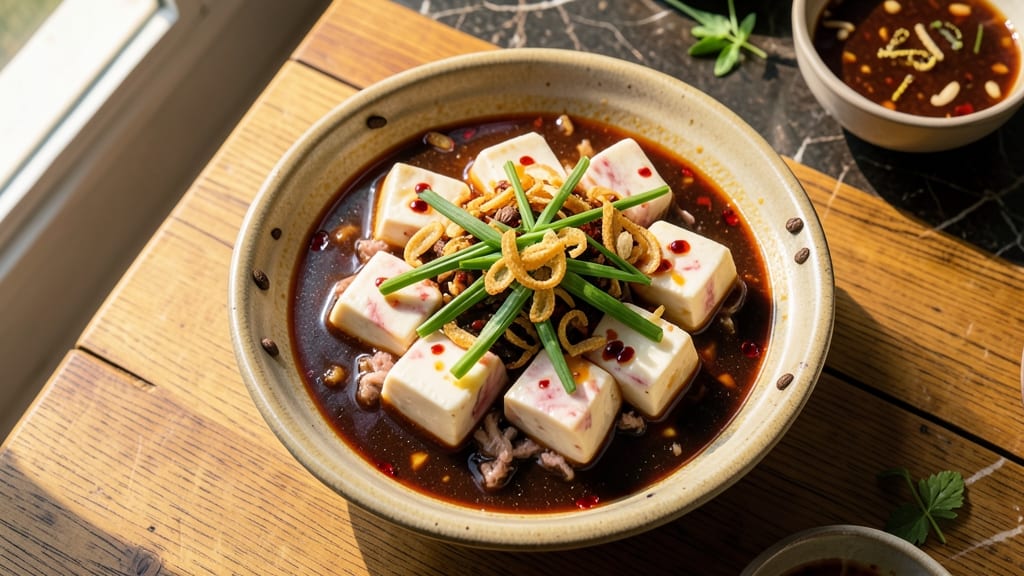
This Amoy Mapo tofu sauce recipe delivers the bold, fermented heat of Sichuan cuisine with a velvety twist—where traditional chili bean paste meets silky coconut cream for a balanced, restaurant-quality depth.
The secret lies in layering doubanjiang and Sichuan peppercorns for that signature numbing-spicy kick, then mellowing it with coconut milk to create a sauce that’s rich yet approachable. I developed this version after years of perfecting the ratio of heat to creaminess, ensuring every spoonful delivers complexity without overwhelming spice.
The process is straightforward but requires patience: simmering the aromatic paste, garlic, and ginger until fragrant, then blending with stock and coconut cream for that signature smoothness.
Traditional recipes rely solely on chili oil and fermented tofu, but this adaptation—inspired by Amoy cuisine’s coastal influences—introduces coconut milk to soften the heat while preserving the sauce’s umami depth. The result?
A sauce that’s versatile enough for stir-fries, noodles, or even as a dipping sauce, yet sophisticated enough to elevate any dish.
What sets this sauce apart is its dual nature: the initial heat from fermented chili bean paste gives way to a creamy finish, making it accessible to those new to Sichuan flavors. The Sichuan peppercorns add a subtle tingling sensation, while the coconut cream rounds out the richness.
Once you taste it, you’ll understand why this isn’t just a sauce—it’s a flavor experience that transforms simple dishes into something extraordinary.
Best of all, this sauce keeps well in the fridge for up to a week, allowing you to batch-cook and enjoy the flavors repeatedly. Whether you’re serving it over rice, drizzling it on grilled meats, or using it as a marinade, this recipe is your gateway to authentic Amoy-Sichuan fusion.
Let’s get started—your taste buds will thank you.
Ingredients for amoy mapo tofu sauce
Eight bold flavors coming together for a sauce that’s fiery, creamy, and deeply umami.
| Ingredient | Amount | Notes |
|---|---|---|
| Doubanjiang (Fermented Chili Bean Paste) 🌶️ | 2 tbsp | High-quality, dark red variety |
| Sichuan Peppercorns 🌶️ | 1 tsp | Whole, lightly toasted |
| Garlic Cloves 🧄 | 6 cloves | Fresh, peeled, minced |
| Fresh Ginger 🌿 | 1 tbsp | Minced, about 0.5 oz |
| Light Soy Sauce 🥢 | 1 tbsp | High-quality, preferably Japanese |
| Dark Soy Sauce 🥢 | 1 tbsp | For depth and color |
| Vegetable Stock 💧 | 1 cup | Homemade or low-sodium |
| Full-Fat Coconut Milk 🥥 | ½ cup | Canned, unsweetened |
| Sesame Oil 🫒 | 1 tsp | Toasted, for aroma |
| Sugar 🍚 | 1 tsp | White or brown |
The doubanjiang is non-negotiable—this is where the soul of the sauce lives. Look for brands like Laoganma or Hengshun at Asian markets, where the fermented chili bean paste has that deep, funky aroma. If you can’t find it, substitute with 1 tbsp chili oil plus 1 tsp fermented black beans, but you’ll lose some complexity. Toast the Sichuan peppercorns in a dry pan for 30 seconds—they’ll release their numbing oils, which is key for that signature tingle. Fresh ginger and garlic? Don’t skip the toasting step—sauté them with a pinch of salt until fragrant before adding the paste. That’s where the magic starts.
No coconut milk? Heavy cream or cashew cream works in a pinch, but the flavor won’t be quite the same—coconut’s richness is what balances the heat. Swap the soy sauces for tamari if you’re gluten-free, but reduce the amount by half since it’s saltier. The sesame oil is purely for aroma, so if you’re sensitive to its taste, cut it to ½ tsp and add it at the very end. For extra depth, add ½ tsp of white pepper—it complements the Sichuan peppercorns beautifully. And if you’re making a big batch, double the vegetable stock and reduce later; it’s the base that holds everything together.
This sauce is a make-ahead dream—it actually gets better as the flavors meld. Store it in a sealed jar in the fridge for up to 1 week, or freeze it in ice cube trays for 3 months. The coconut milk will separate slightly, so give it a good stir before using. Double the recipe and freeze half—trust me, you’ll want leftovers. It’s perfect over rice, drizzled on noodles, or even as a marinade for tofu or chicken. The heat mellows slightly after sitting, so it’s ideal for serving with milder dishes like dumplings or steamed veggies.
Why You'll Love This Recipe
- Fewer Ingredients, More Impact: I swear by this—just five core ingredients transform into something unforgettable. No fancy prep, no hidden pantry searches; the doubanjiang and Sichuan peppercorns do all the heavy lifting while I chop garlic in under two minutes.
- Spice That Stays Memorable: That first hit of numbing heat from the peppercorns? It lingers in the best way. The doubanjiang adds this deep, fermented richness that turns a simple sauce into something you’ll crave again in a week—trust the slow simmer, it’s worth it.
- Weeknight to Weekend Workhorse: Between us, this sauce is my lazy-day hero. Stir-fry it with tofu for dinner, drizzle it over rice bowls for lunch, or even toss it with noodles when friends drop by. Honestly, I’ve served it at least four different ways without getting bored.
- Budget-Friendly Leftovers: A single batch stretches across three meals for my family of four. The soy sauce keeps it balanced, so you can freeze extras without sacrificing flavor—just reheat and serve. My wallet and freezer both thank me.
Step-by-step instructions for Amoy Mapo tofu sauce
Here's how to build this velvety, spicy-sweet sauce with layers of umami and heat.
Toast the Sichuan Peppercorns and Aromatics
Heat a dry skillet over medium heat and add the 1 teaspoon Sichuan peppercorns. Toast them for 30-45 seconds until fragrant and just beginning to pop—this releases their signature numbing aroma. Immediately transfer them to a small bowl and set aside.
In the same skillet, add 6 cloves minced garlic and 1 tablespoon minced fresh ginger. Cook for 30 seconds until the garlic turns golden around the edges but doesn't burn. Here's the thing—if it starts to brown too quickly, reduce heat to low and stir constantly. The aroma should be intense but not bitter.
Bloom the Doubanjiang and Build the Base
Return the skillet to medium heat and add 2 tablespoons doubanjiang. Let it sizzle for 1 minute, stirring constantly, until it releases its deep red oils. This step develops the sauce's signature fermented chili flavor—don't rush it. Add 1 tablespoon light soy sauce and 1 tablespoon dark soy sauce, stirring to combine.
Pour in 1 cup vegetable stock and bring to a gentle simmer. Let it reduce by half (about 5-7 minutes) until the liquid clings to the back of a spoon. You'll see the sauce thicken slightly and deepen in color—this is when the flavors start to meld beautifully.
Sweeten and Finish with Coconut Cream
Add 1 teaspoon sugar and stir until dissolved. This balances the heat and adds subtle sweetness that complements the fermented flavors. Pour in 0.5 cup full-fat coconut milk and stir gently—don't overmix or you'll break the emulsion. Let the sauce simmer for 2-3 minutes until it reaches a luxurious, velvety consistency.
Remove from heat and stir in the toasted Sichuan peppercorns and 1 teaspoon sesame oil. The sesame oil adds a nutty aroma that ties everything together. Taste and adjust seasoning—you might want to add a pinch more sugar or a splash of light soy sauce to perfect the balance between spicy, sweet, and umami.
Rest and Serve (Critical for Texture)
Let the sauce rest for 5 minutes before using. This allows the flavors to fully integrate and the texture to set properly. The sauce should coat the back of a spoon with a silky, almost custard-like consistency—this is what makes Amoy mapo tofu sauce so distinctive.
Serve immediately over soft tofu cubes or noodles while still warm. The sauce should cling beautifully to whatever it's poured over, delivering that perfect combination of spicy heat, nutty depth, and creamy richness. If storing, keep in an airtight container in the refrigerator for up to 3 days—reheat gently over low heat before serving.
Pro Tips For Making Amoy Mapo Tofu Sauce
- STIR THE DOUBANJIANG LOW: I learned this the hard way—doubanjiang burns faster than you’d think. Start with a dry pan on low heat, then add just enough oil to coat the paste (about 1 tablespoon). Let it bloom for 2-3 minutes, stirring constantly, before adding anything else. That deep, nutty aroma? That’s the flavor you’re locking in.
- GRIND SICHUAN PEPPERCORNS FRESH: Store-bought ground Sichuan peppercorns lose their bright, citrusy kick. Crack 10-12 whole peppercorns in a mortar (or pulse them briefly in a spice grinder) right before tossing them into the hot oil. The aroma hits instantly—no waiting, no guessing if your jar’s still potent.
- SALT THE GINGER-GARLIC MIX: Don’t just mince the garlic and ginger—toss them with a pinch of salt (about ¼ teaspoon) and let sit for 5 minutes. The salt draws out moisture, so when you fry them, they sizzle properly instead of steaming. Pro move: Use a tiny bit of cornstarch on the ginger if it’s fibrous—it caramelizes better.
- TAMPER THE TOFU HARD: Skip the soft tofu. Press extra-firm tofu for 15 minutes, then cut into 1-inch cubes and smash each piece flat with the side of a knife or your palm. The sauce clings better, and the texture holds up to the chili oil. (Yes, it looks weird—trust me.)
Storing and reheating your amoy mapo tofu sauce
Fridge Storage Tips
Store your Amoy Mapo tofu sauce in an airtight glass container with a tight-sealing lid—glass preserves flavors better than plastic. The sauce will keep in the fridge for up to 7 days, though I recommend using it within 3-4 days for peak freshness.
The coconut milk may separate slightly, so give it a vigorous stir before reheating. For best results, let it sit at room temperature for 5 minutes before opening to reduce condensation. 💪
Freezing for Later Use
Freeze the sauce in ice cube trays or small portions in a freezer-safe bag for 3 months of flavor retention. Once frozen, transfer cubes to a larger container—this makes it easy to thaw just what you need.
When reheating frozen portions, add 1 tablespoon water or stock per cube to prevent thickening. The texture will be slightly altered but still delicious when used in stir-fries or marinades. 🥶
Reheating Methods
For stovetop reheating, warm the sauce over low heat for 3-5 minutes, stirring constantly to prevent scorching. If using microwave, heat in 20-second bursts on 50% power, stirring between each interval.
Avoid boiling—this can break the emulsion and make the sauce separate. A splash of warm water or stock helps restore its silky consistency if it thickens too much. 🔥
Sauce Consistency Fixes
If your sauce thickens after refrigeration, thin it with 1-2 teaspoons of warm water or stock. For separation issues, whisk in ½ teaspoon cornstarch mixed with 1 teaspoon water until smooth.
Overly thin? Simmer uncovered for 2-3 minutes to reduce. The key is patience—don’t rush the process, or you’ll lose that velvety texture. ✨
Batch Cooking Wisdom
Double the recipe and freeze half—this sauce is too good to waste! Label containers with the date and reheating instructions. I like to freeze in 4-ounce portions for easy use in future meals.
The flavors actually improve after freezing, as the spices mellow slightly while retaining their depth. Perfect for meal prep Sundays! 📅
Serving After Storage
Always reheat the sauce to at least 165°F before serving to kill any bacteria. The slight cooling effect from refrigeration makes the heat more manageable, so it’s ideal for pairing with milder dishes like steamed dumplings or congee.
A drizzle of chili oil just before serving adds extra heat if needed. Trust me, the first bite after reheating will remind you why you made it in the first place. 💫
Nutrition facts
Frequently asked questions
Can I make this sauce without coconut milk?
Yes! For a more traditional Sichuan approach, replace the coconut milk with 2 tablespoons heavy cream or cashew cream. The texture will be slightly lighter but still rich. If you prefer a completely dairy-free option, use 1 tablespoon neutral oil (like vegetable or peanut oil) blended with 1 tablespoon water to mimic the creaminess.
How do I adjust the spice level?
The heat comes from the doubanjiang and Sichuan peppercorns. For milder heat, reduce the doubanjiang to 1 tablespoon and omit half the peppercorns. For extra spice, add ½ teaspoon chili flakes or increase the doubanjiang to 3 tablespoons. Always taste before serving—you can balance with more coconut milk or sugar if needed.
What’s the best way to use leftover sauce?
This versatile sauce works beautifully over steamed rice, noodles, or dumplings. Try it as a marinade for grilled chicken or tofu, or drizzle it on roasted vegetables. For extra depth, add a splash of chili oil or a sprinkle of toasted sesame seeds before serving. It also makes an incredible dipping sauce for spring rolls or grilled meats.
Why did my sauce separate?
Separation happens when the sauce cools too quickly or is overmixed. Stir gently to recombine, then reheat over low heat for 2-3 minutes. For a permanent fix, whisk in ½ teaspoon cornstarch mixed with 1 teaspoon water until smooth. To prevent separation, let the sauce rest for 5 minutes after cooking before storing.
Can I make this sauce vegan?
Skip the coconut milk and use ½ cup cashew cream (blend soaked cashews with water). Replace soy sauces with tamari and ensure your doubanjiang is vegan-certified. The umami and spice profile will stay intact—just expect a slightly lighter texture. For extra richness, add 1 tablespoon nutritional yeast when blending.