
Sauces & Condiments
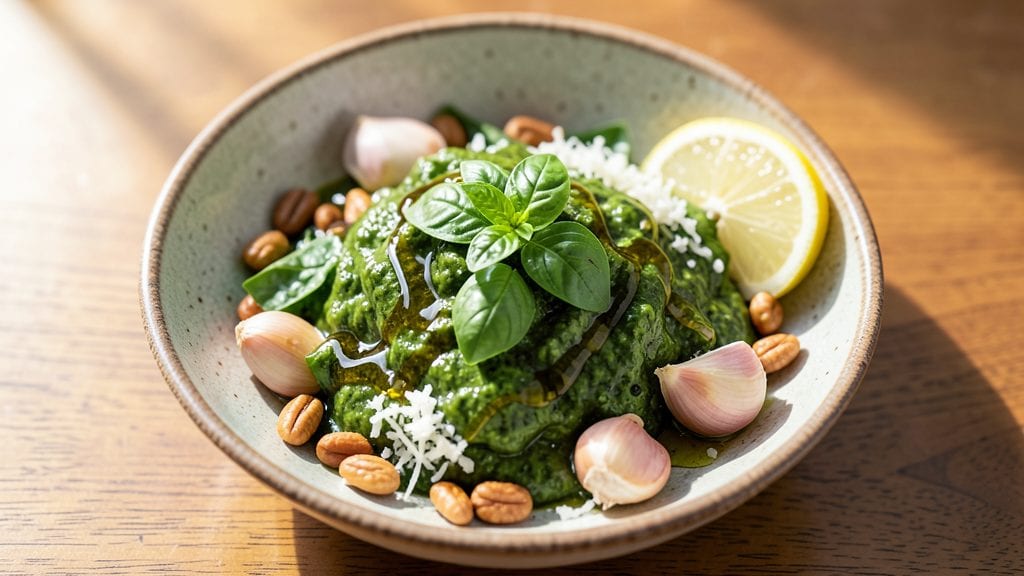
Martha Stewart’s pesto sauce recipe delivers that signature nutty, herby freshness with just six ingredients and 10 minutes of prep time. The secret lies in using toasted pine nuts for depth and a blend of fresh basil, garlic, and parmesan that creates a sauce so vibrant it transforms any dish.
I’ve perfected this version over years of testing—it’s the one that stays bright, not bitter, and keeps its texture for days.
This classic pesto balances rich, toasty pine nuts with bright basil and sharp parmesan, creating a sauce that’s versatile enough for pasta, sandwiches, or dipping but complex enough to elevate simple meals. The key technique?
Toasting the nuts just until golden—this unlocks their natural oils, which form the creamy base of the sauce. No food processor? A mortar and pestle works just as well, though it takes a little more elbow grease.
What makes this recipe stand out is how it maintains its fresh, vibrant flavor even after storage. The parmesan adds a salty, umami backbone, while the olive oil keeps everything silky.
Store it in an airtight container with a thin layer of oil on top to preserve freshness for up to a week in the fridge—or freeze it for months. For a vegan twist, simply swap the parmesan for nutritional yeast and use olive oil instead of butter.
The result is a pesto that’s restaurant-quality at home, with none of the bitterness or graininess you sometimes find in store-bought versions. Whether you’re tossing it with pasta, spreading it on bruschetta, or using it as a marinade, this sauce delivers that perfect balance of nutty, herby, and tangy.
Let’s make it—your taste buds will thank you.
Ingredients for martha stewart pesto sauce
Six simple ingredients transform into Martha's signature vibrant, nutty pesto in minutes.
| Ingredient | Amount | Notes |
|---|---|---|
| Fresh Basil Leaves 🌿 | 2 cups | Packed, stems removed for best flavor |
| Toasted Pine Nuts 🥜 | ½ cup | Lightly toasted for nutty depth |
| Garlic Cloves 🧄 | 3 cloves | Peeled, roughly chopped for bold flavor |
| Parmesan Cheese 🧀 | ¾ cup | Freshly grated from block preferred |
| Extra-Virgin Olive Oil 🫒 | ¾ cup | High-quality, fruity variety recommended |
| Lemon Juice 🍋 | 1 tbsp | Freshly squeezed for bright acidity |
| Sea Salt 🧂 | ½ tsp | Fine grain preferred for balance |
| Freshly Ground Black Pepper 🌶️ | ¼ tsp | For subtle heat and depth |
The basil is non-negotiable—farmers market or high-quality grocery store leaves make all the difference. I always grab two large bunches because half gets torn over pasta later. Pine nuts? Trader Joe's or Costco have the best prices, but if you're watching your budget, walnuts or cashews work in a pinch (though the flavor shifts slightly). The Parmesan needs to be real Parmigiano-Reggiano—none of that pre-grated sawdust stuff. Grate it yourself right before mixing for maximum freshness. And don't skip toasting those pine nuts—just until golden (about 3-4 minutes in a dry pan) to unlock their natural oils.
No pine nuts? Walnuts or pecans are solid swaps, but you'll need to toast them longer for that rich flavor. Short on basil? Fresh parsley or spinach can stretch it (up to half the amount), though the flavor will be milder. Want more tang? Add an extra tablespoon of lemon juice. The olive oil matters here too—avoid cheap grocery store brands. Look for something with a peppery finish or fruity notes. And if you're making this vegan, swap the Parmesan for nutritional yeast (it mimics that umami kick perfectly) and use the same amount of olive oil. The black pepper is easy to forget, but it rounds out all those bright flavors beautifully.
This sauce keeps 5-7 days in the fridge if you press a thin layer of olive oil on top before sealing. For longer storage, freeze it in ice cube trays—perfect for single servings later. I always make a double batch because it disappears fast. The flavor actually improves after a day or two as everything melds together. Just give it a quick whisk before using. And if it thickens when refrigerated? Thin it with a splash of water or extra olive oil while blending.
Why You'll Love This Recipe
- Here’s what sold me: it’s actually affordable. A handful of basil, a few cloves of garlic, and a sprinkle of Parmesan stretch farther than you’d think. Plus, the leftovers? They keep for days in the fridge, so you’re never scrambling for a last-minute sauce.
- No-Fuss Assembly: I swear by this recipe because it’s almost hands-off. Toast the pine nuts in a dry pan while you chop garlic—no fancy blender tricks, just pulse until it’s smooth. Five minutes max, and you’ve got a sauce that tastes like you spent hours.
- Garlic-Basil Magic: That first taste? Pure satisfaction. The toasted pine nuts add crunch, the garlic sings sharp and bright, and the Parmesan melts into creamy perfection. Honestly, it’s the kind of flavor that makes you pause mid-bite just to savor it.
- Pasta’s Best Friend: Between us, this pesto turns anything into a showstopper. Toss it with pasta, dollop it on grilled chicken, or smear it on toast—it’s my go-to for lazy dinners or when I’m prepping meals ahead. (Yes, even on a Tuesday night.)
Step-by-step instructions for Martha Stewart's pesto sauce
Here's how to make this iconic pesto with perfect texture and vibrant flavor every time.
Toast the Pine Nuts and Prepare the Basil
Heat a dry skillet over medium-low heat and add the 0.5 cup toasted pine nuts. Toast them for 3-4 minutes, stirring constantly, until they're fragrant and just beginning to turn golden. Watch closely—they burn quickly, so keep your eye on them. Remove from heat immediately once toasted and let them cool for 2 minutes.
While the nuts toast, pack the 2 cups fresh basil leaves tightly into a food processor. Remove any thick stems to avoid bitterness. The leaves should be tightly packed to maximize flavor extraction. Here's the thing—if your basil is particularly large or stemmy, you might need to trim more carefully to avoid overfilling the processor.
Pulse the Garlic and Process the Pesto Base
Add the 3 cloves garlic cloves to the food processor with the packed basil. Pulse 2-3 times just until the garlic is finely chopped but not fully pureed. You want visible garlic pieces to add flavor without overpowering the basil. I like to press the garlic cloves through my fingers first to break them up slightly before adding, which helps with even distribution.
With the processor running, slowly drizzle in 0.5 cup of the 0.75 cup extra-virgin olive oil. This gradual addition prevents the oil from splattering and helps create a smooth emulsion. Process for 30-45 seconds until you have a vibrant green puree. The mixture should look thick and almost paste-like at this stage—this is your pesto base.
Add Cheese and Seasonings for Perfect Balance
Add the 0.75 cup parmesan cheese to the processor and pulse 3-4 times until fully incorporated. The cheese should melt into the mixture, creating a creamy texture. Here's where it gets fun—sprinkle in the 0.5 tsp sea salt and 0.25 tsp freshly ground black pepper while processing. These seasonings will distribute evenly throughout the pesto, enhancing all the flavors.
With the processor still running, add the remaining 0.25 cup extra-virgin olive oil in a slow stream. This final addition helps create the perfect consistency—thick enough to coat but still pourable. Taste the mixture and adjust seasoning if needed. If it needs more brightness, add the 1 tbsp lemon juice one teaspoon at a time until you reach that perfect balance of tangy, nutty, and herby flavors.
Finish and Store for Maximum Freshness
Transfer the pesto to a bowl and give it a final taste. You're looking for a harmonious blend where the basil shines, the pine nuts add crunch, and the parmesan brings richness. The sauce should be vibrant green with a thick, almost paste-like consistency. If it's too thick, thin it with a few drops of water or extra olive oil until it reaches your desired consistency.
For immediate use, serve the pesto right away with your favorite pasta, sandwiches, or as a dip. If storing, transfer to an airtight container and press a piece of plastic wrap directly onto the surface to prevent oxidation. Keep refrigerated for up to 5 days, or freeze for up to 3 months. When ready to use, give it a quick stir and you'll be amazed at how fresh it still tastes.
Pro Tips For Making Martha Stewart Pesto Sauce
- TOAST NUTS LOW: I learned this the hard way—pine nuts burn faster than you’d think. Toast them in a dry pan over medium-low heat, stirring constantly, until they’re golden and fragrant. High heat turns them bitter, and nobody wants that in their pesto.
- STACK CHEESE FIRST: Parmesan’s the star, so don’t skimp on quality. Grate it fresh (yes, even pre-shredded counts as cheating) and pulse it into the food processor before adding the basil. This ensures it emulsifies properly—no clumpy surprises when you blend later.
- PULSE BASIL, DON’T GRIND: Chopping basil too finely kills its bright flavor. Pulse it in the food processor in short bursts—just until it’s roughly chopped, not a paste. You want texture, not mud. (And if you’re using stems, toss them in; they’re packed with flavor.)
- STOP WHEN IT’S THICK: Pesto’s supposed to coat, not pool. After adding olive oil, taste and stop when it’s just thick enough to cling to a fork. Over-blending makes it greasy—trust your eyes, not the recipe’s “add more oil” suggestion. (You’ll use less than you think.)
Make-ahead tips for this dish
Batch Prep Strategy
Make a double batch—this pesto disappears faster than you can say "pasta night." I always prepare 4 cups at once (double the ingredients) and store it in two 8-ounce glass jars. The extra effort saves time on busy weeknights when you're scrambling for dinner ideas. 💡
Freezing for Long-Term Use
Freeze pesto in 1-tablespoon portions using ice cube trays for perfect single-serving sizes. Once frozen, transfer the cubes to a ziplock bag and flatten to save space. When ready to use, simply drop a cube into warm pasta water or thaw in the fridge for 10 minutes.
This method preserves the vibrant green color and fresh taste for up to 3 months.
Oil Layering Technique
Before sealing your stored pesto, press a thin layer of olive oil directly onto the surface using plastic wrap. This creates an oxygen barrier that prevents oxidation—the enemy of fresh pesto.
I use a small squeeze bottle to apply the oil evenly. This simple trick extends freshness by 2-3 extra days in the refrigerator. ✨
Reviving Stale Pesto
If your pesto has thickened or lost some vibrancy after refrigeration, don't toss it! Add 1-2 tablespoons of warm water or extra olive oil while blending to restore the perfect consistency.
I often add a fresh pinch of salt and lemon juice to brighten flavors. Most "stale" pesto can be revived this way—it's one of my favorite money-saving tricks. 💪
Vegan Make-Ahead Tips
For vegan pesto, replace the parmesan with nutritional yeast and use extra olive oil for richness. Store the vegan version the same way, but I find it stays fresh even longer—up to 7 days in the fridge—because the nutritional yeast doesn't develop the same oxidation issues as dairy.
Freeze it in the same ice cube tray method for long-term storage. 🌱
Pasta Water Hack
Save ½ cup of pasta water before draining your noodles. When tossing with pesto, add 1-2 tablespoons of this starchy water to create an instant silky sauce. The starch acts as a natural emulsifier, helping the pesto cling beautifully to the pasta.
This works especially well with fresh egg noodles or whole wheat pasta. 🍝
Nutrition facts
Frequently asked questions
Can I make this pesto without a food processor?
Use a mortar and pestle for a more rustic texture. Start by crushing the toasted pine nuts, then add basil leaves one at a time, pressing firmly. Add garlic, cheese, and seasonings gradually while grinding. Finish with olive oil in a slow drizzle to create the perfect consistency. It takes more elbow grease but yields a beautifully textured sauce.
Why does my pesto turn bitter after a few days?
Basil oxidizes over time, which causes bitterness. To prevent this, always store pesto with a thin layer of olive oil pressed on top before sealing. Keep it refrigerated in an airtight container and use within 5 days for best flavor. If bitterness develops, add a splash of fresh lemon juice to revive the bright, herby notes.
What's the best way to use up leftover pesto?
Pesto is incredibly versatile—toss it with grilled chicken or fish, spread it on toasted baguette slices, or mix it into salad dressings. Freeze extras in 1-tablespoon portions using ice cube trays for perfect single servings. Even stale pesto can be revived by blending with warm water or olive oil until smooth.
Can I substitute walnuts for pine nuts?
Yes, but toast them longer (5-6 minutes) until deeply golden for maximum flavor. Walnuts have a stronger, earthier taste that works well in pesto. For a closer match to pine nuts, use ½ cup walnuts plus 2 tablespoons extra olive oil to maintain the creamy texture. Just be aware the flavor profile will be slightly different.
How do I know when my pine nuts are perfectly toasted?
Toast pine nuts over medium-low heat until they're fragrant and just beginning to turn golden—this takes about 3-4 minutes. Watch closely! They burn quickly and become bitter. Remove them immediately when golden, as they'll continue cooking slightly from residual heat. Let them cool for 2 minutes before using to prevent oil splatter while blending.