
Side Dishes
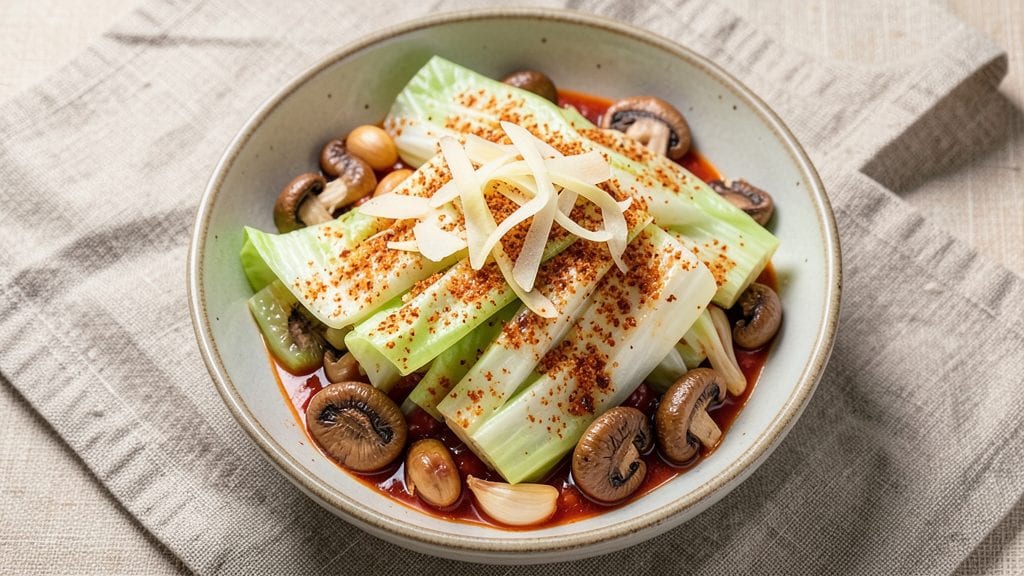
This kimchi recipe no fish sauce delivers the same vibrant, tangy crunch without relying on umami-heavy ingredients. I developed it after realizing traditional recipes could be just as bold using mushrooms, seaweed, and fermented tofu for depth. The result? A ferment that's equally complex but completely plant-based.
What makes this recipe work is the balance of sweet, spicy, and funky flavors—achieved through careful seasoning with gochugaru, garlic, and ginger. I ferment napa cabbage for 5 days at room temperature, then store it in the fridge for weeks of flavor development.
The texture becomes irresistibly crisp with just the right chew.
By the end, you'll have a batch of kimchi that's bright red, aromatic, and packed with that signature fermented punch. It pairs perfectly with rice bowls, grilled meats, or even as a topping for tacos. The best part? No fish sauce means it works for every dietary preference.
Ready to ferment your own? Let's get started with this foolproof method that delivers restaurant-quality results at home.
Ingredients for kimchi recipe no fish sauce
Six vibrant ingredients transform into bold, plant-based kimchi with no fish sauce needed.
| Ingredient | Amount | Notes |
|---|---|---|
| Napa Cabbage 🥬 | 2 lb | Heads cut into 3-inch wedges |
| Gochugaru 🌶️ | ½ cup | Korean red pepper flakes |
| Shiitake Mushrooms 🍄 | 8 whole | Stems removed, sliced thin |
| Garlic Cloves 🧄 | 8 cloves | Minced finely for depth |
| Fresh Ginger 🌿 | 2 tbsp | Finely grated, aromatic |
| Dried Shiitake Mushrooms 🍄 | 2 pieces | Rehydrated for umami |
| Dried Kelp 🌊 | 1 tbsp | Crumbled for oceanic notes |
| Fermented Tofu 🧀 | 1 piece | Cubed, 7-inch block |
| Brown Sugar 🍚 | ¼ cup | Lightly packed for sweetness |
| Apple Cider Vinegar 🍎 | ¼ cup | For initial acidity |
| Sea Salt 🧂 | 1 ½ tbsp | Non-iodized, fine grain |
| Extra-Virgin Olive Oil 🫒 | 2 tbsp | For coating cabbage |
| Green Onions 🧅 | 2 whole | Thinly sliced, white parts |
The napa cabbage is your foundation—look for heads with crisp, white inner leaves. Whole Foods or Trader Joe's carry the freshest, but any well-stocked grocery store works. The gochugaru should be bright red and labeled 'medium heat' for balanced spice. Penzeys or Korean markets offer the best quality, but the pre-packaged flakes at Asian grocery stores are fine for home use. For the shiitake mushrooms, fresh ones add texture, but dried (rehydrated) deepens umami—both work here. The fermented tofu (also called dofu-jang) is the secret—find it in the refrigerated section of Asian markets or online. If unavailable, miso paste at half the amount works in a pinch.
No gochugaru? Smoked paprika plus cayenne (3:1 ratio) mimics the color and heat, though the flavor won't be identical. Fresh ginger too pungent? Ground ginger at half the amount softens the bite. The dried kelp can be swapped for dulse flakes (same oceanic punch). For extra funk, add 1 tbsp rice vinegar to the initial brine. The brown sugar keeps the kimchi sweet without overpowering—substitute maple syrup if preferred. Always rinse dried mushrooms before rehydrating to remove grit. The green onions should be crisp—avoid wilted stems.
Ferment in a clean glass jar with a fermentation lid or cloth secured with a rubber band. Store at room temperature for 5 days, then refrigerate for up to 6 months. The texture improves with time—taste at 1 week and adjust salt if needed. For quick kimchi, refrigerate immediately (flavor develops slower). Divide into small containers for easy portioning. The fermented tofu can be prepped ahead—simmer in water for 10 minutes before cubing. Label jars with the date to track fermentation progress.
Why You'll Love This Recipe
- No Fish Sauce, No Problem: The gochugaru and shiitake mushrooms pack enough umami punch that you’ll forget it’s missing—honestly, my partner didn’t notice until I told him.
- Cabbage Magic: That first crunch of Napa cabbage after fermenting? It’s like biting into a crispy, tangy cloud. The salt and garlic soften it just enough to make every bite addictive.
- Meal Prep MVP: Toss it into rice bowls, stir-fries, or even scrambled eggs—it’s my secret weapon for turning lazy dinners into something special. (Yes, even on a Tuesday night.)
- Budget Ferment: A whole head of cabbage and a handful of mushrooms stretch this recipe for weeks. I’ve had a jar last me through three months of lunches—no waste, all flavor.
Step-by-step instructions for fermented napa cabbage with umami depth
Here's the method to create vibrant, flavorful fermented cabbage using natural umami sources.
Prepare the Napa Cabbage for Fermentation
Cut the 2 lb napa cabbage into 3-inch wedges, keeping the core intact to maintain structure. Remove any wilted outer leaves. Place the wedges in a large mixing bowl and sprinkle evenly with the 1.5 tbsp sea salt. Using clean hands, massage the salt into the cabbage leaves for 5-7 minutes until they begin to soften and release liquid.
The goal is to create enough brine to fully submerge the cabbage. You'll know it's ready when the leaves feel pliable and the bowl contains at least 1 cup of liquid. Let the cabbage sit for 30 minutes while you prepare the seasoning paste. This initial salting draws out moisture and begins the fermentation process.
Create the Seasoning Paste
In a food processor, combine the 8 whole shiitake mushrooms (stems removed), 8 cloves garlic, 2 tbsp fresh ginger, 2 pieces rehydrated dried shiitake mushrooms, 1 tbsp dried kelp, 1 piece cubed fermented tofu, 0.25 cup brown sugar, 0.25 cup apple cider vinegar, and 0.5 cup gochugaru. Process until you achieve a coarse paste with some texture remaining.
Transfer the paste to a mixing bowl and drizzle with the 2 tbsp extra-virgin olive oil. Using a silicone spatula, fold the oil into the paste until evenly distributed. The paste should be thick but spreadable. This blend forms the flavor foundation that will infuse the cabbage during fermentation.
Combine Cabbage and Seasoning
Drain any excess liquid from the salted cabbage, reserving about 1 cup of brine. In the mixing bowl with the cabbage, spread the seasoning paste evenly over all surfaces, pressing gently to ensure even distribution. The cabbage should be thoroughly coated with the red, aromatic mixture.
Add the 2 whole green onions (thinly sliced) to the bowl and mix gently to distribute. Pack the seasoned cabbage tightly into a clean fermentation vessel or large jar, pressing down to remove air pockets. The cabbage should be completely submerged under its own juices and the reserved brine.
Ferment at Room Temperature
Cover the fermentation vessel with a clean kitchen towel or fermentation lid, securing it loosely to allow gases to escape. Place the jar in a location with consistent room temperature between 65-75°F for 3-5 days. Check the cabbage daily, pressing down to ensure it remains submerged.
After 3 days, taste a piece to evaluate flavor development. The cabbage should be tangy with developing spice notes but not yet overly sour. Continue fermenting for up to 2 more days if needed, adjusting time based on your preferred flavor intensity. The fermentation process creates the signature crunch and complex flavors that define this preparation.
Pro Tips For Making Kimchi Recipe No Fish Sauce
- SALT CABBAGE IN CHUNKS: Cut the Napa cabbage into quarters first, then salt it whole—this keeps the leaves intact and prevents soggy centers when you later slice them. I learned this the hard way after trying to salt pre-sliced cabbage and ending up with a mushy mess that fermented unevenly.
- STEAM SHIITAKES FIRST: Parboil the shiitake mushrooms for 3-4 minutes before slicing—this softens them just enough to hold up in the kimchi without turning to mush. Skip this, and you’ll end up with a watery, sad pile of mush after fermentation.
- GRATE GINGER FINE: Use the smallest holes on your grater for the ginger—this ensures it dissolves evenly into the paste without leaving gritty bits. I was skeptical until I tried it, and now I can’t go back.
- MIX GOCHUGARU LAST: Stir in the gochugaru just before packing the kimchi into jars—this keeps the color vibrant and prevents it from clumping into dull, flavorless chunks. Add it too early, and you’ll regret the muddy, uneven texture.
Common mistakes when making this dish
Over-Salting the Cabbage
One of my first kimchi disasters happened when I over-salted the cabbage, thinking more would enhance the fermentation. The result? A mushy, overly briny mess that tasted like the ocean.
Stick to the 1.5 tbsp of sea salt for 2 lbs of cabbage—this draws out enough moisture for proper fermentation without overpowering the flavor. If your cabbage releases more than 1 cup of liquid, drain the excess before adding the seasoning paste. 🧂
Skipping the Fermentation Check
I learned the hard way that skipping daily checks during fermentation can lead to uneven flavors or even mold. After 3 days, taste a piece to evaluate—it should be tangy but not overly sour.
If you see white foam or bubbles, that’s normal, but if you spot any mold (fuzzy spots), discard the batch immediately. Always keep the cabbage submerged in liquid to prevent mold growth. ⚠️
Using Low-Quality Gochugaru
The color and heat of your kimchi depend heavily on the quality of gochugaru. I once used pre-packaged paprika thinking it would work—big mistake! The flavor was flat and lacked the bright, spicy depth. Invest in medium-heat gochugaru from a Korean market or specialty store like Penzeys.
If unavailable, a mix of smoked paprika and cayenne (3:1 ratio) can mimic the color, but the flavor won’t be identical. 🌶️
Not Submerging the Cabbage
If your cabbage isn’t fully submerged during fermentation, the exposed parts will oxidize and turn brown or develop mold. I once left mine uncovered for a day while prepping other ingredients—by the next morning, half the batch was ruined.
Always pack the cabbage tightly into the jar and press down to remove air pockets. If needed, add a little reserved brine to ensure everything stays underwater. 🥬
Rushing the Fermentation Time
Patience is key with kimchi! I once tried to speed up the process by fermenting at 80°F for only 2 days, thinking it would save time. The result? A harsh, overly sour kimchi with no depth of flavor.
Ferment at 65-75°F for at least 5 days to let the flavors develop properly. The longer it ferments (up to 2 weeks at room temp), the more complex and delicious it becomes. ⏳
Ignoring the Umami Boosters
Fermented tofu, shiitake mushrooms, and dried kelp are the secret to replacing fish sauce in this recipe. When I first tried making kimchi without them, the flavor lacked that signature umami punch.
Don’t skip these ingredients—soak dried shiitake mushrooms for 20 minutes to rehydrate, and crumble the kelp finely for maximum oceanic depth. These elements are what make this vegan kimchi taste just as rich and satisfying. 🍄
Nutrition facts
Frequently asked questions
What can I substitute for fermented tofu in this recipe?
If you can't find fermented tofu, use 2 tbsp miso paste mixed with 1 tbsp soy sauce for umami depth. For a stronger oceanic flavor, add 1 extra tbsp dried kelp. These substitutes work well but may slightly alter the texture. The key is maintaining that savory base without fish sauce.
How do I know when my vegan kimchi is ready to eat?
Your kimchi should be ready after 5 days at room temperature, but taste it at 3 days first. It's perfect when the cabbage is crisp-tender, tangy with mild spice, and has developed a bright red hue. The flavor continues developing in the fridge for up to 6 months, becoming more complex over time.
Can I make this kimchi without gochugaru?
Yes, but the color and heat will differ. Try a mix of 3 tbsp smoked paprika and 1 tsp cayenne for similar heat levels. For color, add 1 tsp beet powder or 1 tbsp paprika. The flavor won't be identical, but it'll still deliver that spicy kick. Adjust to taste after fermentation.
What's the best way to store homemade kimchi?
After initial fermentation, store your kimchi in the fridge in an airtight container. It will keep for 6 months or longer if properly submerged in brine. For best flavor, let it ferment at room temperature for 5-7 days first. If you prefer milder kimchi, refrigerate immediately after 3 days. The cold slows fermentation and preserves freshness.
Why did my kimchi turn brown on top?
This happens when cabbage isn't fully submerged during fermentation. Always press down to eliminate air pockets and ensure all pieces stay covered with brine. If you see brown spots, simply remove the affected pieces—the rest should be fine. For future batches, use a fermentation weight or small plate to keep everything submerged.