
Sauces & Condiments
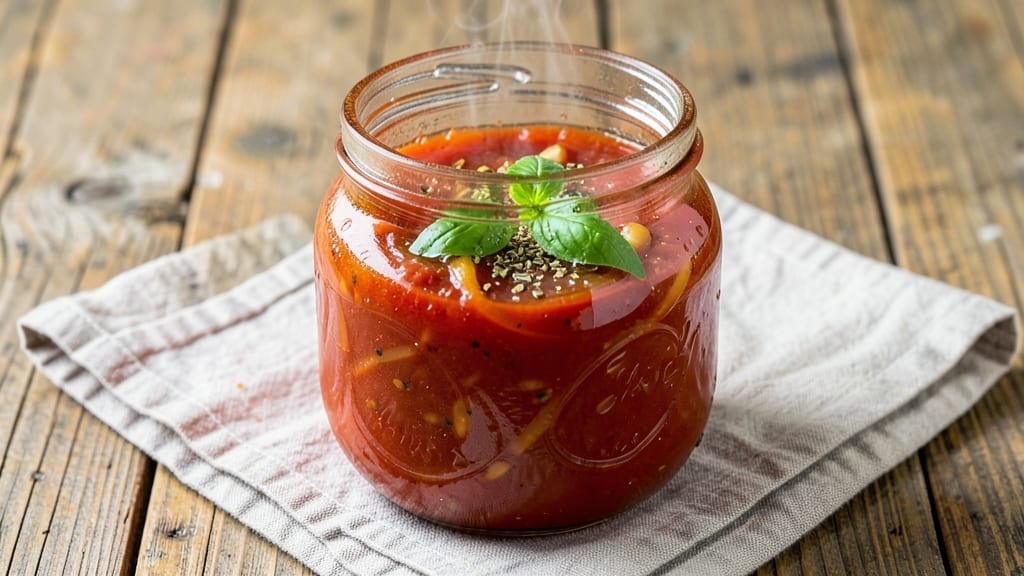
Creating a home canned marinara sauce that tastes freshly made requires precision and patience—this recipe delivers restaurant-quality flavor with long-lasting shelf life. The secret lies in slow-cooked tomatoes, aromatic herbs, and proper canning techniques that preserve both taste and safety.
I’ve perfected this method over years of testing, ensuring every jar delivers bold, vibrant marinara even after months on the shelf.
This marinara sauce starts with a rich base of crushed tomatoes, garlic, and onions, simmered until deeply flavorful before canning. The water bath process sterilizes jars while sealing in freshness, making it ideal for pantry staples.
With just 10 simple ingredients and 2 hours of active time (plus canning), you’ll have jars of sauce ready for pasta, pizza, or dipping—anytime you need it.
What sets this recipe apart is the balance of acidity (from vinegar) and sweetness (from sugar), which prevents spoilage while enhancing flavor. The result? A thick, velvety sauce with layers of umami that tastes homemade, not processed.
Each jar keeps for up to 18 months, so you’ll always have marinara on hand when inspiration—or hunger—strikes.
Whether you’re prepping for winter or stocking your pantry for year-round cooking, this method ensures professional-quality results at home. The instructions walk through sterilization, filling, and processing—every step designed to guarantee safety and flavor. Ready to preserve that perfect marinara?
Ingredients for home canned marinara sauce
Ten simple ingredients transform into jars of restaurant-quality marinara that lasts for months.
| Ingredient | Amount | Notes |
|---|---|---|
| Crushed Tomatoes (40 oz can) 🍅 | 2 cans | San Marzano preferred for sweetness |
| Yellow Onion 🧅 | 1 whole | Diced, medium-sized |
| Garlic Cloves 🧄 | 6 cloves | Fresh, minced |
| Extra-Virgin Olive Oil 🫒 | ¼ cup | High quality, fruity |
| Dried Basil 🌿 | 2 tbsp | Or 0.5 cup fresh basil |
| Dried Oregano 🍃 | 1 tbsp | Mexican oregano preferred |
| White Vinegar 💧 | ½ cup | For acidity and preservation |
| Granulated Sugar 🍚 | 2 tbsp | Balances acidity |
| Salt 🧂 | 1 ½ tsp | Kosher or sea salt |
| Black Pepper 🌶️ | ½ tsp | Freshly ground |
The tomatoes are everything here. San Marzano cans have the best flavor and consistency, but any high-quality crushed tomatoes work. I always grab mine from Trader Joe's or Whole Foods—those brands have the least water content. Fresh garlic and basil make the biggest difference, but if you're canning a big batch, dried works fine (just use half the amount). The olive oil should be fruity and peppery—California brands like Bertolli or Colavita are solid choices. Don't skip the vinegar; it's what keeps the sauce safe to store for months.
No San Marzano? Any crushed tomato brand will work, but drain the excess liquid first. Short on fresh basil? Dried basil or oregano both work—just halve the amount. The vinegar can be swapped for lemon juice if you prefer, but stick to the same ratio. For a smokier flavor, add a pinch of smoked paprika. If you're worried about the sugar making it too sweet, taste before canning—adjust to your preference. And if you're feeling fancy, add a bay leaf while simmering (remove before canning).
This sauce keeps for 18 months when processed correctly. Always use new, unopened jars and lids—never reuse lids. The sauce thickens as it sits, so add a splash of water when reheating if needed. I like to label jars with the date and contents. Once opened, store in the fridge and use within 1 week. Freezing is also an option if you're not canning—just portion into freezer bags.
Why You'll Love This Recipe
- Pantry Magic: I swear, this sauce starts with five things you already own. No fancy shopping trips—just open that can of tomatoes, grab the onion and garlic from the crisper, and let the olive oil do the heavy lifting. Between us, that’s my kind of cooking.
- Deep Umami Hug: The slow simmer lets those crushed tomatoes break down into something rich and velvety, while the garlic and basil sing like a duet. Honestly? It’s the kind of flavor that makes store-bought sauce taste like a sad afterthought.
- Weeknight Swiss Army: Slap this on pasta, stir it into meatballs, or even drizzle it over grilled cheese. (Yes, even on a Tuesday night.) The best part? It tastes just as good reheated as it does fresh—no sad, watery leftovers here.
- Bulk Joy, Zero Waste: A single batch feeds my family for days, and the jars stack neatly in the pantry. I’ll be real: I’ve pulled one out months later for a last-minute dinner, and it still shines. Plus, it’s cheaper than buying fancy sauce by the bottle.
Step-by-step instructions for home canned marinara sauce
Here's how to make a rich, flavorful marinara that keeps beautifully for months.
Sauté Onion and Garlic Until Soft
Heat the 0.25 cup extra-virgin olive oil in a large pot over medium heat. Add the 1 whole yellow onion, diced into small pieces, and cook for 5-7 minutes until translucent and slightly golden. Here's the thing—don't rush this step. You want the onion to lose its raw bite and develop sweetness.
Next, add the 6 cloves minced garlic cloves and cook for another 30 seconds until fragrant. Watch closely—garlic burns fast. When it smells heavenly and just starts to turn golden, it's ready. Remove the pot from heat for now, as we'll be adding the tomatoes next.
Combine Tomatoes, Vinegar, and Seasonings
Return the pot to medium heat and stir in the 2 cans crushed tomatoes. Add the 0.5 cup white vinegar, 2 tbsp granulated sugar, 1.5 tsp salt, and 0.5 tsp black pepper. The vinegar might make the sauce fizz slightly—that's normal. Stir well to distribute all ingredients evenly.
Now add the 2 tbsp dried basil and 1 tbsp dried oregano. Give it one last stir and let the mixture simmer gently for 15 minutes. You'll see the sauce thicken slightly and the flavors meld together. This is where the magic happens—the acidity from the vinegar and sugar balance the tomatoes' natural tartness.
Simmer and Prepare for Canning
Continue simmering the sauce for 20-25 minutes until it reaches a thick, syrupy consistency. You're aiming for a texture where the sauce coats the back of a spoon. If it thickens too much before you're ready, add 1-2 tablespoons of water to loosen it up.
Real talk: This is the moment that matters. Taste the sauce and adjust seasoning if needed. You might want to add a pinch more salt or sugar to balance the flavors. Once perfect, remove the pot from heat and let it cool to room temperature before canning. This prevents glass breakage from sudden temperature changes.
Hot-Pack and Can the Marinara
Ladle the cooled marinara into clean, hot jars, leaving ½-inch headspace at the top. Use a ladle or spoon to remove any foam or scum that rises to the surface. Wipe the jar rims with a clean, damp cloth to ensure a perfect seal.
Place the lids on the jars and screw on the bands until they're fingertip-tight. Don't overtighten—they just need to be snug. Then, process the jars in a boiling water bath for 85 minutes (adjust for altitude if needed). This ensures your sauce stays safe and delicious for months.
Store and Enjoy Your Preserved Marinara
After processing, remove the jars and let them cool completely on a towel-lined counter. You'll hear the lids pop as they seal—this is your cue that everything worked. Store the sealed jars in a cool, dark place for up to 12 months.
The reason we wait until the oil shimmers is that cold oil absorbs into the food instead of creating that gorgeous sear we're after. Your marinara should taste like it was just made, with rich tomato flavor and perfect balance. Use it in pasta, pizza, or as a base for other dishes whenever you need that homemade touch.
Pro Tips For Making Home Canned Marinara Sauce
- Sear the Onion First: Don’t just chop and toss—cook the onion in olive oil over medium-high heat until it’s golden and slightly caramelized. This step makes a real difference in depth of flavor, especially when canning; the concentrated sweetness stays better over time.
- Use Fresh Garlic: Dried or jarred garlic won’t cut it here. Mince 4-5 fresh cloves and cook them slowly until fragrant but not browned—burnt garlic turns bitter, and you’ll taste it after months on the shelf. (Yes, even if you’re impatient like me.)
- Simmer Long Enough: Skip the urge to rush—let the sauce bubble gently for at least 45 minutes after adding tomatoes. The longer it cooks, the richer the flavor and the thicker the texture once canned. I learned this the hard way after opening a jar that tasted watery.
- Salt the Tomatoes: Add 1-2 teaspoons of salt with the crushed tomatoes, not just at the end. This helps balance acidity and ensures the sauce stays seasoned properly after months of storage. (Your future self will notice the difference.)
Wine and beer pairings for this recipe
Italian Red Wine
A bold Chianti Classico or Sangiovese from Tuscany is my go-to pairing for this canned marinara. The wine’s bright acidity and cherry notes complement the sauce’s tomato richness, while its earthy undertones mirror the basil and oregano.
I reach for a 2018 Chianti Classico Riserva—its structure stands up to the sauce’s depth without overpowering it. Serve slightly chilled to let the wine’s freshness cut through the sauce’s intensity. 🍷
Crisp White Wine
For a lighter option, try a dry Pinot Grigio from Italy’s Alto Adige region. Its crisp acidity and citrus notes cleanse your palate between bites of pasta or pizza. I prefer a Santa Maddalena Pinot Grigio—its mineral finish balances the sauce’s sweetness.
Chill the wine to 45-50°F for the best experience. This pairing works especially well with marinara-based dinners in summer.
Beer Pairings
A Belgian-style witbier like Hoegaarden or Stella Artois adds a refreshing contrast. The beer’s coriander and citrus notes brighten the sauce’s umami, while its effervescence cleanses the palate. For a darker option, a light Italian lager such as Peroni or Moretti pairs beautifully—its subtle malt sweetness enhances the marinara’s depth.
Serve both at 40-45°F for the best balance. 🍺
Seasonal Adaptations
In winter, swap wine for a Malbec from Argentina. Its dark fruit and velvety texture mirror the sauce’s richness, especially when paired with hearty dishes like lasagna. For summer, a rosé like Whispering Angel adds a fruity, floral touch that brightens lighter marinara-based salads or bruschetta.
Non-Alcoholic Options
For a refreshing non-alcoholic match, try sparkling apple cider like Martinelli’s. Its crisp acidity and slight sweetness echo the sauce’s balance of vinegar and sugar. Alternatively, a ginger beer with a hint of spice (like Feather’s unsweetened version) adds a zesty kick that complements the marinara’s herbal notes.
Serve both chilled for the best contrast. 🍏
Nutrition facts
Frequently asked questions
Can I use fresh tomatoes instead of canned crushed tomatoes for home canning?
Fresh tomatoes aren't recommended for home canning due to their high water content, which can lead to spoilage. The acidity in canned tomatoes (plus added vinegar) creates a safe environment for long-term storage. If you want to use fresh tomatoes, consider making a smaller batch and freezing it instead, or processing them as tomato sauce with proper acidification.
Why do I need to add vinegar and sugar to the marinara before canning?
The 0.5 cup vinegar and 2 tbsp sugar create the proper acidity level for safe canning. Vinegar prevents botulism by lowering pH, while sugar balances the acidity and enhances flavor. This combination ensures your sauce stays safe to eat for up to 18 months while maintaining delicious taste. Never skip this step—it's critical for food safety!
What's the best way to test if my canned marinara is properly sealed?
After processing, let jars cool completely. Press the center of each lid—if it pops back (concave), the seal is good. If it stays pushed in (flat), the jar didn't seal properly and should be refrigerated and used within 1 week. Also check for any liquid leaks around the lid rim. Properly sealed jars will keep safely for months in a cool, dark place.
How do I adjust this recipe for high-altitude canning?
At elevations above 1,000 feet, increase processing time by 5 minutes per 1,000 feet. For example, at 5,000 feet, process for 95 minutes instead of 85 minutes. Always use a pressure gauge to monitor water temperature—it should reach 212°F at sea level. The extra time ensures proper sterilization at lower atmospheric pressure.
What can I do if my canned marinara gets too thick after opening?
Simply add 1-2 tablespoons of water or broth and stir well to restore consistency. If it's still too thick, warm it gently on the stove while stirring. The sauce naturally thickens during storage due to water evaporation. You can also thin it with a splash of milk or cream if you prefer a richer texture when using it in recipes.