
Sauces & Condiments
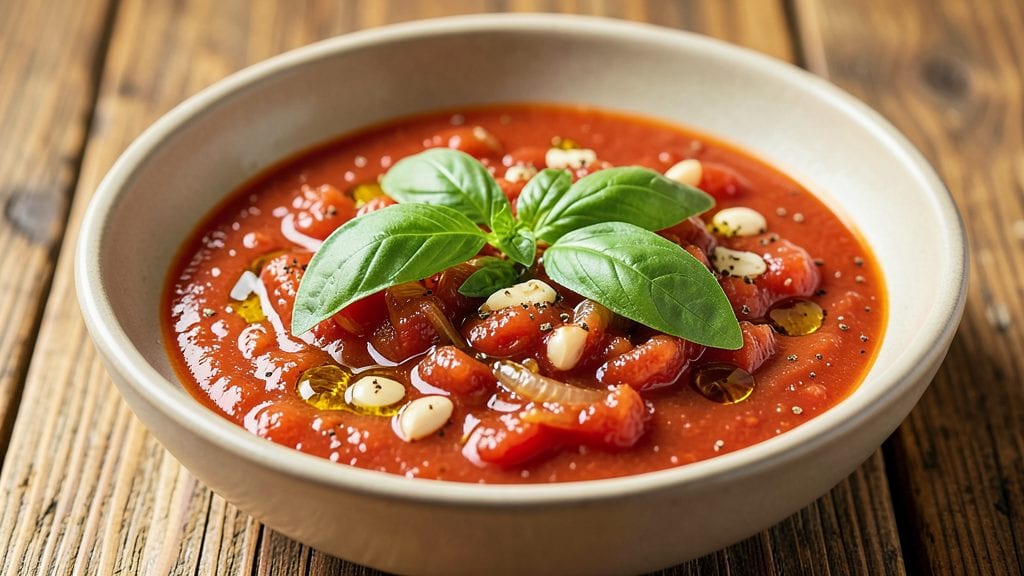
This canned tomato marinara sauce recipe transforms simple pantry staples into a restaurant-quality sauce with layers of simmered depth and bright, fresh basil. The key lies in slow reduction and proper seasoning—no expensive ingredients required, just time and attention to balance.
My version delivers a smooth, velvety texture with just the right tang, perfect for pasta, pizza, or braising meats.
What sets this sauce apart is the two-stage simmering process, where canned tomatoes break down into a rich base before blending with garlic, onions, and aromatic herbs. I use a small amount of olive oil to develop flavors without overpowering the natural acidity of the tomatoes.
The fresh basil added at the end provides that signature brightness that store-bought sauces often miss.
By the time you're done, you'll have a sauce that's smoother than jarred versions but with more depth than most recipes promise. The slow reduction concentrates flavors while maintaining a balanced acidity, and the basil finish ensures every spoonful tastes fresh.
This is the kind of sauce that transforms ordinary meals into something special.
Store it in the refrigerator for up to five days or freeze for longer shelf life, making it ideal for meal prep. Whether you're covering spaghetti, topping homemade pizza, or using it as a braising liquid, this marinara delivers professional results with simple ingredients and straightforward technique.
Ingredients for canned tomato marinara sauce
Pantry staples plus a few fresh touches make this sauce taste restaurant-fresh.
| Ingredient | Amount | Notes |
|---|---|---|
| Canned San Marzano Tomatoes 🍅 | 28 oz | Crushed or whole, no salt added |
| Extra-Virgin Olive Oil 🫒 | ¼ cup | High quality, fruity variety |
| Yellow Onion 🧅 | 1 whole | Medium size, finely diced |
| Garlic Cloves 🧄 | 4 cloves | Fresh, minced finely |
| Fresh Basil Leaves 🌿 | ½ cup | Packed, stems removed |
| Dried Oregano 🍃 | 1 tsp | Or 1 tbsp fresh if available |
| Salt 🧂 | 1 ½ tsp | Diamond Crystal preferred |
| Black Pepper 🌶️ | ½ tsp | Freshly ground preferred |
| Red Wine Vinegar 🍷 | 1 tbsp | Adjust to taste |
| Granulated Sugar 🍬 | 1 tsp | Balances acidity |
San Marzano tomatoes are the secret weapon here—their sweetness and low acidity make all the difference. Trader Joe's and Whole Foods usually carry them, but any high-quality canned tomatoes work. Skip the salt-added kind, though. For the basil, farmers markets have the freshest, but grocery store containers work too—just check the leaves are vibrant, not wilted. The olive oil should be fruity and peppery, not harsh. California avocado oil is another great option if you want something neutral.
No San Marzano tomatoes? Any crushed tomatoes will do, but add an extra pinch of sugar to balance the acidity. Dried oregano works, but fresh is better—use half the amount if you're swapping. Short on basil? Fresh parsley or thyme adds a nice twist. The red wine vinegar can be swapped for lemon juice if you prefer, but wine gives that classic tang. For a richer sauce, add a splash of red wine—just 2 tbsp does the trick. And if you're worried about the sugar making it too sweet, don't be—it just rounds out the acidity from the tomatoes and vinegar.
This sauce keeps beautifully in the fridge for 5-7 days in an airtight container. For longer storage, freeze it in ice cube trays—perfect for single portions later. The flavor actually improves after a day or two as everything melds together. If you make a big batch, freeze half and use the rest within the week. Reheat gently on the stove or microwave until steaming, then stir in fresh basil at the end for that bright finish.
Why You'll Love This Recipe
- No Chopping Struggle: I swear by this—just dice one onion and mince a few garlic cloves. That’s it. The San Marzano tomatoes do all the heavy lifting, so you’re not stuck peeling or seeding anything. (Yes, even on a Tuesday night.)
- Garlic-Basil Magic: The moment I add fresh basil and toasted garlic to simmering tomatoes? My kitchen smells like a Tuscan trattoria. That bright, herby finish cuts through the richness of the olive oil—simple, but ridiculously satisfying.
- Pasta Party Starter: This sauce is my go-to for quick dinners, potlucks, or feeding a crowd. Toss it with spaghetti, ladle it over grilled chicken, or freeze half for later. It’s the one sauce that makes everything feel like a celebration.
- Budget-Friendly Pantry Hero: A single can of San Marzano tomatoes and a few pantry staples stretch into meals for days. I make a big batch, freeze portions, and still have enough for next week’s marinara night. (My wallet and my freezer thank me.)
Step-by-step instructions for canned tomato marinara sauce
Here's how to build rich, balanced marinara using just canned tomatoes and fresh finishes.
Sauté Onion Until Translucent
Heat the 0.25 cup extra-virgin olive oil in a medium saucepan over medium heat. Add the 1 whole yellow onion that's been finely diced. Cook for 5-6 minutes, stirring occasionally, until the onions become soft and translucent. You'll notice the edges start to turn slightly golden—that's your cue they're ready for the next step.
Don't let the onions brown too much or they'll add bitterness to your sauce. If they start to stick, add a splash of water and scrape the bottom with a wooden spoon to release any browned bits. These bits are full of flavor, so don't waste them.
Add Garlic and Herbs for Depth
Push the onions to one side of the pan and add the 4 cloves garlic cloves that you've minced finely. Cook for 30 seconds until the garlic becomes fragrant—you'll smell that unmistakable aroma that signals it's ready. Stir frequently to prevent burning, which can make your sauce taste bitter.
Add the 1 tsp dried oregano, 1.5 tsp salt, and 0.5 tsp black pepper to the pan. Stir everything together for 30 seconds to let the spices bloom and infuse the onions and garlic with their flavors. This step builds the aromatic foundation of your sauce.
Simmer Tomatoes Until Thickened
Pour in the 28 oz canned San Marzano tomatoes, making sure to include any juices from the can. Add the 1 tbsp red wine vinegar and 1 tsp granulated sugar. Stir well to combine everything. Bring the mixture to a gentle boil over medium-high heat, then immediately reduce the heat to low. Let it simmer uncovered for 20-25 minutes, stirring occasionally.
You're looking for the sauce to thicken and reduce by about one-third. The texture should coat the back of a spoon without being gluey. If it's reducing too quickly, lower the heat slightly. If it's not thickening enough, let it simmer a bit longer. The sauce should have a rich, concentrated tomato flavor with balanced acidity.
Finish with Fresh Basil
After the sauce has thickened, remove the pan from heat. Stir in the 0.5 cup fresh basil leaves that you've packed and stems removed. Let the basil steep in the warm sauce for 5 minutes. This allows the fresh basil to infuse the sauce with its bright, aromatic flavor.
Taste the sauce and adjust the seasoning if needed. You might want to add a pinch more salt or a splash more red wine vinegar to balance the flavors. The fresh basil should make your sauce smell vibrant and fresh, like a true Italian finish.
Serve and Store
Serve the marinara immediately over your favorite pasta or use it as a base for other dishes. The sauce should be vibrant red with a glossy sheen from the olive oil. Each spoonful should be rich, slightly sweet, and perfectly balanced between acidity and depth.
For storage, let the sauce cool to room temperature, then transfer it to an airtight container. It will keep in the refrigerator for up to 5 days or in the freezer for up to 3 months. When reheating, warm it gently on the stove over low heat, stirring occasionally, until heated through.
Pro Tips For Making Canned Tomato Marinara Sauce
- Crush That Garlic: DESCRIPTION: Smash those cloves with the flat side of your knife first—no chopping needed. I learned this the hard way after burning three batches of sauce from mincing garlic too finely and watching it turn bitter before it even had a chance to mellow.
- Salt the Onions Early: DESCRIPTION: Toss the diced onion in a pinch of salt right after it hits the pan. This draws out the moisture fast, so you’re not dealing with a steaming mess while you wait for the garlic to soften—just a dry, golden base that caramelizes properly.
- Simmer, Don’t Boil: DESCRIPTION: Keep the heat at a gentle simmer, not a rolling boil. After 20 minutes, I used to rush it and end up with a watery, underdeveloped sauce. A low simmer (barely any bubbles) lets the flavors meld without breaking down the tomatoes into mush.
- Stir the Tomatoes Gently: DESCRIPTION: Break up the San Marzano tomatoes with a wooden spoon instead of a blender—just enough to release their juices. Over-mixing turns the sauce into a paste and ruins the texture. A few chunks? That’s the charm.
Troubleshooting your canned tomato marinara sauce
Sauce Too Thin?
If your sauce isn't thickening enough, try simmering it uncovered for an extra 10-15 minutes—this helps evaporate excess moisture. For faster results, mash 1-2 ripe bananas (yes, really!) or ½ cup tomato paste into the sauce.
Both act as natural thickeners without altering flavor. I’ve used this trick when I’m in a hurry, and it works beautifully. 💡
Sauce Too Acidic?
If the red wine vinegar or tomatoes make your sauce taste overly tangy, balance it with a pinch of granulated sugar or honey—just ½ tsp at a time. For a richer depth, stir in 1 tbsp unsweetened cocoa powder or a splash of heavy cream.
These additions round out the acidity while keeping the sauce vibrant. Taste as you go!
Garlic Overpowering?
If your garlic tastes too strong, reduce it to 2-3 cloves next time. For immediate fixes, add 1 tsp lemon juice or a pinch of salt to mellow the flavor.
A splash of red wine (just 1 tbsp) also helps balance the intensity. I’ve learned to roast my garlic first—it mellows the flavor beautifully while adding sweetness. 🧄
Basil Not Infusing?
If your basil isn’t releasing its flavor, try blending the sauce with the basil leaves for 10-15 seconds before letting it steep. Alternatively, finely chop the basil and stir it in while the sauce is still warm.
For extra potency, use 1 tbsp basil oil (available at specialty stores) or add a few drops of basil extract. Freshness matters—always use the brightest leaves!
Sauce Too Gluey?
A gluey sauce usually means it’s over-reduced. Fix it by adding 1-2 tbsp water or broth and simmering gently for 5 minutes. If the texture is still off, stir in 1 tbsp cornstarch mixed with 1 tbsp water and simmer until thickened.
For a smoother finish, blend the sauce briefly with an immersion blender. 🔥
Storage Issues?
If your sauce separates or smells off after refrigerating, it may have absorbed odors from other foods. Store it in an airtight glass container (like a mason jar) in the coldest part of your fridge.
For freezing, leave 1 inch of headspace to prevent ice crystals. If mold appears, discard it—never taste-test! A well-stored sauce should keep its vibrant color and flavor for 5-7 days in the fridge.
Nutrition facts
Frequently asked questions
Can I use any canned tomatoes for this sauce?
San Marzano tomatoes are ideal because of their sweetness and low acidity, but any high-quality canned tomatoes will work. Just add an extra ½ tsp sugar if using regular crushed tomatoes to balance the acidity. Avoid salt-added varieties—the extra sodium can make your sauce taste flat.
How do I prevent my sauce from getting too acidic?
Start with high-quality tomatoes and adjust the red wine vinegar gradually—begin with just 1 tsp instead of 1 tbsp. A pinch of sugar or honey also helps balance acidity without adding sweetness. Taste as you go! For richer depth, stir in 1 tbsp unsweetened cocoa powder or a splash of heavy cream at the end.
Can I make this sauce without fresh basil?
If you don’t have fresh basil, use 1 tbsp dried basil or 1 tsp basil extract (found in specialty stores). For a different flavor profile, try 1 tbsp fresh parsley or thyme. The key is to add the herb at the end while the sauce is warm to infuse its aroma. No fresh herbs? A pinch of citrus zest adds brightness too!
Why does my sauce taste bitter?
Bitterness usually comes from overcooked onions or garlic. Sauté onions until just translucent (5-6 minutes) and cook garlic for only 30 seconds. If your sauce is already bitter, add 1 tsp lemon juice or a pinch of salt to balance it. For future batches, try roasting the garlic first—it mellows the flavor beautifully.
How can I use this sauce beyond pasta?
This versatile sauce works as a pizza topping, braising liquid for chicken or meatballs, or a dip for garlic bread. Use it in place of ketchup on burgers or mix it into soups for extra depth. For a quick meal, toss it with roasted vegetables or spread it on grilled sandwiches. The possibilities are endless!