
Sauces & Condiments
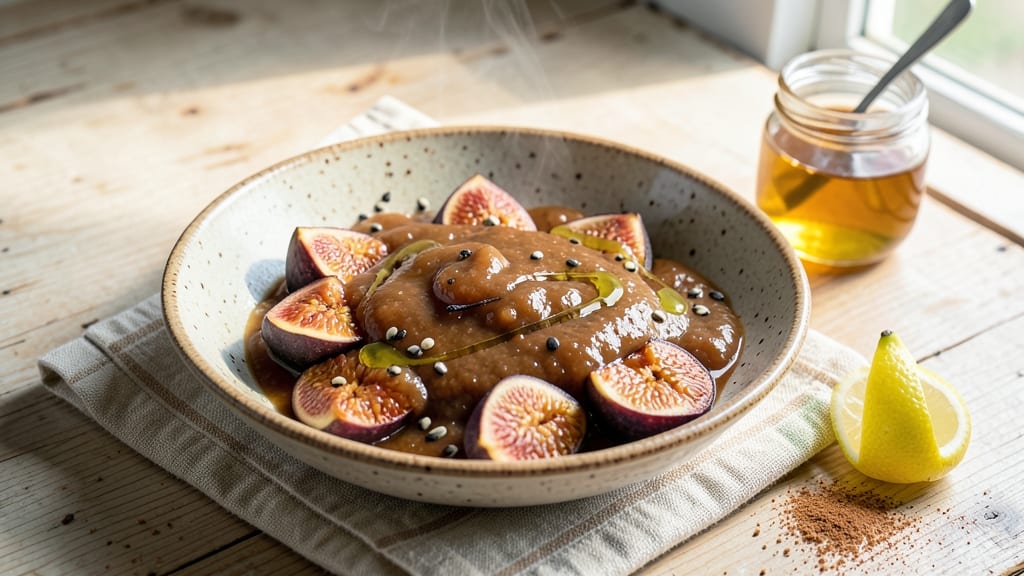
This fig sauce recipe transforms simple ingredients into a jammy, velvety condiment that elevates everything from grilled cheese to charcuterie boards. The process is straightforward—simmering fresh or dried figs with honey and lemon until thickened—but the results are anything but basic.
I developed this version after realizing how versatile a well-balanced fig sauce could be, bridging sweet and savory flavors without overpowering either.
The key lies in the reduction: simmering figs with a touch of vanilla and cinnamon until the mixture thickens into a glossy, spreadable consistency.
This isn’t just a glaze—it’s a multi-purpose sauce that adds depth to roasted meats, pairs beautifully with aged cheeses, and even enhances desserts like pancakes or ice cream. The acidity from lemon balances the natural sweetness, while spices add warmth that lingers on the palate.
What makes this recipe stand out is its versatility—use it as a dip, a glaze, or a finishing touch. The sauce keeps well in the refrigerator for up to two weeks, making it perfect for meal prep or gifting.
Whether you’re hosting a dinner party or simply craving something special for your next sandwich, this fig sauce delivers restaurant-quality flavor with minimal effort.
Ready to make it? The ingredients are simple, the process is foolproof, and the results will have everyone asking for seconds. Let’s get started—your taste buds will thank you.
Ingredients for fig sauce
Eight ingredients transform into a velvety, jammy sauce perfect for sandwiches, charcuterie, or desserts.
| Ingredient | Amount | Notes |
|---|---|---|
| Fresh Figs 🍇 | 1 ½ lb | Pitted and quartered, ripe but firm |
| Honey 🍯 | ½ cup | Raw or wildflower preferred |
| Lemon Juice 🍋 | ¼ cup | Freshly squeezed, seeds removed |
| Vanilla Bean 🌿 | 1 whole | Split lengthwise for seeds |
| Ground Cinnamon 🌶️ | 1 tsp | Freshly ground for warmth |
| Extra-Virgin Olive Oil 🫒 | ¼ cup | For glossy finish |
| Sea Salt 🧂 | ½ tsp | Diamond Crystal preferred |
| Dried Figs 🍇 | ½ cup | Optional, for depth |
| Red Wine Vinegar 🍷 | 1 tbsp | For tangy balance |
Figs are the star here—fresh is ideal, but dried adds depth if you're short on time. Whole Foods or local markets usually have the best quality, but any grocery store's figs work if they're plump and vibrant. The dried figs? Trader Joe's has a great bulk bin option that keeps for months. Skip the pre-pitted kind—they're often mushy. A quick knife through the stem and a gentle twist gets them open, and a paring knife handles the pitting like a dream. For honey, raw or wildflower adds complexity, but any liquid honey works. The vanilla bean? Split it lengthwise and scrape out the seeds—don't skip this, it's where the magic happens.
No fresh figs? Dried work perfectly—just soak them in warm water for 10 minutes first. Short on honey? Maple syrup at a 1:1 ratio keeps the flavor profile close. The red wine vinegar can be swapped for apple cider vinegar if you prefer something milder. Want extra richness? Add 1 tbsp of heavy cream at the end. The olive oil is non-negotiable for that glossy finish—avoid light olive oil, it lacks flavor. If you're making this ahead for a party, double the batch—it disappears fast when paired with cheeses or grilled meats.
This sauce keeps beautifully—2 weeks in the fridge sealed in a jar. For gifting, portion into small jars with a ribbon. Freezes for up to 3 months if you're prepping for holidays. The texture thickens as it cools, so stir in a splash of warm water if it gets too stiff. I always make extra—it pairs with everything from grilled chicken to vanilla ice cream. The first time I made this, I used it as a glaze for pork tenderloin and got rave reviews. Trust me, you'll want to keep a jar in your fridge.
Why You'll Love This Recipe
- Five-Ingredient Magic: This sauce comes together with just fresh figs, honey, and a splash of lemon—no fancy techniques, no stress. Honestly, I’ve made it while chatting on the phone because it’s that unfussy.
- Sweet-Tart Symphony: The honey and lemon juice balance the figs’ jammy richness, while a scraped vanilla bean adds depth that feels luxurious. Between us, it’s the kind of flavor that makes you pause mid-bite.
- Cheat-Code Versatility: Drizzle it over yogurt for breakfast, swirl it into ricotta for dessert, or toss it with goat cheese on toast. I’ve even used it to glaze roasted chicken—it’s my secret weapon for turning simple meals into something special.
- Lasts All Week: Make a big batch—it keeps for days in the fridge without losing its vibrancy. My kids ask for it on sandwiches by day three, and I’ve never had to toss any. Budget-friendly? Absolutely.
Step-by-step instructions for fig sauce that elevates every bite
Here's how to transform fresh figs into a luscious, versatile sauce perfect for sandwiches or charcuterie boards.
Simmer Fresh Figs Until Jammy
In a medium saucepan, combine the 1.5 lb fresh figs (pitted and quartered), 0.5 cup honey, and 0.25 cup lemon juice. Bring to a gentle boil over medium heat, then immediately reduce to a simmer. Let it cook uncovered for 15-20 minutes, stirring occasionally, until the figs break down into a thick, jam-like consistency.
You'll know it's ready when the mixture darkens slightly and thickens enough to coat the back of a spoon. The aroma will be rich and sweet with a bright citrus note—this is where the magic happens. If you notice the sauce getting too thick too quickly, add 1-2 tablespoons of water to maintain balance. The dried figs can wait—they'll add texture later.
Infuse with Vanilla and Spices
Once the fresh figs are jammy, scrape the seeds from the 1 whole vanilla bean and add them to the sauce along with the 1 tsp ground cinnamon and 0.5 tsp sea salt. Stir well to distribute the spices evenly. Let the mixture simmer gently for another 5 minutes to allow the vanilla to bloom and the cinnamon to warm up.
Here's the thing—vanilla needs time to release its full flavor. If you rush this step, you'll miss that deep, floral complexity that makes this sauce extraordinary. The cinnamon should dissolve completely, but don't worry if you see tiny specks—they'll mellow out as it cools. Taste the sauce now; you should detect layers of sweetness, warmth, and subtle tartness.
Finish with Olive Oil and Vinegar
Remove the saucepan from heat and let the mixture cool slightly for 2-3 minutes. Then, whisk in the 0.25 cup extra-virgin olive oil and 1 tbsp red wine vinegar until fully incorporated. The olive oil adds a luxurious mouthfeel, while the vinegar cuts through the sweetness for balance. If the sauce seems too thick after cooling, you can thin it slightly with 1-2 teaspoons of water or more lemon juice.
This is where the sauce transforms from good to extraordinary. The olive oil gives it a velvety finish, and the vinegar ensures it won't be cloyingly sweet. Stir in the 0.5 cup dried figs now—they'll soften slightly and add a delightful chewy contrast. Let the sauce sit at room temperature for 10 minutes to allow all the flavors to meld completely.
Adjust and Store for Maximum Flavor
Taste the sauce one final time and adjust the seasoning if needed. You might want to add a pinch more sea salt or a splash of lemon juice to brighten it up. For the best texture, transfer the sauce to a clean jar and let it cool completely. It will thicken as it sits, so you may need to stir occasionally to maintain consistency.
The sauce keeps well in the refrigerator for up to 2 weeks, but I recommend using it within 10 days for peak flavor. When ready to serve, give it a quick stir—it should be thick, glossy, and ready to drizzle over grilled cheese, cheese boards, or even roasted meats. The contrast of warm, jammy figs with cool, sharp cheese is pure perfection.
Pro Tips For Making Fig Sauce
- STALK THE FIGS: Don’t grab the first ripe figs you see—look for ones that yield slightly when gently squeezed (like a soft peach) but aren’t mushy. Overripe figs turn the sauce into a watery mess, and underripe ones won’t break down properly. I learned this the hard way after making a batch that tasted like chewed-up rubber.
- SIMMER LOW AND SLOW: Medium-low heat is your friend here. Figs release their natural sugars aggressively, and high heat turns them bitter. After the initial chop-and-simmer, drop the temperature and let it bubble gently for at least 15 minutes. Sounds boring, but it’s the only way to get that deep, caramelized sweetness without burning.
- SCRAPE THE VANILLA: Don’t just drop the vanilla bean in and call it a day. Split it lengthwise, scrape out every last bit of those tiny black seeds with a knife, and toss them in. The seeds pack way more flavor than the pod alone—it’s like the difference between a whisper and a shout. (Yes, even if you’re impatient like me.)
- LEMON JUICE LAST: Add the lemon juice toward the end of cooking, not at the start. Figs are delicate, and too much acid too soon makes them turn gray and sad. Wait until the sauce is thickened and fragrant, then stir in the juice to brighten the flavors without wrecking the texture. Trust me, your sauce will thank you.
Best sauces and condiments for this fig sauce
Sweet-Savory Glaze
Use this fig sauce as a glaze for roasted meats—especially pork tenderloin or lamb chops. Brush it on during the last 5-7 minutes of roasting at 400°F for a caramelized finish.
I love pairing it with herb-crusted lamb chops—the fig sauce adds a jammy sweetness that balances the savory meat. For extra depth, add 1 tsp balsamic vinegar to the sauce before glazing. 🍖
Cheese Board Elevator
This sauce transforms any charcuterie spread into a gourmet experience. Drizzle it over aged cheddar, brie, or goat cheese for a sweet-savory contrast. I recommend serving it with provolone, sharp cheddar, and a few slices of salami—the fig sauce ties everything together beautifully.
For presentation, use a squeeze bottle to create elegant drizzles over the cheese board. 🧀
Grilled Cheese Upgrade
Take your grilled cheese to the next level by spreading a thin layer of fig sauce on one slice before assembling. The sauce caramelizes slightly in the pan, creating a sticky, jammy layer that pairs perfectly with gruyère or gouda.
For extra indulgence, add a sprinkle of crispy prosciutto between the slices. This combo is a game-changer for lunch or a cozy dinner. 🥪
Dessert Drizzle
Don’t stop at savory—this sauce is amazing on desserts! Drizzle it over vanilla ice cream, pancakes, or even warm chocolate chip cookies. The warm spices and honey complement the sweetness beautifully.
I also love using it as a filling for thick-cut cinnamon rolls—just brush it on before baking. For a fancy touch, garnish with toasted pecans or candied walnuts. 🍰
Marinade Magic
Use this sauce as a marinade for chicken or tofu before grilling or baking. The figs and honey tenderize the protein while adding a rich, fruity flavor. I marinate boneless chicken thighs for 4-6 hours before grilling, then brush with extra sauce during the last minute of cooking.
The result? Juicy, flavorful meat with a sticky glaze. 🍗
Bread Dipping Sauce
Warm up some crusty sourdough or baguette slices and serve them with this sauce for a sophisticated appetizer. The combination of warm bread, jammy figs, and sharp cheese (like manchego) is irresistible. For extra flair, sprinkle with flaky sea salt and a few cracked black peppercorns right before serving. 🥖
Nutrition facts
Frequently asked questions
Can I make this fig sauce with dried figs only?
Yes! Simply soak 1 cup dried figs in warm water for 10 minutes to soften, then drain before combining with honey and lemon. For extra richness, add 1 tbsp extra olive oil to compensate for the reduced moisture. The texture will be slightly thicker but equally delicious.
How do I store leftover fig sauce?
Transfer to an airtight jar and refrigerate for up to 2 weeks. For longer storage, freeze for 3 months—thaw overnight in the fridge. The sauce thickens as it cools, so stir in 1 tsp water if needed before serving. Pro tip: Label with the date to track freshness.
What's the best way to use fig sauce on grilled cheese?
Spread a thin layer on one slice before assembling—it caramelizes beautifully in the pan! For extra decadence, add crispy prosciutto between slices. The sauce pairs perfectly with gruyère or sharp cheddar, creating a sweet-savory balance that elevates a simple sandwich.
Can I substitute honey with another sweetener?
Yes! Use maple syrup at a 1:1 ratio for a similar flavor profile, or agave for a neutral sweetness. For depth, try date syrup, which adds caramel notes. Just note that maple syrup may darken the sauce slightly more than honey.
Why did my fig sauce turn out too thin?
Simmering time is key—cook for 20-25 minutes until thickened. If it's still runny, return to low heat and simmer uncovered for 5-10 more minutes. For immediate thickening, mix 1 tsp cornstarch with water and stir in. This happens most often with overripe or underripe figs.