
Sauces & Condiments
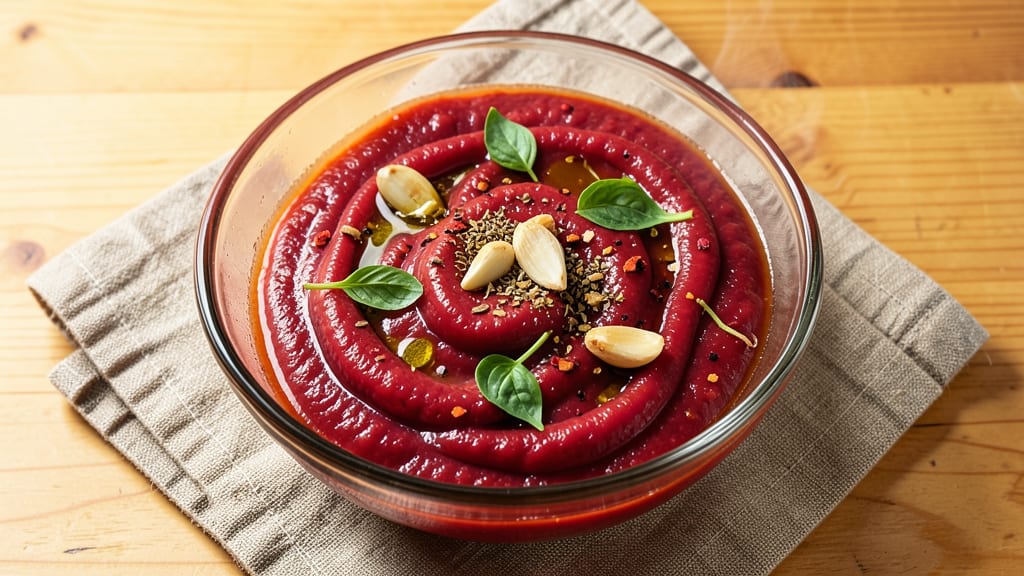
This copycat pizza sauce recipe delivers the same umami-packed depth you love from your favorite pizzeria, without the artificial ingredients found in store-bought jars. The secret lies in slow-simmered tomatoes, aromatic garlic, and a precise balance of herbs that create a sauce with rich, complex flavor and perfect consistency.
I developed this recipe after years of testing—it’s the one that finally convinced even the most devoted jarred-sauce fans to switch.
The foundation of great pizza sauce is simmering time, which allows the natural sugars in tomatoes to caramelize and deepen the flavor. Unlike jarred versions, this recipe builds layers of taste through fresh basil, oregano, and a touch of red pepper flakes for subtle heat.
The sauce thickens naturally as it cooks, creating that ideal smooth yet slightly chunky texture that clings perfectly to pizza dough.
What sets this sauce apart is its versatility—it works equally well for classic New York-style pies, Neapolitan thin crusts, or even as a marinara for pasta. The flavor intensifies after a day in the fridge, making it perfect for meal prep.
Once you taste the difference, you’ll never go back to the jarred stuff.
Ready in just 30 minutes, this sauce requires minimal effort but delivers restaurant-quality results. The ingredients are simple—tomatoes, garlic, olive oil, and herbs—but the technique transforms them into something extraordinary. Let’s make sauce that tastes like it came straight from a pizzeria kitchen.
Ingredients for copycat pizza sauce
Simple ingredients, pizzeria-level flavor—this sauce is everything jarred versions aren't.
| Ingredient | Amount | Notes |
|---|---|---|
| San Marzano Tomato Paste 🍅 | 1 tbsp | High-quality, no sugar added |
| Fresh Garlic Cloves 🧄 | 4 cloves | Minced for aromatic depth |
| Extra-Virgin Olive Oil 🫒 | ¼ cup | Lightly fruity, not bitter |
| Fresh Basil Leaves 🌿 | ½ cup | Packed, stems removed |
| Dried Oregano 🍃 | 1 tsp | Mexican oregano preferred |
| Red Pepper Flakes 🌶️ | ½ tsp | For subtle heat |
| Granulated Sugar 🍚 | 1 tsp | Balances acidity |
| Diamond Crystal Kosher Salt 🧂 | 1 tsp | Adjust to taste |
| Crushed Red Pepper 🌶️ | ¼ tsp | Optional for extra depth |
| Dried Thyme 🌿 | ½ tsp | Earthy complement |
The tomatoes are non-negotiable. San Marzano paste is the gold standard—sweeter, smoother, and packed with natural sugars that caramelize beautifully. If you can't find it, Muir Glen is a solid backup. Fresh garlic is a must here; pre-minced gets soggy and loses its punch. I always grab a whole head from Trader Joe's—it keeps longer and tastes fresher. The olive oil should be fruity but not peppery—California Avocado or Bertolli are my go-tos. For the basil, fresh is ideal, but if you're in a pinch, dried works at one-third the amount (though nothing beats that bright, fresh flavor).
No red pepper flakes? Crushed cayenne at half the amount gives similar heat. Short on basil? Fresh parsley at double the quantity mimics the freshness. Want more depth? Add a splash of balsamic vinegar at the end—just a teaspoon. The sugar balances the acidity, but if you're using extra-sweet tomatoes, you can skip it entirely. For the thyme, fresh sprigs work too—just remove them before blending. And if you're making a big batch, consider adding a pinch of smoked paprika for that authentic wood-fired taste.
This sauce tastes even better the next day—flavor intensifies as it rests. Store in an airtight container in the fridge for up to 5 days, or freeze portions for 3 months. I like to portion it into ice cube trays for single-use servings—just pop one into your pizza dough and you're good to go. If it thickens too much, a splash of water or broth thins it right out. The key is letting it simmer low and slow—don't rush it—that's what builds the umami.
Why You'll Love This Recipe
- No-Fuss Pantry Magic: I swear by this sauce because it lives in my cabinet—just toss in the San Marzano paste, a splash of water, and simmer. The garlic and basil come together in minutes, no chopping marathon required.
- Garlic-Basil Bomb: That first whiff of fresh garlic sizzling in olive oil? It’s the secret weapon. The San Marzano paste gives it a depth you won’t find in jarred sauce, and the basil finishes it with a bright, herby punch.
- Game for Any Night: Weeknight pizza? Check. Sunday brunch lasagna? Still works. Even slathered on grilled chicken or roasted veggies—it’s the kind of sauce that makes everything feel special without trying too hard.
- Stays Fresh, Saves Money: A batch lasts me a week in the fridge, and I freeze half for lazy days. Better yet, the ingredients cost less than half of what you’d pay for a fancy jar—plus, you control the quality every time.
Step-by-step instructions for umami-packed pizza sauce
This sauce delivers restaurant-quality depth with minimal effort—no shortcuts, just pure flavor.
Bloom the Aromatics in Olive Oil
Heat the 0.25 cup extra-virgin olive oil in a medium saucepan over medium-low heat. Add the 4 cloves minced fresh garlic cloves and let them cook for 2-3 minutes until they're fragrant but not browned—this prevents bitterness. Here's the thing: garlic burns fast, so keep an eye on it. Stir occasionally to distribute the heat evenly.
Next, add the 1 tsp dried oregano and 0.5 tsp dried thyme, stirring for 30 seconds to toast the spices. This step unlocks their essential oils, giving your sauce that authentic Italian depth. The spices should smell earthy and warm, not burnt. If they darken too quickly, reduce the heat slightly.
Build the Sauce Base
Add the 1 tbsp San Marzano tomato paste and stir vigorously for 1 minute to fully incorporate. The paste will darken slightly as it melts into the oil. Now, pour in 1 cup of water—this is crucial for creating a balanced sauce. Bring the mixture to a gentle simmer over medium heat and let it cook uncovered for 5 minutes.
While simmering, add the 1 tsp granulated sugar, 1 tsp Diamond Crystal kosher salt, and 0.5 tsp red pepper flakes. The sugar balances the acidity, the salt enhances all flavors, and the red pepper flakes add subtle heat. Stir occasionally to prevent sticking. You'll see the sauce thicken slightly as it reduces—this is exactly what you want for that perfect pizza sauce consistency.
Finish with Fresh Herbs and Crushed Pepper
Remove the sauce from heat and stir in the 0.5 cup fresh basil leaves (stems removed) and 0.25 tsp crushed red pepper. The basil adds bright, fresh notes that cut through the richness, while the crushed red pepper deepens the flavor. Let the sauce sit off the heat for 5 minutes—this allows the flavors to meld completely. Taste and adjust seasoning if needed; you might need a pinch more salt or sugar depending on your basil's freshness.
For best results, use this sauce immediately on your pizza or store it in an airtight container in the refrigerator for up to 5 days. The flavors will continue to develop, making it even more complex over time. This isn't just pizza sauce—it's a flavor bomb that elevates every bite.
Pro Tips For Making Copycat Pizza Sauce
- Simmer Low and Slow: I learned this the hard way—boiling pizza sauce ruins it. Once you add the garlic and basil, drop the heat to a gentle simmer (barely bubbling) and let it cook for 20-25 minutes. The flavors meld without turning bitter, and you won’t end up with a watery mess.
- Toast the Garlic: Peel those cloves first, then toss them in a dry pan over medium-low heat for 30 seconds until fragrant but not browned. Crushed raw garlic burns fast and adds bitterness—this step guarantees sweet, mellow flavor without overpowering the sauce.
- Skip the Crowding: When adding the tomato paste, resist the urge to dump it all in at once. Spread it in a thin layer first, let it cook for 2 minutes, then stir. Thickening it gradually prevents clumping and ensures a smooth, velvety texture—no one likes lumpy sauce on their pizza.
- Add Basil Late: Fresh basil wilts and turns bitter if cooked too long. Tear the leaves by hand (no chopping!) and stir them in just before turning off the heat. This keeps their bright, herbal punch intact—because nothing kills good pizza sauce faster than sad, mushy basil.
Wine and beer pairings for copycat pizza sauce
Italian White Wine
For this sauce, I always reach for a crisp Pinot Grigio from Italy—specifically, one from the Friuli-Venezia Giulia region. A glass of 2019 Ronco della Iseleta Pinot Grigio (around $15-$20) brings bright citrus and mineral notes that mirror the sauce’s fresh basil and acidity.
The wine’s light body won’t overpower the dish, but its acidity cuts through the richness of melted cheese on pizza. Serve slightly chilled for the best experience. 🍷
Crisp Lager Pairing
A German Pilsner like Warsteiner or Spaten Optimator is my go-to beer pairing. The crisp, clean malt profile and subtle hop bitterness cleanse your palate between bites of saucy pizza.
For a local option, try a Belgian Witbier like Hoegaarden—its coriander and orange peel notes complement the sauce’s herbal freshness. Avoid heavy stouts or IPAs, which would clash with the delicate tomato and basil flavors.
Red Wine for Heartier Pies
If you’re making a meat-topped pizza or prefer bold flavors, a Chianti Classico like Castello di Volpaia (around $25-$35) works beautifully. The medium-bodied acidity and cherry notes stand up to rich toppings like pepperoni or sausage.
Look for a 100% Sangiovese from the Chianti DOCG region—it’s the perfect match for a classic Margherita or BBQ chicken pie. Decant for 30 minutes to soften tannins.
Sparkling Wine for Celebrations
For a special occasion, a dry Prosecco like La Marca Prosecco Superiore adds a festive touch. The effervescence and apple notes contrast the sauce’s richness, making each bite feel like a celebration.
Serve well-chilled (around 45-50°F) in flutes to highlight its bubbles. This pairing works especially well with thin-crust pizzas or gourmet toppings like truffle oil or burrata.
Non-Alcoholic Options
Don’t skip the pairing just because you’re avoiding alcohol! A sparkling apple cider like Martinelli’s or a ginger beer (like Feast! Big Ginger Beer) adds refreshing acidity.
For a sophisticated touch, try a non-alcoholic Italian sangria—mix sparkling water, orange juice, and a splash of grenadine with fresh mint. The citrus notes echo the sauce’s brightness. 💛
Nutrition facts
Frequently asked questions
Can I make this sauce without fresh basil?
Yes, but the flavor will be different. Use 1 teaspoon dried basil instead, but add it at the very end to preserve its aroma. For a similar freshness, try 1 teaspoon fresh parsley or ½ teaspoon dried marjoram. The sauce will still taste great—just not as vibrant.
How do I adjust the thickness for different pizza styles?
For Neapolitan-style (thin crust), use the sauce as-is—it’s already perfect. For New York-style (thick crust), thin it with 1-2 tablespoons water or broth. If it’s too thick after simmering, add liquid gradually while stirring. For deep-dish, reduce the sauce by 10-15 minutes longer to achieve a paste-like consistency.
Why does my sauce taste too acidic or bitter?
Acidity usually means the tomatoes weren’t ripe enough or simmered too long. Balance it with ½ teaspoon more sugar or a pinch of salt. Bitterness often comes from overcooked garlic or spices—next time, toast them for just 30 seconds over low heat. If it’s still off, stir in 1 teaspoon balsamic vinegar to mellow the flavors.
Can I make this sauce in a slow cooker or Instant Pot?
For a slow cooker, combine all ingredients except basil, cook on Low for 3-4 hours, then stir in basil at the end. For an Instant Pot, sauté garlic/spices first, then add remaining ingredients and cook on High Pressure for 5 minutes. Quick-release the pressure, stir in basil, and let it sit for 5 minutes off heat. Both methods work, but stovetop gives the best texture control.
How do I store leftovers for the best flavor?
Let the sauce cool completely, then transfer to an airtight container. It keeps in the fridge for 5-7 days, with flavors actually improving over time. For long-term storage, freeze in ice cube trays (perfect for single servings) or silicone molds for up to 3 months. Thaw overnight in the fridge—never microwave directly from frozen. The sauce thickens when cold, so stir in 1 tablespoon water if needed before using.