
Sauces & Condiments
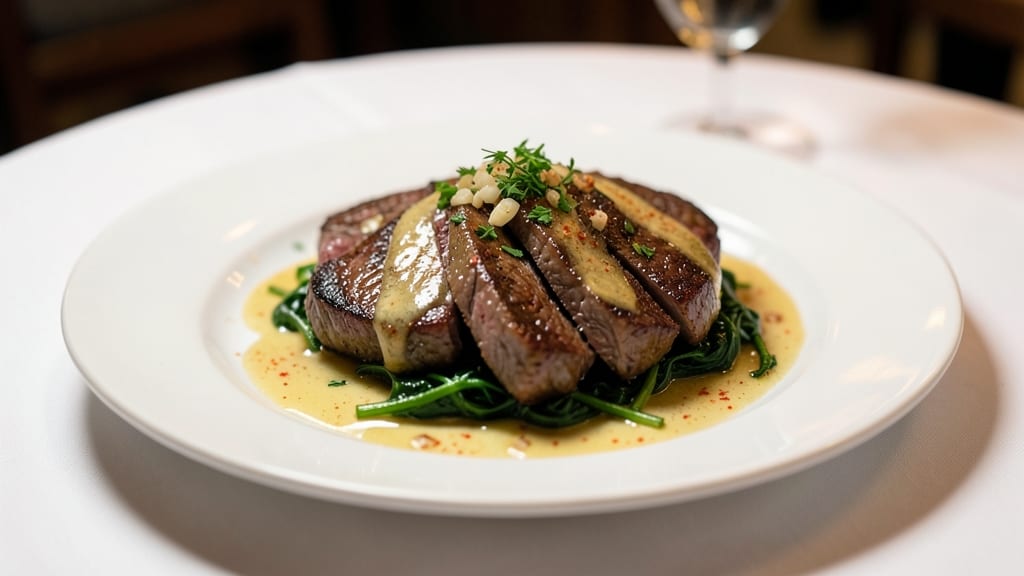
Mastering classic Béarnaise sauce recipe transforms any steak dinner into a restaurant-worthy experience—its velvety texture and aromatic depth come from precise technique, not shortcuts. The key lies in tempering butter into a warm vinegar reduction while whisking continuously, creating an emulsion that's both rich and stable.
I've perfected this method over years, ensuring every batch achieves that signature glossy finish and herbaceous brightness.
This sauce begins with a reduction of white wine vinegar and shallots, which forms the flavor base before butter is gradually incorporated to create the signature emulsion. Fresh tarragon and parsley add the signature herbal notes, while a touch of cayenne brings subtle heat.
The process requires patience—whisking constantly over a double boiler ensures the sauce never breaks or seizes, even when butter is added.
What you'll achieve is a sauce that's silky, aromatic, and perfectly balanced—neither too tangy nor overly buttery. It clings beautifully to steak, chicken, or even grilled vegetables, elevating them instantly.
The glossy sheen and rich flavor make it worth the effort, and it keeps well in the refrigerator for up to 3 days, ready to transform your next meal.
For those new to emulsified sauces, the technique might seem intimidating, but I'll guide you through each step to ensure success. The payoff—a sauce that tastes like fine dining—is well worth the practice. Let's get started on creating this timeless classic.
Ingredients for classic bearnaise sauce
Nine essential components create this velvety, herb-infused emulsion that defines fine dining.
| Ingredient | Amount | Notes |
|---|---|---|
| White Wine Vinegar 🍷 | ½ cup | Dry variety preferred for balance |
| Shallots 🧅 | 2 whole | Minced finely for smooth texture |
| Fresh Tarragon 🌿 | ¼ cup | Finely chopped, stems removed |
| Fresh Parsley 🌿 | ⅛ cup | Finely chopped, flat-leaf preferred |
| Unsalted Butter 🧈 | 1 cup | Cold, cubed for gradual incorporation |
| Cayenne Pepper 🌶️ | ¼ tsp | Adjust for desired heat intensity |
| Diamond Crystal Kosher Salt 🧂 | ½ tsp | Fine grain for delicate seasoning |
| Granulated Sugar 🍬 | ½ tsp | Balances acidity in reduction |
| Heavy Cream 🥛 | ¼ cup | Optional for enhanced richness |
The foundation begins with white wine vinegar—opt for a dry variety like Bartles & Jaymes or La Vieille Ferme to avoid overpowering tang. Shallots should be fresh, firm, and pale purple—avoid green-tinged ones. For tarragon, farmers' market stalks deliver superior flavor over grocery store bunches, which often wilt quickly. Penzeys or McCormick's organic tarragon are reliable alternatives if fresh isn't available. The parsley acts as a flavor bridge, so flat-leaf varieties provide more robust flavor than curly. Store all fresh herbs in damp paper towels in sealed containers for up to 5 days—they lose potency rapidly once picked.
Substitutions require precision: apple cider vinegar can replace white wine vinegar at a 1:1 ratio, though it adds subtle sweetness. Dried tarragon works at one-third the amount, but lacks the bright, anise-like notes of fresh. For butter, European-style cultured butter like Plugrá adds depth, though unsalted works fine. The cayenne pepper is non-negotiable for the signature heat—smoked paprika at half the amount offers a different profile. Heavy cream can be omitted entirely, but if using, ensure it's full-fat for proper emulsification. Salt should be Diamond Crystal kosher—Morton's lacks the fine grain needed for delicate seasoning.
This emulsion must be used within 3 days for optimal texture, though it can be refrigerated for up to 5 days if stored in an airtight glass container submerged in vinegar to prevent butter separation. For longer storage, freeze in ice cube trays—thaw in a double boiler before use. Never reheat directly—always temper with residual heat from the sauce itself to prevent breaking. The sauce thickens as it cools, so rewhisk briefly before serving. Portion into ramekins for elegant plating, or store in a glass jar with a tight seal for convenience.
Why You'll Love This Recipe
- No-Fuss Emulsions: I swear by this recipe because it’s the only bearnaise that doesn’t demand a degree in French technique. The trick is melting the butter into the vinegar-shallot base slowly—no whisking arms required—then finishing with the herbs. It’s forgiving, even if you’re not.
- Herb-Packed Magic: That bright tarragon and parsley combo? It’s what turns this from "sauce" to "showstopper." The vinegar cuts through the richness of the butter, and the herbs linger like a whisper of summer—especially when drizzled over seared steak or grilled fish.
- Weeknight to Dinner Party: Make a double batch on Sunday and store it in the fridge. It’s ready to elevate weeknight chicken or impress guests at your next dinner. Honestly, I’ve used it on everything from eggs to roasted veggies, and it never lets me down.
- Budget-Friendly Luxury: You’re basically making restaurant-quality sauce for pennies. Shallots and tarragon are cheap at farmers' markets, and a stick of butter stretches far. Plus, leftovers keep for days, so you’re not wasting a thing—just pure, creamy flavor on demand.
Step-by-step instructions for classic bearnaise sauce
Master this timeless French sauce through precise technique and patience.
Create the Vinegar Reduction
In a small saucepan, combine the 0.5 cup white wine vinegar, 2 whole minced shallots, 0.5 tsp granulated sugar, and 0.5 tsp diamond crystal kosher salt. Bring to a simmer over medium-high heat and reduce by half—this should take about 8-10 minutes. The reduction should be syrupy and golden, with the shallots completely dissolved. If it reduces too quickly, lower the heat to maintain gentle bubbling.
Here's the thing—this reduction forms the flavor foundation. Don't rush it; let the vinegar mellow and the shallots integrate fully. When you can see the bottom of the pan clearly through the reduced liquid, it's ready. Strain immediately through a fine-mesh sieve into a heatproof bowl to remove any sediment, then set aside to cool slightly. The mixture should be smooth and glossy, with no visible particles.
Infuse the Butter with Herbs
While the reduction cools, prepare the herb butter by combining the 1 cup cold unsalted butter (cut into small cubes) with the 0.25 cup finely chopped fresh tarragon, 0.125 cup finely chopped fresh parsley, and 0.25 tsp cayenne pepper. Place the mixture in a small heatproof bowl set over a pot of barely simmering water—this creates a gentle bain-marie that melts the butter without scorching the herbs.
Stir occasionally with a wooden spoon until the butter is completely melted and the mixture reaches 160°F—just below the temperature where butter separates. The herbs should infuse the butter with vibrant green color and aromatic essence. Remove from heat immediately once melted, then strain through a fine-mesh sieve into a clean bowl to remove herb stems and any solids. This infused butter is the heart of your bearnaise.
Emulsify the Sauce
With the vinegar reduction at room temperature (around 70-75°F), place the bowl over a pot of barely simmering water again. Whisk in the 0.25 cup heavy cream to temper it slightly, then begin whisking continuously. Gradually add the infused butter in a slow, steady stream—this is critical. The sauce will initially break, but keep whisking vigorously as it re-emulsifies into a glossy, velvety consistency.
Maintain the sauce at 150-160°F while whisking—never let it exceed 165°F or the butter will separate permanently. The final texture should be silky, with a sheen that coats the back of a spoon. If the sauce thickens too much, whisk in 1 teaspoon water at a time until it reaches the perfect consistency. Taste and adjust seasoning with additional diamond crystal kosher salt or cayenne pepper as needed.
Finish and Serve Immediately
Strain the finished sauce through a fine-mesh sieve into a clean sauceboat or small bowl to ensure absolute smoothness. Cover the surface with a thin layer of plastic wrap pressed directly onto the sauce to prevent a skin from forming. Serve immediately alongside steak, fish, or roasted vegetables—bearnaise loses its emulsion if reheated.
For the classic presentation, drizzle the sauce in a zigzag pattern over the protein just before serving. The sauce should coat the back of a spoon without being too thick, and the tarragon and parsley flavors should shine through with a subtle heat from the cayenne. This is where the magic happens: the perfect balance of acidity, richness, and herbaceousness in every bite.
Pro Tips For Making Classic Bearnaise Sauce
- Sweat Shallots Slowly: I learned this the hard way—rush the shallots, and you’ll end up with bitter, raw bits in your sauce. Use a low, consistent heat and let them cook for 8-10 minutes until they’re translucent and just starting to turn golden. No need to brown them; you’re not making caramel here.
- Strain Twice, Strain Right: The first strain removes the shallots, but the second—through a fine-mesh sieve lined with cheesecloth—is where the magic happens. Skip it, and you’ll get a sauce with a weird texture. Press the liquid out gently; no one’s judging your patience.
- Whisk Like Your Life Depends on It: When you’re whisking in the butter, start slowly and let each piece melt completely before adding more. I used to dump it all in at once, and the sauce would split every time. Go slow—this isn’t a race.
- Use Cold Butter, Not Warm: Cut the butter into small cubes and chill them for 10 minutes before adding. Warm butter melts too fast and can turn your sauce into a greasy mess. Cold butter incorporates smoothly, giving you that silky, emulsified finish. Trust me, it’s worth the wait.
Best sauces and condiments for this classic bearnaise sauce
Herb-Infused Variations
Swap out tarragon for fresh chervil or chives to create a lighter, more delicate variation—just reduce the parsley to 0.1 cup to maintain balance. For a Mediterranean twist, add 1 tsp finely chopped fresh oregano alongside the tarragon.
I’ve found that lemon thyme works beautifully too, adding a bright citrus note that pairs perfectly with seafood. Always adjust the butter-to-herb ratio to avoid overpowering the sauce’s signature richness. 🌿
Spice Level Adjustments
For a mild heat, reduce the cayenne to ¼ tsp or use smoked paprika at half the amount. If you prefer a fiery kick, add ½ tsp finely chopped fresh chili or a pinch of Aleppo pepper to the reduction.
I once experimented with 1 tsp harissa paste in the vinegar reduction—it added smoky depth without overpowering the sauce. Taste as you go, as spice levels can intensify during emulsification. 🌶️
Dairy-Free Adaptations
Replace butter with vegetable shortening (like Crisco) or coconut oil for a dairy-free version, though texture will differ slightly. For richness, use ¼ cup neutral oil (like avocado oil) in place of the heavy cream.
The emulsion will be lighter but still velvety. I’ve also had success with cashew cream (blended soaked cashews) for a plant-based alternative, though it requires more whisking to stabilize. Always strain thoroughly to remove any solids. 🥥
Sauce Pairing Upgrades
Elevate your bearnaise by adding 1 tsp Dijon mustard to the reduction for extra depth, or finish with 1 tsp capers for a briny contrast. A drizzle of truffle oil (just ½ tsp) right before serving adds luxurious earthiness.
For a smoky twist, infuse the vinegar reduction with ½ tsp liquid smoke—it mimics the charred notes of grilled meats beautifully. 🍽️
Storage Hacks
To reheat bearnaise, place the sauce in a double boiler over barely simmering water, whisking constantly until warmed to 140°F. Never microwave—it breaks the emulsion. For longer storage, freeze in 1-tablespoon portions in ice cube trays, then transfer to a bag.
Thaw in the fridge overnight and reheat gently. I keep a small batch in the fridge at all times for last-minute steak dinners. ❄️
Nutrition facts
Frequently asked questions
Why does my bearnaise sauce break when I add butter?
The most common cause is adding butter too quickly or at too high a temperature. Always temper the butter by adding it slowly while whisking continuously over gentle heat (150-160°F). If it breaks, whisk vigorously and add 1 teaspoon warm water to help re-emulsify. The key is patience—never rush the butter incorporation!
Can I make bearnaise sauce ahead of time?
You can prepare the vinegar reduction and herb butter separately up to 2 days ahead, but the final sauce should only be emulsified and served fresh. Refrigerate components in airtight containers, then combine when ready. The sauce loses its emulsion when reheated, so always make it fresh for the best texture and flavor.
What's the best way to store leftover bearnaise?
Store in an airtight container submerged in vinegar to preserve the emulsion for up to 3 days. For longer storage, freeze in 1-tablespoon portions in ice cube trays. Thaw in the fridge overnight and reheat gently in a double boiler—never microwave! The texture may separate slightly after freezing, so whisk vigorously to restore smoothness.
Can I substitute white wine vinegar with something else?
Apple cider vinegar works in a pinch (1:1 ratio), but it adds subtle sweetness. For a more neutral acidity, use distilled white vinegar. Avoid balsamic or red wine vinegar—they'll alter the sauce's delicate balance. The vinegar reduction is the flavor foundation, so choose carefully!
How do I fix bearnaise that's too thick?
Whisk in 1 teaspoon warm water at a time until you reach the desired consistency. If it's still too thick after adding water, gently reheat in a double boiler while whisking continuously. The sauce should coat the back of a spoon without being gluey. For prevention, maintain the sauce at 150-160°F during emulsification.