
Sauces & Condiments
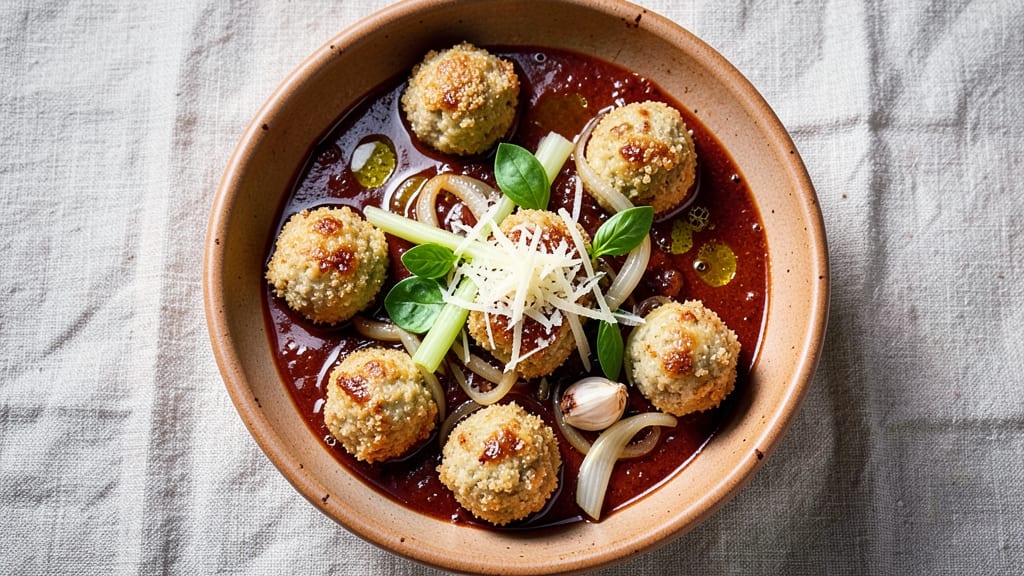
This chicken and ragu sauce recipe transforms simple ingredients into a slow-simmered masterpiece that clings to every bite. The secret lies in a rich blend of tomatoes, aromatics, and a touch of red wine that deepens the flavor over hours of gentle cooking.
Unlike quick sauces, this one develops layers of complexity—caramelized edges, tender meatballs, and a velvety texture that makes it irresistible on pasta, chicken, or even as a standalone dish.
The process begins with building flavor in the pan—sautéing onions, garlic, and celery until they soften and release their natural sweetness. Deglazing with wine cuts through the richness while extracting every last bit of flavor from the pan.
Then comes the slow simmer, where tomatoes, herbs, and a splash of broth meld together into a sauce so robust it tastes like it's been simmering all day. The result is a sauce that's versatile enough for weeknight dinners but impressive enough for company.
What sets this ragu apart is its ability to transform ordinary meals into something extraordinary. The sauce thickens just enough to coat meatballs or chicken perfectly, while remaining light enough to drizzle over fresh pasta.
It keeps well in the fridge for up to five days, making it ideal for meal prep, and freezes beautifully for future use. Each spoonful delivers a perfect balance of acidity, sweetness, and umami that lingers long after the last bite.
Whether you're serving it over al dente spaghetti, spooning it onto grilled chicken, or using it as a hearty filling for stuffed shells, this ragu sauce delivers restaurant-quality results with minimal effort.
The key is patience—letting the flavors develop gradually is what turns this into something truly special. Ready to elevate your cooking with this timeless classic?
Ingredients for chicken and ragu sauce
Rich, slow-simmered sauce with layers of umami and aromatic depth—just 17 ingredients transform simple pantry staples into restaurant-quality magic.
| Ingredient | Amount | Notes |
|---|---|---|
| Extra-Virgin Olive Oil 🫒 | ½ cup | High-quality for richness |
| Yellow Onion 🧅 | 1 ½ cups | Finely diced, about 2 medium |
| Carrots 🥕 | 1 cup | Finely diced, baby carrots work |
| Celery Stalks 🥬 | 1 cup | Finely diced, about 3 stalks |
| Garlic Cloves 🧄 | 6 cloves | Minced, not pre-minced jarred |
| Dry Red Wine 🍷 | 1 cup | Bold Cabernet Sauvignon preferred |
| Canned San Marzano Tomatoes 🍅 | 28 oz | Crushed by hand, seeds removed |
| Chicken Broth 💧 | 1 ½ cups | Low-sodium preferred |
| Tomato Paste 🍅 | 2 tbsp | High-quality, not watered down |
| Fresh Thyme Leaves 🌿 | ½ cup | Stems removed, or 1 tbsp dried |
| Fresh Rosemary 🌿 | 1 tbsp | Chopped, or 1 tsp dried |
| Ground Black Pepper 🌶️ | 1 tsp | Freshly cracked for best flavor |
| Salt 🧂 | 1 ½ tsp | Diamond Crystal preferred |
| Ground Chicken 🍗 | 1 ½ lb | 93% lean, for meatballs |
| Panko Breadcrumbs 🍞 | ½ cup | For meatballs, not regular crumbs |
| Large Egg 🥚 | 1 whole | For binding meatballs |
| Parmesan Cheese 🧀 | ¼ cup | Freshly grated, for meatballs |
The foundation starts with the San Marzano tomatoes—their natural sweetness and acidity are non-negotiable for authentic ragu. Whole Foods or Trader Joe's carry them in cans, and the price difference from store-brand is worth it. For the aromatics, yellow onions and carrots should be finely diced (a food processor speeds this up). The garlic is where flavor explodes—freshly minced, not pre-minced jarred garbage. Red wine matters too: Cabernet Sauvignon or Merlot adds depth, but any dry red will work. If you're prepping ahead, store the wine and broth separately until ready to deglaze—it keeps longer that way.
No red wine? Extra chicken broth with 1 tbsp balsamic vinegar mimics the acidity and depth. Short on thyme? Fresh oregano at the same amount works, but thyme's piney notes are essential. The tomato paste can be swapped for 1 additional cup of crushed tomatoes, though paste adds thickness and concentration. For meatballs, ground turkey at a 1:1 ratio keeps it lean. The Panko breadcrumbs are key—regular crumbs get soggy. If you're gluten-free, use gluten-free breadcrumbs or crushed cornflakes. The Parmesan should be freshly grated; pre-grated has anti-caking agents that ruin texture.
This sauce tastes better the next day—5-7 days in the fridge, 3 months frozen. Portion into airtight containers with a thin layer of olive oil on top to preserve color. For meatballs, freeze them raw in a single layer before transferring to bags—this prevents clumping. Reheat gently on the stove with a splash of broth to restore moisture. The sauce thickens as it cools, so thin with broth if needed. Leftovers? Double the batch—it disappears faster than you can say 'al dente'
Why You'll Love This Recipe
- Here’s what sold me: this sauce begs to be made in bulk. Double the batch, freeze half, and thank me later. Reheat it for pasta, dump it over rice, or even slather it on toast—it’s the ultimate lazy-day lifesaver. My freezer’s full of it, and I’m not complaining.
- One-Pot Magic: I swear by this recipe when I’m too tired to dirty more than one pan. Sauté the onion, carrots, and celery in olive oil until they soften—that caramelized aroma alone makes it worth it—and the garlic? Oh, it’s the star. Just toss in the chicken, simmer, and let the sauce thicken naturally. No straining, no fuss.
- Deep Umami Love: Between us, this ragu isn’t just flavorful—it’s ridiculously good. The slow cook of onions, carrots, and celery builds layers of sweetness, while the garlic and olive oil add that rich, savory depth. It’s the kind of sauce that turns plain chicken into something you’ll lick the plate for.
- Leftover Goldmine: Here’s what sold me: this sauce begs to be made in bulk. Double the batch, freeze half, and thank me later. Reheat it for pasta, dump it over rice, or even slather it on toast—it’s the ultimate lazy-day lifesaver. My freezer’s full of it, and I’m not complaining.
Step-by-step instructions for chicken and ragu sauce
This method delivers deep, complex flavor through slow simmering and proper technique.
Build the Meatballs with Perfect Texture
In a large bowl, combine the 1.5 lb ground chicken, 0.5 cup Panko breadcrumbs, 1 whole large egg, 0.25 cup Parmesan cheese, 1 tsp ground black pepper, and 1.5 tsp salt. Using your hands, gently mix until just combined—don't overwork the mixture or the meatballs will become dense. I like to press the mixture together briefly to test its cohesion before shaping.
Roll the mixture into 1.5-inch diameter balls (about 8 meatballs total) and place them on a plate. Chill in the refrigerator for 15 minutes while you prepare the sauce base. This resting period helps the meatballs hold their shape during cooking. The texture should be firm but not rock-hard when you press one gently.
Sauté the Vegetable Base for Deep Flavor
Heat the 0.5 cup extra-virgin olive oil in a large Dutch oven over medium heat. Add the 1.5 cups finely diced yellow onion, 1 cup diced carrots, and 1 cup diced celery stalks. Cook for 8-10 minutes, stirring occasionally, until the vegetables soften and release their juices. You'll notice the onions become translucent and the carrots begin to caramelize slightly.
Add the 6 minced garlic cloves and cook for 30 seconds until fragrant. Be careful not to let the garlic burn—it should smell sweet and nutty, not bitter. Remove the vegetable mixture from the pot and set aside. This step develops the foundational flavors that will carry through the entire sauce.
Develop the Sauce with Wine and Tomatoes
Return the Dutch oven to medium heat and deglaze with the 1 cup dry red wine, scraping up any browned bits from the bottom of the pot. Let the wine simmer for 3-4 minutes until reduced by half. Add the 2 tbsp tomato paste and stir for 1 minute to cook out the raw taste.
Pour in the 28 oz crushed San Marzano tomatoes and 1.5 cups chicken broth. Stir in the 0.5 cup fresh thyme leaves and 1 tbsp chopped fresh rosemary. Bring to a gentle simmer, then return the sautéed vegetables to the pot. The sauce should bubble gently—this slow simmering process is crucial for developing deep flavor.
Cook the Meatballs and Simmer the Ragu
Add the chilled meatballs to the sauce, gently stirring to coat them in the liquid. Increase heat to medium-high and bring to a boil, then immediately reduce to a gentle simmer. Cover partially and cook for 20 minutes, stirring occasionally to prevent sticking. The meatballs should cook through while absorbing the rich flavors of the sauce.
After 20 minutes, uncover the pot and continue simmering for an additional 20-25 minutes until the sauce thickens slightly and the meatballs are cooked through. You'll notice the sauce reduce and intensify in flavor. The meatballs should be firm to the touch and cooked through to 165°F internally. Taste and adjust seasoning with additional salt or pepper if needed.
Finish and Serve the Perfect Ragu
Remove the meatballs with a slotted spoon and set them aside. Skim any excess fat from the surface of the sauce if desired. Return the meatballs to the sauce and simmer for an additional 5 minutes to allow them to absorb the final flavors. The sauce should coat the back of a spoon and have a velvety texture.
Serve the chicken and ragu sauce immediately over fresh pasta or with crusty bread to soak up every bit of the rich sauce. Each bite should deliver tender meatballs with a deep, complex sauce that balances sweet tomatoes, earthy herbs, and rich umami flavors. The sauce will continue to improve as it sits, so don't hesitate to make extra for leftovers.
Pro Tips For Making Chicken And Ragu Sauce
- Sweat the Veggies Slow: I used to rush the onion, carrot, and celery—just throwing them in with the garlic until they softened. Now I cook them on medium-low for 12-15 minutes, stirring occasionally, until the onion is translucent and the carrots are breaking down. This builds deeper flavor without burning, and the sauce won’t taste raw or bitter when you add the chicken.
- Slice Carrots Thin: Thick carrot chunks? Forget it. Dice them into ¼-inch pieces so they cook through evenly and melt into the sauce. Celery and onion should be similarly fine—about ⅛-inch dice. I learned this the hard way: big chunks mean half-cooked veggies lurking in every bite.
- Don’t Crowd the Pan: If your chicken pieces are packed like sardines, they’ll steam instead of brown. Work in batches—even if it means two pans—so they get a crisp golden crust before the sauce comes in. This isn’t the prettiest method, but it’s the tastiest.
- Deglaze with Wine First: After browning the chicken, hit the pan with ½ cup of dry white wine (or broth) and let it simmer for 2 minutes before adding the ragu. This pulls up all the stuck-on bits—what you’d normally miss—and gives the sauce an instant depth. Skip this, and you’re basically skipping the best part.
Common mistakes when making great chicken and ragu sauce
Skipping the Sauté
One of the biggest mistakes is rushing the vegetable base. Skipping the 8-10 minute sauté for onions, carrots, and celery means missing out on the caramelization that builds sweetness and depth.
I’ve seen people add these veggies directly to the wine or tomatoes, but they’ll end up with a bland, watery sauce. Take your time here—this is where the foundation of flavor is built. 🌶️
Overworking Meatballs
When forming meatballs, many people overmix the ground chicken, egg, and breadcrumbs, which leads to dense, rubbery results. The key is to handle the mixture just enough to combine—about 10-12 gentle stirs—before shaping. Overworking develops gluten, making the meatballs tough.
I always press a small piece of the mixture between my fingers to check for cohesion before rolling. If it crumbles, add a splash of water or a little more breadcrumb.
Ignoring the Resting Time
Chilling the meatballs for 15 minutes before cooking is crucial, yet many skip this step to save time. This resting period allows the proteins to relax and bind, preventing the meatballs from falling apart in the sauce.
If you’re in a hurry, at least let them sit for 5 minutes—it makes a noticeable difference in texture. Pro tip: Use this time to prep the sauce base while the meatballs firm up.
Boiling the Sauce
Bringing the sauce to a full boil after adding the meatballs is a common mistake that can make the sauce break or the meatballs toughen. Instead, aim for a gentle simmer—small bubbles at the edges, not a rolling boil.
This keeps the sauce emulsified and the meatballs tender. If you see large bubbles, reduce the heat immediately. The sauce will thicken naturally over time, so patience is key.
Using Low-Quality Tomatoes
The difference between store-brand crushed tomatoes and San Marzano tomatoes is night and day. Cheap tomatoes lack the natural sweetness and acidity that balance the rich flavors of the ragu. I’ve tried making this sauce with canned tomatoes labeled "diced" or "stewed," and the results are always flat.
Invest in San Marzano—the flavor improvement is worth the extra cost. If you can’t find them, look for "whole peeled" San Marzano tomatoes and crush them yourself for the best texture.
Skimming Fat Too Aggressively
While it’s tempting to skim excess fat from the surface of the sauce, going overboard can remove too much of the natural richness that enhances flavor. Instead, use a spoon to remove only the top layer of fat if needed—about 1-2 tablespoons is plenty.
The fat helps carry the flavors and adds mouthfeel. If your sauce seems too thin, reduce it uncovered on the stove for 5-10 minutes—the fat will help thicken it naturally as it evaporates. 💫
Nutrition facts
Frequently asked questions
Can I make this ragu sauce without wine?
Replace the 1 cup dry red wine with 1 cup chicken broth plus 1 tablespoon balsamic vinegar. The vinegar mimics the acidity and depth of wine, while the broth maintains the sauce's richness. The flavor will be slightly different but still delicious.
How long does this sauce keep in the fridge?
The sauce tastes even better the next day and stays fresh for 5-7 days in an airtight container. For longer storage, freeze portions in airtight containers with a thin layer of olive oil on top—this preserves color and flavor for up to 3 months. Always thaw in the fridge, not at room temperature.
Can I use ground turkey instead of chicken?
Yes! Ground turkey works perfectly at a 1:1 ratio—it keeps the dish lean while maintaining great flavor. For best results, use 93% lean ground turkey and add 1 extra tablespoon of olive oil to the meatball mixture to prevent dryness. The cooking time remains the same.
What's the best way to reheat leftovers?
Gently reheat on the stove over low-medium heat, adding 1-2 tablespoons of chicken broth to restore moisture. Avoid microwaving, as it can make the sauce watery. For meatballs, cover the pot to prevent drying out—this keeps them tender and the sauce velvety.
Can I make this sauce in a slow cooker?
Yes, but with adjustments! Brown the meatballs first in a skillet, then transfer them to the slow cooker with the sauce ingredients. Cook on low for 6-7 hours or high for 3-4 hours, stirring occasionally. The slow cooker method develops deeper flavor but requires more time—check for doneness at 165°F internally.