
Sauces & Condiments
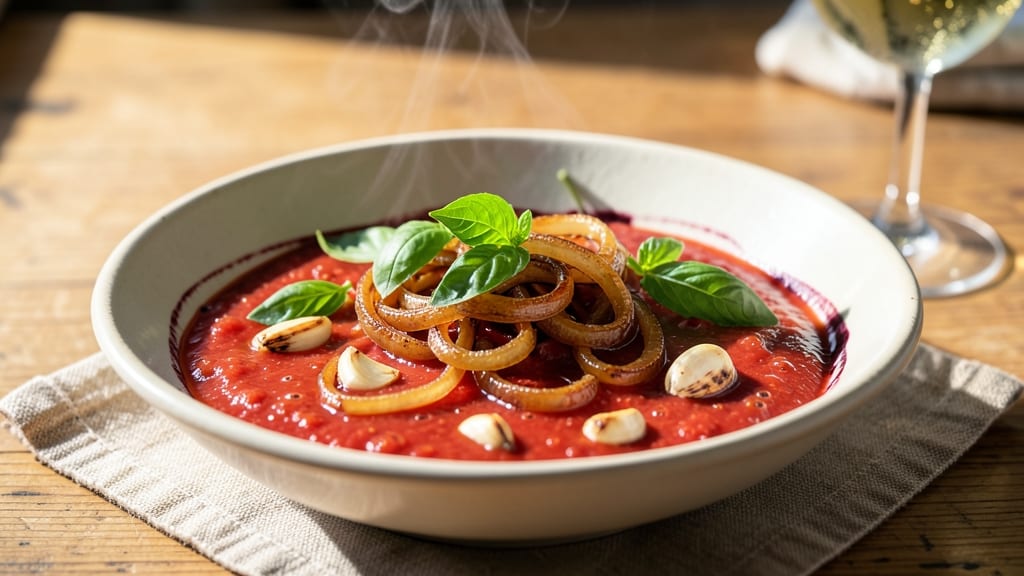
Bobby Flay's marinara sauce transforms simple ingredients into a slow-simmered umami bomb that elevates any Italian dish. The secret lies in caramelizing garlic and onions before building layers of tomato flavor—no shortcuts, just deep, complex taste.
This isn’t your average jarred sauce; it’s restaurant-quality with a fresh basil finish that brightens every bite.
What sets this sauce apart is Bobby’s signature technique: low-and-slow simmering to develop rich, concentrated flavor while keeping the texture velvety smooth. No blender required—just a pot, patience, and the right balance of acidity from tomatoes and sweetness from onions.
The result? A sauce so versatile it works on pasta, pizza, or even as a dipping sauce for crusty bread.
By the time you’re done, you’ll have a deeply aromatic marinara with just the right kick of red pepper flakes and a fragrant basil zing that makes it taste homemade.
The umami depth comes from caramelized garlic and a touch of olive oil, while the acidity from tomatoes keeps it bright. This is the kind of sauce that makes you reach for the jar again and again.
Perfect for meal prep or last-minute dinners, this marinara freezes beautifully and tastes even better the next day. Let’s get cooking—your taste buds will thank you.
Ingredients for bobby flay marinara sauce
Ten simple ingredients create Bobby Flay's restaurant-style marinara sauce with deep umami flavor.
| Ingredient | Amount | Notes |
|---|---|---|
| Extra-Virgin Olive Oil 🫒 | ½ cup | High-quality, fruity variety |
| Yellow Onion 🧅 | 1 whole | Diced small for caramelization |
| Garlic Cloves 🧄 | 6 cloves | Peeled and thinly sliced |
| San Marzano Tomato Cans 🍅 | 2 cans | 28 oz each, crushed by hand |
| Red Wine 🍷 | ½ cup | Dry, bold variety like Cabernet |
| Fresh Basil Leaves 🌿 | ½ cup | Packed, stems removed |
| Tomato Paste 🍅 | 2 tbsp | Smooth, no sugar added |
| Red Pepper Flakes 🌶️ | ½ tsp | Adjust for heat preference |
| Dried Oregano 🍃 | 1 tsp | Italian variety preferred |
| Sea Salt 🧂 | 1 ½ tsp | Kosher or fine grain |
The tomatoes make all the difference. San Marzano cans from Italy have that perfect balance of sweetness and acidity—Trader Joe's or Whole Foods carry them, or order online. For the olive oil, California extra-virgin (like Corto or Otto) adds fruity notes that elevate the sauce. Fresh basil is non-negotiable here: grab a big bunch—half goes in the pot, half gets torn over the top right before serving. The red wine adds depth, so Cabernet Sauvignon or Merlot work best (whatever's open in your fridge).
No red wine? Substitute with 0.5 cup beef broth plus 1 tbsp balsamic vinegar—it mimics the acidity and richness. Short on fresh basil? Use 1 tsp dried basil at one-third the amount, but honestly, it won't taste the same. The tomato paste is key for thickening—Trader Joe's squeeze tubes are perfect for this recipe (no waste, lasts forever). For the onions, yellow or red both work, but yellow caramelizes slightly faster. If your red pepper flakes are too spicy, cut the amount in half or use a pinch of cayenne instead.
This sauce tastes even better the next day—let it sit overnight if you can. Store in an airtight container in the fridge for up to 5 days, or freeze for 3 months in ice cube trays for perfect portions. I always double the batch: one for dinner, one to freeze for lazy weeknights. The basil wilts fast, so wrap it in damp paper towels and store it in a sealed bag with the stems submerged in water—keeps it fresh for days.
Why You'll Love This Recipe
- No Chopping Nightmare: That onion doesn’t need to be julienned—just dice it roughly. Same with the garlic: smash those cloves with the flat of your knife, peel, and toss in. Bobby Flay’s method turns prep into a 5-minute task, not a chore. (Between us, I’ve burned more garlic trying to mince it finely—this way, it still tastes like heaven.)
- Wine-Infused Depth: Honestly, the red wine isn’t just for flavor—it’s the secret weapon. That splash of bold cabernet or merlot simmers into the sauce, leaving behind layers of richness that canned sauce just can’t match. The San Marzanos handle the acidity like pros, so you get bright, complex flavor without bitterness. My picky-eater husband actually asks for seconds now.
- Pasta Party Ready: This sauce doubles as a marinade for grilled chicken or a dipping sauce for crusty bread—no extra work, just more reasons to make it. I’ve used it for weeknight dinners, potlucks, and even as a base for homemade pizza dough (yes, even on a Tuesday night). The wine cuts through the richness of cheese, so it’s foolproof for any occasion.
- Fridge Hero: Make a big batch and thank me later. The flavors actually improve after a day or two in the fridge—deepening, balancing out. I freeze half in portions, so I’m never stuck with sad, watery leftovers. And with just tomatoes, wine, and pantry staples, it’s the kind of budget-friendly sauce that makes me feel like I’m feeding a crowd without breaking the bank.
Step-by-step instructions for Bobby Flay's marinara sauce
Here's how to build a rich, layered marinara with deep umami and bright basil notes.
Build the Flavor Base in Olive Oil
Heat the 0.5 cup extra-virgin olive oil in a large, heavy-bottomed saucepan over medium-low heat. Add the 1 whole yellow onion and cook for 8-10 minutes, stirring occasionally, until the onions turn a deep golden color and begin to caramelize. This slow cook time develops sweetness that forms the sauce's foundation.
Once the onions are soft and golden, add the 6 cloves garlic cloves and the 2 tablespoons tomato paste. Stir constantly for 2-3 minutes until the garlic becomes fragrant and the tomato paste darkens slightly. This creates a rich, concentrated flavor that will carry through the entire sauce. The reason we cook the tomato paste first is that it deepens its umami profile before we add liquid.
Deglaze and Simmer the Tomatoes
Pour in the 0.5 cup red wine and scrape up any browned bits from the bottom of the pan with a wooden spoon. This deglazing step captures all the flavor that's stuck to the pan. Let the wine simmer for 3-4 minutes until it reduces by about half and the alcohol smell dissipates completely.
Add the contents of the 2 cans San Marzano tomato cans, breaking them up with your hands as you pour. Stir in the 1.5 teaspoons sea salt, 1 teaspoon dried oregano, and 0.5 teaspoon red pepper flakes. Bring the mixture to a gentle boil, then immediately reduce the heat to low and let it simmer uncovered for 45-50 minutes. You want the sauce to reduce slowly so the flavors meld together and the texture becomes rich and velvety.
Finish with Fresh Basil and Adjust Seasoning
After the sauce has simmered, remove it from heat and stir in the 0.5 cup fresh basil leaves. Let the sauce sit off the heat for 5 minutes to allow the basil to infuse its bright, fresh flavor. This is where the magic happens—the basil adds a vibrant contrast to the deep, rich tomato base.
Taste the sauce and adjust the seasoning if needed. If it needs more salt, add it gradually—remember, the sauce will continue to reduce slightly as it cools. If you prefer a smoother texture, you can blend the sauce briefly with an immersion blender, but I like to leave it slightly rustic for that homemade quality. The sauce should be thick enough to coat the back of a spoon but still pourable.
Rest and Serve
Let the sauce rest for 10-15 minutes before serving. This allows the flavors to fully develop and the sauce to reach its ideal consistency. The longer it rests, the more complex the flavors become. Serve warm over your favorite pasta, with crusty bread, or alongside grilled meats.
This sauce tastes even better the next day as the flavors continue to meld. Store any leftovers in an airtight container in the refrigerator for up to 5 days, or freeze for up to 3 months. The key to a great marinara is patience—don't rush the simmering process, and the results will be worth it.
Pro Tips For Making Bobby Flay Marinara Sauce
- Sweat the Onion First: Don’t rush the onion—cut it into even ¼-inch slices and cook them in the olive oil on medium-low for 8-10 minutes until deep golden. I learned this the hard way: skipping this step leaves your sauce tasting raw and dull, no matter how long you simmer later.
- Crush Garlic Like a Pro: Use a flat side of your knife to smash the garlic cloves before adding them to the pot. This releases more flavor without burning—just toss them in whole and let them soften. (Yes, even if you’re impatient like me.)
- Reduce Wine Fully: Let the red wine simmer until it’s nearly evaporated—about 3-4 minutes—before adding the tomatoes. Skimping here leaves a boozy aftertaste that fights with the San Marzano sweetness. Trust the process.
- Crush Tomatoes by Hand: Dump the San Marzano cans into a bowl and mash them with your fingers to break up the skins. This gives a smoother texture and saves you from straining. (Your future self will thank you.)
Serving suggestions for this dish
Pasta Perfection
This marinara shines brightest when tossed with al dente pasta like spaghetti or linguine. I always use Bronze Die pasta from De Cecco—the rough texture grabs the sauce beautifully. For extra richness, finish with a drizzle of extra-virgin olive oil and a sprinkle of grated Parmigiano-Reggiano.
The sauce's acidity cuts through the creaminess of fettuccine Alfredo too, creating a perfect balance. 🍝
Pizza Base
Spread this sauce thinly over a homemade or store-bought pizza crust—I love Caesar's thin crust for its crisp texture. Top with fresh mozzarella, cherry tomatoes, and basil leaves right before baking.
The sauce's umami depth and bright basil notes elevate any pizza, even a simple Margherita. For a twist, add sausage crumbles or grilled chicken before baking. 🍕
Dipping Sauce
Warm the sauce slightly and serve it in a small crock pot or bowl with crusty bread or garlic knots for dipping. The sauce's velvety texture and balanced flavors make it irresistible.
I often serve it with freshly baked focaccia or rosemary bread—the crustiness contrasts perfectly with the smooth sauce. 🥖
Meat Pairings
This marinara pairs beautifully with grilled chicken, beef meatballs, or pork tenderloin. The sauce's acidity helps tenderize the meat while adding depth. I like to simmer Italian sausage directly in the sauce for the last 10 minutes of cooking—it infuses the sauce with smoky, savory notes. 🍖
Breakfast Twist
Use this sauce as a breakfast marinara for eggs Benedict or shakshuka. The rich tomato flavor complements the eggs perfectly, and the basil adds a fresh touch. I also drizzle it over scrambled eggs with goat cheese for a gourmet breakfast. 🍳
Freezer-Friendly
Portion the sauce into ice cube trays for easy freezing—just pop out and reheat for quick meals. I freeze it in quart-sized bags for larger portions.
When reheating, add a splash of water or broth to prevent thickening. The sauce tastes even better after thawing, as the flavors meld further. ❄️
Nutrition facts
Frequently asked questions
Can I make this marinara sauce without red wine?
Swap the 0.5 cup red wine with 0.5 cup beef broth plus 1 tablespoon balsamic vinegar to mimic the acidity and richness. The sauce will still develop deep umami flavors, just with a slightly different profile. The key is balancing the acidity—vinegar helps replicate the wine's tang.
How do I prevent my sauce from getting too thick?
If your sauce thickens too much during simmering, stir in 1-2 tablespoons of water or broth to loosen it. Bobby Flay's method relies on slow reduction, but you can adjust the simmer time to 30-40 minutes if needed. For extra insurance, keep the pan uncovered and stir occasionally to prevent sticking. The sauce should coat the back of a spoon but remain pourable.
What's the best way to store leftovers?
Store in an airtight container in the fridge for up to 5 days, or freeze for 3 months in quart-sized bags. For freezing, portion into ice cube trays for perfect single-serving portions. Thaw overnight in the fridge—never microwave directly from frozen. The flavors actually improve after resting!
Can I use dried basil instead of fresh?
While fresh basil adds that signature bright zing, you can use 1 teaspoon dried basil (about one-third the amount). However, the flavor won't be as vibrant. For best results, add 1 extra tablespoon of fresh basil at the end if possible. The dried version works in a pinch but lacks the aromatic punch.
Why does my sauce taste bland after simmering?
Blandness usually means insufficient seasoning or underdeveloped flavors. First, check your salt—add 1/4 teaspoon at a time while tasting. Also, ensure you caramelized the onions and garlic properly (they should be deep golden). For extra depth, add 1/2 teaspoon sugar or 1/4 teaspoon smoked paprika during simmering. Patience is key—don't rush the 45-minute simmer!