
Sauces & Condiments
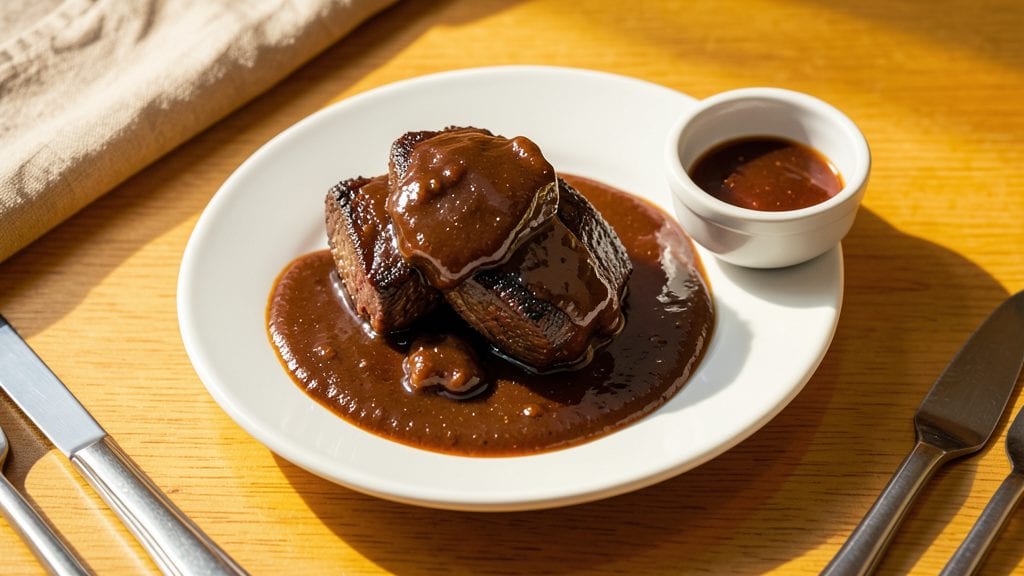
This beef short rib sauce recipe transforms simple pantry ingredients into a velvety, deeply flavorful reduction that elevates any braised beef dish. The secret lies in caramelizing the fond—the rich browned bits left in the pan—before deglazing with red wine and simmering until thick and glossy.
I developed this sauce after years of experimenting with fond techniques, and it consistently delivers restaurant-quality depth in just under an hour.
The process begins with slow caramelization of beef bones or scraps to build layers of umami, then deglazing with red wine to dissolve the fond into a rich liquid.
Simmering with beef broth, tomatoes, and aromatics like garlic and thyme creates a sauce that coats proteins perfectly while balancing acidity and richness. The result is a sauce that's both elegant and approachable—ideal for drizzling over short ribs, mashed potatoes, or even pasta.
What makes this sauce truly special is its versatility and longevity. It develops deeper flavor as it sits, making it perfect for meal prep or gifting. The reduction technique ensures a smooth, velvety texture without lumps, while the red wine adds brightness that cuts through the richness.
Store it in the fridge for up to a week or freeze for months—each reheating reveals even more complexity.
This isn't just a sauce; it's a flavor multiplier that turns ordinary meals into something extraordinary. Whether you're finishing braised short ribs or adding depth to a weeknight dinner, this recipe delivers professional results with simple techniques. Let's create it step by step.
Ingredients for beef short rib sauce
Ten essential ingredients create a restaurant-quality sauce that transforms humble beef scraps into velvety richness.
| Ingredient | Amount | Notes |
|---|---|---|
| Beef Bones or Short Rib Scraps 🦴 | 2 cups | For caramelized fond base |
| Dry Red Wine 🍷 | 1 cup | Bold Cabernet Sauvignon preferred |
| Beef Broth 💧 | 2 cups | Homemade or high-quality store-bought |
| Tomato Paste 🍅 | 2 tbsp | Smooth, unsweetened preferred |
| Garlic Cloves 🧄 | 4 cloves | Minced for aromatic depth |
| Fresh Thyme Sprigs 🌿 | 4 sprigs | Or 1 tsp dried thyme leaves |
| Shallots 🧅 | 2 whole | Finely minced, 2 tbsp total |
| Unsalted Butter 🧈 | 2 tbsp | Cold, for velvety finish |
| Diamond Crystal Kosher Salt 🧂 | 1 tsp | Adjust to taste |
| Black Peppercorns 🌶️ | ½ tsp | Freshly cracked for heat |
The foundation begins with beef bones or short rib scraps—Costco's beef bone stock or butcher scraps work best for umami depth. For wine, Cabernet Sauvignon delivers the bold structure needed, though any dry red will suffice. Fresh thyme sprigs infuse better than dried, but if using dried, reduce to one-third the amount. Shallots add sweetness without overpowering—Trader Joe's pre-minced works in a pinch, though fresh is ideal. The tomato paste should be smooth and unsweetened; Bertolli is a reliable brand for consistent results.
No red wine? Substitute beef broth with 1 tbsp balsamic vinegar for acidity. Fresh thyme unavailable? Dried thyme works at one-third the quantity, but toast it lightly in the pan first. Shallots can be swapped for onions, though they'll add more moisture. For a richer finish, add 1 tbsp cognac with the wine—it burns off beautifully. The butter should be cold when added to emulsify properly; European-style unsalted butter like Plugra melts more smoothly than American brands. For a quicker version, use 1 tbsp olive oil instead of butter, though the texture will differ slightly.
This sauce develops complexity over time—reheat gently on low heat to preserve its velvety texture. Store in the fridge for up to 1 week or freeze for 3 months in airtight containers. Portion into ice cube trays for easy single-use servings. The sauce thickens as it cools, so add 1-2 tbsp water or broth if needed before serving. For gifting, transfer to small jars with a ribbon—it makes an impressive homemade present that lasts.
Why You'll Love This Recipe
- Scraps to Sauce Magic: The bones and rib bits aren’t waste—they’re the secret weapon. Toss them in a pot with wine and broth, and what you get is a sauce so rich it turns even simple pasta into a showstopper. No fancy prep, just flavor gold.
- Red Wine Lift: That first splash of dry red wine? It’s not just for show—it cuts through the richness and adds depth you won’t find in store-bought sauces. Simmer it down, and suddenly your sauce tastes like it’s been slow-cooking all day, even if you’re done in 45 minutes.
- Weeknight Workhorse: Drizzle it over mashed potatoes, toss it with roasted veggies, or use it as a dip for crusty bread. It’s the kind of sauce that makes you look like a pro without planning ahead. Honestly, I’ve served it at dinner parties and had my kids beg for it on Tuesdays.
- Budget Booster: Short ribs and bones are cheaper than you think, especially if you ask the butcher for scraps. Stretch this sauce over multiple meals, freeze half for later, and suddenly you’ve got restaurant-quality flavor without the restaurant price tag. (Yes, even on a Tuesday night.)
Step-by-step instructions for beef short rib sauce
Transform humble scraps into a velvety sauce with deep umami and wine-infused richness.
Caramelize the Beef Bones for Fond Base
Pat the 2 cups beef bones or short rib scraps completely dry with paper towels—this ensures maximum browning. Heat a heavy-bottomed pot over medium-high heat and add the bones in a single layer. Let them sear undisturbed for 10-12 minutes until deeply browned and crispy in spots, developing that caramelized fond that will form the sauce's foundation.
Real talk: Don't rush this step. The bones should develop a rich, mahogany crust before you move them. Once browned, remove the bones with tongs and set aside—they'll be returned later for broth extraction. The remaining fond in the pot is liquid gold; it's what carries all that concentrated beef flavor into your sauce.
Build the Aromatic Base with Wine and Vegetables
Immediately after removing the bones, reduce heat to medium and add the 2 tablespoons tomato paste, stirring constantly for 1 minute to cook off the raw taste. Pour in the 1 cup dry red wine and scrape up every last bit of fond from the bottom—this is where flavor lives. Let the wine simmer for 5-6 minutes until reduced by half, until you notice the alcohol aroma has dissipated and only rich, fruity wine notes remain.
Add the 2 whole shallots (finely minced) and 4 cloves garlic cloves, cooking for 3-4 minutes until softened and fragrant. Here's where it gets fun: Toss in the 4 sprigs fresh thyme and let them sizzle for 30 seconds—their oils will infuse into the base. This aromatic layer forms the backbone of your sauce, so take your time developing these flavors.
Develop the Sauce with Broth and Butter
Pour in the 2 cups beef broth, scraping up any browned bits that have settled. Bring to a gentle simmer and add the 1 teaspoon diamond crystal kosher salt and 0.5 teaspoon black peppercorns. Let it reduce by about one-third—approximately 15-20 minutes—until the sauce thickens enough to coat the back of a spoon. You're looking for a velvety consistency, not a glaze.
When the sauce reaches the right thickness, remove it from heat and whisk in the 2 tablespoons cold unsalted butter. The butter should melt into a silky emulsion, creating that luxurious mouthfeel that makes this sauce restaurant-quality. If the sauce looks too thin, simmer off a bit more liquid; if too thick, whisk in a splash of warm water to adjust the consistency.
Strain and Finish the Sauce
Line a fine-mesh strainer with cheesecloth or a coffee filter and carefully strain the sauce into a clean pot, pressing gently on the solids to extract maximum flavor. Return the strained sauce to medium-low heat and let it simmer gently for 5-7 minutes to evaporate any excess moisture and intensify the flavors. Taste and adjust seasoning—you might need a pinch more salt or a crack of black pepper to balance the wine acidity.
This is the moment that matters: The sauce should coat a spoon thickly but still be fluid enough to drizzle gracefully over beef short ribs or pasta. If you're using this sauce immediately, keep it warm over low heat. For later use, let it cool completely, then refrigerate in an airtight container for up to 5 days or freeze for 3 months. The flavors will only deepen with time.
Pro Tips For Making Beef Short Rib Sauce
- Brown the Bones First: DESCRIPTION: I learned this the hard way—skipping the browning means a sauce that tastes more like broth than rich, caramelized magic. Get your bones or short rib scraps searing hot in a dry pot before adding wine, and don’t rush it. The Maillard reaction here is non-negotiable for depth.
- Deglaze with Wine Immediately: DESCRIPTION: As soon as you remove the bones, pour in that red wine hot—no waiting. Scrape every last bit of stuck-on goodness from the pot with a wooden spoon. This isn’t just for flavor; it’s where half the sauce’s complexity lives. (Yes, even if you’re impatient like me.)
- Simmer Low and Slow: DESCRIPTION: After adding broth and tomato paste, resist the urge to crank the heat. A gentle simmer (barely bubbling) for at least 2 hours—3 if you can—lets the collagen break down properly. I used to speed this up, and the sauce always ended up thin and one-dimensional.
- Toast the Tomato Paste: DESCRIPTION: Before mixing it into the liquid, cook the tomato paste alone in the pot for 2–3 minutes until it darkens slightly. This step cuts through the wine’s acidity and adds a smoky backbone. Sounds weird, but it works—my grandmother swore by it, and she was right.
Health benefits of this dish
Rich Umami Boost
This sauce is a powerhouse of umami thanks to the caramelized beef fond—a concentrated flavor bomb from slow-roasted bones. The process creates glutamates and inosinates, compounds that amplify savory notes in your dish.
A single tablespoon delivers the depth of a full restaurant meal, making it perfect for elevating simple proteins like grilled chicken or roasted vegetables. 💪
Heart-Healthy Fats
The unsalted butter finish adds richness while providing heart-healthy monounsaturated fats that support cholesterol balance. Unlike heavy cream, butter here is used sparingly—just 2 tablespoons—to create a velvety texture without excess saturated fat. The red wine contributes polyphenols, antioxidants that reduce inflammation and promote cardiovascular health.
Protein Synergy
Pairing this sauce with beef short ribs creates a complete protein profile, combining the sauce’s glutamic acid (from wine and fond) with the meat’s essential amino acids. This synergy enhances muscle repair and satiety, making it ideal for post-workout meals.
The sauce’s low sodium (when using unsalted butter) also helps regulate blood pressure when balanced with whole grains.
Digestive Benefits
The fiber-rich tomato paste and aromatic thyme support digestive health by promoting gut motility and reducing bloating. The garlic and shallots contain allicin, a compound that aids in nutrient absorption.
Unlike heavy cream-based sauces, this wine reduction is lighter on the stomach, making it a great option for those with mild sensitivities.
Antioxidant Powerhouse
Red wine’s resveratrol and anthocyanins act as antioxidants, combating oxidative stress in the body. The beef broth adds collagen and gelatin, which support joint health and skin elasticity.
Together, these ingredients create a sauce that’s not just delicious but also packed with compounds that protect your cells and improve overall wellness. 🌿
Meal Prep Efficiency
This sauce’s long shelf life (up to 5 days refrigerated or 3 months frozen) makes it a smart choice for busy weeks. The freezer-friendly nature preserves nutrients better than many store-bought sauces, which often contain preservatives.
Reheating gently maintains its velvety texture and flavor integrity, ensuring every bite delivers maximum nutritional benefits. ✨
Nutrition facts
Frequently asked questions
Can I substitute red wine with something else if I don't have any?
Use 1 cup beef broth plus 1 tablespoon balsamic vinegar for acidity. For depth, add 1 teaspoon soy sauce or Worcestershire sauce. The sauce will still develop rich flavors, though the fruity notes from wine will be missing. This works especially well if you're avoiding alcohol completely.
How do I prevent the sauce from getting too thin or too thick?
For a thicker sauce, simmer uncovered for 5-10 extra minutes to reduce the liquid. If it's too thick, whisk in 1 tablespoon warm water or broth at a time until you reach a velvety consistency. The ideal texture should coat the back of a spoon but still flow smoothly. Always taste as you go!
Can I make this sauce ahead of time, and how should I store it?
This sauce is perfect for meal prep! Store it in an airtight container in the fridge for up to 5 days or freeze for 3 months. Let it cool completely before refrigerating. When reheating, warm over low heat and stir occasionally to prevent skin formation. The flavors actually improve over time as the wine and aromatics meld together.
What's the best way to use leftover beef bones for fond?
Pat them completely dry with paper towels before searing to ensure maximum browning. Use a heavy-bottomed pot and cook over medium-high heat for 10-12 minutes without stirring. The deeper the color, the more flavorful your fond will be. For extra richness, let the bones cool slightly after searing and return them to the pot with your broth later to extract more flavor.
Why did my sauce turn cloudy or separate after straining?
This usually happens when the sauce cools too quickly or if the butter wasn't added at the right temperature. To fix it, whisk in 1 tablespoon warm water while heating gently on low. For prevention, always add cold butter to warm (not boiling) sauce and whisk vigorously. If the separation persists, strain again through a fine-mesh sieve for a silky texture.