
Sauces & Condiments
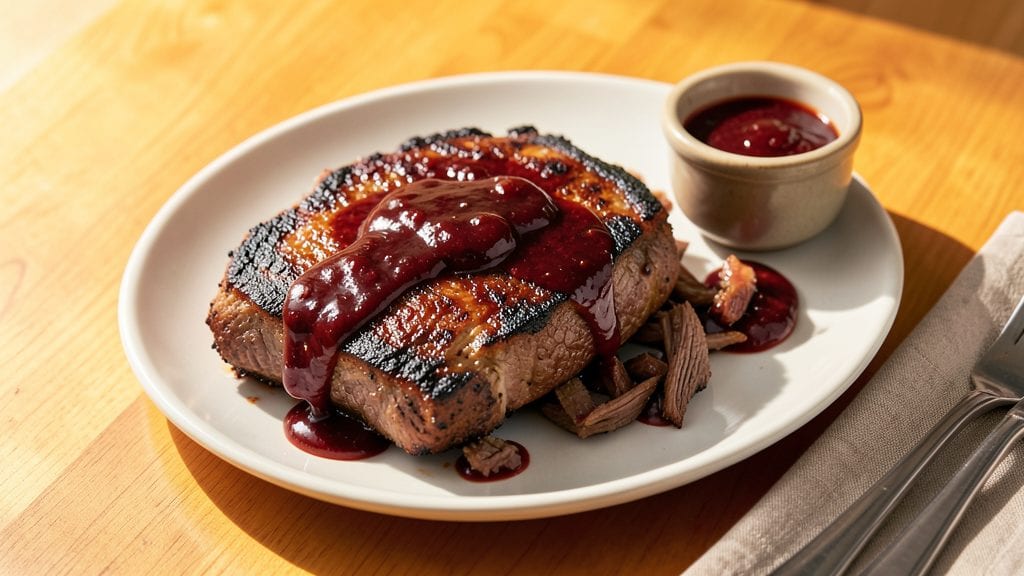
This beef brisket BBQ sauce recipe transforms simple ingredients into a deep-smoked tomato base with layers of caramelized sweetness and tangy depth—perfect for elevating any smoked brisket.
The secret lies in balancing molasses, vinegar, and spices while simmering until the flavors meld into a glossy, complex sauce that clings beautifully to tender meat.
I developed this recipe after years of testing, refining the ratio of sweetness to acidity until every bite delivers that perfect harmony of smoky, sticky perfection.
The foundation of great BBQ sauce starts with a rich tomato base, where canned tomatoes simmer until their natural sugars caramelize into a velvety consistency. Molasses adds that signature deep sweetness, while apple cider vinegar cuts through the richness for balance.
Smoked paprika and liquid smoke infuse the sauce with authentic barbecue flavor, creating a profile that’s both bold and nuanced. This sauce isn’t just for brisket—it works wonders on ribs, pulled pork, or even as a glaze for grilled vegetables.
What sets this sauce apart is its versatility and depth—it thickens just enough to coat meat without being syrupy, and the slow simmer develops complex flavors that store-bought versions can’t match.
The result is a sauce that’s tangy yet sweet, smoky yet bright, with a glossy finish that makes every bite irresistible. Whether you’re smoking a brisket for hours or tossing it with grilled chicken, this sauce will take your dish to the next level.
Ready in just 30 minutes with minimal effort, this recipe delivers restaurant-quality results at home. The ingredients are simple, but the technique ensures a sauce that’s far more sophisticated than anything you’d find in a bottle. Let’s get started—your brisket (or whatever you’re smoking) deserves this kind of flavor.
Ingredients for beef brisket bbq sauce
Nine essential ingredients crafting restaurant-quality brisket BBQ sauce with smoky depth and caramelized richness.
| Ingredient | Amount | Notes |
|---|---|---|
| Canned Crushed Tomatoes 🍅 | 1 can | 28 oz can, San Marzano preferred |
| Unsweetened Molasses 🍯 | ½ cup | Dark molasses for depth |
| Apple Cider Vinegar 🍎 | ¼ cup | Raw, unfiltered preferred |
| Smoked Paprika 🌶️ | 2 tbsp | High-quality, not pre-mixed |
| Liquid Smoke 🔥 | 1 tbsp | Hickory or apple flavor |
| Brown Sugar 🍚 | ½ cup | Packed, light or dark |
| Yellow Onion 🧅 | 1 whole | Medium, finely chopped |
| Garlic Cloves 🧄 | 3 cloves | Fresh, minced finely |
| Kosher Salt 🧂 | 1 ½ tsp | Diamond Crystal preferred |
| Ground Black Pepper 🌶️ | ½ tsp | Freshly cracked preferred |
The San Marzano canned tomatoes are non-negotiable for their sweetness and low acidity—Whole Foods or Trader Joe's carry them. If unavailable, Muir Glen is a solid backup. Molasses quality varies wildly: Goya or Brunswick deliver consistent depth, while cheaper brands can taste bitter. The apple cider vinegar should be raw and unfiltered—Bragg is my go-to for its tangy punch. Smoked paprika? Penzeys or McCormick smoked varieties add authentic barbecue character without overpowering. For liquid smoke, Hickory flavor from Traeger or Kirkland Signature ensures that smoky backbone every great BBQ sauce needs.
No San Marzano tomatoes? Crushed tomatoes from Heinz work in a pinch, but reduce simmering time by 5 minutes. Substitute molasses with maple syrup at half the amount, though it lacks that deep, almost bitter sweetness. Vinegar shortages? Balsamic vinegar bridges the gap, though it adds a slightly fruity note. Smoked paprika unavailable? A pinch of cayenne plus a dash of liquid smoke mimics the effect. For onions, yellow or red both work, but yellow has a slightly sweeter profile. Garlic can be jarred minced in emergencies, but fresh is always better—just peel and finely chop. Salt preferences vary, but Diamond Crystal dissolves cleaner than table salt.
This sauce thickens as it cools, so stir occasionally during the final 5 minutes of simmering to prevent sticking. Store in a glass jar in the fridge for up to 3 weeks—the flavors deepen over time. For longer storage, freeze in ice cube trays for perfect single-use portions. Reheat gently on the stove, stirring frequently to prevent scorching. The sauce reheats beautifully, with flavors intensifying after the second day—make extra if you can. Leftovers keep their glossy texture when refrigerated properly, making them perfect for quick weeknight meals.
Why You'll Love This Recipe
- Pantry Magic: I swear by this sauce because it’s built from what’s already in my cupboard—no special shopping trips. The crushed tomatoes give it that rich base, while the molasses and vinegar cut through the smokiness like a perfect balance.
- Smoky Depth Bomb: That liquid smoke and smoked paprika combo? Chef’s kiss. It’s not just smoky—it’s got this deep, almost charred edge that makes every bite taste like it came from a real pit. (Yes, even on a Tuesday night.)
- Leftovers That Shine: This sauce thickens beautifully when reheated, so I make a double batch. Slather it on pulled pork sandwiches, toss it with roasted potatoes, or drizzle it over grilled veggies—it’s the same great flavor, different ways.
- Budget Stretch: Honestly, molasses and vinegar are some of the most affordable ingredients out there, and they pack a punch. A single can of tomatoes and a little smoke go a long way, meaning I feed my family hearty, flavorful meals without breaking the bank.
Step-by-step instructions for beef brisket BBQ sauce
A rich, smoky sauce that balances sweetness and depth—this method delivers restaurant-quality results every time.
Sauté Onions and Garlic for Foundational Flavor
Heat a large saucepan over medium heat and add the 1 whole yellow onion, chopped into small dice. Cook for 8-10 minutes, stirring occasionally, until the onions soften and begin to caramelize at the edges. You'll know they're ready when they turn a deep golden color and release a sweet, jammy aroma.
Reduce heat to medium-low and add the 3 cloves garlic, minced finely. Cook for 1-2 minutes until the garlic becomes fragrant but doesn't brown. Here's the thing—garlic burns quickly, so keep an eye on it. Remove the pan from heat if it starts to darken, as you want the flavor without bitterness.
Build the Base with Tomatoes and Spices
Return the pan to medium heat and pour in the 1 can canned crushed tomatoes. Stir well to combine with the onions and garlic. Add the 2 tablespoons smoked paprika and 1 tablespoon liquid smoke, whisking until evenly distributed. This is where the deep, smoky character of the sauce begins to develop.
Increase heat to medium-high and bring the mixture to a boil. Once boiling, reduce heat to medium-low and let it simmer uncovered for 15-20 minutes. You'll see the sauce thicken slightly as the liquid reduces, and the flavors meld together. Stir occasionally to prevent sticking, and skim off any foam that rises to the surface.
Sweeten and Balance the Sauce
Add the 0.5 cup unsweetened molasses and 0.5 cup brown sugar, stirring until fully dissolved. The molasses will darken the sauce and add a rich, caramelized depth, while the brown sugar provides sweetness that balances the smokiness. Return the heat to medium and let the sauce simmer for another 10-12 minutes, stirring occasionally.
Next, pour in the 0.25 cup apple cider vinegar. The acidity brightens the flavors and cuts through the sweetness, creating a well-rounded profile. Taste the sauce and adjust seasoning with 1.5 teaspoons kosher salt and 0.5 teaspoon ground black pepper as needed. The sauce should be sweet, smoky, and tangy with a deep, complex flavor.
Simmer to Perfection
Continue simmering the sauce over low heat for 20-25 minutes, stirring occasionally. This slow reduction allows the flavors to deepen and the sauce to thicken to a glossy, coatable consistency. You're aiming for a sauce that clings to brisket slices without being overly thick or syrupy.
If the sauce thickens too much, add 1-2 tablespoons water at a time until it reaches your desired consistency. The sauce should coat the back of a spoon but still be pourable. Once smooth and flavorful, remove the pan from heat and let the sauce cool slightly before serving. This sauce tastes even better the next day as the flavors continue to meld.
Pro Tips For Making Beef Brisket Bbq Sauce
- Simmer Slow and Steady: This sauce isn’t a race—low and slow is the name of the game. After adding the crushed tomatoes, drop the heat to a bare simmer (just small bubbles) and let it cook uncovered for at least 45 minutes. I used to rush it, and the sauce ended up thin and one-dimensional. Patience here builds depth in flavor.
- Deglaze That Pan First: Before you even think about adding tomatoes, deglaze the pot with a splash of apple cider vinegar after browning any aromatics (onions, garlic, etc.). The vinegar cuts through the fond, pulling out all those caramelized bits that make the sauce rich. Skip this, and you’re missing out on half the flavor—trust me, I’ve done it both ways.
- Balance the Molasses: Molasses is potent—start with half the amount called for and taste as you go. Too much, and your sauce turns cloyingly sweet; too little, and it lacks that deep, caramelized backbone. I learned this the hard way when I doubled it once and had to dump half the batch. A teaspoon at a time is your friend.
- Strain Out the Skins: After simmering, skim off any tomato skins that float to the surface—they add bitterness and gum up the sauce. Use a fine-mesh strainer or a spoon to fish them out while the sauce is still warm. I know it’s tedious, but the texture will be silky smooth, not gritty. (Yes, even if you’re in a hurry.)
Perfect pairings for beef brisket bbq sauce
Sauce for Smoked Meats
This sauce isn’t just for brisket—it’s the perfect complement for any smoked meat. I’ve used it on pulled pork shoulders (add a splash of orange juice for brightness) and smoked ribs (brush on during the last 30 minutes of cooking).
The smoky depth pairs beautifully with the fat cap on ribs, while the tangy sweetness cuts through pork’s richness. For chicken thighs, reduce the molasses to ¼ cup and add 1 tsp dried thyme to avoid overwhelming the bird. 🌶️
Vegetable Pairings
Transform grilled vegetables into a showstopper with this sauce. Toss eggplant slices or portobello mushrooms with the sauce and roast at 400°F for 20 minutes—the smoky-sweet glaze caramelizes beautifully. I also drizzle it over grilled asparagus (tossed with olive oil and lemon zest) for a restaurant-worthy side.
For corn on the cob, brush the sauce on after grilling and sprinkle with feta cheese and chopped cilantro.
Breakfast Adaptations
Who says BBQ sauce is just for dinner? Use this sauce to elevate breakfast dishes like smoked sausage patties (cook until 165°F internal temp) or grilled cheese sandwiches (add a spoonful to the butter before assembling).
For breakfast burritos, mix the sauce with scrambled eggs and shredded cheddar—the smoky sweetness balances the saltiness of bacon perfectly. I even drizzle it over yogurt parfaits with granola for a sweet-and-smoky twist. 🍳
Dessert Twists
Yes, you read that right—this sauce can be dessert! Warm vanilla ice cream with a drizzle of the sauce and top with toasted pecans and sea salt flakes.
The caramelized sweetness pairs surprisingly well with chocolate-dipped strawberries or baked apples (core an apple, fill with sauce, and bake at 375°F for 25 minutes). For a savory-sweet treat, spread it on biscuits with sharp cheddar and crispy bacon bits.
Beverage Pairings
Balance the sauce’s bold flavors with the right drink. A honey-sweetened iced tea (add 1 tbsp honey per cup) complements the molasses sweetness, while a light lager like Peroni cuts through the richness. For a non-alcoholic option, try sparkling apple cider—the bubbles cleanse your palate between bites.
If you’re serving this with spicy wings, a mango lassi cools the heat while harmonizing with the sauce’s smoky notes. 🍺
Sauce as a Marinade
Use this sauce as a marinade for grilled meats like chicken breasts or shrimp skewers. Reserve ½ cup of the sauce, then marinate the protein for 2-4 hours before grilling. The acidity in the vinegar tenderizes the meat, while the molasses adds caramelization.
For tofu, reduce the marinating time to 1 hour and add 1 tbsp soy sauce to enhance umami. Always grill or bake the meat until it reaches 165°F internal temp—the sauce will cling beautifully and create a delicious crust. ✨
Nutrition facts
Frequently asked questions
Can I make this BBQ sauce without molasses?
Yes, but the flavor will be lighter. Replace the ½ cup molasses with ¼ cup maple syrup plus 1 tbsp brown sugar for similar sweetness. The sauce will lose some depth, but it'll still taste delicious—just more subtly sweet. For a deeper flavor, try ½ cup dark corn syrup instead.
How do I adjust the thickness of the sauce?
If the sauce is too thick, add 1-2 tablespoons water at a time while stirring over low heat. For a thicker consistency, simmer uncovered for an extra 5-10 minutes to reduce the liquid further. The ideal texture coats the back of a spoon but remains pourable. Pro tip: The sauce thickens more as it cools, so don't over-reduce it.
Can I use this sauce on chicken or fish instead of beef?
For chicken, reduce the molasses to ¼ cup and add 1 tsp dried thyme to complement the poultry. For fish like salmon or trout, use ½ the vinegar and ¼ the molasses to avoid overpowering the delicate flavor. The smoky-sweet profile works beautifully on both, but adjust the sweetness to match your preference.
Why does my sauce taste too sweet or sour?
Too sweet? Add 1-2 tablespoons apple cider vinegar and simmer for 5 minutes to balance it. Too sour? Stir in 1-2 tablespoons brown sugar and taste as you go. The key is the molasses-to-vinegar ratio—start with equal parts and adjust to taste. Always taste as you simmer to catch imbalances early!
How long will this sauce keep in the fridge?
Store the sauce in an airtight glass jar in the fridge for up to 3 weeks. The flavors actually improve over time! For longer storage, freeze in ice cube trays or small containers. Thaw overnight in the fridge—never microwave directly from frozen. The sauce reheats beautifully on the stove over low heat, stirring constantly.