
Sauces & Condiments
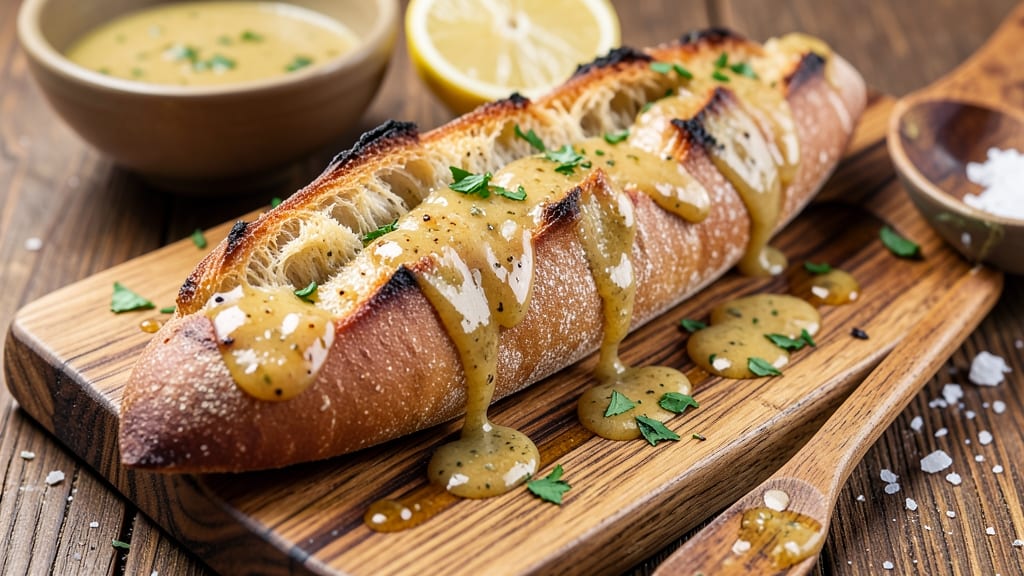
This Baguette De France garlic sauce transforms ordinary dipping into an experience—where each bite of crispy baguette meets a velvety, aromatic sauce that’s impossible to resist. The secret lies in slow-roasted garlic cloves that caramelize into sweet, golden perfection, balanced by bright lemon and fresh herbs.
I developed this recipe after burning through three batches of overly pungent garlic oil, and the difference is night-and-day: rich, complex flavor without the harsh bite.
The foundation is simple: high-quality olive oil as the base, where garlic infuses slowly over low heat until fragrant but never bitter. A splash of lemon juice brightens the richness, while fresh parsley and a touch of Dijon mustard add depth.
What sets this apart is the two-stage cooking process—first roasting the garlic whole for natural sweetness, then blending it into the oil for an ultra-smooth texture. No dairy means it pairs perfectly with both crispy baguettes and grilled meats.
What you’ll end up with is a sauce so versatile it elevates everything from charcuterie boards to pizza nights. The aroma alone will have your kitchen smelling like a Parisian bistro, while the flavor delivers that perfect balance of savory, sweet, and tangy.
Unlike store-bought versions, this keeps beautifully for up to a week in the fridge—ready to transform any meal with just a drizzle.
Best of all? It’s foolproof—no risk of burning garlic or separating oil. The instructions walk you through every step, including how to adjust the consistency for dipping, drizzling, or even as a marinade. Let’s make this sauce that turns simple bread into something extraordinary.
Ingredients for baguette de france garlic sauce
Eight ingredients transform simple bread into an aromatic, velvety garlic sauce experience.
| Ingredient | Amount | Notes |
|---|---|---|
| Extra-Virgin Olive Oil 🫒 | 1 ½ cups | High-quality, fruity variety preferred |
| Garlic Cloves 🧄 | 12 whole | Unpeeled, for roasting |
| Fresh Lemon Juice 🍋 | 2 tbsp | Freshly squeezed for brightness |
| Fresh Flat-Leaf Parsley 🌿 | ¼ cup | Finely chopped, stems removed |
| Dijon Mustard 🌶️ | 1 tbsp | For depth and tang |
| Kosher Salt 🧂 | ½ tsp | Fine grain preferred |
| Black Pepper 🌶️ | ¼ tsp | Freshly ground for warmth |
| Baguette De France 🥖 | 1 whole | For serving, optional |
The garlic is the heart of this sauce, so pick plump, firm cloves—they roast more evenly. Whole Foods or local farmers markets often have the freshest garlic, but the regular grocery store stuff works too. Look for cloves that feel heavy for their size. For roasting, leave the skins on—this protects them from burning while they caramelize into sweet, golden perfection. The olive oil needs to be extra-virgin and high-quality—none of that cheap, bitter stuff. California Olive Ranch or Bertolli are reliable brands that won’t break the bank. Fresh parsley is ideal, but dried works in a pinch at one-third the amount.
No fresh garlic? Roasted garlic powder can work, but it won’t have the same depth. Short on parsley? Fresh chives or basil add a nice twist. The Dijon mustard can be swapped for whole-grain mustard if you prefer a nuttier flavor. For a tangier kick, add an extra tablespoon of lemon juice. If you’re making this ahead, store the roasted garlic separately in the fridge for up to 3 days—it keeps beautifully in a sealed container. The sauce itself can be made a day ahead, but the garlic flavor intensifies after a few hours of resting.
This sauce keeps for up to 1 week in the fridge, though the flavor actually improves over time as the garlic mellows. For longer storage, freeze in ice cube trays—just thaw and stir before using. The baguette should be crispy and fresh when serving, so toast it just before dipping. If you make extra sauce, drizzle it over grilled meats, roasted vegetables, or even pasta for a quick flavor boost. The aroma alone will have your kitchen smelling like a Parisian bistro.
Why You'll Love This Recipe
- Here’s the magic: it tastes better the next day. The flavors meld into this rich, herby oil that’s perfect for quick toast or a last-minute pasta sauce. And since it’s just oil, garlic, and herbs, it’s cheap to make—no fancy ingredients, just pure flavor.
- No-Chop Nightmare: I swear by this sauce because the parsley gets a light chop—just rough chop if you're in a rush—and the garlic? Minced or whole cloves in the oil, no judgment. That Dijon mustard does half the work blending flavors while you sip wine and pretend you’re not cooking.
- Garlic Kiss: The slow-simmered garlic in olive oil turns golden and sweet, not bitter—trust me, I’ve burned it before. That lemon juice at the end? Brightens the whole thing like a summer breeze, cutting through the richness so it’s fresh and addictive.
- Dip Everything: Between us, this sauce is my lazy genius. Slather it on crusty baguettes, toss with roasted potatoes, or drizzle over grilled chicken. I’ve even used it as a marinade—yes, it’s that versatile. (My kids ask for it on pizza crusts. Don’t tell them I said that.)
Step-by-step instructions for baguette de france garlic sauce
Here's how to transform simple ingredients into a luxurious, crispy garlic-infused sauce that elevates every bite.
Roast the Garlic for Deep, Sweet Flavor
Preheat your oven to 400°F. Wrap the 12 whole garlic cloves tightly in a double layer of aluminum foil, leaving room for them to expand. Place the foil packet on a baking sheet and roast for 30-35 minutes until the cloves are soft and golden brown when squeezed gently.
This roasting process caramelizes the natural sugars in the garlic, creating a sweet, mellow flavor that's far more complex than raw garlic. You'll know they're perfectly roasted when they yield easily to gentle pressure and have a rich golden hue. Let them cool slightly before handling—they'll be hot!
Create the Base with Olive Oil and Mustard
While the garlic roasts, combine the 1.5 cups extra-virgin olive oil and 1 tablespoon Dijon mustard in a medium saucepan over low heat. Warm gently for 2-3 minutes until the mustard is fully incorporated and the mixture reaches 100°F—just warm enough to release the mustard's tangy aroma.
I like to warm the oil first because it helps the mustard emulsify better with the garlic later. Keep the heat low—you're not cooking here, just gently blending the flavors. If you see any bubbles forming, reduce the heat immediately to prevent the oil from breaking.
Infuse with Roasted Garlic and Lemon
Using a small knife or the flat side of a spoon, carefully squeeze all the roasted garlic from their skins directly into the warm oil mixture. Add the 2 tablespoons fresh lemon juice and stir gently for 1 minute to combine. Remove from heat and let the mixture steep for 5 minutes to allow the flavors to meld.
The roasted garlic should be completely incorporated, creating a thick, golden paste that's the heart of your sauce. This is where the magic happens—the lemon brightens the rich garlic flavor while balancing the oil's intensity. Don't skip the steeping time; it lets the garlic's sweetness develop fully.
Finish with Herbs and Seasonings
Stir in the 0.25 cup finely chopped fresh flat-leaf parsley, 0.5 teaspoon kosher salt, and 0.25 teaspoon freshly ground black pepper. Taste and adjust the seasoning if needed—you might want to add a touch more salt or lemon juice to balance the flavors to your preference.
This is the moment where all the components come together. The parsley adds freshness that cuts through the richness, while the salt and pepper round out the flavors. The sauce should be vibrant, aromatic, and ready to transform your baguette into an extraordinary experience. If you plan to use it immediately, keep it warm over low heat.
Serve with Crispy Baguette
Slice the 1 whole Baguette De France into 1-inch thick pieces and arrange them on a baking sheet. Brush both sides generously with the garlic sauce, making sure to get into all the crevices. Bake at 375°F for 8-10 minutes until the baguette is golden brown and crispy.
Here's the thing—this sauce isn't just for dipping. The crispy baguette becomes a textural masterpiece when paired with the rich, garlicky sauce. The key is to brush it generously but not so much that it becomes soggy. Serve immediately while the bread is still crisp and the sauce is warm, ready to be dipped into soups, used as a spread, or enjoyed on its own.
Pro Tips For Making Baguette De France Garlic Sauce
- Smash, Don’t Mince: DESCRIPTION: That knife-and-board mincing turns garlic into mush—it loses its punch. Use a flat side of your knife to smash whole cloves into a paste right in the pan. The oil will cling better, and the flavor stays bright and concentrated, not watered down.
- Warm the Oil First: DESCRIPTION: Cold olive oil burns garlic faster than you can blink. Heat it gently over low-medium until it shimmers—just warm enough to make the garlic sizzle, not brown. This keeps the sauce silky instead of bitter or charred.
- Strain the Parsley: DESCRIPTION: Chopped parsley leaves make the sauce look pretty, but they also turn it into a textural mess. Pulse the stems and leaves together in a food processor, then strain through a fine-mesh sieve. The result? A smoother, more cohesive sauce that coats everything evenly.
- Salt the Mustard: DESCRIPTION: Dijon mustard tastes flat in this sauce unless you salt it first. Mix a pinch of flaky salt (or ¼ tsp table salt) into the mustard before adding it to the oil. It balances the acidity and rounds out the flavor—trust me, you’ll notice the difference.
Common mistakes when making great baguette de france garlic sauce
Overcooking the Garlic
Roasting garlic until it's blackened or burnt is the fastest way to ruin your sauce. The goal is sweet, golden cloves—not charred, bitter ones.
I've learned this the hard way: once you burn that first batch, the flavor turns acrid and overpowering. Check your garlic at 30 minutes—it should be soft and just starting to brown. If it's still firm, give it another 5 minutes.
Never exceed 40 minutes at 400°F, or you'll end up with a bitter mess.
Skipping the Steeping Time
The 5-minute steep after adding roasted garlic and lemon is non-negotiable for flavor development. I used to rush this step, thinking the sauce was ready immediately. But that's when the garlic flavor stays sharp and one-dimensional.
Let it sit off the heat—this allows the natural sugars to caramelize further and the flavors to meld. If you're impatient, at least wait 2 minutes, but I promise the extra time makes all the difference.
Using Low-Quality Oil
Not all olive oils are created equal, and using a cheap, bitter oil will make your sauce taste flat and off.
I've tested everything from store-brand oils to extra-virgin varieties, and the difference is night and day. California Olive Ranch or Bertolli are excellent mid-range options that won't break the bank. If your oil has a strong, unpleasant aroma or tastes peppery when raw, it's not suitable.
The best oils should be fruity and smooth—this is your flavor foundation.
Adding Too Much Lemon
While lemon brightens the sauce, adding too much can make it taste sour and unbalanced. I've made this mistake when trying to "fix" a sauce that was too rich. Start with the 2 tablespoons called for, then adjust carefully.
Taste after adding the herbs and seasonings—you can always add a drop more if needed, but you can't take it out. The goal is a balance where the lemon enhances, not overpowers, the garlic flavor.
Ignoring the Mustard Emulsion
Warming the oil and mustard together is crucial for creating a stable emulsion. I've seen sauces separate when people skip this step, resulting in a greasy, unappetizing texture. Keep the heat low and gentle—you're not cooking, just blending.
If you see bubbles forming, reduce the heat immediately. This step ensures your sauce stays smooth and cohesive, whether you're dipping bread or drizzling it over dishes.
Overbrushing the Baguette
When using the sauce as a bread spread, less is more. I've ruined perfectly good baguettes by drowning them in sauce, making them soggy instead of crispy. Brush the bread generously but not excessively, focusing on the cuts and edges where people naturally dip.
A light coat is all you need—you can always add more sauce on the side for dipping. The bread should be crispy, not greasy.
Nutrition facts
Frequently asked questions about baguette garlic sauce
Can I make this sauce without roasting the garlic?
You can, but the flavor will be less complex. Roasting transforms raw garlic's sharp bite into sweet, mellow notes. For a quick version, sauté 10 minced garlic cloves in olive oil until golden (2-3 minutes on low heat), then proceed with the recipe. The sauce will still be delicious but won't have the same depth.
How do I adjust the consistency for dipping vs. drizzling?
For thicker dipping sauce, reduce the olive oil to 1 cup and add 1 tablespoon water after blending. For a thinner drizzling sauce, increase oil to 1.75 cups and stir in 1 teaspoon lemon zest. Both versions keep well—just thin with water or thicken with extra roasted garlic paste as needed.
What other breads pair well with this sauce?
This sauce works beautifully with ciabatta, focaccia, or even grilled sourdough. For extra texture, try brushing it on toasted baguette slices or spreading it on warm pita bread. The key is bread with an open crumb structure that soaks up the sauce without getting soggy.
Can I make this sauce dairy-free and vegan?
This recipe is already dairy-free. For a fully vegan version, ensure your Dijon mustard contains no animal products (most brands are vegan). The roasted garlic and lemon base make it naturally plant-based, perfect for vegan diets or those avoiding dairy. The sauce also pairs well with vegan cheeses if you want to get creative!
How can I use this sauce beyond bread dipping?
This versatile sauce elevates everything! Drizzle it over grilled vegetables, pasta dishes, or roasted meats like chicken or lamb. It also makes an excellent marinade for seafood (try with shrimp or scallops) or as a finishing sauce for pizza. The possibilities are endless—just