
Sauces & Condiments
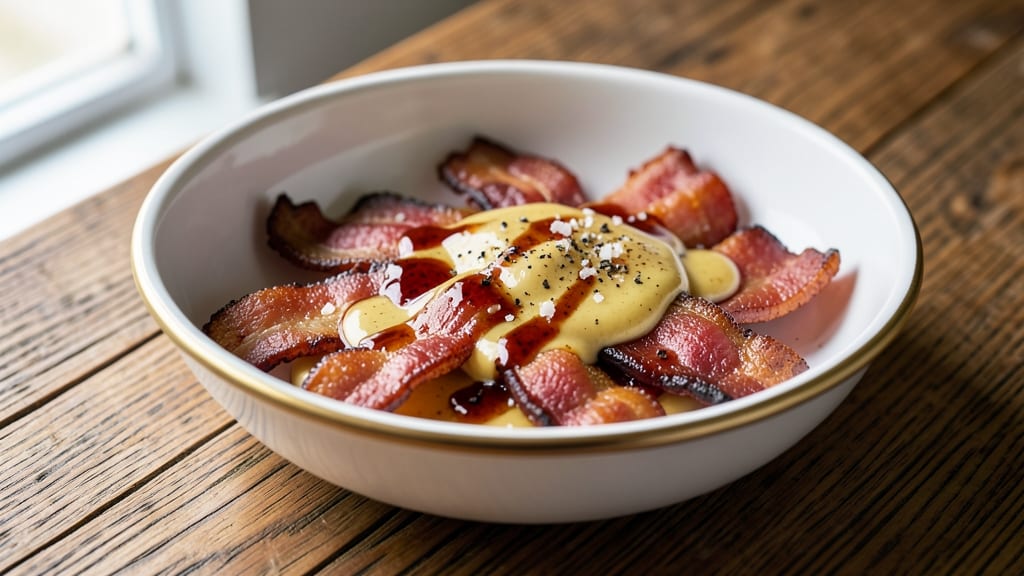
This bacon mustard sauce recipe transforms simple ingredients into a smoky-sweet glaze that elevates grilled meats to restaurant-quality. The secret lies in balancing crispy bacon, tangy mustard, and creamy richness—creating a sauce that's equally at home as a marinade, dipping sauce, or finishing glaze.
I developed this recipe after years of experimenting with bold, flavorful condiments that cut through rich proteins while adding depth.
The sauce starts with cooked bacon, rendered until crisp, which forms the foundation for its signature smoky flavor. Whisking in Dijon mustard and cream creates a silky, emulsified texture that clings perfectly to grilled chicken, pork chops, or even steak.
A touch of apple cider vinegar brightens the mix, while a pinch of smoked paprika deepens the complexity—no blending required, just whisking until smooth.
What you’ll end up with is a versatile sauce that’s rich yet balanced—sweet from the caramelized bacon, tangy from the mustard, and velvety from the cream. It thickens just enough to coat meats beautifully without being gloppy, making it ideal for basting during grilling or drizzling over finished dishes.
The best part? It keeps well in the fridge for up to a week, so you can make a batch and use it all week long.
Use it as a marinade for tender, flavorful meats, a dipping sauce for fries or pretzels, or a finishing glaze for roasted vegetables. The possibilities are endless, but the technique is simple: crisp the bacon, whisk the ingredients, and let the flavors meld.
Here’s how to make it perfectly every time.
Ingredients for bacon mustard sauce
Six crispy ounces of bacon and simple pantry staples create a sauce that transforms grilled meats instantly.
| Ingredient | Amount | Notes |
|---|---|---|
| Thick-Cut Bacon 🥓 | 6 oz | Cooked until crispy, drained |
| Dijon Mustard 🍯 | 2 tbsp | High-quality, smooth texture |
| Heavy Cream 🥛 | ½ cup | Full-fat for richness |
| Apple Cider Vinegar 🍏 | 1 tbsp | Freshly squeezed preferred |
| Smoked Paprika 🌶️ | ½ tsp | For depth and smokiness |
| Granulated Sugar 🍚 | 1 tbsp | Balances tangy flavors |
| Salt 🧂 | ½ tsp | Kosher or sea salt |
| Black Pepper 🌶️ | ¼ tsp | Freshly ground preferred |
| Garlic Cloves 🧄 | 1 whole | Minced for subtle aroma |
The bacon is non-negotiable for that signature smoky depth. Thick-cut bacon from Oscar Mayer or Applegate cooks slower and renders more flavor—skip the pre-cooked bacon bits. Cook it in a cold skillet to render fat evenly, then drain on paper towels. The Dijon mustard should be smooth, not grainy—Maille or Amoy are my go-tos. Heavy cream needs to be full-fat (none of that light stuff) for that velvety texture. If you're in a pinch, half-and-half works at half the amount.
No heavy cream? Greek yogurt thinned with milk mimics the tangy richness. Short on apple cider vinegar? White vinegar or lemon juice in the same amount. The smoked paprika is what gives it that restaurant-quality depth—don't skip it. For extra sweetness, swap sugar for maple syrup or honey. The garlic clove is optional but adds a subtle punch that balances everything. If you're using it, mince it finely so it dissolves completely into the sauce.
This sauce thickens as it cools, so whisk it well after cooking. Store in an airtight jar in the fridge for up to 7 days, or freeze for 3 months. The bacon fat solidifies when chilled, so let it sit at room temperature for 5 minutes before whisking again. Perfect for basting during grilling or drizzling over finished meats. Doubling the recipe? Just keep the bacon-to-mustard ratio the same—it scales beautifully.
Why You'll Love This Recipe
- Here’s what sold me: thick-cut bacon is splurge-worthy, but a few slices go a long way in this sauce. The mustard and vinegar are pantry staples, and the cream adds richness without breaking the bank. It’s the kind of "treat yourself" moment that doesn’t actually cost much.
- Five-Ingredient Magic: That’s all it takes—no fancy techniques, just crispy bacon rendered down, a splash of vinegar to brighten, and a swirl of cream to smooth it out. I swear, the way the smoky paprika ties everything together? It’s the kind of sauce that makes you pause mid-bite and think, "Wait, how did this get so good?"
- Weeknight Hero: Between us, this is the sauce I reach for when I’m too tired to think but still want flavor. Drizzle it over grilled chicken for dinner, toss it with roasted potatoes for lunch—it’s my secret weapon for meals that feel special without the fuss. (Yes, even on a Tuesday night.)
- Leftovers That Don’t Suck: Most sauces turn into a sad, watery mess after day two, but not this one. The bacon fat keeps it rich, the mustard stays sharp, and the cream adds just enough body to reheat beautifully. I’ve had it last four days in the fridge—still delicious, still worth making.
Step-by-step instructions for bacon mustard sauce
This smoky-sweet glaze comes together in minutes with rich, balanced flavors.
Cook and Drain the Thick-Cut Bacon
Place the 6 oz thick-cut bacon in a cold skillet over medium-low heat. Cook undisturbed for 8-10 minutes until the edges begin to crisp and the fat renders out. Avoid stirring too soon—the bacon needs time to develop that signature crispiness.
Once the bacon is golden brown and the fat has rendered (about ½ cup), use tongs to transfer the bacon to a paper towel-lined plate. Let it drain for 2 minutes, then break the bacon into ¼-inch pieces with your hands. Reserve ¼ cup of the bacon fat in the skillet—this is your flavor foundation.
Build the Sauce Base with Mustard and Vinegar
Return the skillet with reserved bacon fat to medium heat. Add the 2 tbsp Dijon mustard and whisk vigorously for 30 seconds until it melts completely into the fat. The mustard will darken slightly and develop a rich aroma.
Pour in the 1 tbsp apple cider vinegar and stir for 1 minute until the mixture bubbles gently and the acidity brightens the mustard. This step balances the richness of the bacon fat with tangy depth—don't skip it. The sauce should now have a glossy, slightly thickened appearance.
Add Cream and Sweet-Smoky Seasonings
Reduce heat to low and slowly pour in the ½ cup heavy cream, whisking constantly to prevent curdling. Let the mixture simmer gently for 3-4 minutes until it thickens slightly and small bubbles form around the edges.
Add the 1 tbsp granulated sugar, ½ tsp smoked paprika, ½ tsp salt, ¼ tsp black pepper, and 1 minced garlic clove. Stir for 1 minute until the garlic is fragrant and the sugar dissolves completely. The sauce should now have a smooth, velvety texture with a perfect balance of sweet, smoky, and tangy notes.
Finish with Crispy Bacon and Simmer
Add the crumbled bacon pieces to the sauce and stir gently to combine. Let the mixture simmer for 2-3 minutes until the bacon is warmed through and the sauce coats the back of a spoon. The final sauce should be thick enough to glaze but still pourable—adjust consistency with 1-2 tsp water if needed.
Taste and adjust seasoning if necessary. For extra richness, stir in 1-2 tbsp reserved bacon fat from the plate. Transfer to a clean jar or bowl and let it cool slightly before using. This sauce keeps well in the refrigerator for up to 5 days and reheats beautifully—perfect for drizzling over grilled meats, roasted vegetables, or even as a sandwich spread.
Pro Tips For Making Bacon Mustard Sauce
- CRISP THE BACON FIRST: Cook your thick-cut bacon until it’s just crisp—no need for well-done. The rendered fat is gold for flavor, but overcooking turns it bitter. Save the crispy bits for garnish (they’re perfect on salads or burgers) and reserve the fat for the sauce. Trust me, you’ll use every drop.
- WHISK THE CREAM COLD: Dijon mustard and apple cider vinegar cut through the richness of heavy cream, but cold cream behaves better. Whisk it in slowly while the pan’s still warm—this prevents curdling. If it starts to seize up, just lower the heat and keep stirring like your life depends on it. (It doesn’t, but the sauce does.)
- SALT THE MUSTARD: Dijon mustard is already salty, but not all brands are created equal. Taste it first—if it’s bland, add a pinch of salt before mixing. Skipping this step means your sauce might taste flat, and you’ll wonder why it’s missing something. A little upfront salting guarantees depth.
- STRAIN THE FAT, NOT THE FLAVOR: After cooking the bacon, strain the fat through a fine-mesh sieve to remove any burnt bits, but don’t rinse the pan. Those crispy crumbles and caramelized bits add complexity. If you’re lazy, just fish them out with a slotted spoon—it’s not pretty, but it works. The sauce will taste richer for it.
Serving suggestions for bacon mustard sauce
Grilled Meat Glaze
Use this sauce as a basting glaze for grilled chicken, pork chops, or steak. Brush it on during the last 5-7 minutes of cooking over medium-high heat—the heat will caramelize the sugar slightly, creating a beautiful glossy finish.
For extra flavor, marinate meats in ½ cup of the sauce for 30-60 minutes before grilling. 🔥
Dipping Sauce
Serve this sauce warm or at room temperature as a dipping sauce for fries, onion rings, or pretzels. The smoky-sweet balance makes it irresistible for dipping. I like to add a sprinkle of fresh parsley or chopped chives right before serving for a pop of color and freshness.
Trust me, it’s a game-changer for game day snacks!
Sandwich Spread
Spread a thin layer of this sauce on burgers, pulled pork sandwiches, or even grilled cheese. The creaminess and smokiness elevate simple sandwiches to next-level deliciousness. For extra indulgence, top with avocado slices or pickled jalapeños to balance the richness. 🥪
Roasted Veggie Drizzle
Drizzle this sauce over roasted Brussels sprouts, asparagus, or sweet potatoes for a savory-sweet twist. The bacon and mustard flavors complement the earthiness of roasted vegetables beautifully.
Toss the veggies in 1 tbsp olive oil, roast at 400°F for 20-25 minutes, then finish with the sauce for a restaurant-worthy side dish.
Breakfast Topping
Yes, this sauce is amazing on breakfast dishes too! Drizzle it over pancakes, waffles, or even scrambled eggs for a smoky, tangy kick. It also pairs perfectly with bacon and egg sandwiches—just spread it on toasted sourdough for a decadent brunch treat. 🍳
Storage and Reuse
Store leftovers in an airtight container in the fridge for up to 5 days or freeze for 3 months. The sauce thickens when chilled, so whisk in 1-2 tsp water before reheating.
I like to reheat it gently on the stovetop over low heat until smooth. Use it as a marinade, glaze, or finishing sauce—it’s that versatile! ✨
Nutrition facts
Frequently asked questions
Can I make this sauce without bacon?
The bacon provides the signature smoky depth, but you can substitute with ¼ cup bacon fat (from pre-cooked bacon) or 2 tbsp liquid smoke for a similar flavor profile. For a vegetarian version, use 2 tbsp smoked paprika + 1 tbsp olive oil instead of bacon. The sauce will still be rich but with a different character.
Why did my sauce separate?
Sauce separation happens when cream and fat aren't properly emulsified. To fix it, whisk in 1 tbsp cold water or 1 tsp cornstarch mixed with water while heating gently. For prevention, whisk constantly when adding cream and avoid high heat. The sauce should thicken slightly when cooled—if it's too thin, simmer longer.
How spicy should the mustard be?
Use Dijon mustard for a smooth, mild base—it's less aggressive than whole-grain mustard. If you prefer heat, add ½ tsp hot sauce or ¼ tsp cayenne pepper at the end. The apple cider vinegar already provides tangy brightness, so adjust spice to taste after tasting the finished sauce.
Can I make this sauce ahead of time?
Yes! This sauce actually tastes better after resting. Make it 1-2 days ahead and store in an airtight container in the fridge. The flavors meld beautifully, and it reheats perfectly. For long-term storage, freeze for up to 3 months—thaw overnight in the fridge before using.
What's the best way to reheat leftovers?
Gently reheat on the stovetop over low heat for 2-3 minutes, whisking constantly until smooth. Avoid microwaving—it can cause separation. For extra richness, stir in 1 tsp reserved bacon fat while reheating. The sauce should be warm but not boiling.