
Sauces & Condiments
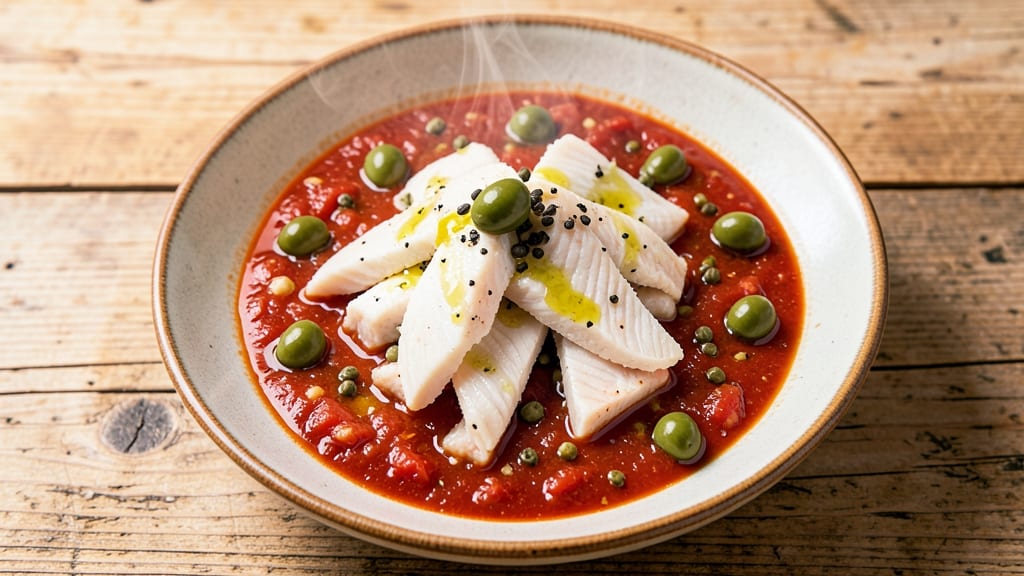
This Baccala in tomato sauce recipe transforms humble salt-cured cod into a Sicilian masterpiece with layers of umami and bright acidity. The process begins with careful desalting—soaking the fish for hours until it’s tender yet firm enough to hold its shape.
What makes this dish special is the balance: salty, briny baccala meets sweet, slow-simmered tomatoes, elevated by garlic, olives, and capers.
Traditional preparation calls for a two-step cooking method: first, the fish is poached gently in water to remove excess salt, then simmered in a rich tomato sauce until the flavors meld.
The sauce should be reduced but still vibrant, with just enough liquid to coat the fish without overwhelming it. Regional variations exist—Neapolitan versions often include chili flakes, while Sicilian styles lean into citrus notes.
The result is a dish that’s simultaneously rustic and refined: flaky, tender cod bathed in a sauce that’s tangy, slightly sweet, and deeply savory. Serve it with crusty bread to soak up every drop or alongside roasted potatoes for a hearty meal.
The aroma alone—tomatoes caramelizing with garlic and herbs—will have your kitchen smelling like a coastal Italian trattoria.
This recipe delivers authentic, restaurant-quality flavors without requiring specialized techniques. With patience (the desalting is key) and attention to the sauce’s balance, you’ll achieve a dish that’s both nostalgic and impressive. Let’s get cooking—your taste buds will thank you.
Ingredients for baccala in tomato sauce
Authentic Sicilian flavors start with these carefully selected ingredients for rich, umami-packed baccala in tomato sauce.
| Ingredient | Amount | Notes |
|---|---|---|
| Salt-Cured Cod (Baccala) 🐟 | 1 lb | Fully cured, desalted properly |
| San Marzano Tomatoes 🍅 | 28 oz | Crushed by hand, seeds removed |
| Garlic Cloves 🧄 | 6 cloves | Peeled, thinly sliced horizontally |
| Extra-Virgin Olive Oil 🫒 | ½ cup | Liguria or Tuscan variety preferred |
| Green Olives 🫒 | ½ cup | Pitted, preferably Sicilian |
| Capers 🌿 | 2 tbsp | Nonpareils, rinsed if briny |
| Red Wine Vinegar 🍷 | 2 tbsp | For acidity balance |
| Fresh Oregano 🌿 | ¼ cup | Chopped, stems removed |
| Fresh Basil Leaves 🌿 | ⅛ cup | Chopped, for finishing |
| Salt 🧂 | 1 ½ tsp | Diamond Crystal preferred |
| Black Peppercorns 🌶️ | ½ tsp | Freshly cracked |
| Bay Leaves 🌿 | 2 whole | Dried, removed before serving |
| Crusty Bread 🍞 | 8 slices | For serving, toasted |
| Water 💧 | 4 cups | For initial desalting |
The baccala is the foundation—look for salt-cured cod with visible marbling and a firm texture (avoid dried-out pieces). Italian specialty stores or well-stocked seafood markets carry the best quality, often pre-cured. If using pre-cured, soak it for 12-24 hours in cold water, changing the water every 4 hours. The tomatoes must be San Marzano—their sweetness and low acidity are non-negotiable for authentic flavor. Whole, crushed tomatoes work better than canned crushed; their skins add texture and depth. Garlic should be freshly peeled and sliced horizontally for even cooking.
No San Marzano tomatoes? Roma tomatoes are the next best option—peeled, seeded, and crushed by hand for maximum flavor. Substitute capers with 1 tbsp lemon juice if unavailable, but the briny punch is essential. For olive oil, Liguria or Tuscan varieties provide the peppery, fruity notes traditional to this dish. If using green olives, rinse them well to remove excess salt. The red wine vinegar can be swapped for white wine vinegar (use half the amount), but the acidity balance is critical—taste as you go. Fresh herbs are ideal, but dried oregano (at one-third the amount) works in a pinch.
Store the desalted cod in its soaking water in the fridge for up to 2 days before cooking. The tomato sauce base (without cod) can be refrigerated for 3 days or frozen for 3 months. For best results, toast the bread just before serving to maintain crispness. The final dish reheats beautifully—simmer gently on the stove to avoid breaking the cod. Leftovers keep for 2 days in the fridge, though the flavors deepen overnight. Portion into single servings before freezing for easy reheating.
Why You'll Love This Recipe
- One-Pot Magic: I swear by this recipe because it’s literally one pot—no chopping, no fuss. Just toss in the baccala (already cured, so no prep), crush a few garlic cloves, and let the San Marzano tomatoes do the work while you sip wine. The olives? Just a handful straight from the jar. That’s it.
- Umami Bomb: The baccala’s salty depth meets the bright, sweet San Marzano tomatoes—it’s like a flavor explosion in your mouth. The garlic sizzles in the olive oil until it’s just crisp enough, and those green olives add a briny punch. Honestly, I’ve never tasted a tomato sauce this alive.
- Leftovers That Shine: This sauce actually gets better the next day—yes, really. I make a big batch on Sunday, let it sit overnight, and reheat it for sandwiches or pasta all week. The flavors meld into something richer, and the baccala softens just enough to melt in your mouth. (My kids beg for it.)
- Budget Meal Hero: Baccala might sound fancy, but a small piece goes a long way, and it’s cheaper than fresh fish. San Marzano tomatoes are a splurge, but they’re worth it—plus, you use the whole can. This recipe stretches into multiple meals without breaking the bank. My wallet and my taste buds thank me.
Step-by-step instructions for salt-cured cod in tomato sauce
Mastering this Sicilian classic transforms tough salt-cured cod into tender, flavorful fillets through precise desalting and slow simmering.
Desalt the Baccala Thoroughly
Place the 1 lb salt-cured cod (baccala) in a non-reactive bowl and cover completely with the 4 cups water. Let it soak for 12 hours, changing the water every 4 hours—this gradual process removes excess salt while preventing the fish from becoming mushy. After the final water change, pat the cod dry with paper towels and let it air-dry for 30 minutes at room temperature. You'll notice the surface becomes slightly tacky as moisture evaporates, which helps create a better texture when cooked.
I've found that skipping this step or rushing the desalting leads to either overly salty fish or a crumbly texture. The key is patience—the longer the soak, the better the final result, but don't exceed 24 hours total or the fish may absorb too much water and lose its natural firmness.
Build the Umami-Packed Tomato Base
Heat the 0.5 cup extra-virgin olive oil in a large Dutch oven over medium heat. Add the 6 cloves horizontally sliced garlic and cook for 1-2 minutes until they turn golden and fragrant—don't let them brown or they'll become bitter. Add the 28 oz crushed San Marzano tomatoes, 2 whole bay leaves, 1.5 tsp salt, and 0.5 tsp freshly cracked black peppercorns. Stir well to combine.
Bring the mixture to a gentle simmer and let it cook uncovered for 20-25 minutes, stirring occasionally. You're looking for a sauce that reduces slightly but still maintains a chunky, vibrant texture—this concentration intensifies the tomato flavor. The acidity from the tomatoes will begin to break down the fish's proteins later, creating that signature tender texture.
Simmer the Cod Until Fork-Tender
Gently add the desalted baccala to the tomato mixture, submerging it completely. Reduce heat to low and cover partially with a lid, leaving a 2-inch gap for steam to escape. Simmer for 30-35 minutes, turning the fish occasionally with a slotted spoon. The cod is done when it flakes easily with a fork and the internal temperature reaches 145°F—it should be opaque throughout with no translucent areas.
Here's the thing—don't rush this step. The slow cooking allows the fish to absorb the tomato's flavors while maintaining its structure. If you notice the sauce reducing too quickly, add 1-2 tablespoons of water to maintain the proper consistency. The fish should be just tender enough to pull apart with gentle pressure, not falling apart completely.
Finish with Bright, Herbal Accents
Remove the cod from the sauce and transfer it to a serving platter. Stir the 0.5 cup green olives, 2 tbsp capers, 2 tbsp red wine vinegar, 0.25 cup chopped fresh oregano, and 0.125 cup chopped fresh basil leaves into the remaining sauce. Simmer for an additional 5 minutes to allow the flavors to meld. The vinegar brightens the dish while the olives and capers add briny contrast to the sweet tomatoes.
Return the cod to the sauce just before serving, allowing it to soak up those final flavors. The sauce should coat the back of a spoon with a smooth yet textured consistency, balancing the richness of the fish with the acidity of the tomatoes. Garnish each serving with an additional sprinkle of fresh basil and serve immediately with the 8 slices toasted crusty bread for dipping.
Serve with Perfectly Toasted Bread
While the cod finishes absorbing the sauce, toast the 8 slices crusty bread in a dry skillet over medium heat until they develop golden brown spots and crisp up slightly—about 2-3 minutes per side. The bread should be warm but not burnt, providing a sturdy base for scooping up the rich tomato sauce.
This dish shines when served immediately, as the flavors continue to develop even after cooking. Each bite should deliver tender, flaky cod with layers of tomato sweetness, herbal brightness, and briny capers. The bread acts as both a vehicle and a contrast, its crisp texture cutting through the sauce's richness. For best results, serve while the cod is still warm and the sauce maintains its vibrant color.
Pro Tips For Making Baccala In Tomato Sauce
- SOAK THE BACCALA LONGER: I learned this the hard way—skipping the extra hour or two of soaking in cold water leaves that salty bite behind. Use a bowl big enough to submerge the fillets completely, and change the water every 30 minutes for the first two hours. The goal isn’t just to remove salt; it’s to let the fish absorb flavor.
- CRUSH THE TOMATOES BY HAND: San Marzano tomatoes are sweet, but blitzing them in a food processor turns them into a paste that clings like glue. Instead, crush them roughly with your fingers—just enough to break the skins and release the juices. This keeps the sauce bright and lets the acidity cut through the richness of the olive oil.
- SWEAT THE GARLIC LOW AND SLOW: After burning three batches, I finally figured out: garlic in olive oil needs patience. Cook it over the lowest heat possible—just until it’s golden, not brown—so it doesn’t turn bitter. Add a splash of water if it starts to stick; the steam helps it release flavor without burning.
- FINISH WITH A SPLASH OF WATER: The sauce will thicken as it simmers, but adding ¼ cup of water at the end loosens it up and brightens the acidity. Stir it in, let it bubble for 30 seconds, then taste. This is the moment the dish comes together—don’t skip it, even if it feels like overkill.
Pro cooking tips for this dish
Desalting Mastery
The desalting process is where this dish succeeds or fails. I've learned that room-temperature water works best—never use hot water as it can cook the fish prematurely. For a 1 lb piece of baccala, divide the 12-hour soak into three 4-hour intervals, changing the water each time.
This gradual approach ensures even salt removal without over-soaking. After the final rinse, pat the fish dry and let it air-dry for 30 minutes—this step creates a slightly tacky surface that helps the sauce cling beautifully. 💧
Tomato Sauce Reduction
Don't rush the tomato base reduction—this is where the sauce develops its signature depth. Simmer the tomatoes uncovered over medium-low heat for 20-25 minutes, stirring occasionally. The goal is a chunky, vibrant sauce that coats the back of a spoon but still has texture.
I use a large Dutch oven because it provides even heat distribution. If the sauce reduces too quickly, add 1-2 tablespoons of water to maintain the proper consistency. The acidity from the tomatoes will begin breaking down the fish's proteins during the final simmer, creating that signature tender texture. 🍅
Low-and-Slow Simmering
After adding the cod, maintain a gentle simmer at 180-190°F—this is lower than you might expect. The key is patience: cover the pot partially with a lid (leave a 2-inch gap) and simmer for 30-35 minutes, turning the fish occasionally.
The cod is done when it reaches 145°F internal temperature and flakes easily with a fork. I've found that using a meat thermometer is essential—visual cues alone can be misleading with salt-cured fish. 🌡️
Flavor Layering
The final 5 minutes of simmering with olives, capers, and vinegar are crucial for balancing flavors. The red wine vinegar brightens the dish while the green olives and capers add briny contrast to the sweet tomatoes.
I like to stir these ingredients into the sauce after removing the cod—this prevents them from overcooking and losing their texture. Return the cod to the sauce just before serving so it absorbs those final flavors without becoming soggy. 💫
Bread Toasting
Toast the bread in a dry skillet over medium heat until it develops golden brown spots—about 2-3 minutes per side. The bread should be warm but not burnt, providing the perfect textural contrast to the rich sauce. I recommend using a cast iron skillet for even browning.
Serve the bread immediately alongside the baccala, as it loses its crispness quickly. The bread acts as both a vehicle for the sauce and a contrast to the tender fish. 🍞
Equipment Essentials
For this recipe, I rely on three key pieces of equipment: a large Dutch oven for even heat distribution, a meat thermometer for precise temperature monitoring, and a slotted spoon for gently handling the fish.
The Dutch oven prevents the sauce from sticking, while the thermometer ensures the cod reaches the perfect internal temperature. A non-reactive bowl is essential for the desalting process to prevent metallic flavors. These tools make the difference between a good dish and a great one. 🔥
Nutrition facts
Frequently asked questions
How long should I soak baccala before cooking?
Soak the 1 lb baccala for 12 hours total, changing the water every 4 hours. This gradual process removes excess salt while keeping the fish firm. Never exceed 24 hours or the texture may become mushy. The final 30-minute air-dry is equally important for better sauce adhesion.
Can I use canned tomatoes instead of fresh?
While fresh San Marzano tomatoes are ideal, you can use high-quality canned crushed tomatoes in a pinch. Look for brands with minimal additives and no added salt. For best results, drain them well and add 1 extra tablespoon of red wine vinegar to compensate for lower acidity. The texture will be slightly smoother but still delicious.
What's the secret to keeping the baccala from falling apart?
Three key factors: proper desalting, gentle cooking, and low heat. Maintain a 180-190°F simmer and cook for exactly 30-35 minutes. Use a meat thermometer to check 145°F internal temp—overcooking causes fish to disintegrate. The partial lid coverage helps control moisture while allowing steam to escape.
How can I make this dish ahead of time?
The sauce can be made 2 days ahead and stored in the fridge. For the full dish, cook the baccala and sauce, then refrigerate for up to 2 days. Reheat gently on the stove with 1-2 tablespoons of water to restore moisture. The flavors actually improve overnight as components meld. For freezing, portion into single servings before freezing for up to 3 months.
What's the difference between Sicilian and Neapolitan versions?
Sicilian versions emphasize citrus notes (often adding lemon zest) and more olives/capers for brininess. Neapolitan styles include chili flakes or red pepper for heat, and sometimes anchovies for extra umami. Both use tomato sauce, but Sicilian leans sweeter while Neapolitan is slightly spicier.