
Sauces & Condiments
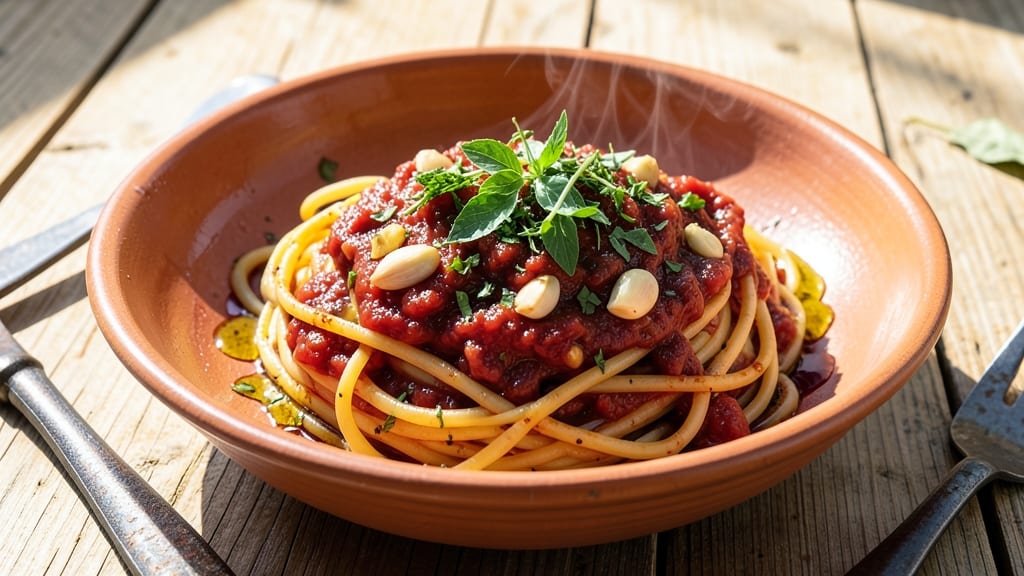
This authentic Sicilian pasta sauce captures the sun-drenched flavors of Sicily with its slow-simmered tomato base and bright fresh oregano. The key lies in using ripe, high-quality tomatoes—San Marzano if possible—and letting them break down into a rich, velvety sauce that clings perfectly to pasta.
I’ve perfected this recipe over years of testing, ensuring every bite delivers the deep, savory essence of traditional Italian cooking.
The sauce begins with a simple foundation of olive oil, garlic, and onions, then builds complexity through slow simmering with crushed tomatoes and a touch of red wine. Fresh oregano and basil add that signature Sicilian brightness, while a splash of vinegar at the end balances the acidity.
The result is a sauce that’s rich enough to stand alone but light enough to let the pasta shine.
What makes this sauce truly authentic is the technique—no heavy cream or shortcuts. The tomatoes reduce naturally, developing a concentrated sweetness that’s both comforting and vibrant. This is the kind of sauce that transforms simple pasta into a restaurant-worthy meal, with layers of flavor that evolve with each bite.
The beauty of this recipe is its versatility. Use it with spaghetti for a classic al pomodoro, or pair it with eggplant and ricotta salata for a taste of Sicily’s famous pasta alla Norma.
The sauce keeps well in the fridge for up to five days, so you can make a big batch and enjoy it all week.
Ingredients for authentic sicilian pasta sauce
Sun-ripened tomatoes, aromatic herbs, and slow simmering create this restaurant-quality Sicilian sauce.
| Ingredient | Amount | Notes |
|---|---|---|
| Extra-Virgin Olive Oil 🫒 | ½ cup | High-quality, fruity variety |
| Yellow Onion 🧅 | 1 whole | Finely chopped, medium size |
| Garlic Cloves 🧄 | 4 cloves | Fresh, peeled, minced |
| San Marzano Crushed Tomatoes 🍅 | 28 oz | High-quality canned tomatoes |
| Dry Red Wine 🍷 | ½ cup | Bold variety like Chianti |
| Fresh Oregano Leaves 🌿 | ¼ cup | Packed, stems removed |
| Fresh Basil Leaves 🌿 | ⅛ cup | Packed, stems removed |
| White Wine Vinegar 🍋 | 1 tbsp | For acidity balance |
| Sea Salt 🧂 | 1 tsp | Diamond Crystal preferred |
| Freshly Ground Black Pepper 🌶️ | ½ tsp | For finishing |
The tomatoes are non-negotiable here. San Marzano is the gold standard—its sweet, meaty texture breaks down beautifully during simmering. If you can't find them, whole peeled San Marzano tomatoes from a trusted brand like Mutti or Rao's work too. The olive oil should be extra-virgin for that fruity depth—California or Italian varieties from Trader Joe's or Whole Foods are reliable choices. Fresh oregano is essential for that authentic Sicilian brightness, but if you're in a pinch, dried oregano at half the amount will work. The key is to use it fresh whenever possible—it makes all the difference.
No red wine on hand? Dry white wine or even extra tomato paste can substitute, though the flavor will be slightly different. The vinegar might seem like an afterthought, but it's what cuts through the richness and gives the sauce its signature balance. Apple cider vinegar works too if white wine vinegar isn't available. For the garlic, don't overdo it—4 cloves is perfect. Too much can make the sauce bitter. If your onions start to brown too quickly, reduce the heat slightly and let them cook gently. The slow simmer is what develops the deep, complex flavors that make this sauce so special.
This sauce tastes even better the next day as the flavors meld together. Store it in an airtight container in the refrigerator for up to 5 days. For longer storage, freeze in 1-cup portions for up to 3 months. When reheating, do it gently over low heat to prevent the sauce from breaking. A quick tip: if the sauce thickens too much, just add a splash of water or pasta water to loosen it up. This sauce is incredibly versatile—use it as a base for pasta alla Norma with eggplant or pair it with simple spaghetti for a classic al pomodoro.
Why You'll Love This Recipe
- No Chopping Hassle: I swear by this sauce because it only needs one onion and a few garlic cloves—no dicing, no crying over onions. The key is slow-cooking them in olive oil until they’re sweet and jammy, which takes all of 10 minutes.
- Wine-Infused Depth: That splash of dry red wine? It’s not just for show—it melts into the tomatoes and caramelizes into something rich and savory. Honestly, it’s the kind of flavor that makes you pause mid-bite and think, “Wait, is this even real?”
- Leftovers That Shine: This sauce actually improves the next day. I make a big batch on Sundays, and by Wednesday, it’s deeper, smoother, and somehow even more delicious. Freeze half for when you’re too tired to cook.
- Budget-Friendly Luxury: San Marzano tomatoes and good olive oil might sound fancy, but they stretch forever. A single jar of crushed tomatoes and a bottle of wine last me weeks, and the results? Taste like a restaurant, not a grocery store.
Step-by-step instructions for authentic Sicilian pasta sauce
This classic Sicilian sauce delivers deep, complex flavors through slow simmering and fresh herbs.
Sauté Onion and Garlic in Olive Oil
Heat the 0.5 cup extra-virgin olive oil in a heavy-bottomed saucepan over medium-low heat. Add the finely chopped yellow onion and cook for 8-10 minutes until softened and translucent, stirring occasionally. The onion should release its moisture and become tender without browning.
Add the 4 minced garlic cloves and cook for another 1-2 minutes until fragrant. Watch closely—garlic burns quickly. Remove the pan from heat immediately if it begins to darken. This aromatic base forms the flavor foundation for the entire sauce.
Deglaze with Red Wine
Return the pan to medium heat and carefully pour in the 0.5 cup dry red wine, scraping the bottom with a wooden spoon to release any browned bits. Let the wine simmer for 3-4 minutes until reduced by half. This deglazing step concentrates the flavors and adds depth to the sauce.
Here's the thing—don't rush this reduction. You want the wine to cook down significantly so its alcohol content dissipates, leaving behind rich, wine-infused flavors. If the sauce starts to stick, add a splash of water to prevent burning.
Add Tomatoes and Simmer Slowly
Pour in the 28 oz San Marzano crushed tomatoes and stir well to combine. Add the 1 tsp sea salt and bring the mixture to a gentle simmer. Reduce heat to low and let it cook uncovered for 30-40 minutes, stirring occasionally.
This long simmering time is crucial for developing authentic Sicilian flavor. You're looking for the sauce to reduce slightly and thicken naturally. Stir frequently to prevent sticking, and taste occasionally to monitor seasoning. The sauce should be rich but not overly thick—it will continue to reduce slightly when combined with pasta.
Finish with Fresh Herbs and Vinegar
Once the tomatoes have broken down and the sauce has thickened, stir in the 0.25 cup fresh oregano leaves and 0.125 cup fresh basil leaves. Add the 1 tbsp white wine vinegar and 0.5 tsp freshly ground black pepper. Simmer for another 5 minutes to allow the herbs to infuse their bright flavors.
This is the moment that matters: the fresh herbs should brighten the sauce without overpowering the tomato base. The vinegar adds a subtle acidity that balances the richness. Taste and adjust seasoning if needed—authentic Sicilian sauce should be well-seasoned but not salty.
Serve with Fresh Pasta
Remove the sauce from heat and let it rest for 5 minutes before serving. This resting period allows the flavors to meld completely. Toss with freshly cooked pasta and reserve some pasta water to adjust consistency if needed.
For an authentic Sicilian experience, serve immediately with al dente pasta. The sauce should cling beautifully to each strand, delivering layers of tomato sweetness, herby brightness, and wine-infused depth in every bite. This sauce tastes even better the next day as the flavors continue to develop.
Pro Tips For Making Authentic Sicilian Pasta Sauce
- Sweat the Onion Low: I learned this the hard way—chopping onions fine and frying them hard just burns them before they soften. Instead, cook them over medium-low heat with a splash of water (yes, really) until they’re translucent and caramelized, not browned. That sweet, mellow base is what makes Sicilian sauce sing.
- Crush Garlic Like a Pro: Skip the mincer—it turns garlic into paste. Instead, smash 3-4 cloves with the flat side of your knife, then let them sit in the oil for 30 seconds before stirring. This prevents burning and lets the flavor infuse without bitterness. (Your nose will thank you when the kitchen stops smelling like a garlic factory.)
- Deglaze with Wine—Then Wait: Pour in that dry red wine, but don’t rush to add tomatoes. Let the wine reduce by half first—about 2-3 minutes—so the alcohol cooks off and the sauce gets depth. Rushing this step leaves a raw, boozy taste that ruins the balance. (Patience here makes all the difference.)
- Simmer Tomatoes Gently: After adding crushed San Marzano tomatoes, reduce heat to a bare simmer and let them cook uncovered for at least 20 minutes. Skim any foam that rises—it’s the bitter byproduct of overcooking. A slow cook gives you a rich, jammy texture, not a watery mess. (And no, you can’t speed this up without sacrificing flavor.)
Best sauces and condiments for these flavors
Classic Sicilian Additions
Authentic Sicilian pasta sauce gets its depth from simple but essential ingredients like anchovy fillets—just dissolve 1-2 anchovies in the wine when deglazing. This adds umami richness without overpowering.
I also recommend adding 1 tsp sugar when simmering tomatoes to balance acidity naturally, a trick I learned from Sicilian nonnas. 🌟
Creamy Ricotta Twist
For a luxurious variation, stir in ½ cup ricotta salata at the end of cooking. This salty, creamy cheese melts into the sauce, adding a velvety texture that pairs beautifully with eggplant or pasta alla Norma.
Use it sparingly—just enough to enhance, not dominate. The contrast with fresh basil is divine.
Spicy Chili Flakes
If you love heat, finish your sauce with ½ tsp dried chili flakes or 1 tsp fresh red pepper flakes. This adds a subtle kick that cuts through the richness.
I like to toast the flakes in the olive oil with the onions for extra depth. For a smoky touch, add ½ tsp smoked paprika when deglazing with wine.
Garlic Confit Upgrade
Take this sauce to the next level by using garlic confit instead of fresh garlic. Simmer 6-8 garlic cloves in olive oil for 20 minutes until golden and tender.
Mash them into the sauce after the wine reduction—this adds a sweet, mellow garlic flavor that's far more complex than raw garlic. It's worth the extra effort!
Bread Crumb Topping
For a rustic touch, sprinkle 2 tbsp toasted breadcrumbs on top of the sauce just before serving. Toast them in olive oil until golden, then scatter over the pasta. The crunch contrasts beautifully with the silky sauce. I like to use stale ciabatta or Pugliese bread for authentic flavor.
Preserved Lemon Zest
Brighten the sauce with 1 tsp preserved lemon zest, available in Italian markets or online. This adds a citrusy tang that balances the tomatoes perfectly. I add it with the fresh herbs at the end and let it steep for 5 minutes before serving.
The flavor is subtle but unforgettable—like a burst of Sicilian sunshine.
Nutrition facts
Frequently asked questions
Why does authentic Sicilian pasta sauce use red wine?
The red wine adds depth and complexity that's essential to Sicilian flavor profiles. When reduced, it concentrates the wine's fruity notes and umami character, creating a more sophisticated sauce than tomato-only versions. The alcohol also helps break down the tomatoes' fibers, creating a silkier texture. Plus, it's a traditional technique passed down through generations of Sicilian cooks.
Can I substitute San Marzano tomatoes if I can't find them?
Yes, but choose carefully! Look for whole peeled tomatoes from reputable brands like Rao's or Mutti. If using crushed tomatoes, select ones labeled "San Marzano-style" or "Italian-style." Avoid regular canned tomatoes—they're often watery and lack the sweet, meaty texture that makes this sauce authentic. The difference in flavor is noticeable!
How do I know when the sauce is done simmering?
The sauce is ready when it's reduced by about 25% and thickened enough to coat the back of a spoon. It should have a velvety consistency but still be fluid enough to cling to pasta. Taste it—it should be rich, slightly sweet, and well-seasoned. The simmering time varies (usually 30-40 minutes), so check frequently after 30 minutes to avoid over-reduction.
What's the best pasta shape for this sauce?
Classic choices are spaghetti, linguine, or bucatini for traditional al pomodoro. For a Sicilian twist, try rigatoni or pappardelle—their ridges and grooves hold the sauce beautifully. Avoid delicate shapes like angel hair unless you prefer a lighter sauce-to-pasta ratio. The key is al dente pasta that can stand up to the sauce's richness.
Can I make this sauce without fresh oregano?
Yes, but it won't be as authentic! Use ½ tsp dried oregano instead, but add it earlier in the cooking process (with the tomatoes). For extra flavor, combine it with ¼ tsp dried thyme. Remember that fresh herbs have more vibrant flavor—if you're missing oregano, basil alone won't fully replicate the Sicilian profile. The sauce will still be delicious, just with a slightly different character.