
Sauces & Condiments
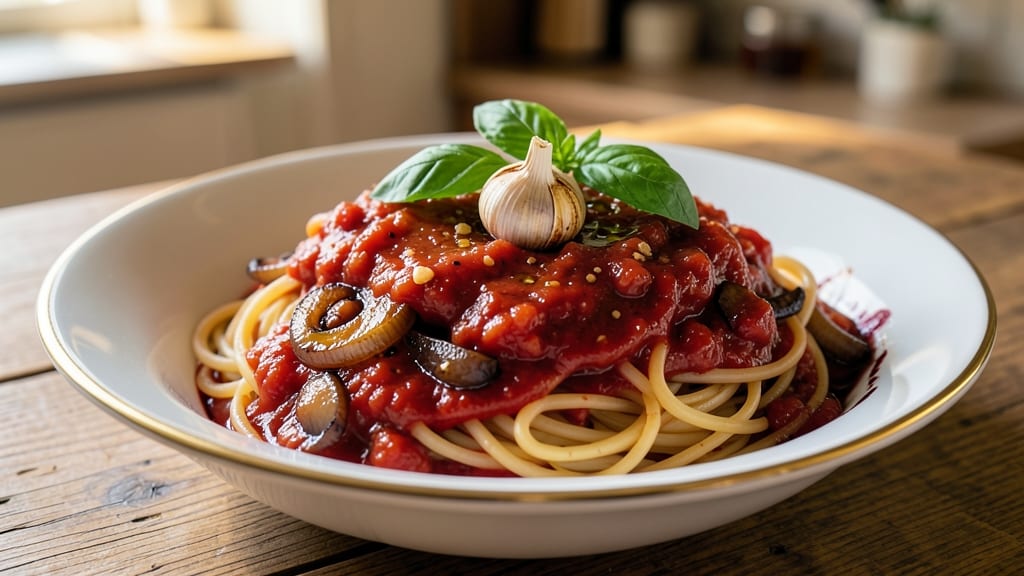
This awesome spaghetti sauce recipe transforms simple ingredients into a rich, umami-packed sauce that clings to every strand of pasta. The secret lies in slow-simmered tomatoes, aromatic herbs, and a touch of sweetness that balances deep savory notes—no fancy techniques required.
What makes it stand out is the hidden herb magic: fresh basil and oregano infuse the sauce with layers of flavor that develop beautifully over time.
The foundation begins with crushed tomatoes and garlic, sautéed until fragrant, then simmered for hours to concentrate their natural sweetness. A splash of red wine adds depth, while a pinch of sugar rounds out the acidity, creating a sauce that’s both complex and approachable.
This isn’t your basic marinara—it’s a versatile, restaurant-quality sauce that works as a standalone dish or pairs perfectly with meatballs, chicken, or shrimp.
By the time you’re done, you’ll have a velvety, deeply flavorful sauce with a glossy finish and a balance of sweet, tangy, and herby notes. The texture is just right—thick enough to coat pasta generously but still smooth enough to drizzle over grilled meats or roasted vegetables.
It’s the kind of sauce that turns a simple weeknight dinner into something memorable, without requiring hours in the kitchen.
For added richness, stir in ground beef or Italian sausage during the final 20 minutes of simmering, or keep it vegetarian by adding mushrooms and lentils. The possibilities are endless, but the core recipe remains foolproof—perfect for beginners and seasoned cooks alike. Let’s get cooking!
Ingredients for awesome spaghetti sauce
The foundation of this umami-rich sauce starts with crushed tomatoes and aromatic herbs, simmered slowly to develop deep flavor layers.
| Ingredient | Amount | Notes |
|---|---|---|
| Crushed Tomatoes 🍅 | 28 oz | San Marzano preferred for sweetness |
| Yellow Onion 🧅 | 1 whole | Medium size, finely diced |
| Garlic Cloves 🧄 | 4 cloves | Freshly minced for aromatic depth |
| Extra-Virgin Olive Oil 🫒 | ½ cup | High-quality, fruity variety |
| Dry Red Wine 🍷 | ½ cup | Bold Cabernet Sauvignon preferred |
| Fresh Basil Leaves 🌿 | ½ cup | Packed, stems removed |
| Dried Oregano 🍃 | 1 tbsp | Mexican oregano for authentic flavor |
| Granulated Sugar 🍚 | 1 tbsp | Balances acidity |
| Salt 🧂 | 1 ½ tsp | Diamond Crystal preferred |
| Ground Black Pepper 🌶️ | ½ tsp | Freshly cracked for heat |
The tomatoes are the heart of this sauce, so San Marzano is non-negotiable—their natural sweetness and low acidity create the perfect base. Whole Foods or local Italian markets carry the best quality, but any high-end grocery store will have them. For the onions, yellow onions work best—they caramelize beautifully and add subtle sweetness without overpowering. The garlic should be freshly minced just before adding to the pot, not pre-minced from a jar. Penzeys is my go-to for quality dried oregano, but the bulk bins at Trader Joe's offer a great budget-friendly alternative.
No red wine? Dry sherry or beef broth works in a pinch, though the depth won't be identical. Fresh basil is ideal, but dried basil at one-third the amount will suffice if that's all you have. For the sugar, brown sugar adds a caramel note, though granulated keeps it classic. The olive oil matters—California Early Harvest or Colavita brands elevate the sauce. If you're making a large batch, double the herbs and adjust the wine to 1 cup for richer flavor development.
This sauce tastes even better the next day as flavors meld. Store in airtight containers for up to 5 days in the fridge or 6 months frozen. For freezing, portion into 1-cup containers to thaw exactly what you need. The sauce thickens as it cools, so add 1-2 tbsp water when reheating if needed. Freeze any extra basil in ice cube trays with olive oil for future use—game changer for quick pasta dishes.
Why You'll Love This Recipe
- One-Pot Magic: I swear by this sauce because it’s literally one pot—no chopping boards clogged with scraps, no extra pans to wash. Just onions, garlic, and tomatoes simmering together while I toss a salad or open a bottle of wine. The red wine deglazes the pan like a dream, pulling out all those caramelized bits that make the difference between good and ridiculously good.
- Wine-Infused Depth: Here’s what sold me—the wine. Not just any splash, but a proper pour that cooks down into something rich and velvety. That first bite? It’s like someone took all the bright acidity of crushed tomatoes and wrapped it in a hug of umami from the olive oil and garlic. (Yes, even on a Tuesday night.)
- Meal Prep MVP: This sauce doubles as my lazy Sunday project and my emergency dinner fix. Make a big batch, freeze half, and you’ve got a pantry staple that’s always ready. Pasta night? Check. Stuffed peppers? Done. Even my picky roommate asks for seconds—proof it’s versatile enough to please.
- Budget-Friendly Luxury: Crushed tomatoes and onions won’t break the bank, but the flavor? That’s gourmet-level. The olive oil adds richness without the cost of cream, and the wine elevates it from "weeknight meal" to "I actually cooked dinner" vibes. Honestly, it’s the kind of sauce that makes you feel fancy without the grocery bill to match.
Step-by-step instructions for deep umami simmer with hidden herb magic
Here's how to build a sauce that layers complexity through slow extraction and aromatic development.
Sauté Aromatics Until Deeply Fragrant
Heat the 0.5 cup extra-virgin olive oil in a heavy-bottomed pot over medium-low heat. Add the 1 whole yellow onion, diced into even ¼-inch pieces, and cook for 8-10 minutes until translucent and slightly caramelized at the edges. The onions should soften completely without browning—this prevents bitterness later.
Add the 4 cloves garlic cloves, freshly minced, and cook for another 1-2 minutes until just fragrant. Here's the thing—garlic burns quickly, so watch it closely. You want to release its sweet, mellow aromatics, not its bitter compounds. When the garlic turns golden around the edges but hasn't darkened, it's ready. Remove the pot from heat briefly if needed to prevent burning.
Deglaze and Reduce the Wine Base
Return the pot to medium heat and pour in the 0.5 cup dry red wine. Immediately scrape up all the browned bits from the bottom of the pan with a wooden spoon—this deglazing captures concentrated flavor. Let the wine simmer until reduced by half, about 3-4 minutes. You'll notice the alcohol aroma dissipates as it cooks off, leaving behind deeper wine notes.
Add the 28 oz crushed tomatoes and 1 tbsp granulated sugar to balance the acidity. Stir well to combine, then bring to a gentle simmer. This is where the sauce begins its transformation—let it cook uncovered for 15 minutes while you prepare the remaining ingredients. The sugar will help mellow the tomatoes' natural acidity while the wine adds complexity.
Build Layered Flavor Through Slow Cooking
Reduce heat to low and add the 1 tbsp dried oregano, 1.5 tsp salt, and 0.5 tsp ground black pepper. Stir gently to distribute the spices evenly. Let the sauce simmer uncovered for 30-40 minutes, stirring occasionally. This slow reduction allows the flavors to meld and intensify—you'll see the sauce thicken noticeably as moisture evaporates.
Taste the sauce after 30 minutes of simmering. If it needs more depth, add a pinch of salt or a splash of water to adjust consistency. The sauce should coat the back of a spoon but still be loose enough to cling to pasta. Here's the critical checkpoint: the aroma should be rich and complex, with notes of tomato, wine, and herbs intertwining. If it smells flat, extend the simmer by another 10 minutes—patience at this stage makes all the difference.
Finish With Fresh Herbs for Brightness
Remove the pot from heat and stir in the 0.5 cup fresh basil leaves, stems removed. Let the sauce sit off the heat for 5-10 minutes—this allows the basil's bright, fresh notes to infuse without wilting completely. The sauce should be vibrant green from the basil, indicating it's properly integrated. If you prefer a smoother texture, strain out the basil before serving.
For the final touch, taste and adjust seasoning one last time. The sauce should be balanced—sweet from the sugar, acidic from the tomatoes, umami from the wine and herbs, and properly salted. If it's too thick, thin with a splash of pasta water; if too thin, simmer uncovered for another 5 minutes to reduce. Serve immediately over al dente spaghetti, reserving some sauce to toss with the pasta for even coating.
Pro Tips For Making Awesome Spaghetti Sauce
- Sweat the Onion Low: I used to blast onions on high heat until they were charred and bitter—don’t make that mistake. Cook them over medium-low with a splash of water, covered, until they’re translucent but not browned. This keeps them sweet and mellow, not overpowering the tomatoes later.
- Deglaze with Wine Early: Pour that red wine in right after the onions and garlic hit the pan—before the tomatoes go in. Let it simmer for 2-3 minutes to cook off the alcohol, so it doesn’t taste like you’re drinking sauce. (Yes, even if you’re impatient like me.)
- Crush Tomatoes by Hand: Skip the canned crushed tomatoes if you can—use fresh or high-quality canned whole tomatoes and crush them lightly with your fingers. This keeps the sauce thicker and lets you control the texture better than pre-crushed, which often has extra water.
- Simmer Long and Slow: After adding the tomatoes and wine, reduce heat to a bare simmer and walk away for at least 30 minutes. The flavors meld better when they’re not rushed, and you’ll avoid that canned-tomato taste. (Your future self will notice the difference.)
Dietary considerations for this awesome spaghetti sauce
Vegetarian Adaptations
Skip the meat entirely and boost umami with 2 cups finely chopped mushrooms sautéed with the onions, or add ½ cup cooked lentils for heartiness.
For extra depth, stir in 1 tbsp soy sauce or 1 tsp miso paste during the final 10 minutes of simmering—this adds a savory complexity without meat. I’ve also had great success with sun-dried tomatoes (¼ cup, chopped) for concentrated tomato flavor. 🌱
Gluten-Free Options
This sauce is naturally gluten-free, but always double-check labels on ingredients like crushed tomatoes (some brands add thickeners) and dried oregano (contamination risk). For extra safety, use certified gluten-free red wine and ensure your olive oil and sugar are also certified.
The recipe remains unchanged—just verify each component. Trust me, the flavor stays identical! ✨
Dairy-Free Considerations
While this sauce doesn’t contain dairy, it pairs beautifully with dairy-free cheese alternatives like nutritional yeast or cashew ricotta on top. For a richer finish, stir in 1 tbsp coconut aminos (instead of soy sauce) during the last 5 minutes of simmering—it adds a subtle umami note without dairy.
The texture and flavor remain perfectly balanced. 🥛
Low-Sodium Versions
Reduce the salt to 0.5 tsp and use low-sodium crushed tomatoes (like Muir Glen) to cut sodium by half. Boost flavor with extra garlic (5 cloves) and 1 tsp smoked paprika for depth.
For a potassium boost, add ½ cup diced tomatoes (not crushed) at the end—they’ll release juices that enhance the sauce’s body. Taste frequently to adjust! 🧂
Allergy-Friendly Swaps
For nut allergies, avoid coconut aminos and use tamari (gluten-free soy sauce) instead. If basil is an issue, swap for cilantro or parsley—both add freshness without the same flavor profile.
For tomato allergies, replace crushed tomatoes with 2 cups tomato passata (cooked down) and 1 tbsp tomato paste for thickness. Always test small batches first! 🌿
Keto-Friendly Adjustments
Skip the sugar entirely and use erythritol or monk fruit sweetener (½ tsp) to balance acidity. Thicken the sauce with 1 tbsp cornstarch or arrowroot powder mixed with 2 tbsp water, added at the end.
For extra fat (and flavor), stir in 2 tbsp heavy cream or coconut cream during the last 5 minutes of simmering. The result is rich, keto-compliant, and still clings beautifully to pasta. 🥑
Nutrition facts
Frequently asked questions
Can I make this sauce without red wine?
Replace the 0.5 cup red wine with 0.5 cup dry sherry or beef broth for depth, or use 0.25 cup apple cider vinegar + 0.25 cup water for acidity. The sauce will still develop rich flavors—just extend the simmer time by 5-10 minutes to concentrate the flavors.
How do I adjust the thickness for different pasta shapes?
For long pasta (spaghetti, linguine), keep the sauce slightly thinner so it coats evenly. For short pasta (penne, rigatoni), thicken it more by simmering uncovered for 10-15 extra minutes. If needed, stir in 1 tbsp tomato paste or 1 tsp cornstarch mixed with water at the end. The sauce should cling beautifully to any shape!
Why does my sauce smell flat after simmering?
Flat aroma usually means the sauce didn't reduce enough or lacks acidity. Boost flavor by adding 1 tbsp balsamic vinegar or 1 tsp lemon juice and simmering uncovered for another 10 minutes. For depth, stir in 1 tsp fish sauce (trust me, it disappears!) or ½ tsp smoked paprika. Patience is key—great sauce needs time to develop.
Can I make this sauce in a slow cooker?
Yes! Follow the same steps until adding the tomatoes, then transfer everything to a 3-4 quart slow cooker on low heat for 4-5 hours. Add fresh basil at the end and let it sit off heat for 10 minutes before serving. The slow cooker enhances the sauce's tenderness while keeping it vibrant. Perfect for hands-off cooking!
What's the best way to store leftovers?
Let the sauce cool completely, then transfer to airtight containers. It keeps in the fridge for 5 days or freezes for 6 months. For freezing, portion into 1-cup containers—this lets you thaw exactly what you need. The sauce thickens when chilled, so add 1-2 tbsp water when reheating. Freeze any extra basil in ice cube trays with olive oil for future use!