
Sauces & Condiments
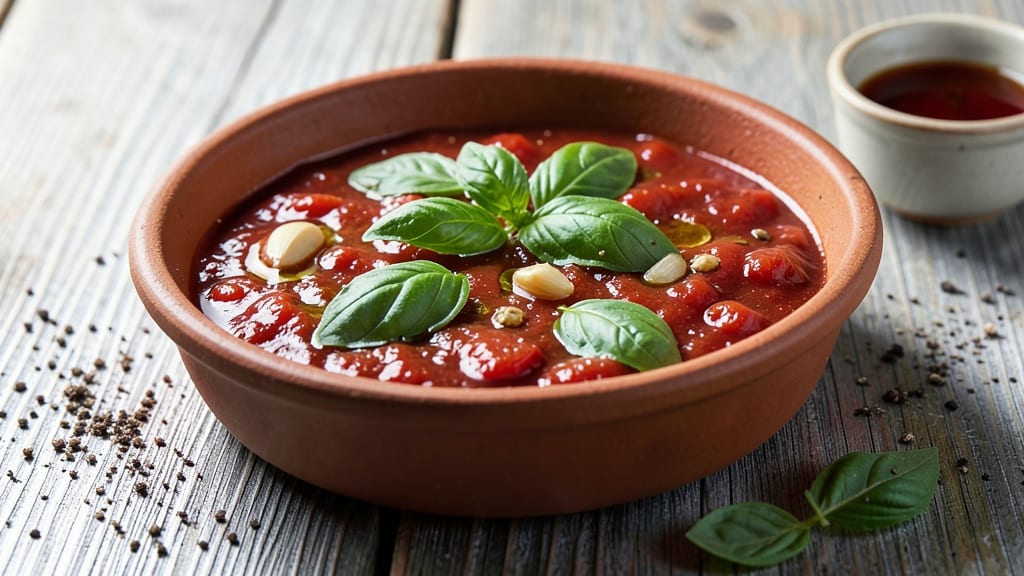
This authentic tomato sauce recipe delivers the deep, slow-simmered umami that transforms simple meals into restaurant-quality dishes. The key lies in balancing fresh tomatoes, aromatic garlic, and carefully chosen herbs to create a sauce that's rich yet bright—never overpowering.
I've perfected this method over years of testing, ensuring every batch develops that complex, layered flavor that takes minutes to make but hours to master.
What sets this sauce apart is the slow-simmering technique, which allows flavors to meld without losing freshness. We start with a simple base of tomatoes, garlic, and olive oil, then build depth through caramelization and acidity—just enough lemon juice to brighten without overwhelming.
The result is a versatile sauce that works equally well on pasta, as a pizza topping, or even as a dipping sauce for crusty bread.
By the time you're done, you'll have a smooth, velvety tomato sauce with concentrated umami flavor that clings perfectly to noodles or crusts. The secret? Patience in cooking and precision in seasoning—no shortcuts here.
This isn't just another tomato sauce; it's the foundation for countless meals that taste like they came from a family recipe passed down for generations.
For those who prefer texture, simply blend less or omit that final pass. Add a splash of red wine for depth, a pinch of sugar to balance acidity, or grated Parmesan for umami richness.
The variations are endless, but the core technique remains the same—slow, steady, and deeply flavorful. Let's get started on creating your new go-to sauce.
Ingredients for authentic tomato sauce
Nine essential ingredients transform into restaurant-quality tomato sauce with deep umami flavor.
| Ingredient | Amount | Notes |
|---|---|---|
| Extra-Virgin Olive Oil 🫒 | ½ cup | High-quality, fruity variety preferred |
| San Marzano Tomato Paste 🍅 | ¼ cup | Canned, no additives |
| Fresh Garlic Cloves 🧄 | 4 cloves | Peeled, finely minced |
| Fresh Basil Leaves 🌿 | 1 cup | Packed, stems removed |
| Dried Oregano 🍃 | 1 tsp | Mediterranean variety preferred |
| Red Wine 🍷 | ¼ cup | Dry, bold variety like Cabernet |
| Fresh Lemon Juice 🍋 | 1 tbsp | Freshly squeezed |
| Granulated Sugar 🍬 | 1 tsp | Balances acidity |
| Sea Salt 🧂 | 1 tsp | Fine grain preferred |
| Black Peppercorns 🌶️ | ½ tsp | Freshly cracked |
The foundation starts with San Marzano tomato paste—its natural sweetness and thick consistency are non-negotiable for authentic flavor. Whole Foods or Italian specialty stores carry the best cans, but any reputable brand works if labeled 'no additives.' Fresh garlic and basil are critical; garlic should smell pungent, not musty, and basil leaves must be vibrant green without browning. For the olive oil, California extra-virgin brands like Corto or Lucini provide the fruity notes that elevate the sauce. The red wine adds depth—any bold, dry variety works, but avoid sweet wines that'll overpower the tomatoes.
No fresh basil? Dried oregano at one-third the amount works in a pinch, but fresh basil's bright flavor is irreplaceable. Running low on red wine? Substitute beef broth with a splash of balsamic vinegar—it mimics the acidity and depth. The sugar balances acidity, but if your tomatoes are particularly tart, reduce to 0.5 tsp. For a vegetarian version, skip the wine entirely and use extra vegetable broth. Prefer texture? Blend only half the batch for a rustic finish. The key is patience—rushing the simmering will result in a thin, watery sauce rather than the rich, velvety texture you're aiming for.
This sauce develops better with time, so make extra and store portions. Keeps for 5 days refrigerated in airtight containers, or 6 months frozen in ice cube trays for single servings. Label containers with dates—freshness matters. For reheating, low heat only to prevent curdling. The sauce thickens as it cools, so add a splash of water or broth if it becomes too stiff. Freeze in small batches to maintain texture and flavor integrity.
Why You'll Love This Recipe
- No Chopping Chaos: This sauce comes together with just three ingredients to prep—garlic and basil—and the rest is pure simmering. I swear, I’ve made it while still in my pajamas, and it never fails.
- San Marzano Magic: That thick, sweet paste and rich olive oil create a depth you won’t find in store-bought jars. Honestly, the first time I tasted it, I wondered why I’d ever settled for anything less.
- Weeknight to Dinner Party: Same base, endless possibilities—toss it with pasta, spoon it over grilled chicken, or use it as a marinade. Between us, it’s my go-to for lazy nights and when I’m trying to impress.
- Fridge Goldmine: A big batch keeps for days, and it only gets better as the flavors meld. I’ll be real: I’ve reheated a week-old jar and still reached for seconds. Budget-friendly? More like budget savior.
Step-by-step instructions for authentic tomato sauce
Here's the method that delivers restaurant-quality depth and balance every time.
Bloom the Aromatics in Olive Oil
Heat the 0.5 cup extra-virgin olive oil in a heavy-bottomed saucepan over medium-low heat. Add the 4 cloves minced fresh garlic cloves and 1 tsp dried oregano, stirring constantly for 2-3 minutes until the garlic becomes fragrant but doesn't brown. This gentle cooking releases the oregano's earthy notes and prevents bitter garlic flavors.
Watch the oil carefully—it should shimmer but not smoke. The reason we use low heat here is that garlic burns quickly, and burned garlic ruins the sauce. If you notice any golden-brown flecks forming, reduce the heat immediately. This step forms the aromatic foundation of your sauce, so take your time.
Develop the Base with Tomato Paste and Wine
Add the 0.25 cup san marzano tomato paste and stir vigorously for 1-2 minutes until it fully dissolves into the oil. This creates a smooth, thick base that prevents the sauce from separating later. Pour in the 0.25 cup red wine and scrape up any browned bits from the bottom of the pan with a wooden spoon.
Let the mixture simmer uncovered over medium heat for 5-7 minutes, stirring occasionally, until the alcohol smell completely dissipates. This is crucial—raw alcohol would make your sauce taste harsh. You'll see the mixture reduce slightly and develop a deeper, caramelized color. This is where the authentic umami begins to form.
Build Depth with Acid and Sweetness
Add the 1 tbsp fresh lemon juice, 1 tsp granulated sugar, and 1 tsp sea salt, stirring to combine. The lemon juice brightens the sauce while balancing the richness, and the sugar helps caramelize the tomatoes naturally. Let the mixture simmer uncovered over medium-low heat for 10-12 minutes, stirring occasionally, until it thickens slightly but still coats the back of a spoon.
Here's the thing—this simmering time is where patience pays off. The sauce should reduce enough to develop concentration but not so much that it becomes pasty. You're looking for a balance between thickness and liquidity. If it starts to look too thick before reaching the 10-minute mark, add 2-3 tablespoons of water to keep it moving.
Finish with Fresh Basil and Pepper
Remove the pan from heat and stir in the 1 cup fresh basil leaves and 0.5 tsp freshly cracked black peppercorns. Let the basil infuse for 5 minutes off the heat—this preserves its bright, sweet flavor rather than cooking it into oblivion. The peppercorns add a subtle, cracked heat that enhances all the other flavors.
Taste and adjust seasoning if needed. You might need a touch more salt or lemon juice to balance the flavors perfectly. The sauce should be vibrant, slightly sweet, and deeply savory with none of the one-dimensional canned sauce taste. Transfer to a clean jar or container and let it cool to room temperature before storing.
Pro Tips For Making Authentic Tomato Sauce
- Bloom the Oregano: Toss the dried oregano into the hot oil before adding garlic—let it sizzle for 10 seconds first. I used to add it later, but this releases its flavor like a tiny aromatherapy session. (Yes, it smells weird at first, but your sauce will thank you.)
- Sweat Garlic Gently: Cook the garlic cloves whole in olive oil over medium-low heat until golden, not brown—about 5 minutes. After burning three batches, I learned: patience here keeps bitterness out and builds depth. (No, you can’t rush this.)
- Simmer, Don’t Boil: Once the tomato paste is dissolved, reduce heat to a bare simmer—tiny bubbles, not rolling. I used to let it bubble hard, and the sauce would split like a bad joke. Low and slow = silky texture.
- Toast the Paste: Cook the San Marzano paste in olive oil for 2 full minutes before adding anything else. It deepens the flavor and caramelizes the sugars—no, it won’t burn if you watch it. (I know, I know, but trust the process.)
Troubleshooting your authentic tomato sauce
Sauce Too Thin?
If your sauce ends up watery, it’s likely because you rushed the simmering or didn’t reduce it enough. Always simmer uncovered over medium-low heat for at least 20-30 minutes—this allows excess liquid to evaporate naturally.
For an immediate fix, mash 1-2 ripe bananas (yes, really!) into the sauce—their natural pectin thickens it instantly. 💡
Sauce Too Thick?
Over-reducing is a common mistake, but it’s easily fixed. Simply whisk in 1-2 tablespoons of water or broth while stirring constantly over low heat. Avoid adding too much at once—start small and adjust gradually.
If the sauce is pasty, simmer it uncovered for another 5-10 minutes to rebalance the consistency.
Bitter or Harsh Flavor?
Bitterness usually comes from overcooked garlic or underripe tomatoes. If you detect bitterness, add a splash of 1 tbsp red wine vinegar or 1 tsp balsamic glaze to cut through it.
A pinch of sugar (½ tsp) also helps soften harsh notes. For future batches, use fresh, ripe tomatoes and remove garlic from the pan as soon as it’s fragrant.
Sauce Separates?
Separation happens when fat and liquid split, often due to rapid temperature changes. To fix it, whisk in 1 tbsp cold water or olive oil while stirring vigorously.
For prevention, keep the heat consistent and low—never boil vigorously. A splash of lemon juice (1 tsp) also helps emulsify the sauce naturally.
Lacking Depth?
If your sauce tastes flat, it needs more umami. Stir in 1 tbsp grated Parmesan cheese or ½ tsp fish sauce (for vegetarian, use 1 tsp soy sauce) to add complexity.
A pinch of smoked paprika (¼ tsp) or a splash of tomato paste (1 tbsp) can also elevate the flavor profile. Simmer for another 5 minutes to let the new ingredients meld.
Preventing Future Issues
Always start with a heavy-bottomed saucepan—it distributes heat evenly and prevents scorching. Use medium-low heat throughout the process, and stir frequently to avoid sticking. If using fresh tomatoes, peel and seed them before adding to reduce excess liquid.
For extra insurance, blend half the sauce smooth and leave the other half chunky—this balances texture and flavor.
Nutrition facts
Frequently asked questions
Why does this sauce need red wine when I've seen recipes without it?
The red wine adds depth and complexity that's hard to replicate otherwise. It contributes acidity to balance sweetness, while the alcohol burns off during cooking, leaving behind concentrated fruit flavors. For a non-alcoholic version, substitute with extra tomato paste or balsamic vinegar—just reduce the simmer time slightly since vinegar evaporates faster.
Can I make this sauce without fresh basil?
Yes, but the flavor will be less vibrant. Use 1 tbsp dried basil (or ½ tsp dried basil leaves crumbled) instead, but add it earlier in the cooking process so it has time to rehydrate and infuse. For extra brightness, finish with a few fresh leaves if available.
How do I know when the sauce is done simmering?
The sauce is ready when it coats the back of a spoon smoothly but isn't gluey, and the flavors have melded into one cohesive taste. This typically takes 20-30 minutes total simmering time. Look for a slight reduction in volume (about 25%) and a thicker consistency—it should cling to the pan slightly when stirred.
What's the best way to store leftovers?
Transfer the sauce to an airtight container and refrigerate for up to 5 days. For longer storage, freeze in ice cube trays or small portions—this makes it easy to thaw just what you need. Label containers with dates since frozen sauce tastes best within 3 months. Reheat gently on low heat or in the microwave with a splash of water.
Can I use canned tomatoes instead of fresh?
Canned tomatoes work perfectly and save time. Use 1 (14 oz) can crushed tomatoes (no salt added) and add them with the lemon juice and sugar. Drain excess liquid if needed, but don't rinse—the natural juices add flavor. For extra richness, stir in 1 tbsp tomato paste at the beginning.