
Sauces & Condiments
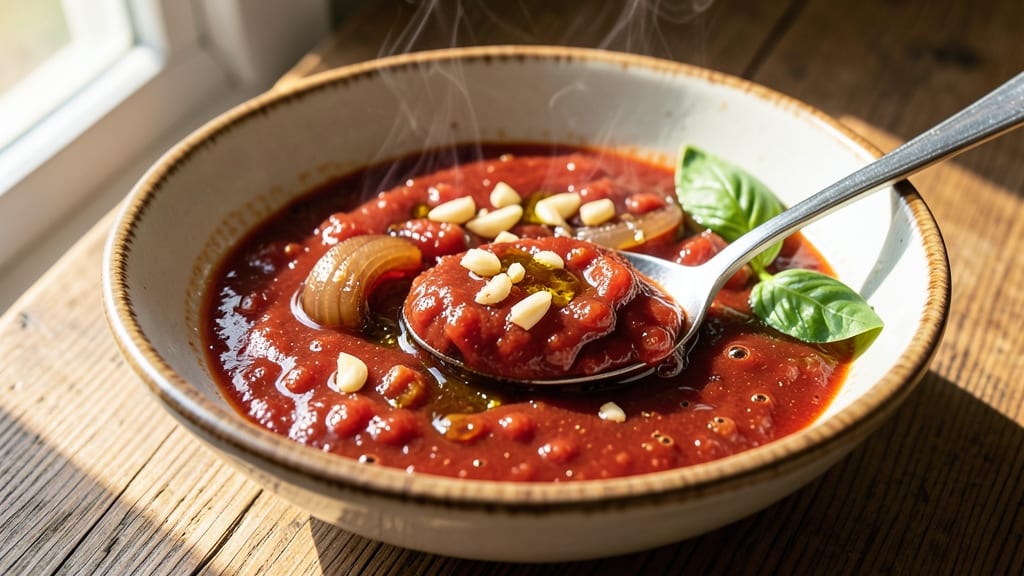
This authentic spaghetti sauce recipe from scratch transforms simple ingredients into a rich, slow-simmered masterpiece that captures the heart of Italian cooking. 🌟 The secret lies in caramelizing onions and garlic until deep golden, then building layers of flavor through a long, gentle simmer that develops complex tomato notes without ever tasting like canned sauce.
What sets this sauce apart is the balance of acidity, sweetness, and umami—achieved through a mix of crushed tomatoes, tomato paste, and a splash of red wine.
Fresh oregano added at the end brightens the sauce with its vibrant, slightly floral aroma, while a pinch of sugar and salt rounds out the flavors. The result is a sauce that clings perfectly to al dente pasta, with a depth you won’t find in store-bought versions.
This recipe delivers restaurant-quality results with minimal effort, using pantry staples and just 30 minutes of active time (plus hours of simmering for maximum flavor). The slow cook brings out the natural sweetness of the tomatoes while developing a velvety texture that coats every strand of pasta.
Whether you're serving it over spaghetti, using it as a marinara base, or freezing it for later, this sauce is a game-changer for weeknight dinners.
For meat lovers, browned Italian sausage or ground beef can be added for heartiness, while vegetarians can boost umami with mushrooms or white beans. The sauce keeps well in the fridge for up to a week or freezes beautifully for months—making it the ultimate pantry staple. Let’s get cooking!
Ingredients for authentic spaghetti sauce recipe from scratch
Pantry staples meet Italian tradition for a sauce that transforms simple ingredients into restaurant-quality flavor.
| Ingredient | Amount | Notes |
|---|---|---|
| Yellow Onions 🧅 | 2 whole | Thinly sliced for caramelization |
| Garlic Cloves 🧄 | 4 cloves | Minced for aromatic base |
| Extra-Virgin Olive Oil 🫒 | ½ cup | For slow cooking onions |
| Crushed Tomatoes 🍅 | 28 oz | San Marzano preferred |
| Tomato Paste 🍅 | 2 tbsp | For rich, concentrated flavor |
| Red Wine 🍷 | ½ cup | Bold dry variety like Cabernet |
| Fresh Oregano 🌿 | ¼ cup | Chopped for vibrant finish |
| Granulated Sugar 🍬 | 1 tbsp | Balances acidity |
| Salt 🧂 | 1 ½ tsp | Diamond Crystal preferred |
| Black Pepper 🌶️ | ½ tsp | Freshly cracked |
The onions and garlic form the aromatic foundation—caramelizing them for 30 minutes develops deep sweetness that anchors the sauce. Yellow onions work best for their mild sweetness, but red onions add color. For garlic, fresh cloves are non-negotiable—jarred minced lacks depth. San Marzano crushed tomatoes are the gold standard, but any high-quality canned tomatoes work. The olive oil should be extra-virgin with fruity notes—it carries the caramelization. If you're short on time, Trader Joe's sells pre-caramelized onion jam that works in a pinch.
No red wine? Dry white wine or extra tomato paste bridges the flavor gap, though wine adds complexity. Fresh oregano is ideal, but dried oregano at half the amount works if you're out. The sugar isn't just for sweetness—it balances the acidity in tomatoes. For a meatier version, brown 8 oz Italian sausage and add it to the sauce. Vegetarians can swap in 1 cup sautéed mushrooms for umami. The tomato paste is crucial—it thickens the sauce and deepens the flavor without overpowering. If you don't have a squeeze tube, Trader Joe's sells single-serve packets that work perfectly.
This sauce improves with time—2-3 hours of simmering builds layers of flavor. Store in an airtight container in the fridge for up to 7 days, or freeze for 6 months in portions. For easy reheating, cover with a splash of water or broth. The sauce thickens as it cools, so thin with water or wine if needed. Double the batch—it freezes beautifully and saves you time on busy nights. The oregano should be added at the end to preserve its bright aroma, and the sugar and salt adjusted to taste after simmering.
Why You'll Love This Recipe
- No Chopping Chaos: I swear by this sauce because you only need to dice one onion and mince three cloves of garlic—no fancy techniques, just basic knife skills. The crushed tomatoes and paste do the heavy lifting while you sip your wine (or coffee) and stir.
- Deep Umami Magic: That tomato paste, simmered low with olive oil and onions until it darkens just a little? It builds layers of flavor you won’t find in jarred sauces. The garlic gets sweet and mellow, and the crushed tomatoes add that perfect balance of tang and richness—no weird aftertaste.
- Weeknight & Potluck Hero: I make a big batch on Sundays and freeze half for lazy nights when I just want real food on the table. It’s also the one dish I bring to gatherings because everyone always asks for the recipe—even the picky eaters.
- Pantry Staple, Wallet-Friendly: Honestly, this sauce costs me less than $5 for a full batch, and the ingredients last for months. The olive oil and onions stretch across multiple meals, and the tomatoes keep well. Plus, leftovers taste just as good reheated as they do fresh—proof that simple ingredients win every time.
Step-by-step instructions for authentic slow-simmered tomato sauce
This method delivers restaurant-quality depth through proper technique and patience.
🔥 Step 1: Caramelize Onions in Olive Oil
Heat the 0.5 cup extra-virgin olive oil in a heavy-bottomed pot over medium-low heat. Add the 2 whole yellow onions sliced thinly, stirring occasionally. Cook for 20-25 minutes until the onions turn deep golden brown and sweet-smelling.
This slow caramelization builds the sauce's foundation. I like to press down gently with a wooden spoon to ensure even browning. If the onions start to stick, reduce heat slightly—you're looking for a rich, jammy texture, not burnt bits. The onions should be so tender they nearly dissolve when pressed.
🍳 Step 2: Add Garlic and Tomato Paste
Once the onions are perfectly caramelized, increase heat to medium and add the 4 cloves minced garlic. Cook for 1-2 minutes until fragrant but not browned—garlic burns quickly, and you want that sweet, nutty aroma without bitterness.
Stir in the 2 tbsp tomato paste and cook for another 2 minutes, allowing it to darken slightly. This step deepens the sauce's umami flavor and helps prevent separation later. The paste will blend completely with the onions, creating a thick, flavorful base for the tomatoes.
🍳 Step 3: Deglaze with Wine and Add Tomatoes
Pour in the 0.5 cup red wine and scrape up any browned bits from the bottom of the pot. Let it simmer for 3-4 minutes until the wine reduces by half. This deglazing step captures all the concentrated flavors you've built so far.
Add the 28 oz crushed tomatoes and 1 tbsp granulated sugar. Stir well to combine, then bring to a gentle simmer. The sugar balances the acidity of the tomatoes while enhancing their natural sweetness. Let the sauce bubble away uncovered for 15 minutes to allow excess moisture to evaporate.
⏰ Step 4: Season and Simmer Low and Slow
Add the 1.5 tsp salt and 0.5 tsp black pepper, then reduce heat to low. Partially cover the pot and let the sauce simmer gently for 45-60 minutes, stirring occasionally. This slow cooking allows flavors to meld and develop depth.
Here's the thing—don't rush this step. The sauce should reduce slightly, becoming thicker and more concentrated. You'll know it's ready when it coats the back of a spoon smoothly. If it's too thin, uncover and simmer longer; if too thick, add a splash of water or reserved pasta water.
👨🍳 Step 5: Finish with Fresh Oregano
Remove the pot from heat and stir in the 0.25 cup chopped fresh oregano. Let it steep for 5 minutes before serving. This final step adds vibrant, bright notes that cut through the richness of the tomatoes.
The oregano should be finely chopped to distribute evenly throughout the sauce. Taste and adjust seasoning if needed—authentic Italian sauces rely on balanced flavors, not overwhelming salt. Serve immediately over al dente spaghetti with a sprinkle of fresh oregano and a drizzle of olive oil.
Pro Tips For Making Authentic Spaghetti Sauce Recipe From Scratch
- Sweat the Onions Low: I learned this the hard way—ditch the high heat for onions. Cook them slow over medium-low with a splash of water until they’re golden and translucent, not browned. That caramelized flavor is the foundation of your sauce, and rushing it just makes it bitter.
- Crush Garlic, Don’t Mince: Skip the knife for garlic—smashed cloves release more flavor without burning. Use the flat side of your knife to gently press 4-5 cloves in the pan, then let them bloom in the oil for 30 seconds before adding anything else. (Yes, even if you’re impatient like me.)
- Toast the Tomato Paste: Don’t just stir it in—cook the paste alone in the oil for 2-3 minutes until it darkens slightly. This deepens the umami and prevents that raw, floury aftertaste. It’s the thing that makes homemade sauce taste like it simmered for hours, not 20 minutes.
- Simmer, Don’t Boil: After adding crushed tomatoes, keep the heat at a gentle simmer—not a rolling boil. Too much heat breaks down the texture and concentrates bitterness. Cover and let it bubble softly for at least 20 minutes, stirring occasionally. (Your future self will thank you.)
Serving suggestions for this authentic spaghetti sauce recipe from scratch
Pasta Pairings
This sauce clings perfectly to al dente spaghetti—the classic choice—but works beautifully with bucatini or linguine too. For extra texture, try penne rigate or fettuccine, which hold the sauce in their ridges.
I like to toss the cooked pasta directly in the pot with the sauce to absorb all those rich flavors. 🍝
For a rustic touch, serve over whole wheat or chickpea pasta—both add a satisfying bite that complements the sauce's velvety texture. If you're feeling adventurous, try gluten-free brown rice or lentil pasta for a heartier, protein-packed dish.
Just be sure to cook the pasta until it's perfectly al dente before mixing it with the sauce.
Protein Additions
For a meaty twist, brown 8 oz Italian sausage or ground beef before adding the onions, then stir it into the sauce during the final 15 minutes of simmering.
This ensures the meat stays tender and soaks up the flavors. I love using sweet or spicy Italian sausage for a balance of sweetness and heat. 🌶️
Vegetarians can boost umami with 1 cup sautéed mushrooms or ½ cup white beans, added with the tomatoes. For a seafood option, stir in cooked shrimp or clams in the last 5 minutes of cooking to keep them tender.
The acidity in the sauce prevents overcooking, so they stay perfectly juicy.
Bread and Sides
No Italian meal is complete without crusty bread to soak up the sauce. I recommend a baguette or ciabatta, sliced and toasted until golden. For a lighter option, serve with a garlic bread made from a focaccia loaf brushed with olive oil and garlic. 🥖
Pair your sauce with a simple arugula salad tossed with lemon vinaigrette to cut through the richness. Roasted zucchini or eggplant adds a smoky contrast, while steamed broccolini keeps the meal light and fresh. For a heartier side, creamy polenta or mashed potatoes make excellent partners.
Garnishing Finishes
Fresh oregano or basil brightens the dish with a pop of color and aroma. I like to sprinkle grated Parmesan cheese or Pecorino Romano on top for a salty, nutty finish. A drizzle of extra-virgin olive oil adds richness and ties everything together. 🌿
For a smoky touch, add a pinch of red pepper flakes or a sprinkle of freshly cracked black pepper. If you love texture, top with toasted pine nuts or crispy breadcrumbs for crunch. These simple garnishes elevate the sauce from homemade to restaurant-quality in seconds.
Nutrition facts
Frequently asked questions
Why does this sauce need such a long simmer time?
The slow simmer develops deep, complex flavors by allowing the onions to caramelize fully and the tomatoes to break down naturally. This process builds layers of sweetness and umami that canned sauces can't match. Think of it like coffee—steeping longer extracts more flavor without bitterness.
Can I substitute red wine with something else?
Yes! Use ½ cup dry white wine or extra tomato paste for depth. For a non-alcoholic version, try tomato juice or broth. The wine adds acidity and complexity, but these alternatives work in a pinch. Just reduce the liquid by half before adding tomatoes.
How do I fix a sauce that's too acidic or sour?
Add a pinch of sugar or a splash of red wine vinegar (½ tsp) to balance the acidity. For a richer taste, stir in 1 tbsp tomato paste and simmer for 5 minutes. If the sauce is still too sharp, a small pat of butter or a sprinkle of Parmesan cheese helps mellow the flavors.
What's the best way to store leftover sauce?
Let it cool completely, then transfer to an airtight container. It keeps in the fridge for 5-7 days or freezes for up to 6 months. For reheating, warm gently on low heat with a splash of water or pasta water to restore texture. Never reheat directly from frozen—thaw first!
Can I make this sauce in a slow cooker?
Follow the same steps until adding tomatoes, then transfer everything to a slow cooker. Cook on low for 6-8 hours or high for 3-4 hours**. The low-and-slow method enhances flavors beautifully. Just stir occasionally to prevent sticking—add a splash of water if needed.