
Sauces & Condiments
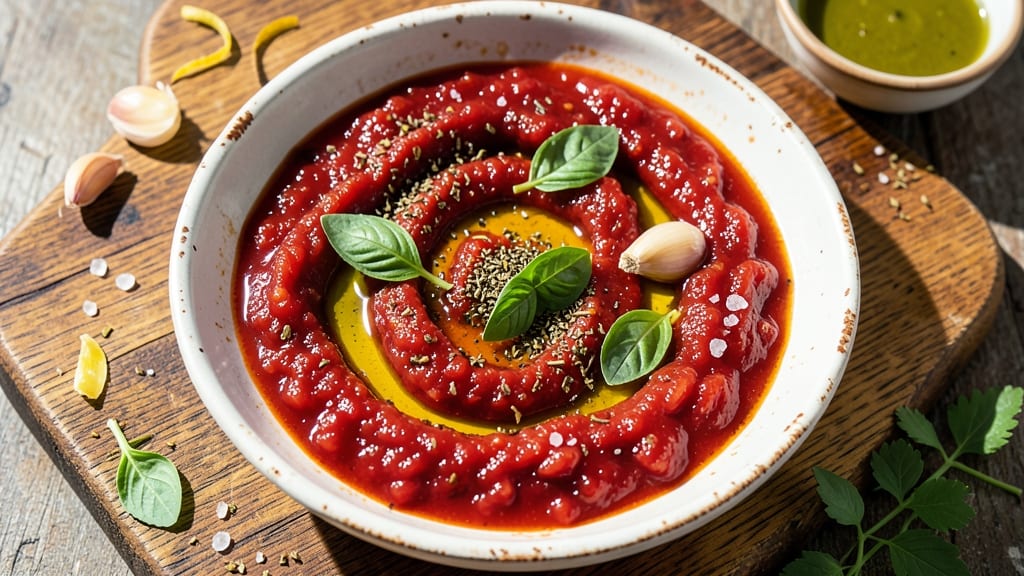
This authentic Sicilian pizza sauce transforms simple tomatoes into a rich, herby masterpiece that captures the soul of Sicilian cuisine. 💛 Unlike sweet American sauces, this version relies on fresh tomatoes, garlic, and just enough oregano to echo the flavors of Palermo’s street markets.
The secret lies in slow-simmering—no sugar, no shortcuts—just pure, unadulterated tomato magic that builds depth over time.
Traditional Sicilian technique calls for peeling ripe tomatoes and simmering them until their natural sweetness concentrates into a velvety sauce. We blend it just enough to create a chunky texture with pockets of fresh basil and garlic, preserving the rustic charm of homemade.
This isn’t a sauce you’ll find in jars—it’s a labor of love that elevates every slice of pizza to restaurant-quality.
The result is a sauce so balanced it lets the cheese and dough shine while adding layers of aromatic depth. No artificial flavors, no heavy seasoning—just the bright, tangy essence of Sicily.
The best part? It keeps beautifully for weeks in the fridge, ready to transform your next pizza night into an Italian feast.
Perfect for classic Margherita, rustic focaccia, or even as a pasta sauce, this recipe proves authenticity doesn’t require complexity. Let’s get started on the sauce that will change how you make pizza forever.
Ingredients for authentic sicilian pizza sauce
Nine simple ingredients transform into Sicily's most flavorful pizza sauce.
| Ingredient | Amount | Notes |
|---|---|---|
| Fresh Ripe Tomatoes 🍅 | 2 ½ lb | Roma or San Marzano, peeled and crushed |
| Garlic Cloves 🧄 | 6 cloves | Fresh, peeled and lightly crushed |
| Extra-Virgin Olive Oil 🫒 | ½ cup | High quality, fruity variety |
| Fresh Basil Leaves 🌿 | ½ cup | Packed, stems removed |
| Dried Oregano 🍃 | 1 tsp | Sicilian or Mediterranean blend |
| Salt 🧂 | 1 tsp | Diamond Crystal kosher salt |
| Black Pepper 🌶️ | ¼ tsp | Freshly ground preferred |
| Red Wine Vinegar 🍷 | 1 tbsp | For brightness |
| Sugar 🍬 | 1 tsp | Optional, for balancing acidity |
The tomatoes are everything here. San Marzano or Roma are ideal—they're sweet, meaty, and pack the most flavor. Trader Joe's and Whole Foods usually carry them, but any ripe, vine-ripened tomatoes work in a pinch. Skip the canned stuff—fresh is non-negotiable for authentic taste. Peel them by blanching in boiling water for 30 seconds, then shocking in ice water. The skins will slip right off. If you're short on time, peeled canned tomatoes (like San Marzano) can substitute, but they won't have the same depth. Garlic should be fresh and lightly crushed—no pre-minced jars here. The olive oil matters too: look for cold-pressed, extra-virgin with a fruity aroma. California or Italian varieties work best for this sauce.
No fresh basil? Dried works at one-third the amount, but trust me, fresh is worth hunting down at the market. The oregano should be Sicilian or Mediterranean blend—regular Italian oregano is too strong. Short on red wine vinegar? Balsamic vinegar at half the amount works, but it'll change the flavor profile slightly. The sugar is truly optional—this sauce relies on the natural sweetness of ripe tomatoes. If yours are particularly tart, add it; otherwise, skip it completely. For a deeper flavor, some cooks add a splash of pasta water to the finished sauce—it's packed with starchy goodness that helps bind everything together. If you're making a big batch, consider doubling the garlic and basil—they'll blend right in and add even more depth.
This sauce tastes even better the next day as the flavors meld. Store it in an airtight container in the fridge for up to 2 weeks, or freeze for 6 months in portion-sized containers. I like to freeze it in ice cube trays, then transfer the cubes to a bag—perfect for adding to pizza dough or pasta later. The sauce thickens as it cools, so you might want to add a splash of water or olive oil when reheating. If you make extra, use it on fresh focaccia, grilled vegetables, or even as a marinade for chicken. Every time I make this, I end up with more sauce than I know what to do with—it's that good.
Why You'll Love This Recipe
- No Chopping Needed: I swear, this sauce takes less effort than deciding what to watch on TV. Just crush a few tomatoes by hand (or grab a can of San Marzano if you’re in a rush), toss in whole garlic cloves, and let the olive oil do the work—no dicing, no mincing, just pure, lazy genius.
- Taste Like Sicily: That first bite of fresh basil and garlic on warm, ripe tomatoes? It’s the kind of flavor that makes you pause mid-chew. The olive oil shines, the oregano lingers, and honestly, it’s the only sauce that doesn’t taste like it came from a jar.
- Pizza Night, Every Night: Use it on pizza, obviously—but also drizzle it over grilled chicken, toss it with pasta, or slather it on bruschetta. I’ve even used it as a marinade for shrimp. (Yes, even on a Tuesday night.)
- Lasts All Week: Make a big batch, store it in the fridge, and thank me later. The flavors deepen over time, and it’s way cheaper than buying pre-made sauce. Plus, leftovers mean no last-minute grocery runs—just open, heat, and eat.
Step-by-step instructions for authentic Sicilian pizza sauce
Here's how to craft the true essence of Sicilian pizza sauce—simple, herby, and slow-simmered to perfection.
🍳 Step 1: Sauté Garlic in Olive Oil Until Fragrant
Heat the 0.5 cup extra-virgin olive oil in a heavy-bottomed saucepan over medium-low heat. Add the 6 lightly crushed garlic cloves and cook for 2-3 minutes until they're golden but not browned—this prevents bitterness. Here's the thing: you want the garlic to perfume the oil without burning, so keep an eye on it.
If you notice the garlic starting to sizzle too aggressively, immediately reduce the heat to low. The oil should shimmer gently, not bubble vigorously. This step builds the aromatic foundation of your sauce, so don't rush it. Once the garlic is golden, remove the pan from heat for just a moment—this prevents the garlic from cooking further while you prep the tomatoes.
🍳 Step 2: Add Tomatoes and Simmer Uncovered
Return the pan to medium heat and add the 2.5 lb crushed fresh ripe tomatoes. Stir well to combine with the garlic oil, then increase heat to medium-high and bring to a gentle boil. Once boiling, immediately reduce heat to low and let it simmer uncovered for 30-40 minutes.
This slow simmer is crucial—it allows the tomatoes to break down naturally without losing their sweetness. You'll see the sauce thicken gradually, and the color will deepen from bright red to a rich, rustic hue. Stir occasionally to prevent sticking, but don't over-stir—this can make the sauce too smooth. The goal is a rustic, chunky texture that captures authentic Sicilian flavor.
🥘 Step 3: Season with Herbs and Acid
After 30 minutes of simmering, stir in the 1 tsp dried oregano, 1 tsp salt, and 0.25 tsp black pepper. Add the 1 tbsp red wine vinegar and 1 tsp sugar (if using), then taste and adjust seasoning. The vinegar brightens the tomatoes while the sugar just slightly balances the acidity—this is where Sicilian pizza sauce gets its signature tang.
Now for the herbs: tear the 0.5 cup fresh basil leaves into rough pieces and add them to the sauce. Let it simmer for another 5-7 minutes—this allows the basil to infuse its fresh, sweet flavor without turning bitter. The sauce should now coat the back of a spoon with a thick, velvety consistency. If it's still too thin, simmer uncovered for another 5-10 minutes until it reaches your desired thickness.
⏰ Step 4: Cool and Store Properly
Remove the sauce from heat and let it cool to room temperature. Here's the key: don't rush this step. As it cools, the flavors meld even more deeply, and the texture continues to thicken slightly. Once cooled, transfer the sauce to an airtight container and refrigerate for up to 5 days or freeze for up to 3 months.
When using the sauce, let it come to room temperature before spreading on your pizza dough. The cool sauce prevents the crust from cooking too quickly, giving you that perfect balance of crispy crust and flavorful topping. This sauce is the heart of authentic Sicilian pizza—simple, herby, and full of bright tomato flavor without overpowering sweetness or acidity.
Pro Tips For Making Authentic Sicilian Pizza Sauce
- Crush Tomatoes by Hand: I learned this the hard way—using a food processor gives you a watery, seedy mess that won’t set right. Grab a wooden spoon and really press those tomatoes against the strainer (or a fine-mesh sieve) until you’ve extracted every last drop of juice. The pulp should be thick enough to cling to a spoon—if it’s runny, you’ve gone too easy.
- Sweat Garlic Low and Slow: Sizzling garlic turns bitter fast, and that’s the last thing you want in a bright Sicilian sauce. Heat the olive oil over low heat until it shimmers, then add the garlic whole (peeled but unminced) and let it cook for 3–4 minutes until just golden—not brown. Smash it with the back of a spoon afterward for flavor without bitterness.
- Skip the Boil—Simmer Gently: After adding tomatoes, resist the urge to crank the heat. A rolling boil breaks down the tomatoes into mush and burns the garlic’s delicate flavor. Instead, keep it at a gentle simmer—tiny bubbles at the edges, maybe 15–20 minutes—so the sauce reduces without losing its vibrancy. (Yes, even if you’re impatient like me.)
- Add Basil Late (Like, Really Late): Fresh basil wilts and turns bitter if cooked too long. Tear the leaves by hand (don’t chop—you want texture) and stir them in only during the last 30 seconds of cooking. If you’re prepping ahead, add it raw just before serving—it’ll brighten the sauce like a burst of sunshine. (Your future self will thank you.)
Dietary considerations for these flavors
Gluten-Free Adaptation
This sauce is naturally gluten-free since it contains no wheat-based ingredients. However, if you're using it on gluten-free pizza dough, ensure your dough recipe also avoids cross-contamination. I always double-check that my olive oil and vinegar are certified gluten-free brands like Bertolli or Annie's to prevent any accidental exposure.
The sauce's herby tomato flavor actually complements gluten-free crusts beautifully, as the bright acidity cuts through any potential dryness. 🌱
Low-Carb Options
To make this sauce keto-friendly, simply reduce the sugar to ½ tsp or omit it entirely. The natural sweetness of ripe San Marzano tomatoes will still shine through. I've found that adding an extra ½ tsp of red wine vinegar helps balance the acidity without requiring sugar.
This version works perfectly on low-carb pizza crusts made from almond flour or cauliflower. The sauce's richness comes from the tomatoes and olive oil, not carbohydrates, so it stays true to its authentic roots while fitting low-carb diets. ✨
Dairy-Free Considerations
This sauce is already dairy-free, making it perfect for vegan diets when paired with plant-based cheese. The fresh basil and garlic add bright, aromatic notes that complement vegan mozzarella beautifully. For extra richness, I sometimes stir in 1 tbsp nutritional yeast at the end—it adds a cheesy depth without dairy.
Always check your pizza cheese for dairy-free certifications if needed. The sauce's natural acidity helps cut through the richness of vegan cheeses, creating a balanced flavor profile. 💚
Allergen-Friendly Tips
For nut allergies, ensure your olive oil is processed in a nut-free facility—brands like Colavita clearly label their products. If you're avoiding garlic due to sensitivities, substitute with asafetida powder (½ tsp), which provides a similar savory depth without the bulb.
For those with basil allergies, replace it with thyme or marjoram (½ tsp each). The sauce remains versatile while accommodating common dietary restrictions. Always taste as you go—authentic Sicilian flavor adapts well to these substitutions! 🌟
Vegetarian & Vegan
This sauce is inherently vegetarian and easily vegan when paired with plant-based ingredients. The tomato base provides all the umami richness needed, while the olive oil and garlic add depth. For extra protein, stir in 1 tbsp nutritional yeast or hemp seeds at the end.
The sauce's natural acidity makes it a perfect companion for vegan meats or marinated tofu. I love using it as a base for vegan arancini or as a drizzle for roasted vegetables—it brings that authentic Sicilian touch to any plant-based dish. 🌿
Nutrition facts
Frequently asked questions
Why do I need to peel the tomatoes for authentic Sicilian pizza sauce?
Peeling creates that signature smooth, velvety texture Sicilian sauce is known for. The skins can make the sauce too chunky and bitter when simmered. For a quick shortcut, use peeled canned San Marzano tomatoes—but fresh peeled tomatoes give the best flavor and texture. The blanching method (30 seconds in boiling water) makes peeling effortless!
Can I make this sauce without fresh basil?
Yes! Use 1 tbsp dried basil instead, but fresh basil adds that bright, sweet aroma that's essential to authentic flavor. If you can't find fresh basil, try ½ tsp dried basil plus a pinch of thyme for depth. The sauce will still taste great—just slightly different from traditional versions.
How do I know when the sauce is done simmering?
The sauce is ready when it coats the back of a spoon with a thick, glossy consistency (about 30-40 minutes). It should smell rich and aromatic, with deep tomato notes. If it's still too thin after simmering, cook uncovered for another 5-10 minutes—just don't let it boil hard, or the flavors may concentrate too intensely.
What's the difference between this sauce and regular marinara?
Authentic Sicilian sauce is herb-forward, chunkier, and less sweet than American marinara. It relies on fresh tomatoes, garlic, and just enough oregano for brightness—no sugar or heavy seasoning. The slow simmer develops deep, complex flavors without overpowering the pizza. Think of it as a flavor bridge between the dough and cheese, not a sweet topping.
Can I make this sauce ahead of time?
This sauce tastes even better after 24 hours as the flavors meld. Store it in an airtight container in the fridge for up to 2 weeks, or freeze for 6 months. Let it come to room temperature before using—cold sauce can make pizza dough soggy. The longer it rests, the more balanced and aromatic it becomes!