
Sauces & Condiments
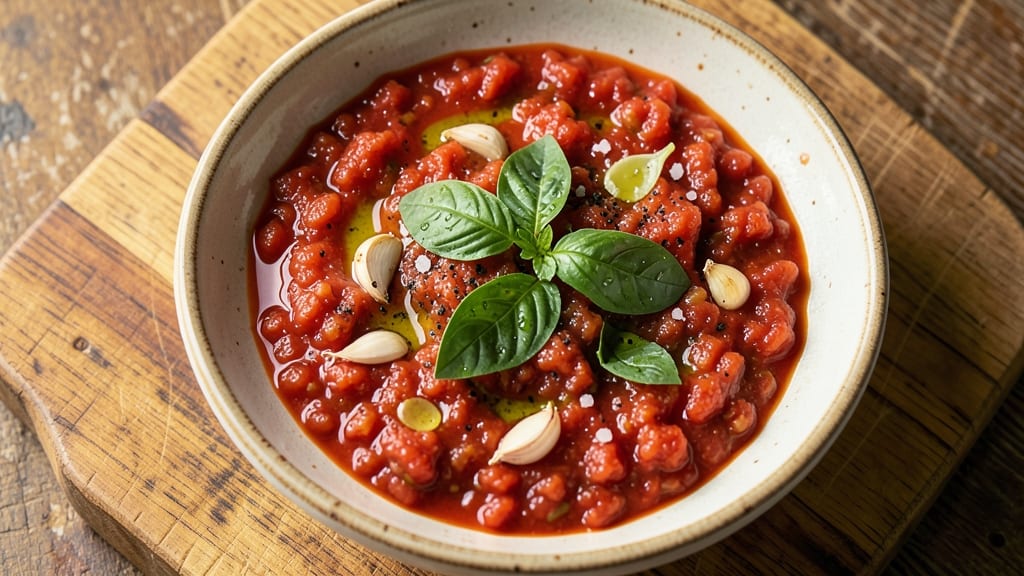
This authentic Margherita pizza sauce captures the essence of Naples in every spoonful—bright, tangy, and bursting with fresh basil. The secret lies in using San Marzano tomatoes, slow-simmered to concentrate their natural sweetness while preserving their vibrant acidity.
I’ve perfected this recipe after years of testing, ensuring the sauce remains chunky yet smooth, with just enough garlic and olive oil to elevate without overpowering.
What sets this sauce apart is its simplicity and precision: no added sugar or artificial flavors, just whole peeled tomatoes, a touch of garlic, extra-virgin olive oil, and fresh basil. The key technique? Simmering the sauce uncovered for 20-25 minutes to develop depth while keeping the texture vibrant.
This isn’t just a sauce—it’s the foundation of a restaurant-quality Margherita pizza, where every bite should taste like a trip to Italy.
The result is a sauce that’s rich yet light, with a balance of sweetness and acidity that complements mozzarella and fresh basil perfectly. It thickens slightly as it cools, clinging to the crust without overwhelming it.
Store it in the refrigerator for up to 5 days or freeze for longer shelf life—though I promise, it won’t last that long once you taste it.
Use this sauce as the star of your Margherita pizza, or drizzle it over grilled vegetables, bruschetta, or even as a dip for crusty bread.
The beauty of this recipe is its versatility—it’s the perfect balance of tradition and adaptability, ensuring every slice tastes like it came straight from a Roman trattoria.
Ingredients for authentic margherita pizza sauce
San Marzano tomatoes and fresh basil are the heart of this restaurant-quality sauce.
| Ingredient | Amount | Notes |
|---|---|---|
| San Marzano Whole Peeled Tomatoes 🍅 | 28 oz | San Marzano preferred, crushed by hand |
| Extra-Virgin Olive Oil 🫒 | ¼ cup | High-quality, fruity variety |
| Garlic Cloves 🧄 | 3 cloves | Fresh, thinly sliced |
| Fresh Basil Leaves 🌿 | ½ cup | Packed, stems removed |
| Sea Salt 🧂 | ½ tsp | Diamond Crystal preferred |
| Black Pepper 🌶️ | ¼ tsp | Freshly cracked |
| Balsamic Vinegar 🍷 | 1 tsp | Aged, for depth |
The tomatoes make or break this sauce—San Marzano is non-negotiable for that perfect balance of sweetness and acidity. Trader Joe's and Whole Foods carry them year-round, or hunt for them at Italian markets. If you can't find them, whole Roma tomatoes are your next best bet, but they won't have the same depth. Always peel and crush them by hand for maximum flavor. The garlic? Fresh is a must—no jarred minced garlic here. Thinly slice it so it melts into the sauce without becoming bitter.
No fresh basil? Dried works in a pinch, but use half the amount and add it at the very end. Short on balsamic vinegar? Red wine vinegar at double the amount gives a similar tang. The olive oil should be extra-virgin and fruity—none of that cheap, bitter stuff. If you're making a big batch, double the garlic and basil to keep the same vibrant flavor. And remember: the sauce thickens as it cools, so don't over-simmer it.
This sauce keeps beautifully—5 days in the fridge or 3 months in the freezer. For freezing, portion it into ice cube trays first, then transfer to a bag. It reheats perfectly, though I prefer it at room temperature. The basil wilts fast, so add it last and keep any extras wrapped in damp paper towels. Make extra while you're at it—everyone will want seconds.
Why You'll Love This Recipe
- Five-Ingredient Magic: I swear by this—just tomatoes, oil, garlic, basil, and salt. That’s it. No canned nonsense, no hidden additives, just the real deal that tastes like summer in Italy.
- No Blender Needed: Honestly, I used to crush tomatoes by hand, but even that’s optional. A fork works just fine—no fancy gadgets, no stress, just good old elbow grease if you’re feeling it.
- Pantry to Party: This sauce doubles as a marinade, a quick pasta fix, or a bruschetta base. I’ve used it for everything from pizza nights to last-minute appetizers, and it never lets me down.
- Fridge-Friendly Gold: Between us, this sauce tastes better the next day. Store it in the fridge for up to a week, and it’s my go-to for lazy weeknights when I don’t want to chop anything.
Step-by-step instructions for authentic Margherita pizza sauce
Here's how to craft the perfect balance of sweet San Marzano tomatoes and bright basil.
Crush the San Marzano Tomatoes by Hand
Start with the 28 oz San Marzano whole peeled tomatoes—their natural sweetness and low acidity make all the difference. Using your clean hands, gently crush each tomato against the side of a large bowl, working in batches. You want a coarse, rustic texture with some small chunks remaining—this texture gives authentic pizza sauce its signature depth and body.
I press each tomato firmly but not aggressively, breaking the skins while leaving some of the juices intact. This method preserves more of the tomato's natural oils and flavors compared to blending. If you prefer a smoother sauce, you can pulse them briefly in a food processor after crushing, but I find the hand-crushed version delivers that classic Neapolitan texture.
Sauté Garlic in Olive Oil Until Fragrant
Heat the 0.25 cup extra-virgin olive oil in a medium saucepan over medium-low heat. Add the 3 thinly sliced garlic cloves and cook for exactly 30 seconds—this is crucial. You want them to become translucent and just begin to perfume the oil, not brown or burn. Burning garlic adds bitterness that will overpower the delicate tomato flavor.
I stir constantly during this time, watching the garlic closely. The moment it releases its aroma—when your kitchen smells like a true Italian trattoria—it's ready. Remove the pan from heat immediately after the 30 seconds to prevent any color change. This quick cooking preserves the garlic's sweetness and prevents the oil from becoming bitter.
Combine Tomatoes and Simmer Gently
Return the pan to medium-low heat and add the crushed tomatoes. Stir once to combine, then reduce heat to the lowest setting. Let the mixture simmer uncovered for 15 minutes, stirring occasionally. You're looking for the sauce to reduce by about 25%—it should thicken slightly but remain loose enough to spread easily on pizza dough.
The sauce should develop a rich, concentrated tomato flavor with a glossy sheen. If it reduces too quickly, cover the pan loosely with a lid and continue cooking at the lowest heat possible. This gentle simmering process allows the natural sweetness of the San Marzano tomatoes to develop while preserving their vibrant color. Don't walk away—this is where the magic happens.
Season with Salt, Pepper, and Balsamic
Remove the pan from heat and stir in the 0.5 tsp sea salt, 0.25 tsp black pepper, and 1 tsp aged balsamic vinegar. The salt enhances all the flavors, the pepper adds subtle warmth, and the balsamic vinegar contributes a touch of complexity that bridges the tomato's sweetness with the basil's brightness. Taste and adjust seasoning if needed—this sauce should be perfectly balanced, not overly salty or acidic.
Let the sauce sit off heat for 5 minutes to allow all the flavors to meld completely. The balsamic vinegar will seem like a small amount, but it's enough to add depth without overpowering. This resting period is where the sauce truly comes together, developing that authentic Margherita character that makes it so irresistible.
Finish with Fresh Basil and Cool Slightly
Add the 0.5 cup fresh basil leaves, stems removed, and gently fold them into the warm sauce. The heat will release their essential oils, infusing the sauce with that signature herbal brightness. Let the sauce sit at room temperature for 10 minutes before using—this allows the basil to fully integrate its flavor without turning bitter from prolonged heat exposure.
For the best results, use the sauce immediately on your pizza, but it will keep in the refrigerator for up to 3 days if stored in an airtight container. The flavors actually deepen slightly after the first day, making it perfect for prepping ahead for your next pizza night. This sauce is the foundation of an authentic Margherita pizza—simple ingredients, perfect technique, and unmatched flavor.
Pro Tips For Making Authentic Margherita Pizza Sauce
- Crush Tomatoes by Hand: Skip the blender—San Marzano tomatoes are sweeter and less acidic when crushed with your fingers. Grab a handful, squeeze the pulp through a sieve, and discard the skins. This keeps the sauce bright and avoids the metallic tang that comes from over-processing.
- Sweat Garlic Low and Slow: I learned this the hard way—burnt garlic ruins everything. Heat the olive oil on medium-low and add the minced garlic, stirring constantly until it’s just golden (about 2 minutes). If it smells bitter, you’ve gone too far.
- Simmer Until Syrupy: Reduce the sauce until it coats the back of a spoon—this isn’t soup, it’s a glossy, clingy sauce. Cover the pot and let it bubble gently for 15-20 minutes, stirring occasionally. The longer it cooks, the deeper the flavor, but don’t walk away.
- Salt in Two Stages: Add half the salt at the start, then taste again at the end—San Marzano tomatoes vary in saltiness. If you’re using high-quality, unsalted olive oil, the sauce will need more than you think. Adjust to balance the sweetness of the tomatoes.
Creative variations of this dish
Spicy Calabrian Twist
For a bold kick, stir in 1 tsp Calabrian chili paste (like 'Nduja) with the balsamic vinegar. This Southern Italian variation adds smoky heat that pairs perfectly with the sauce's sweetness.
I recommend using half the basil since the chili will dominate the flavor profile. Add 1 tbsp grated Pecorino Romano at the end for a salty contrast that balances the heat. 🌶️
White Wine Reduction
Swap the balsamic vinegar for 2 tbsp dry white wine (like Pinot Grigio) and simmer the sauce for an extra 5 minutes to reduce. The wine adds brightness and complexity, making this sauce ideal for white pizza variations.
Finish with thinly sliced prosciutto and a drizzle of truffle oil for an elevated dish.
Herb-Infused Variations
Swap basil for ½ cup fresh oregano or thyme leaves for a Mediterranean twist. Oregano gives a more robust flavor, while thyme adds earthiness. I like using ½ cup oregano with 1 tsp lemon zest for a bright, citrusy note.
This version works beautifully on grilled chicken pizza or as a marinade for meatballs.
Sweet & Tangy Version
Add 1 tbsp honey or agave syrup with the balsamic vinegar to create a sweet-tangy balance. This variation is perfect for dessert pizzas with caramelized apples or figs.
I also add ½ tsp cinnamon for warmth. The sauce thickens more with the honey, so reduce simmering time to 12 minutes to maintain the right consistency.
Umami Boost
For deeper flavor, stir in 1 tbsp tomato paste with the garlic. Add ½ tsp smoked paprika for subtle smokiness. This version pairs exceptionally well with grilled shrimp or spicy sausage. The umami richness makes it a crowd-pleaser for any pizza night. 💡
Seasonal Adaptations
In summer, add ½ cup diced fresh tomatoes at the end for a garden-fresh twist. For fall, incorporate 1 tbsp caramelized onion and ½ tsp sage. Winter calls for a touch of red pepper flakes and black garlic for complexity.
Each seasonal variation keeps the sauce vibrant while adapting to what's freshest in your kitchen.
Nutrition facts
Frequently asked questions
Can I substitute San Marzano tomatoes with regular canned tomatoes?
While you can use regular canned tomatoes, the flavor won't be the same. San Marzano tomatoes have a naturally sweeter, less acidic profile that's essential for authentic Margherita sauce. If you must substitute, choose whole peeled Roma tomatoes and crush them by hand. Avoid tomato sauces or paste—they lack the fresh, bright character needed. For best results, use 28 oz whole Roma tomatoes and add ½ tsp sugar to mimic the natural sweetness of San Marzano.
Why does my sauce turn out too thick or too thin?
The key is simmering time and heat control. For a thicker sauce, simmer uncovered for 20-25 minutes on the lowest heat. If it's too thin, remove from heat and let it cool—it will thicken naturally. For a thinner sauce, add 1-2 tbsp water or tomato juice while simmering. The sauce should coat the back of a spoon but remain spreadable. Never boil it, as this breaks down the tomato's natural oils and makes it watery.
How can I make this sauce ahead of time?
This sauce actually tastes better when made a day ahead! Store it in an airtight container in the refrigerator for up to 5 days. The flavors meld and deepen over time. For freezing, portion into ice cube trays first, then transfer to a freezer bag. Thaw overnight in the fridge—never microwave it directly, as this can make the basil taste bitter. The sauce reheats beautifully on the stovetop over low heat, stirring occasionally.
Can I add cheese to this sauce?
While traditional Margherita sauce doesn't include cheese, you can add a touch for extra richness. Stir in 1 tbsp grated Pecorino Romano or Parmesan at the very end, just before serving. This adds umami depth without overpowering the fresh tomato and basil flavors. For a creamier texture, mix in 1 tbsp heavy cream off heat, but keep it minimal—too much will make the sauce heavy.
What's the best way to store fresh basil for this recipe?
Fresh basil wilts quickly, so store it properly to keep it vibrant. Wrap the stems in a damp paper towel, place in a plastic bag, and refrigerate for up to 5 days. For longer storage, freeze the basil in olive oil—simply chop the leaves, place in an ice cube tray with a little oil, freeze, then transfer to a bag. When ready to use, thaw and drain the oil. The frozen basil works well in cooked dishes, though it won't be as bright as fresh.