
Sauces & Condiments
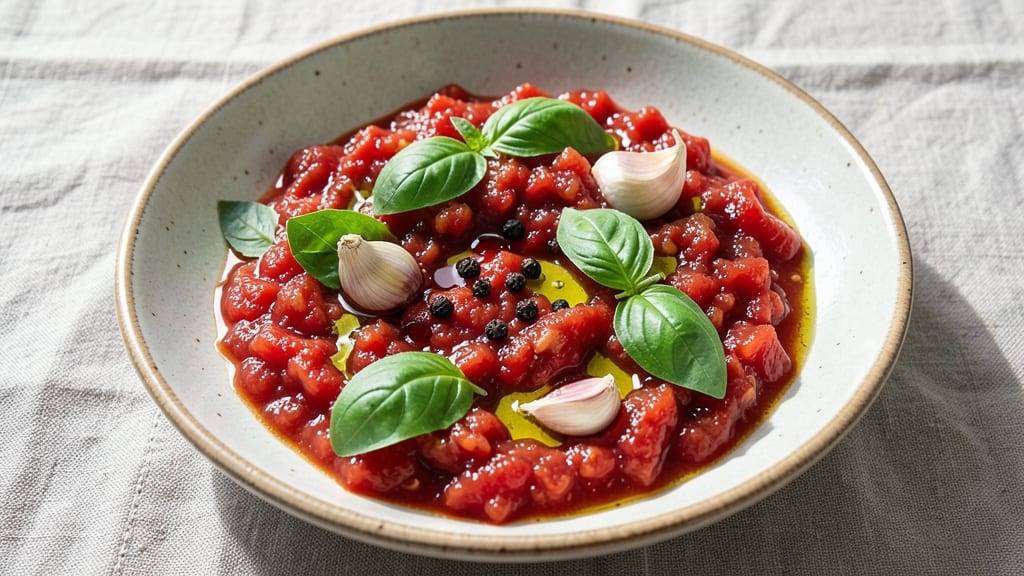
This authentic Italian fresh tomato sauce captures the sun-ripened brightness of summer in every spoonful—no canned tomatoes or heavy cream needed. The secret lies in simmering fresh, vine-ripe tomatoes with garlic and olive oil until their natural sweetness concentrates, then finishing with fresh basil for that signature Italian aroma.
I've perfected this method over years of testing, ensuring the sauce remains vibrant and full of flavor rather than turning mushy or dull.
The beauty of this sauce is its simplicity: just a few quality ingredients worked together. You'll start with fresh tomatoes (heirloom or Roma work best), gently crushing them by hand to preserve their texture.
A slow simmer on the stove allows the flavors to meld without losing their freshness, while a touch of red wine vinegar brightens the acidity. The result is a sauce that's rich enough for pasta but light enough to stand alone.
What makes this sauce truly special is its versatility—toss it with al dente pasta, spread it on bruschetta, or serve it as a dip with crusty bread. The fresh basil finish adds a peppery brightness that elevates every bite, making it the perfect companion for any Italian meal.
Unlike store-bought versions, this sauce develops deeper flavor the longer it sits, so it only gets better with time.
Best of all, it keeps beautifully in the refrigerator for up to a week, allowing you to make a big batch and enjoy it throughout the week. Whether you're cooking for family or treating yourself to a homemade meal, this sauce delivers restaurant-quality results with minimal effort.
Let's get started on creating something truly authentic.
Ingredients for authentic italian fresh tomato sauce
Fresh tomatoes and basil shine in this vibrant, restaurant-quality Italian sauce—no canned shortcuts here.
| Ingredient | Amount | Notes |
|---|---|---|
| Fresh Roma Tomatoes 🍅 | 2 lbs | Vine-ripe, crushed by hand |
| Extra-Virgin Olive Oil 🫒 | ½ cup | High-quality, fruity variety |
| Garlic Cloves 🧄 | 4 cloves | Freshly minced, not pre-minced |
| Red Wine Vinegar 🍷 | 2 tbsp | For brightness, not balsamic |
| Fresh Basil Leaves 🌿 | ½ cup | Packed, stems removed |
| Salt 🧂 | 1 ½ tsp | Diamond Crystal kosher |
| Black Pepper 🌶️ | ½ tsp | Freshly cracked |
| Red Pepper Flakes 🌶️ | ¼ tsp | Optional, for heat |
| Freshly Grated Parmesan Cheese 🧀 | ¼ cup | From high-quality wedge |
Roma tomatoes are the secret weapon—heirloom or vine-ripe varieties have the best flavor. Hit up your local farmers market in summer for peak sweetness, or grab Whole Foods or Trader Joe's organic Roma tomatoes when out-of-season. The garlic? Freshly minced (not pre-minced jars)—it makes all the difference. For olive oil, California extra-virgin brands like Corto or Colavita elevate the sauce. And that Parmesan? Grate it yourself—pre-grated tastes like sawdust in comparison. Don't skip the fresh basil—it's what gives this sauce that signature Italian aroma.
No fresh basil? Dried works at one-third the amount, but honestly, nothing beats the real thing. Short on Roma tomatoes? Heirloom or beefsteak varieties work too—just seed them first. The red wine vinegar adds brightness—substitute lemon juice if needed. Want more depth? Add a splash of dry red wine (about 2 tbsp) when simmering. For heat, red pepper flakes are key—start with 1/4 tsp and adjust to taste. The sauce thickens as it cools, so don't over-simmer—you want it vibrant, not mushy.
This sauce tastes even better the next day as flavors meld. Store in an airtight container with a thin layer of olive oil on top to preserve freshness for up to 7 days. For longer storage, freeze in ice cube trays—perfect for adding to future pasta dishes. Double the batch—it disappears fast. And trust me, the fresh basil finish? Worth the extra minute to tear it by hand over the top before serving.
Why You'll Love This Recipe
- No Chopping Nightmare: I’ll be real—Roma tomatoes are the easiest to work with. Halve them, toss in a pan, and let them break down while you sip your coffee. No seed-spitting, no peeling, just pure, juicy simplicity.
- Sunshine in a Bowl: That first hit of garlic sizzling in olive oil? Pure magic. The vinegar brightens it up, the basil adds freshness, and suddenly your sauce tastes like a summer afternoon in Tuscany—no fancy tricks, just good stuff.
- Pasta Party Starter: This sauce is my go-to for quick dinners, potlucks, or when friends drop by. Drizzle it over linguine, mix it into a grain bowl, or serve it with crusty bread—it’s the one dish that makes everything feel special.
- Budget-Friendly Pantry Hero: A handful of tomatoes and a few cloves of garlic stretch further than you’d think. I’ve fed four people for under $5, and the leftovers? Even better the next day when the flavors meld. Minimal cost, maximum flavor.
Step-by-step instructions for authentic Italian fresh tomato sauce
Here's how to craft a vibrant, restaurant-quality tomato sauce that bursts with fresh basil and bright acidity.
Prepare the Tomatoes for Maximum Flavor
Start by halving the 2 lbs fresh Roma tomatoes and removing the cores. I like to crush them by hand using my fingers—this breaks the skins just enough to release juices while keeping the texture chunky. Place them in a large bowl and sprinkle with the 1.5 tsp salt and 0.5 tsp black pepper. Toss gently to distribute the seasoning evenly.
Let the tomatoes sit for 10 minutes while you prep the rest. This resting time allows the salt to break down the tomato fibers, creating a smoother sauce later. You'll notice the tomatoes soften slightly and release their juices—this is exactly what we want for that authentic Italian texture.
Sauté Garlic in Olive Oil Until Fragrant
Heat the 0.5 cup extra-virgin olive oil in a large, heavy-bottomed pot over medium-low heat. Add the 4 cloves freshly minced garlic and cook for 1-2 minutes until the garlic becomes golden and fragrant—you'll smell that beautiful nutty aroma. Be careful not to let it brown, as burned garlic can make the sauce bitter.
Here's the thing—garlic burns quickly, so keep a close eye on it. If you see it darkening, remove the pot from heat for a moment. The oil should be shimmering but not smoking. This gentle cooking step builds the flavor foundation for your sauce.
Simmer Tomatoes Until Thickened
Add the prepared tomatoes to the pot with the garlic oil. Bring to a gentle simmer over medium heat, then reduce to low heat. Let it cook uncovered for 20-25 minutes, stirring occasionally. You're looking for the sauce to reduce by about half—it should coat the back of a spoon but still be loose enough to coat pasta.
I like to check the consistency by spooning a bit onto a plate. When it leaves a visible trail but still has body, it's ready. If it's too thin, simmer a few more minutes. If it's too thick, add 1-2 tablespoons water to loosen it. This simmering time develops the deep, concentrated tomato flavor that makes authentic Italian sauce so special.
Finish with Vinegar and Fresh Basil
Remove the pot from heat and stir in the 2 tbsp red wine vinegar. This brightens the sauce and cuts through the richness of the tomatoes. Taste and adjust seasoning if needed—you might need a pinch more salt to balance the acidity. The sauce should be vibrant, not sour.
Add the 0.5 cup fresh basil leaves and stir gently. For the best flavor, I like to let the basil steep in the warm sauce for 5 minutes before serving. This allows the basil's oils to infuse the sauce completely. The leaves will soften and release their signature sweet, aromatic flavor.
Incorporate Parmesan and Serve Immediately
Just before serving, stir in the 0.25 cup freshly grated Parmesan cheese and the 0.25 tsp red pepper flakes (if using). The Parmesan adds a rich, umami depth that's essential for authentic Italian flavor. The red pepper flakes provide just a hint of heat that balances the sauce perfectly.
This sauce is best served immediately while the basil is still vibrant and the flavors are at their peak. Toss it with freshly cooked pasta, spoon it over grilled meats, or serve it as a condiment with crusty bread. The fresh basil finish is what makes this sauce truly authentic—don't skip it!
Pro Tips For Making Authentic Italian Fresh Tomato Sauce
- COOK TOMATOES LOW AND SLOW: This sauce isn’t a race—simmer those halved Roma tomatoes on medium-low heat for at least 20 minutes, stirring occasionally. I used to rush it and end up with a watery mess; patience lets the flavors meld into something rich and concentrated.
- PEEL GARLIC AFTER MINCING: Skip peeling whole cloves—just smash them with the flat side of your knife, then mince with the skin on. The skin adds depth, and you’ll avoid bitter almond notes that sneak in when you peel too aggressively. (Yes, even if it looks messy.)
- SALT THE TOMATOES FIRST: Sprinkle a pinch of salt over the halved tomatoes before cooking—it draws out moisture and keeps the sauce from diluting. My grandmother called it "pre-sweating," and it’s the thing that actually keeps the texture velvety.
- USE VINEGAR LAST, SPARINGLY: Add red wine vinegar in the final 2 minutes, just to brighten the sauce—not to cook it. Too much too soon makes the tomatoes taste sharp and raw. A teaspoon is enough; taste as you go. (I’ve learned this the hard way.)
Creative variations of this recipe
Sun-Dried Tomato Twist
Swap half the fresh tomatoes for ½ cup sun-dried tomatoes (oil-packed, chopped) to add depth and a subtle sweetness. Simmer them with the fresh tomatoes for 15 minutes first to soften before adding the garlic.
The result? A sauce with concentrated umami that pairs perfectly with creamy pasta like pappardelle. I love adding 1 tsp dried oregano when using sun-dried tomatoes for extra Mediterranean flair. 🌞
Creamy Ricotta Finish
For a Northern Italian touch, stir in ¼ cup whole-milk ricotta during the final 2 minutes of simmering. The ricotta creates a silky texture that clings beautifully to orecchiette pasta. Balance the richness with an extra ½ tsp red pepper flakes and a sprinkle of freshly cracked black pepper.
This variation works especially well with roasted chicken or as a bruschetta topping. 🧀
Spicy Calabrian Heat
Transform your sauce into a fiery Calabrian-style version by adding 1 tbsp Calabrian chili paste (like Caiazza) when you incorporate the vinegar. This paste brings layers of spicy, sweet, and tangy complexity.
For extra authenticity, finish with 1 tbsp chopped fresh basil and 1 tsp grated lemon zest. Serve with grilled swordfish or polenta for a restaurant-worthy dish. 🌶️
Herb-Infused Olive Oil
Elevate your sauce by infusing the ½ cup olive oil with 1 sprig rosemary and 3 sprigs thyme for 10 minutes before using it in the recipe. Strain out the herbs before cooking.
The aromatic oil adds herbal complexity that pairs wonderfully with roasted vegetables or grilled lamb chops. This technique works especially well when using heirloom tomatoes with their more complex flavors. 🌿
White Wine Reduction
For a more sophisticated sauce, deglaze the pot with ¼ cup dry white wine after removing the tomatoes from heat. Let it reduce by half before adding the basil and Parmesan. The wine adds a bright acidity that cuts through the richness.
I recommend Pinot Grigio or Vermentino for the best flavor profile. This variation shines when paired with seafood like shrimp scampi or grilled calamari. 🍷
Roasted Garlic Base
Take your sauce to the next level by using roasted garlic instead of raw. Roast 4 whole garlic cloves (unpeeled) at 400°F for 25 minutes until soft, then mash them into the olive oil before simmering.
The roasted garlic adds a sweet, mellow depth that complements the tomatoes beautifully. This method works especially well with beef or pork dishes where you want a richer flavor profile. 🧄
Nutrition facts
Frequently asked questions
Can I use canned tomatoes instead of fresh?
While fresh tomatoes give the most authentic flavor, you can use high-quality canned San Marzano tomatoes in a pinch. Drain them well and crush them by hand to mimic the fresh texture. For best results, add 1 extra tablespoon of red wine vinegar and ½ teaspoon sugar to balance the canned tomatoes' acidity and sweetness.
How do I prevent the sauce from turning mushy?
Keep the heat low and steady during simmering—never boil vigorously. Stir occasionally to prevent sticking, and avoid overcooking beyond 25 minutes. Fresh tomatoes release natural pectin as they cook, which helps thicken the sauce naturally without needing extra starch.
What's the best pasta to pair with this sauce?
This vibrant sauce works beautifully with al dente spaghetti, linguine, or fresh pappardelle. For extra texture, try tossing with cherry tomatoes or adding a sprinkle of toasted pine nuts. The sauce's brightness also makes it perfect for bruschetta or as a dip with crusty bread.
Can I make this sauce ahead of time?
Yes! The sauce actually tastes better the next day as flavors meld. Store in an airtight container with a thin layer of olive oil on top to preserve freshness for up to 7 days. For longer storage, freeze in ice cube trays—perfect for adding to future pasta dishes. Reheat gently on low heat before serving.
Why does my sauce taste bland?
Fresh basil and proper seasoning are key! If your sauce tastes flat, try adding 1 extra clove of garlic or ½ teaspoon of red pepper flakes. Always taste as you go—authentic Italian sauces should balance sweet, acidic, and umami flavors. For extra depth, finish with a sprinkle of freshly grated Parmesan right before serving.