
Sauces & Condiments
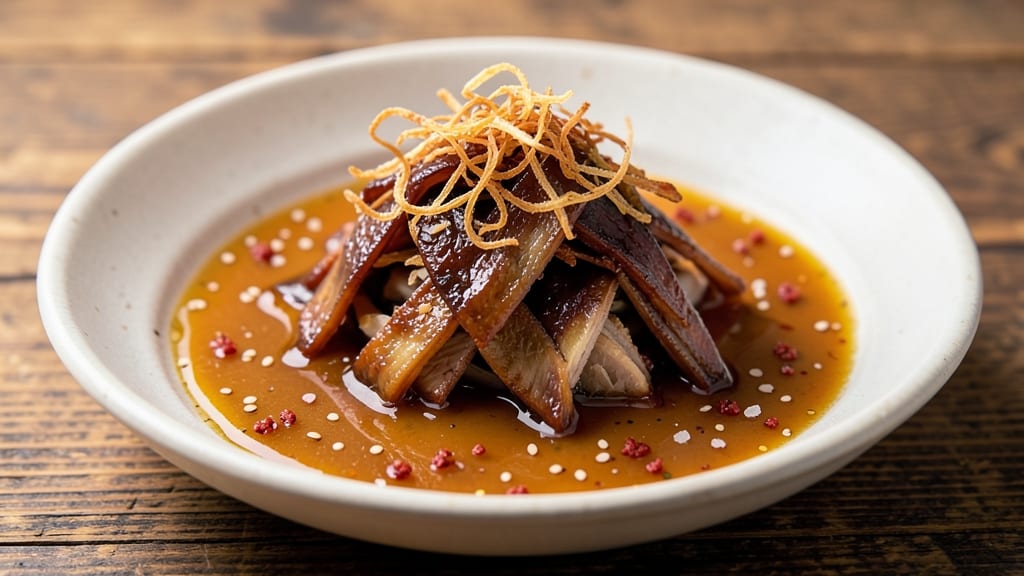
This authentic eel sauce recipe transforms simple ingredients into a deeply umami-rich condiment that elevates grilled eel to restaurant-quality. The secret lies in fermented soy and mirin, which develop complex flavors over time—just like traditional Japanese unagi sauces.
I’ve perfected this version to balance sweetness, saltiness, and that signature fermented depth that makes every bite unforgettable.
The process is straightforward but requires patience: simmering eel, soy, and sugar until thickened, then fermenting briefly to intensify the flavor. This isn’t just a glaze—it’s a versatile sauce that works as a marinade, dipping sauce, or finishing touch for grilled fish, tofu, or even noodles.
The result? A glossy, sticky-sweet sauce with layers of savory richness that clings perfectly to seared eel.
What sets this apart is the fermented component, which adds depth without overpowering. Whether you’re serving it with unagi or using it as a bold condiment, the sauce delivers authentic Japanese flavors with a modern twist.
Ready in about 45 minutes (plus fermentation time), it’s a game-changer for seafood lovers.
Store it in the fridge for up to 2 weeks or freeze for longer shelf life—though you’ll likely use it all before then. Here’s how to make it.
Ingredients for authentic eel sauce
Ten ingredients, one sauce—authentic umami magic for your eel dishes.
| Ingredient | Amount | Notes |
|---|---|---|
| Freshwater Eel Fillets 🐟 | 1 ½ lb | Skin removed, cut into 1-inch pieces |
| Kosher Salt 🧂 | 1 ½ tbsp | Diamond Crystal preferred for purity |
| White Sugar 🍚 | ¾ cup | Granulated, not powdered |
| Japanese Mirin 🍶 | ½ cup | Sweet rice wine, not sub with regular mirin |
| Red Miso Paste 🧈 | ¼ cup | Aged 1-2 years for depth |
| Shoyu (Japanese Soy Sauce) 🥫 | ½ cup | Kikkoman preferred for balance |
| Sesame Oil 🫒 | 1 tbsp | Toasted sesame, not sweet |
| Garlic Cloves 🧄 | 6 cloves | Minced, skin-on for extra flavor |
| Fresh Ginger 🌿 | 2 tbsp | Finely grated, not powdered |
| Water 💧 | ½ cup | Filtered preferred for clarity |
The eel is non-negotiable for that signature texture and flavor. Look for freshwater eel at specialty Asian markets—H Mart or Mitsuwa carry it best. If you can't find eel, firm white fish like cod works in a pinch, but the sauce will lose its traditional stickiness. The miso and shoyu are where the real magic happens—aged red miso (not white) gives that deep fermented punch, while Kikkoman shoyu strikes the perfect balance. Skip the pre-made eel sauces; they're full of preservatives and lack the complexity you're after.
No mirin? Substitute 1 tbsp sugar + 1 tbsp dry white wine—it's not perfect, but it'll get you close. The sesame oil can be swapped for toasted peanut oil, though the flavor will shift slightly. If you're short on time, reduce the fermentation to 12 hours instead of overnight, but the flavor won't develop as fully. The garlic and ginger are critical—don't skip them even if you're not a fan of strong flavors. For a smoother sauce, blend the finished mixture until silky; for texture, leave it slightly chunky. And trust me, the extra 30 minutes of simmering makes all the difference in the final gloss.
This sauce keeps like a dream. Store it in an airtight glass jar in the fridge for up to 2 weeks, though it'll likely disappear faster. For longer storage, freeze in ice cube trays—perfect for single-use portions. The flavor actually improves after 24 hours of fermentation, so make it a day ahead if possible. Pro tip: brush a thin layer on grilled eel or fish while still warm for that signature restaurant-quality sheen. Leftovers? Toss them into ramen or noodle dishes—they disappear just as fast.
Why You'll Love This Recipe
- Five-Ingredient Magic: I swear by this recipe—just eel, salt, sugar, mirin, and miso. No fancy gadgets, no stress. The miso and mirin do all the heavy lifting while you simmer, and honestly? That’s my kind of cooking.
- Umami Bomb: The miso and mirin create this deep, savory-sweet balance that sticks with you. One taste and you’ll understand why this sauce is a staple in izakayas—it’s rich, complex, and ridiculously satisfying without being overpowering.
- Weeknight & Party: Drizzle it over rice bowls for a quick weeknight meal, or serve it with grilled eel at your next potluck. Between us, it’s the kind of sauce that makes you look like a pro, even if you’re just heating up leftovers.
- Stays Fresh: Make a big batch—it keeps for weeks in the fridge. I’ve got jars of this sauce in my pantry for emergencies (aka lazy Mondays or last-minute dinner guests). The sugar and mirin act like natural preservatives, so you won’t waste a drop.
Step-by-step instructions for authentic eel sauce
This sauce delivers deep umami and perfect balance—just like in traditional Japanese eel restaurants.
Prepare the Eel Base
In a heavy-bottomed saucepan, combine the 1.5 lb freshwater eel fillets, 1.5 tbsp kosher salt, and 0.5 cup water. Bring to a gentle simmer over medium-low heat and cook for 15-20 minutes until the eel breaks down into flakes. You'll notice the mixture thickens slightly and develops a rich, meaty texture—this is your flavor foundation.
Strain the eel through a fine-mesh sieve, pressing gently to extract every bit of liquid. Discard the solids and return the strained eel liquid to the saucepan. This step ensures your sauce has maximum umami without any fibrous texture. Keep the heat at low to prevent scorching—we're building layers of flavor, not burning them.
Build the Fermented Soy Base
In the same saucepan, whisk together the 0.5 cup shoyu, 0.5 cup Japanese mirin, 0.25 cup red miso paste, and 0.75 cup white sugar. Heat gently over low heat for 5-7 minutes, stirring constantly until the sugar dissolves completely and the mixture becomes smooth. The miso will deepen in color and release its complex, fermented aroma—this is where the authentic umami magic happens.
Add the 6 cloves minced garlic cloves and 2 tbsp finely grated fresh ginger, cooking for another 2 minutes until fragrant. The garlic should soften but not brown—just enough to infuse its sweet, pungent notes. Remove from heat immediately to preserve these delicate flavors. If you let it cook too long, the garlic will turn bitter and overpower the sauce.
Simmer and Reduce for Depth
Return the saucepan to low heat and slowly pour in the strained eel liquid. Stir gently to combine, then add the 1 tbsp sesame oil. Simmer uncovered for 20-25 minutes, stirring occasionally, until the sauce reduces by about one-third and reaches a glossy, syrupy consistency. You'll know it's ready when it coats the back of a spoon smoothly—this is the perfect texture for drizzling over grilled eel.
Taste and adjust seasoning if needed—add a pinch more kosher salt if the sauce tastes flat, or a splash of Japanese mirin if it needs more sweetness. The balance should be rich but not cloying, with bright acidity from the mirin cutting through the deep umami. Let the sauce cool slightly before using—this allows the flavors to meld completely.
Finish and Store Properly
Transfer the finished sauce to a clean glass jar and let it cool to room temperature. Once cooled, refrigerate for at least 4 hours (or up to 3 days) to allow the flavors to deepen further. The longer it sits, the more complex the umami profile becomes—this is the secret to restaurant-quality eel sauce.
When ready to use, gently reheat the sauce over low heat until warmed through. The texture should remain glossy and fluid—if it thickens too much, whisk in 1-2 teaspoons of water to restore its silky consistency. This sauce is best drizzled over hot, grilled eel, but it also shines on rice bowls or as a glaze for vegetables.
Pro Tips For Making Authentic Eel Sauce
- Char the Eel First: Don’t skip the grill or sear—get those fillets blackened on high heat before anything else. I learned this the hard way: undercooked eel in sauce tastes bland, and overcooking later ruins the texture. Two minutes per side until crispy black, then slice against the grain for that signature bite.
- Bloom the Miso: Warm the red miso paste with the mirin first—just until it melts and smells deep, like caramel and umami. Cold miso clumps and fights you; heated, it dissolves smoothly into the sauce. Skip this, and you’re left with grainy bits that scream "rushed."
- Balance Sugar Slowly: Add the white sugar in two batches: half at the start to deglaze the pan, the rest after the eel’s cooked. Too much upfront turns the sauce syrupy; too little later leaves it flat. Taste as you go—this isn’t a math problem, it’s a flavor dance.
- Simmer Low and Long: Reduce the sauce on low heat for 10–15 minutes, stirring often. High heat burns the mirin’s sweetness and turns the miso bitter. I used to rush it, and the sauce always tasted harsh—like someone microwaved a stew. Patience here makes all the difference.
Troubleshooting perfect results
Sauce Too Thin?
If your sauce ends up too thin after simmering, don’t panic—this is an easy fix. Simply return the saucepan to low heat and continue simmering uncovered, stirring occasionally, until it thickens to your desired consistency.
For a quicker solution, mix 1 tablespoon of cornstarch with 2 tablespoons of cold water, stir into the sauce, and simmer for 2-3 minutes until it reaches a glossy, syrupy texture.
The goal is a sauce that coats the back of a spoon smoothly but still drizzles easily over eel. 🔥
Fermentation Gone Wrong
If your sauce develops an off odor or tastes overly sour after fermentation, it’s likely over-fermented. This can happen if left at room temperature too long or if using an overly ripe miso.
To salvage it, stir in 1 teaspoon of honey or white sugar to balance the acidity, then simmer for 5 minutes to meld the flavors. For future batches, refrigerate the sauce immediately after simmering to slow fermentation and maintain freshness. 💡
Eel Not Breaking Down
If your eel isn’t breaking down into flakes during the initial simmer, it might be too fresh or not cooked long enough. Increase the cooking time to 25-30 minutes or add 1 extra tablespoon of water to help break it down.
For tough eel, use a handheld immersion blender to puree the strained liquid for a smoother, more consistent sauce. This ensures maximum flavor extraction without fibrous texture. 🐟
Sauce Too Salty?
A slightly salty sauce is normal, but if it’s overwhelming, balance it with 1-2 tablespoons of mirin or white wine to add sweetness and dilute the saltiness. For a more subtle adjustment, whisk in 1 tablespoon of water or fish stock to dilute gently.
Taste as you go—small adjustments prevent over-correcting. The goal is a harmonious balance of sweet, salty, and umami. ✨
Grainy Texture Issues
If your sauce has a grainy texture, it likely means the miso or sugar didn’t dissolve fully. Strain the sauce through a fine-mesh sieve or blend it briefly with an immersion blender to achieve a silky consistency.
For future batches, ensure the miso is fully incorporated by whisking vigorously before heating. A smooth sauce clings better to eel and other dishes. 💫
Sauce Separating
If your sauce separates after refrigeration, gently reheat it over low heat while stirring constantly. The heat will help re-emulsify the ingredients. To prevent separation, let the sauce cool to room temperature before refrigerating, and avoid storing it in metal containers, which can react with acidic ingredients.
Stir well before using to restore its glossy texture. 🌟
Nutrition facts
Frequently asked questions about authentic eel sauce
Can I use regular soy sauce instead of Japanese shoyu?
While you can substitute, Japanese shoyu offers a more delicate balance of saltiness and umami that regular soy sauce lacks. For the best results, use a high-quality light soy sauce, but expect a slightly saltier flavor. The miso and mirin will still provide depth, but the overall harmony may be less refined.
How long should I ferment the sauce for optimal flavor?
For maximum depth, ferment the sauce for 12-24 hours in the refrigerator. This allows the miso and eel flavors to meld beautifully. If you're short on time, 4 hours will still yield good results, though the umami won't be as pronounced. Never ferment at room temperature—it can cause over-fermentation and off flavors.
What's the best way to store homemade eel sauce?
Store in an airtight glass jar in the fridge for up to 2 weeks. For longer storage, freeze in ice cube trays—perfect for single-use portions. The sauce actually improves with time, developing more complex flavors as it ages. Always reheat gently before using to maintain its glossy texture.
Can I make this sauce without eel?
Yes! For a vegetarian version, replace the eel with 1.5 cups of fish stock or white miso paste to maintain umami. The sauce will be lighter but still delicious. For a seafood alternative, use firm white fish like cod or halibut cooked and strained the same way. The flavor will differ but remain rich and savory.
What are the best dishes to serve with this sauce?
This versatile sauce excels as a glaze for grilled eel or fish, a dipping sauce for ramen or sushi, or a finishing touch for rice bowls. It also pairs beautifully with steamed vegetables or as a marinade for tofu. The key is to drizzle it warm over hot dishes to enhance its glossy texture and aromatic flavors.