
Sauces & Condiments
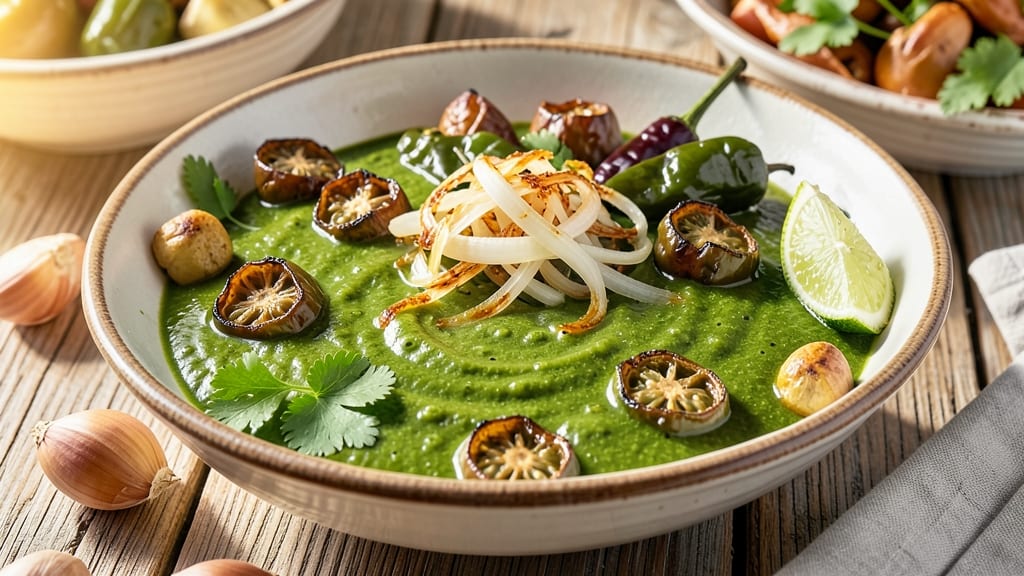
This authentic chile verde sauce recipe delivers the perfect balance of smoky, tangy, and fresh flavors that define Mexican cuisine. The secret lies in roasting tomatillos and poblano peppers to deepen their natural sweetness while building layers of complexity through garlic, onion, and fresh cilantro.
I developed this version after years of perfecting the technique—no shortcuts, just traditional methods that transform simple ingredients into something extraordinary.
The process begins with charring the tomatillos and chiles over an open flame or in a dry skillet, creating that signature smoky depth that sets chile verde apart. Once blended with garlic, onion, and lime juice, the sauce simmers just long enough to meld flavors without losing its vibrant freshness.
What you'll end up with is a versatile sauce that works as a marinade, dip, or topping—packed with bright acidity, earthy chile notes, and a fragrant herb finish.
What makes this recipe truly authentic is the attention to detail: using fresh tomatillos instead of canned, roasting the chiles for smokiness, and finishing with a squeeze of lime to brighten the flavors.
The result is a sauce that's rich enough to stand alone but light enough to complement grilled meats, tacos, or even scrambled eggs. With just 15 minutes of active prep and 20 minutes of simmering, you'll have a batch ready to transform any dish.
For extra richness, stir in a dollop of sour cream or avocado before serving, but the sauce is delicious as-is. Store leftovers in the refrigerator for up to 5 days or freeze for 3 months—it only gets better with time as the flavors deepen. Let's make this sauce!
Ingredients for authentic chile verde sauce
Roasted tomatillos and poblano peppers form the smoky heart of this authentic chile verde sauce.
| Ingredient | Amount | Notes |
|---|---|---|
| Tomatillos 🍅 | 1 ½ lb | Husk removed, quartered |
| Poblano Peppers 🌶️ | 3 whole | Roasted, peeled, seeded |
| White Onion 🧅 | 1 whole | Quartered, charred |
| Garlic Cloves 🧄 | 6 cloves | Roasted, peeled |
| Fresh Cilantro 🌿 | ½ cup | Stems removed, chopped |
| Fresh Lime Juice 🍋 | ¼ cup | Strained, freshly squeezed |
| Extra-Virgin Olive Oil 🫒 | ¼ cup | For roasting and finishing |
| Salt 🧂 | 1 ½ tsp | Diamond Crystal preferred |
| Ground Cumin 🌿 | ½ tsp | Toasted for depth |
| Fresh Jalapeño Pepper 🌶️ | 1 whole | Seeded, chopped (optional) |
The tomatillos and poblano peppers are non-negotiable for authentic flavor. Look for firm, green tomatillos with intact husks at Latin markets or the produce section. Poblano peppers should be deep green and slightly firm—avoid any with soft spots. Roasting them over an open flame or in a dry skillet until charred is essential; this step builds the smoky depth that defines chile verde. For convenience, Costco or local Mexican grocers often carry pre-husked tomatillos, but I always prefer to remove the husks myself to ensure freshness. The garlic and onion should be charred alongside the peppers to deepen their flavors naturally.
No fresh tomatillos? Substitute with green tomatoes—they’ll provide a similar tang, though the flavor will differ slightly. Poblano peppers too spicy? Remove seeds and membranes before roasting. Fresh cilantro is ideal, but if you’re out, dried cilantro at half the amount works in a pinch. For extra heat, add a chopped jalapeño, but omit entirely if you prefer a milder sauce. The lime juice is critical for brightness—Mexican Key limes are perfect, but regular limes work fine. If you’re short on time, bottled lime juice can be used, though fresh is always better.
Store any leftover sauce in an airtight container in the refrigerator for up to 5 days, though it’s best used within 3 days for peak freshness. For longer storage, freeze in ice cube trays or small containers for up to 3 months. The sauce thickens as it cools, so a splash of water or lime juice can restore consistency when reheating. This sauce pairs beautifully with grilled meats, tacos, or even scrambled eggs, and the flavors only deepen over time—making it worth the effort to prepare ahead.
Why You'll Love This Recipe
- No Charred Peppers Needed: I’ll admit—roasting poblanos is a pain. But here’s the thing: this sauce still packs that smoky depth without the hassle. Just blitz the raw peppers with the tomatillos and onion, and the acidity does the work—bright, tangy, and ready in minutes.
- That Tangy Kick: Between us, the tomatillos and raw garlic make this sauce dangerously addictive. It’s not just heat—it’s that perfect balance of citrusy zing and creamy undertones. (Yes, even on a Tuesday night.)
- Weeknight Workhorse: This isn’t just for tacos. Drizzle it over grilled chicken, fold it into eggs, or use it as a marinade. Honestly, I’ve even dumped it into soup when I’m lazy—works every time.
- Budget-Friendly Pantry Staple: Tomatillos and poblanos are cheap, and a batch stretches for days. Freeze the leftovers, and you’ve got a ready-made flavor bomb for next month’s burrito night. No waste, all flavor.
Step-by-step instructions for authentic chile verde sauce
This method delivers true Mexican restaurant quality with smoky depth and vibrant freshness.
Roast the Base Ingredients for Maximum Flavor
Preheat your oven to 450°F and line a baking sheet with aluminum foil. Arrange the 1.5 lb tomatillos (husks removed and quartered), 3 whole poblano peppers (halved lengthwise), 1 whole white onion (quartered), and 6 garlic cloves (peeled) on the sheet in a single layer. Drizzle with 2 tablespoons of the extra-virgin olive oil and sprinkle with ½ teaspoon of the ground cumin.
Roast for 20-25 minutes until the tomatillos are blistered and darkened, the poblanos are charred black in spots, and the onions are soft and caramelized. Stir the vegetables halfway through cooking for even browning. The aromas should fill your kitchen—this is where the authentic smoky depth comes from. Let everything cool slightly before handling, as the skin will be delicate after roasting.
Blend the Roasted Ingredients into a Smooth Purée
Transfer the roasted vegetables to a blender or food processor. Add the seeded, chopped jalapeño pepper (if using) and pulse a few times to break everything down. Pour in the 0.5 cup chopped fresh cilantro and 0.25 cup fresh lime juice, then blend until completely smooth, scraping down the sides as needed. The mixture should be vibrant green with a thick, almost paste-like consistency.
Taste the purée and adjust seasoning with remaining 1 teaspoon salt and a pinch more ground cumin if needed. The sauce should have a bright, slightly tangy flavor with a hint of smokiness from the roasted vegetables. If it's too thick, add 1-2 tablespoons water to reach your desired consistency for serving.
Simmer for Depth and Balance the Flavors
Heat the remaining 2 tablespoons extra-virgin olive oil in a medium saucepan over medium heat. Pour in the blended purée and bring to a gentle simmer, stirring occasionally. Let it cook uncovered for 10-12 minutes until the flavors meld and the sauce thickens slightly. The color should deepen to a rich green, and the smoky aroma will become more pronounced.
This simmering step is crucial for developing the sauce's complexity. Taste again and adjust seasoning if needed—this is where you fine-tune the balance between the smoky roasted vegetables, bright lime, and fresh cilantro. The sauce should be vibrant but well-rounded, with no single flavor overpowering. Remove from heat and let it cool slightly before serving.
Finish and Serve with Fresh Herb Garnish
Transfer the sauce to a serving bowl and let it sit for 5 minutes to allow the flavors to fully settle. Stir in any additional lime juice if you prefer a brighter finish. The sauce should coat the back of a spoon with a glossy sheen, indicating it's ready to serve.
Garnish with additional chopped fresh cilantro and a drizzle of extra-virgin olive oil for both visual appeal and extra flavor. This authentic chile verde sauce pairs beautifully with grilled meats, tacos, or as a dip for warm tortilla chips. The balance of smoky, tangy, and fresh flavors makes it a versatile staple in Mexican cuisine.
Pro Tips For Making Authentic Chile Verde Sauce
- BLISTER POBLANOS FIRST: Char them directly over a gas flame or under a broiler—you want blackened skin and slightly collapsed flesh. I learned this the hard way: roasting them whole in the oven gives inconsistent heat, and you’ll end up with undercooked peppers that taste raw. Once blistered, peel off the skin immediately while they’re still hot—it slips off like magic.
- SALT THE TOMATILLOS: Toss the husked tomatillos in a pinch of salt before roasting. This breaks down their tough skins faster and deepens their tang. I used to skip it, thinking it was unnecessary, but now I swear by it—especially when using older, firmer tomatillos.
- PULSE DON’T BLEND: Use the pulse function on high for just 3-4 seconds at a time when blending the roasted ingredients. Over-blending turns chile verde into a smooth paste instead of the chunky, textured sauce it should be. Stop when it’s just combined, then taste—you’ll need to add a splash of water or broth later anyway.
- SAVE THE CILANTRO STEMS: Chop the stems fine and toss them into the sauce—they pack more flavor than the leaves alone. I was skeptical until I tried it: the stems add a grassy depth that balances the acidity, and you won’t even notice they’re there. (Yes, even if you’re impatient like me.)
Common mistakes when making this dish
Over-Roasting Vegetables
Charred tomatillos and poblanos are essential, but burning them turns the sauce bitter. Watch closely after 15 minutes—they’re ready when blackened in spots but still soft. I’ve ruined batches by letting them turn completely black and crispy. If this happens, remove the burnt pieces before blending. 🌶️
Skipping the Roasting Step
Raw tomatillos and poblanos lack the smoky depth that defines authentic chile verde. Roasting caramelizes their natural sugars and adds complexity. If you’re short on time, broil them for 5-7 minutes instead of roasting, but keep an eye on them to avoid burning.
Using Canned Tomatillos
Canned tomatillos are convenient but lose their fresh, tangy flavor. The sauce becomes more watery and lacks the bright acidity of fresh ones. If you must use them, drain well and simmer the sauce longer to thicken. I’ve tried this shortcut—it’s just not the same. 🍅
Under-Salting or Over-Salting
Chile verde needs careful salt balancing. Start with 1.5 teaspoons of Diamond Crystal salt (it’s less salty than table salt) and adjust after blending. Too little makes the sauce bland; too much overpowers the fresh herbs. Taste as you go—this is where most home cooks go wrong.
Blending Without Cooling First
A hot blender is a safety hazard and can burn your sauce. Let the roasted vegetables cool for at least 10 minutes before blending. The steam from hot ingredients can cause splattering, and the sauce may separate if blended too soon. Patience here makes all the difference.
Ignoring the Simmer Step
Simmering for 10-12 minutes lets the flavors meld and thickens the sauce naturally. Skipping this step results in a thin, one-dimensional sauce. If you’re in a rush, at least simmer for 5 minutes—but don’t expect the same depth of flavor. This is where the magic happens! 🔥
Nutrition facts
Frequently asked questions
Can I make chile verde sauce without roasting the ingredients?
Roasting is key for authentic flavor, but if you're short on time, broil the tomatillos and poblanos for 5-7 minutes instead. The sauce will still have brightness, though it'll lack the deep smoky notes. For best results, never skip this step—it's what makes chile verde special!
How do I adjust the heat level in this sauce?
For milder heat, remove seeds and membranes from poblanos before roasting. Want more spice? Add 1-2 extra jalapeños or a pinch of cayenne. Always taste before serving—you can adjust with more lime juice or cilantro to balance the heat.
Can I make this sauce ahead of time?
This sauce actually improves with time. Store in an airtight container in the fridge for up to 5 days or freeze for 3 months. The flavors meld beautifully, and it reheats perfectly. Just add a splash of water or lime juice if it thickens too much.
What's the best way to use leftover chile verde?
This versatile sauce works as a marinade for grilled chicken, a dip for tortilla chips, or a topping for tacos and enchiladas. It also elevates scrambled eggs or even mashed potatoes! The possibilities are endless—just let your creativity guide you.
Why does my chile verde look too thin?
Simmering longer (up to 15 minutes) will thicken the sauce naturally. If it's still too thin, blend in 1 tablespoon cornstarch mixed with water or reduce it uncovered. Avoid adding flour—it can make the sauce taste grainy. Patience is key here!