
Sauces & Condiments
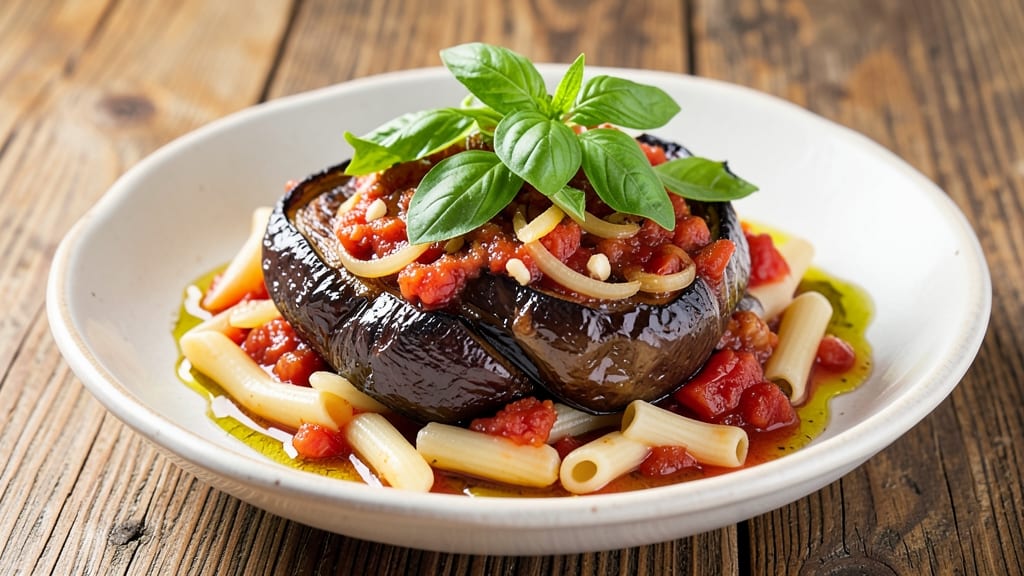
This aubergine pasta sauce recipe transforms humble eggplant into a velvety, smoky sauce that clings to al dente pasta like a dream. 🌟 The secret lies in slow-roasting eggplant until it yields silky purées and deep caramelized notes—no blender required.
This isn’t just a sauce; it’s a flavor revelation that turns weeknight dinners into restaurant-worthy meals with minimal effort.
What makes this recipe stand out is its balance of textures and flavors: the smoky roasted eggplant provides richness, while bright garlic and fresh herbs keep it vibrant.
The sauce simmers down into a luscious consistency that coats every strand of pasta perfectly, whether you’re using penne, spaghetti, or even gluten-free noodles. It’s vegetarian-friendly but hearty enough to satisfy even meat lovers.
By the time you twirl that first forkful, you’ll taste layers of complexity—silky eggplant creaminess, toasted garlic, and a hint of smokiness that lingers on your palate. The best part? This sauce keeps well for up to 5 days in the fridge, making it ideal for meal prep.
Garnish with fresh basil, a sprinkle of Parmesan, or a drizzle of olive oil for that final touch of elegance.
Ready to elevate your pasta game? This recipe delivers restaurant-quality results with simple techniques and a pantry-friendly ingredient list. Let’s get cooking!
Ingredients for aubergine pasta sauce
Simple ingredients, restaurant-quality flavor—this sauce turns humble eggplant into velvety, smoky goodness.
| Ingredient | Amount | Notes |
|---|---|---|
| Eggplant 🍆 | 2 lbs | Medium-sized, organic preferred |
| Extra-Virgin Olive Oil 🫒 | ½ cup | High quality, fruity variety |
| Garlic Cloves 🧄 | 6 cloves | Fresh, peeled, minced |
| Canned Crushed Tomatoes 🍅 | 15 oz | San Marzano preferred |
| Yellow Onion 🧅 | 1 whole | Medium, diced |
| Dried Oregano 🌿 | 1 tsp | Italian preferred |
| Smoked Paprika 🌶️ | 1 tsp | For smoky depth |
| Salt 🧂 | 1 ½ tsp | Diamond Crystal preferred |
| Black Pepper 🌶️ | ½ tsp | Freshly ground |
| Fresh Basil Leaves 🌿 | ¼ cup | Packed, chopped |
| Penne Pasta 🍝 | 12 oz | Al dente preferred |
| Parmesan Cheese 🧀 | ¼ cup | Freshly grated |
Eggplant is the star, so grab 2 lbs of firm, organic ones—they hold up better when roasted. Trader Joe's or Whole Foods usually have the best selection. Skip the small ones; you want even cooking. The olive oil matters too—high-quality extra-virgin (like California Gold) makes all the difference. If you're short on time, pre-chopped garlic from the store works fine, but fresh is better. For the tomatoes, San Marzano cans are worth the splurge—they're sweeter and less acidic.
No smoked paprika? Regular paprika plus a pinch of liquid smoke gets you close. Fresh basil wilting? Dried oregano at half the amount works in a pinch. Short on time? Pre-diced onion from the store saves chopping, but fresh tastes better. The Parmesan can be pre-grated (though it's less fresh), and Parmigiano-Reggiano is the gold standard. For the pasta, penne or rigatoni work best—their ridges hold the sauce. No gluten-free noodles? Brown rice pasta is a good swap.
Roasted eggplant keeps for 3 days in the fridge—use it up fast. The sauce itself? 5 days in the fridge, 3 months frozen. I double the recipe and freeze half for lazy nights. Store the sauce in a jar with a thin layer of olive oil on top to keep it fresh. Garnish with extra basil or Parmesan before serving—that final touch makes it feel fancy.
Why You'll Love This Recipe
- One-Pan Magic: I swear by this—just roast the eggplant and onion together, then toss everything into the same pan. No extra dishes, no stress. The smoky char from the oven sticks to the pasta like it’s begging to be eaten.
- Umami Bomb: That roasted eggplant? It’s the star. Sweet, meaty, and packed with depth—especially when it caramelizes with the garlic and tomatoes. Honestly, the first time I tasted it, I nearly dropped my fork.
- Weeknight Workhorse: Between us, this sauce is my go-to when I’m too tired to think. Toss it with pasta for dinner, or use half for lunch the next day. Even my picky roommate asks for seconds—(yes, even on a Tuesday night).
- Budget Flex: Canned tomatoes and eggplant? Check. Olive oil and garlic? Check. This recipe costs me less than takeout, but tastes like I spent hours. The leftovers keep for days, so I’m basically making free meals for myself.
Step-by-step instructions for aubergine pasta sauce
Transform humble eggplant into a velvety, smoky sauce that clings beautifully to pasta.
🔥 Step 1: Roast the Eggplant Until Charred and Silky
Preheat your oven to 425°F and line a baking sheet with parchment paper. Cut the 2 lbs eggplant into 1-inch cubes, being careful not to overcrowd the pan. Drizzle with 2 tablespoons of the 0.5 cup extra-virgin olive oil and toss to coat evenly.
Spread the eggplant in a single layer and roast for 25-30 minutes, turning occasionally, until the edges are deeply charred and the flesh collapses slightly. You're aiming for that perfect balance of smoky flavor and tender texture—when you pierce a cube with a fork, it should offer just slight resistance. The charred skin will melt into the sauce, adding incredible depth.
Transfer the roasted eggplant to a plate and let it cool slightly. Here's the thing—if you try to blend hot eggplant, you'll end up with a greasy mess. Let it rest for 10 minutes so the skin can release its oils properly.
🍳 Step 2: Sauté Aromatics and Build the Sauce Base
While the eggplant cools, heat the remaining 0.3 cup extra-virgin olive oil in a large skillet over medium heat. Add the 1 whole yellow onion (diced) and cook for 5-6 minutes until softened and translucent, stirring occasionally. You'll smell the onions caramelizing—that's when you know they're ready.
Add the 6 cloves minced garlic cloves and cook for just 30 seconds until fragrant. Be careful here—garlic burns quickly! Immediately stir in the 15 oz canned crushed tomatoes, 1 tsp dried oregano, 1 tsp smoked paprika, 1.5 tsp salt, and 0.5 tsp black pepper. Let the mixture simmer gently for 10 minutes until slightly thickened.
This is where the magic happens—the tomatoes break down and meld with the spices, creating a fragrant base that will become your sauce's backbone. The smoked paprika adds that essential depth that makes this sauce sing.
🥘 Step 3: Blend the Eggplant into Creamy Perfection
Once the eggplant has cooled, peel off any remaining charred skin (though some is fine—it adds texture) and transfer the flesh to a food processor or blender. Add the tomato mixture from the skillet and pulse until completely smooth. You might need to scrape down the sides once or twice to ensure everything blends evenly.
Return the blended sauce to the skillet and simmer over low heat for 10-15 minutes, stirring occasionally. The sauce should thicken slightly as it reduces, developing a glossy sheen. If it becomes too thick, add 2-3 tablespoons of water to reach your desired consistency. Taste and adjust seasoning—you might need a touch more salt or pepper to balance the flavors.
Here's where patience pays off: let the sauce simmer uncovered for the last 5 minutes to concentrate the flavors. The longer it simmers, the more complex the taste becomes—this is where home cooks often rush and miss out on the best flavor development.
🍽️ Step 4: Cook the Pasta and Combine
Bring a large pot of salted water to a boil and cook the 12 oz penne pasta according to package instructions until al dente. Reserve 1 cup of pasta water before draining—this starchy liquid is liquid gold for adjusting sauce consistency. Drain the pasta and add it directly to the simmering eggplant sauce in the skillet.
Toss everything together vigorously with tongs, adding reserved pasta water as needed to create a silky coating. The sauce should cling beautifully to each strand of pasta, creating that perfect al dente bite with creamy sauce. Stir in the 0.25 cup freshly chopped basil leaves and 0.25 cup freshly grated parmesan cheese just before serving.
This is the moment you've been waiting for—serve immediately while the pasta is hot and the sauce is at its peak consistency. The eggplant's natural creaminess combined with the smoky depth creates a sauce that's truly special. Garnish with extra parmesan and fresh basil if you're feeling fancy!
Pro Tips For Making Aubergine Pasta Sauce
- Salt the Eggplant First: Toss sliced eggplant with 1-2 teaspoons of salt and let it sit for 20 minutes before cooking—this pulls out the bitterness and excess moisture. I learned this the hard way after making a sauce that tasted like a sad, watery experiment.
- Sear the Onion Low: Cook the onion in olive oil over medium-low heat until it’s soft and golden, not browned—this keeps the sauce from tasting burnt. High heat turns onions bitter, and nobody wants that in a rich tomato-eggplant sauce.
- Crush the Garlic: Smash the garlic cloves with the flat of your knife before adding them to the pan—this releases more flavor without burning. Whole cloves just sit there like stubborn little rocks, while crushed ones melt into the sauce.
- Simmer the Tomatoes Long: Let the crushed tomatoes cook uncovered for at least 15 minutes to thicken the sauce—stir occasionally to prevent sticking. Rushing this step leaves you with a watery mess, and nobody’s got time for that.
Common mistakes when making great aubergine pasta sauce
Over-Roasting Eggplant
I’ve seen this happen more times than I can count—eggplant turns to ash when roasted too long. The key is patience: 25-30 minutes at 425°F is ideal for 1-inch cubes. If you go beyond 35 minutes, you’ll end up with bitter, dry chunks that ruin your sauce.
Keep an eye on them and rotate the pan occasionally for even cooking. 🔥
Skipping the Cooling Step
Here’s a rookie mistake: blending hot eggplant straight from the oven. The oils release all at once, creating a greasy, unappetizing mess. Always let the roasted eggplant cool for 10 minutes before blending—this lets the skin release its oils gradually, resulting in a silky, creamy texture.
Trust me, your sauce will thank you.
Under-Salting the Sauce
Eggplant absorbs flavors like a sponge, but it doesn’t always need extra salt. That said, 1.5 tsp salt is just the starting point. Taste your sauce before serving—it should be seasoned like the ocean, not bland like tap water.
Don’t be afraid to add more salt after simmering; this is where most home cooks fall short. 🧂
Blending Unevenly
If your sauce looks lumpy, you’re not alone—this happens when eggplant isn’t fully broken down. Pulse in your food processor until completely smooth, scraping down the sides as needed. For extra insurance, heat the sauce back up and blend again. A silky texture is non-negotiable for that restaurant-quality finish.
Ignoring Pasta Water
This is the secret weapon most people overlook. Reserve 1 cup of pasta water before draining—it’s packed with starch that helps emulsify the sauce. If your sauce gets too thick after tossing, add a splash of that starchy water to loosen it up.
Without it, you’ll end up with dry pasta and a clumpy mess.
Rushing the Simmer
Simmering is where flavors meld, but many cooks rush this step. Let your sauce reduce uncovered for the final 5-10 minutes—this concentrates the flavors and deepens the smoky notes. Skipping this means a sauce that tastes flat and one-dimensional. Patience here makes all the difference. ⏳
Nutrition facts
Frequently asked questions
Can I substitute eggplant with zucchini in this recipe?
You can try, but the results will differ significantly. Zucchini is much milder and watery, lacking the deep, smoky flavor eggplant develops when roasted. For a similar texture, use 1 lb zucchini per 1 lb eggplant, but expect a lighter sauce. If you're set on zucchini, pat it dry thoroughly and roast it at 400°F for 20 minutes—it won't caramelize like eggplant.
How do I make this sauce vegan?
Simple swaps make this fully plant-based! Replace the 0.25 cup Parmesan with nutritional yeast or vegan Parmesan, and use vegetable broth instead of water when cooking pasta. The sauce itself is already vegan—just skip the cheese garnish or use a vegan alternative. The smoky eggplant and tomato base shine even without dairy.
Can I make this sauce ahead of time?
This sauce actually tastes better the next day as flavors meld. Store it in an airtight container in the fridge for up to 5 days. Reheat gently on the stove, adding a splash of water if it thickens too much. For longer storage, freeze the sauce (without pasta) for up to 3 months)—just thaw overnight in the fridge before reheating.
What's the best pasta shape for this sauce?
Ridged pastas work best to hold the creamy sauce: penne, rigatoni, or farfalle are ideal. For a lighter option, try linguine or spaghetti, but you'll need to toss more carefully. Gluten-free? Brown rice penne or chickpea pasta both work well—they just need slightly more sauce to coat them properly.
Why does my eggplant sauce turn bitter?
Over-roasting or using old eggplant are the usual culprits. Fresh, firm eggplant roasted for 25-30 minutes at 425°F should never taste bitter. If it does, try adding 1 tsp sugar or 1 extra tomato to balance the flavors. Also, avoid small or soft eggplants—they often contain more seeds and bitterness.