
Sauces & Condiments
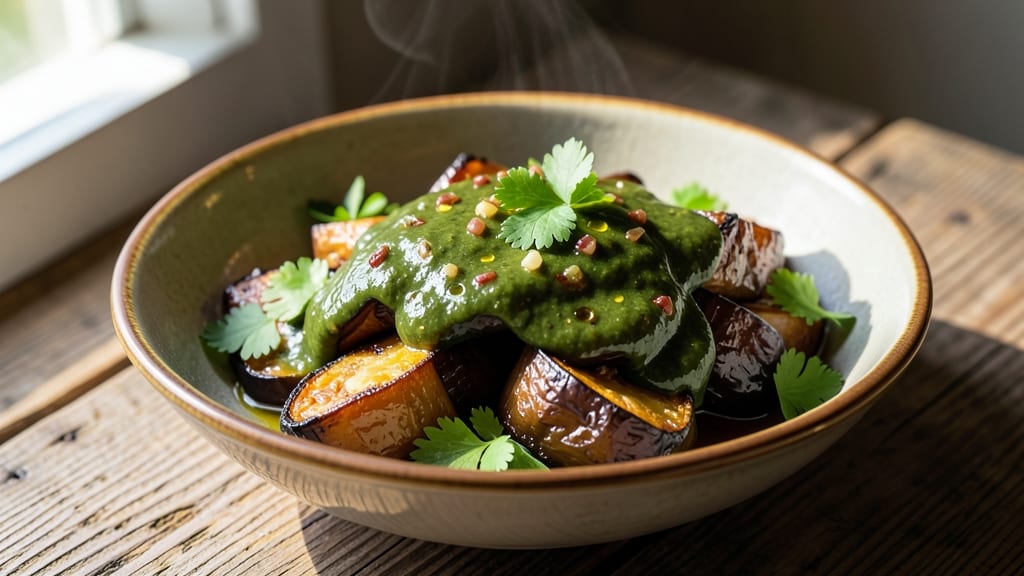
This aubergine sauce recipe transforms humble eggplant into a velvety, aromatic sauce with deep smoky notes and bright herbaceousness. Roasting the eggplant first brings out its natural sweetness while infusing it with a charred depth that elevates any dish.
The process is straightforward—just peel, roast, blend, and season—but the result is restaurant-quality sauce that pairs perfectly with grilled meats, crusty bread, or even as a pasta topping.
The key to success lies in the roasting technique: charring the eggplant over an open flame or high heat in a skillet develops that signature smoky flavor without overpowering the fresh herbs.
I like to finish the sauce with lemon juice and olive oil for brightness, while garlic and chili flakes add layers of complexity. The texture should be smooth yet slightly rustic, with just enough body to cling to whatever you're serving.
What makes this sauce truly special is its versatility—use it as a marinade, a dipping sauce, or a finishing touch for roasted vegetables. It keeps well in the fridge for up to five days, so you can make a big batch and enjoy it all week.
The fresh herbs (parsley, mint, or basil) ensure every spoonful tastes vibrant, while the smoky roasted base adds warmth and depth.
For an extra touch of richness, stir in a spoonful of tahini or yogurt before serving, or add a pinch of smoked paprika for an even deeper flavor profile. This sauce is the perfect balance of traditional technique and modern adaptability—simple to make but impossible to resist.
Ingredients for aubergine sauce
Roasted eggplant, aromatic herbs, and smoky spices create this velvety sauce that elevates any dish.
| Ingredient | Amount | Notes |
|---|---|---|
| Eggplant 🍆 | 2 lbs | Medium-sized, peeled and cubed |
| Extra-Virgin Olive Oil 🫒 | ½ cup | For roasting and finishing |
| Garlic Cloves 🧄 | 6 cloves | Minced for depth of flavor |
| Fresh Parsley 🌿 | ½ cup | Chopped, for vibrant finish |
| Fresh Mint Leaves 🍃 | ¼ cup | Chopped, optional but recommended |
| Lemon Juice 🍋 | 2 tbsp | Freshly squeezed for brightness |
| Red Chili Flakes 🌶️ | 1 tsp | Adjust for heat preference |
| Ground Cumin 🌿 | ½ tsp | Toasted for aromatic warmth |
| Salt 🧂 | 1 tsp | Kosher or sea salt preferred |
| Smoked Paprika 🌶️ | ½ tsp | For additional smoky depth |
The eggplant is the foundation—choose firm, glossy-skinned varieties like Italian or Japanese eggplant for the best texture. Whole Foods or local farmers markets often carry these, but regular grocery stores usually have them too. Roasting brings out the natural sweetness, so don't skip this step. For extra smokiness, char the eggplant directly over a gas flame on the stovetop before roasting in the oven. The key is patience—let it cook until completely tender, about 30-40 minutes at 400°F. I like to peel it afterward for a smoother texture, but you can leave the skin on if you prefer a rustic touch.
No fresh parsley or mint? Dried herbs work at one-third the amount, though they won't have the same brightness. Short on smoked paprika? Liquid smoke at one-quarter teaspoon adds depth, but use sparingly. The garlic can be roasted with the eggplant for a sweeter flavor—just toss it in the oil before adding the eggplant cubes. For a creamier texture, stir in 2 tbsp tahini or Greek yogurt at the end. If you're making this ahead, add the lemon juice and fresh herbs just before serving to keep them vibrant.
This sauce keeps beautifully in the fridge for up to 5 days, though the flavors deepen after a day or two. Store it in an airtight container with a thin layer of olive oil on top to preserve freshness. For longer storage, freeze in ice cube trays—perfect for portion control. Reheat gently on the stove or microwave until warmed through. I often make a double batch because it disappears fast—great for pasta, grilled meats, or as a dip with crusty bread. The roasted eggplant base also freezes well for up to 3 months, so you can prep ahead for busy weeks.
Why You'll Love This Recipe
- No-Chop Nightmare: I swear by this—just slice the eggplant into thick rounds, grill them until charred, then smash them with a fork. That’s it. No dicing, no mincing, no stress. The grill marks add depth without extra work.
- Herb Bomb Flavor: Between us, that mint and parsley combo is chef’s kiss—bright, fresh, and just a little unexpected. The garlic? Sizzled in olive oil until it’s golden, not burnt, so it melts into the sauce like a hug. You’ll taste it in every bite.
- Weeknight to Party: Slather it on toast for a lazy breakfast or drizzle it over grilled fish for dinner guests. Honestly, it’s my go-to when I need something that feels special but doesn’t require a 3-course menu. The eggplant’s smoky sweetness plays well with everything.
- Leftovers That Lie: I make a double batch and pretend I didn’t—because it keeps for days in the fridge. Spread it on sandwiches, toss it with pasta, or just eat it straight from the jar. It’s that good, and it saves me from takeout when I’m too tired to plan.
Step-by-step instructions for smoky roasted eggplant sauce
Transforming simple eggplant into a rich, aromatic sauce requires patience and precision.
Prep and Roast the Eggplant for Maximum Flavor
Preheat your oven to 425°F. Line two large baking sheets with parchment paper and arrange the 2 lbs eggplant in a single layer, ensuring the cubes aren't crowded. This prevents steaming and guarantees crispy edges.
Drizzle the eggplant evenly with ¼ cup of the extra-virgin olive oil and sprinkle with ½ teaspoon salt, ½ teaspoon smoked paprika, and ½ teaspoon ground cumin. Toss gently to coat all surfaces. Roast for 25-30 minutes until the eggplant is tender when pierced with a fork and the edges are deep golden brown.
Here's the thing—I like to flip the eggplant halfway through cooking. After 15 minutes, rotate the baking sheets and give the cubes a gentle stir. This ensures even browning and prevents any side from staying pale. The roasted eggplant should yield slightly when pressed but still hold its shape.
Sauté Garlic Until Fragrant and Golden
While the eggplant roasts, heat ¼ cup extra-virgin olive oil in a large skillet over medium heat. Add the 6 minced garlic cloves and cook for 2-3 minutes until they're golden brown and deeply fragrant. Be careful not to let them burn—they'll darken quickly and turn bitter.
I press down gently on the garlic with a wooden spoon during the first minute to prevent it from curling and ensure even contact with the pan. When the garlic reaches that perfect golden hue, remove the skillet from heat and set it aside—you'll need it in the next step.
Blend the Roasted Eggplant into a Silky Sauce
Transfer the roasted eggplant to a food processor or high-powered blender. Add the sautéed garlic, 1 teaspoon red chili flakes, 2 tablespoons lemon juice, ½ cup chopped fresh parsley, and ¼ cup chopped fresh mint leaves. Pulse until the mixture is smooth, scraping down the sides as needed.
With the motor running, slowly drizzle in the remaining ¼ cup extra-virgin olive oil to emulsify the sauce. You're aiming for a velvety texture—almost like a thick pesto. If the sauce is too thick, add 1-2 tablespoons water at a time until it reaches your desired consistency. Taste and adjust seasoning with additional salt if needed.
Simmer for Depth of Flavor
Pour the blended sauce into a medium saucepan and place it over low heat. Stir occasionally for 10-15 minutes, allowing the flavors to meld together. The sauce should warm through but not boil—this prevents the herbs from becoming bitter.
Here's where it gets good: the longer you simmer, the more complex the flavors become. I like to taste the sauce periodically, adjusting the lemon juice or red chili flakes as needed. The final sauce should balance smoky, herby, and slightly tangy notes with a velvety texture that coats the back of a spoon.
Rest and Serve for Optimal Texture
Remove the sauce from heat and let it rest for 5-10 minutes before serving. This resting period allows the flavors to fully develop and the sauce to thicken slightly. The sauce should be warm but not hot—perfect for drizzling over grilled meats, fish, or serving with crusty bread.
For an extra touch, I like to finish the sauce with a drizzle of extra-virgin olive oil and a sprinkle of fresh parsley right before serving. This adds both visual appeal and a fresh herbal note that brightens the dish. The sauce keeps well in the refrigerator for up to 5 days, making it an excellent make-ahead option for busy weeknights.
Pro Tips For Making Aubergine Sauce
- SALT THE EGPLANT FIRST: Toss sliced eggplant with a generous pinch of salt (about 1 teaspoon per pound) and let it sit for 20 minutes before cooking. This draws out the bitterness and excess moisture—trust me, your sauce won’t taste like a sad, watery experiment.
- CHAR THE GARLIC LOW: After cooking the eggplant, add the garlic cloves whole and let them sizzle gently in the olive oil for 3-4 minutes until golden, not burnt. I learned this the hard way—charred garlic turns bitter and overpowers the delicate mint and parsley flavors.
- PULSE THE HERBS: Instead of chopping parsley and mint finely, pulse them briefly in a food processor or knife-chop them coarsely. This keeps the sauce bright and textured—no mushy herb sludge here.
- USE RESERVED OIL: After cooking the eggplant, save the drippings in the pan (about 1-2 tablespoons) and swirl them into the finished sauce. That golden, eggplant-infused oil makes all the difference—skip it, and your sauce tastes flat.
Perfect pairings for this recipe
Grilled Meat Pairings
This smoky eggplant sauce is a game-changer for grilled meats. Drizzle it over grilled chicken thighs or lamb chops before serving—it clings beautifully to the charred surface while adding layers of smoky depth.
I love pairing it with herb-marinated grilled salmon too; the sauce's acidity cuts through the richness of the fish. For extra flair, serve with grilled halloumi cheese skewers, where the sauce's tangy notes complement the salty, caramelized cheese. 🔥
Crusty Bread Dips
Warm, freshly baked bread is the perfect canvas for this sauce. I recommend sourdough or ciabatta for their open crumb structure that soaks up the sauce. For a Mediterranean twist, serve with pita bread or fresh naan alongside grilled meats.
The sauce also works wonderfully as a dip for garlic breadsticks—just drizzle it over the top before baking for 2-3 minutes to warm through. 🥖
Pasta Elevations
Toss this sauce with al dente penne or fettuccine for an instant upgrade from basic pasta dishes. The eggplant's smoky richness pairs beautifully with pecorino cheese or feta crumbles.
For a lighter option, use it as a sauce for whole wheat spaghetti with a side of roasted cherry tomatoes. I also love adding a pinch of nutmeg to the sauce when serving with pasta for a warm, aromatic finish. 🍝
Vegetable Accompaniments
This sauce transforms simple roasted vegetables into a restaurant-worthy side. Drizzle it over roasted Brussels sprouts or asparagus spears for a flavor boost. It also works beautifully with grilled zucchini or eggplant rounds, creating a cohesive vegetable platter.
For extra texture, sprinkle with toasted pine nuts or crumbled feta before serving. 🥦
Breakfast Applications
Don't limit this sauce to dinner! Use it as a condiment for breakfast sandwiches on English muffins with scrambled eggs. Spread it on toasted baguette slices alongside avocado and poached eggs for a brunch star.
The smoky depth adds unexpected complexity to morning meals. I also like drizzling it over shakshuka for an extra layer of flavor in this Middle Eastern egg dish. 🍳
Global Fusion Twists
For a fusion approach, mix this sauce with Greek tzatziki for a smoky dip that pairs perfectly with falafel or kebabs. In Thai-inspired dishes, stir it into green curry for a vegetarian option that still packs bold flavors.
The sauce also works well in Mexican-style tacos—spread it on corn tortillas with black beans and avocado for a unique twist. 🌍
Nutrition facts
Frequently asked questions
Can I use boiled eggplant instead of roasted for this sauce?
Roasting is key for that deep, smoky flavor, but you can boil the eggplant if needed. Boil 20-25 minutes until tender, then drain well. The sauce will be less rich and smoky, but still flavorful. For extra depth, add 1 teaspoon smoked paprika and ½ teaspoon liquid smoke when blending.
How do I adjust this sauce for a creamy texture?
For a velvety texture, stir in 2-3 tablespoons Greek yogurt or tahini at the end. For extra richness, add 1 tablespoon heavy cream or cashew cream (blend soaked cashews with water). Thin with a splash of milk or broth if needed. The sauce should coat the back of a spoon without being too thick.
What’s the best way to store leftovers?
Store in an airtight container with a thin layer of olive oil on top to preserve freshness. Keeps 5 days in the fridge or 3 months in the freezer. For freezing, portion into ice cube trays—perfect for adding to dishes later. Thaw overnight in the fridge before reheating gently on low heat.
Can I make this sauce without fresh herbs?
Use 1 teaspoon dried parsley and ½ teaspoon dried mint (or ½ teaspoon oregano as a substitute). For brightness, add 1 extra tablespoon lemon juice. The flavor won’t be as vibrant, but it’ll still taste delicious. Dried herbs work best when toasted lightly in a dry pan for 30 seconds before blending.
Why did my sauce turn bitter?
Overcooking the eggplant or simmering too long can cause bitterness. Roast eggplant until tender but not mushy, and simmer the sauce on low heat for just 10-15 minutes. To fix a bitter sauce, stir in ½ teaspoon sugar or 1 extra tablespoon lemon juice to balance the flavors. Fresh herbs also help brighten the taste.