
Sauces & Condiments
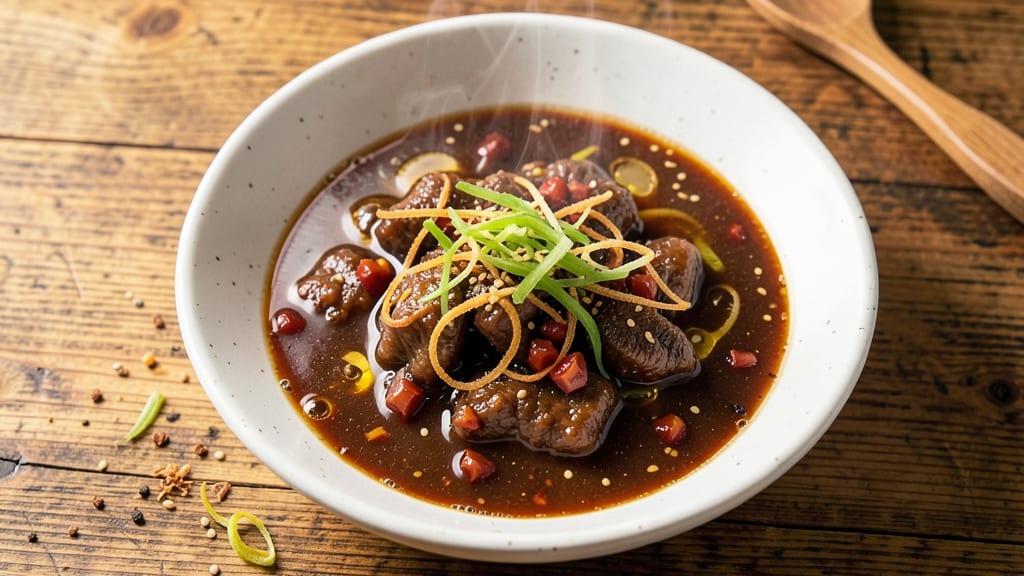
This Asian beef stir-fry sauce recipe delivers the perfect umami-packed balance for restaurant-quality stir-fries at home. The secret lies in combining soy sauce, fresh ginger, and garlic with a touch of sweetness—creating a sauce that's rich, aromatic, and deeply flavorful.
I developed this recipe after years of testing stir-fry sauces, and it consistently elevates simple beef and vegetable stir-fries into something extraordinary.
The foundation of this sauce is a simple yet powerful combination: soy sauce for saltiness, fresh ginger and garlic for aromatic depth, and a touch of sugar to balance the flavors. What makes it special is the optional umami boosters—fish sauce or oyster sauce—that add complexity without overpowering the dish.
This sauce is designed to be versatile, working equally well with sliced beef, tofu, or vegetables.
With just 10 minutes of prep, you'll have a sauce that's ready to transform your stir-fry into a flavorful masterpiece. The sauce keeps well in the fridge for up to 2 weeks, making it perfect for meal prep.
Use 2-3 tablespoons per stir-fry, adjusting to taste, and watch your dish come alive with layers of savory, sweet, and aromatic flavors.
Whether you're cooking for a weeknight dinner or a weekend feast, this sauce is your secret weapon. It's the kind of recipe that becomes a staple in your kitchen, turning ordinary stir-fries into something truly special. Let's get started!
Ingredients for asian beef stir fry sauce
Nine ingredients, umami magic—this sauce transforms simple stir-fries into restaurant-quality dishes.
| Ingredient | Amount | Notes |
|---|---|---|
| Soy Sauce 🥢 | ½ cup | High-quality, light or dark |
| Fresh Ginger 🌿 | 2 tbsp | Finely grated, aromatic |
| Garlic Cloves 🧄 | 4 cloves | Minced, freshly crushed |
| Brown Sugar 🍯 | 2 tbsp | Packed, light or dark |
| Rice Vinegar 🍶 | 2 tbsp | White or seasoned |
| Sesame Oil 🫒 | 1 tbsp | Toasted, for aroma |
| Cornstarch 🌾 | 1 tbsp | For thickening |
| Water 💧 | ¼ cup | Room temperature |
| Fish Sauce 🐟 | 1 tbsp | Optional, for umami |
| Oyster Sauce 🦪 | 1 tbsp | Optional, for depth |
The soy sauce is your flavor anchor—Kikkoman or Pearl River Bridge are my go-tos, but any high-quality brand works. Fresh ginger and garlic are non-negotiable here; pre-minced jarred ginger lacks the bright punch of fresh. For the brown sugar, light brown keeps it subtle, while dark adds molasses depth. If you're feeling fancy, grab organic ginger and garlic from the produce section—they’ve got more zing. The sesame oil? Toasted is key—it’s what gives that nutty aroma. If you can’t find it, regular sesame oil works in a pinch, but it’ll be less fragrant.
No fish sauce? Extra soy sauce plus a dash of Worcestershire mimics the umami. Skip the oyster sauce? Add an extra teaspoon of soy sauce for saltiness. The cornstarch slurry (mix with water) is your thickening secret—Diamond Crystal cornstarch works best, but any brand in a pinch. For extra richness, swap 1 tbsp of water for chicken or vegetable stock. Pro tip: If your sauce is too thick, thin with 1 tsp of water at a time. Too thin? Simmer longer—it’ll thicken as it cools.
This sauce keeps like a dream—2 weeks in the fridge sealed in an airtight jar. For longer storage, freeze in ice cube trays—just thaw and stir. I double the batch every time; the extra goes on bowls of ramen or grilled veggies. If you’re prepping for the week, divide it into small containers so you’re not digging through one giant jar. And if you’ve got leftovers? Stir-fry them with tofu—they’re even better the second time around.
Why You'll Love This Recipe
- Pantry Magic: I swear by this sauce because it’s all about what’s already in my cupboard. No specialty jars or hard-to-find ingredients—just soy, ginger, and garlic that I always have on hand. Honestly, it’s the kind of recipe that makes me feel like I’m cooking with intention, even when I’m just throwing things together.
- Umami Bomb: That first bite? The garlic and ginger sizzle hits you like a warm hug, but it’s the soy and brown sugar playing tag that makes it irresistible. The vinegar cuts through the richness just enough to keep your taste buds begging for more—like a perfect balance of sweet, salty, and tangy that sticks with you.
- Weeknight Workhorse: Between us, this sauce is my secret weapon for busy nights. Toss it with pre-cut beef and frozen veggies, and dinner’s ready in 20 minutes. I’ll be real: my kids don’t even notice when I swap in last night’s leftovers for lunch the next day—it’s that versatile.
- Budget-Friendly Boost: A little goes a long way, and this sauce costs next to nothing to make. I stretch it over rice, noodles, or even eggs, and it never lets me down. Not the prettiest, but the taste makes up for it—especially when I’m trying to feed a crowd without breaking the bank.
Step-by-step instructions for Asian beef stir fry sauce
This sauce delivers the perfect harmony of savory, sweet, and tangy flavors for your stir fry.
Prepare the Aromatics and Base
In a small bowl, finely grate the 2 tablespoons of fresh ginger using a microplane or fine grater. This ensures maximum flavor extraction without fibrous texture. In a separate bowl, mince the 4 cloves of garlic as finely as possible—the smaller the pieces, the more evenly they'll distribute throughout the sauce.
Heat a small saucepan over medium heat and add the 0.5 cup of soy sauce, 2 tablespoons of brown sugar, and 2 tablespoons of rice vinegar. Let this mixture simmer gently for 3-4 minutes until the sugar begins to dissolve and the liquid slightly reduces. This step builds the foundational flavor profile—don't rush it, as the sugar needs time to caramelize slightly for depth.
Incorporate the Umami Elements
Reduce the heat to low and stir in the 1 tablespoon of fish sauce and 1 tablespoon of oyster sauce, if using. These ingredients add layers of umami complexity that elevate the sauce from good to exceptional. Let the mixture simmer for another 2 minutes, allowing the flavors to meld together. You should notice a rich, aromatic steam rising from the pan—this is your cue that the flavors are integrating properly.
Next, add the minced garlic and grated ginger to the saucepan. Stir continuously for 1 minute until the garlic becomes fragrant but doesn't brown. Overcooking garlic turns it bitter, so keep a close eye on it. The sauce should now have a vibrant, appetizing aroma that combines sweet, tangy, and savory notes.
Thicken the Sauce
In a small bowl, whisk together the 1 tablespoon of cornstarch and 0.25 cup of water until completely dissolved. This slurry is crucial for achieving the perfect consistency—too little will leave your sauce watery, while too much will make it gluey. Slowly pour the cornstarch mixture into the saucepan while stirring constantly with a wooden spoon.
Increase the heat to medium-high and bring the sauce to a gentle boil. Continue stirring for 1-2 minutes until the sauce thickens to a glossy, coatable consistency. It should coat the back of a spoon but still be pourable. If it thickens too quickly, add 1-2 teaspoons of water to adjust the texture. The sauce should now have a beautiful sheen and cling to whatever it touches.
Finish with Sesame Oil and Rest
Remove the sauce from heat and stir in the 1 tablespoon of sesame oil. This final touch adds a nutty aroma and subtle richness that ties all the flavors together. The oil should be evenly distributed throughout the sauce, enhancing its complexity without overpowering the other ingredients.
Let the sauce rest for 5 minutes before using it. This resting period allows the flavors to fully develop and the sauce to reach its optimal consistency. The sauce should be smooth, balanced, and ready to elevate any beef stir fry. Store any leftovers in an airtight container in the refrigerator for up to 5 days, or freeze for 3 months. When reheating, warm gently over low heat to preserve the sauce's integrity.
Pro Tips For Making Asian Beef Stir Fry Sauce
- MINCE THE GINGER FINE: I used to throw in big chunks of ginger and wonder why my sauce tasted uneven. Now I grind it with the flat side of my knife until it’s almost a paste—no visible flecks, just flavor. (Yes, it takes 30 seconds, but your sauce will actually sing.)
- COOK GARLIC LOW AND SLOW: After burning three batches, I finally figured out garlic belongs in the sauce after the ginger’s done sizzling. Turn the heat down to medium-low and let it bubble gently—just until it smells sweet and fragrant, not bitter. (Your nose is your best tool here.)
- SALT THE SOY SAUCE: Plain soy sauce tastes flat in stir-fry sauce. I mix in a pinch of salt (about ¼ teaspoon per 2 tablespoons soy) and let it sit for 5 minutes before adding the rest. It balances the sweetness and makes the whole sauce brighter. (I know, I know—it’s weird, but it works.)
- SIMMER THE SUGAR FIRST: Brown sugar burns faster than you’d think. I dissolve it in a splash of warm water first, then stir it into the sauce off the heat before reheating. That way, it caramelizes just enough to deepen the flavor without turning the sauce into a sticky mess. (Your future self will thank you.)
Regional styles of asian beef stir fry sauce
Chinese Cantonese Style
This sauce gets a bold Cantonese twist by adding 1 tablespoon of dark soy sauce instead of light, giving it a deeper, slightly caramelized color and richer flavor. I also swap the rice vinegar for 1 tablespoon of Shaoxing wine, which adds complexity and pairs beautifully with beef.
For extra authenticity, finish with ½ teaspoon of white pepper—it’s a signature touch in Cantonese cooking that adds warmth without overpowering. 🥢
Japanese Teriyaki-Inspired
For a Japanese-inspired version, reduce the soy sauce to ¼ cup and replace the brown sugar with 3 tablespoons of mirin and 1 tablespoon of honey. Add 1 teaspoon of grated daikon radish for a subtle sweetness and freshness.
Simmer the sauce longer—about 5 minutes—to let the mirin caramelize slightly. This version works perfectly with thinly sliced beef like gyu or ribeye. 🍶
Thai-Inspired Stir-Fry Sauce
Transform this sauce into a Thai-inspired version by adding 1 tablespoon of fish sauce, 1 teaspoon of palm sugar, and ½ teaspoon of ground white pepper.
Swap the garlic for 1 shallot, finely minced, and add 1 teaspoon of fresh lemongrass paste (or 2 strips of lemongrass, bruised) for a citrusy, aromatic kick. This sauce pairs wonderfully with Thai basil and chilies in your stir-fry. 🌶️
Korean Gochujang Twist
Give it a Korean flair by adding 1 tablespoon of gochujang (Korean chili paste) and ½ teaspoon of sesame seeds toasted in the pan before adding the sauce. Reduce the soy sauce to ¼ cup and add 1 teaspoon of gochugaru (Korean chili flakes) for heat.
The gochujang adds a sweet, spicy depth that’s perfect with bulgogi-style beef or kimchi. 🔥
Vietnamese Nước Chấm Style
For a Vietnamese-inspired dipping sauce, replace the brown sugar with 2 tablespoons of coconut sugar and add 1 tablespoon of lime juice (instead of rice vinegar) and ½ teaspoon of ground black pepper.
Thin the sauce with 2 tablespoons of water for a lighter consistency, perfect for dipping spring rolls or grilled beef slices. Garnish with fresh cilantro and crushed peanuts for extra texture. 🥥
Nutrition facts
Frequently asked questions
Can I make this sauce without cornstarch?
Yes, but the texture will be thinner. For thickening, use 1 tablespoon of arrowroot powder or 1½ teaspoons of xanthan gum mixed with 2 tablespoons of water. Simmer for 3-4 minutes longer to achieve a similar consistency. If you prefer no thickener, reduce the water by ¼ cup and simmer uncovered for 10-12 minutes to evaporate excess liquid.
How much sauce should I use for beef stir-fry?
Start with 2-3 tablespoons for a standard 12-ounce beef stir-fry. For extra richness, add 1 extra tablespoon and toss with 1 teaspoon of toasted sesame seeds at the end. If your beef is marinated in soy sauce beforehand, reduce the sauce to 1-2 tablespoons to avoid overpowering the dish.
What if my sauce tastes too salty?
Balance excess saltiness by adding 1 teaspoon of brown sugar or ½ teaspoon of honey to sweeten, or 1 teaspoon of rice vinegar for acidity. If the sauce is already thickened, thin it with 1 tablespoon of water to dilute the salt. For a stronger flavor fix, stir in ½ teaspoon of grated ginger or 1 clove of minced garlic to add aromatic depth.
Can I use this sauce for other proteins or veggies?
This sauce works perfectly with chicken, tofu, shrimp, or mushrooms. For seafood, reduce the fish sauce to ½ tablespoon to avoid overpowering delicate flavors. With veggies like bell peppers or broccoli, add ½ teaspoon of honey to enhance sweetness. It’s also fantastic for dipping spring rolls or rice noodles.
Why does my sauce separate when reheating?
Separation usually happens when the sauce cools too quickly or sits in the fridge too long. Stir vigorously and reheat on low heat for 1-2 minutes, adding 1 teaspoon of water at a time until smooth. To prevent this, store the sauce in a shallow container and press plastic wrap directly on the surface before sealing. For extra insurance, whisk in ½ teaspoon of cornstarch before reheating.