
Sauces & Condiments
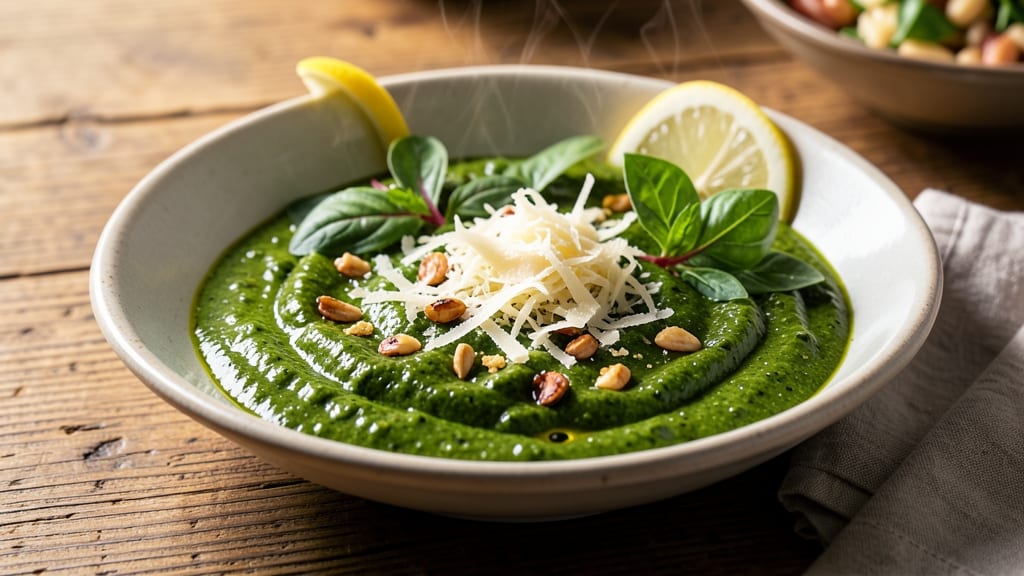
Arugula pesto sauce transforms simple meals into gourmet experiences with its vibrant, peppery depth and creamy richness. This recipe blends fresh arugula with basil, garlic, and nutty Parmesan for a sauce that's brighter than traditional pesto but equally versatile. The key lies in balancing textures—crisp arugula, smooth olive oil, and crumbled cheese—while keeping prep under 10 minutes for instant flavor elevation.
What sets this sauce apart is its adaptability. Use it as a bold pasta tossing sauce, a creamy salad dressing, or a dip for crusty bread. The arugula's natural bitterness mellows into a complex harmony when paired with lemon juice and garlic, while the Parmesan adds depth without overpowering.
Unlike store-bought versions, this recipe delivers freshness that lasts—perfect for meal prep when stored properly.
The result is a sauce that's restaurant-quality but simple enough for weeknight cooking. Its vibrant green color and peppery kick make it ideal for spring and summer dishes, though it works year-round.
Whether you're drizzling it over grilled chicken or mixing it into soups, this sauce brings a bright, herby sophistication to every bite.
Store leftovers in an airtight container in the refrigerator for up to 5 days, or freeze for 3 months. For extra richness, stir in a splash of cream or olive oil before serving.
Pair it with roasted vegetables, seafood, or even as a sandwich spread for a gourmet touch.
Ingredients for arugula sauce
Bright arugula and basil blend with nutty Parmesan for a vibrant, restaurant-quality sauce.
| Ingredient | Amount | Notes |
|---|---|---|
| Fresh Arugula Leaves 🌿 | 1 ½ cups | Packed, stems removed, vibrant green |
| Fresh Basil Leaves 🌿 | 1 cup | Packed, stems removed, vibrant |
| Garlic Cloves 🧄 | 4 cloves | Peeled, roughly chopped |
| Parmesan Cheese 🧀 | ¾ cup | Freshly grated, high-quality |
| Extra-Virgin Olive Oil 🫒 | ¾ cup | Fruity, high-quality preferred |
| Lemon Juice 🍋 | 2 tbsp | Freshly squeezed, seedless |
| Pecorino Romano Cheese 🧀 | ¼ cup | Freshly grated, sharp flavor |
| Toasted Pine Nuts 🥜 | ¼ cup | Lightly toasted for richness |
| Diamond Crystal Kosher Salt 🧂 | ½ tsp | Fine grain preferred |
| Freshly Ground Black Pepper 🌶️ | ¼ tsp | Freshly cracked for best flavor |
The arugula and basil are the heart of this sauce, so prioritize freshness. Local farmers markets often carry the brightest greens—look for leaves that are crisp and free of yellowing. Whole Foods or Trader Joe's are reliable grocery options for both herbs. For the Parmesan, Parmigiano-Reggiano from a block is non-negotiable—pre-grated versions contain anti-caking agents that ruin texture. Toast the pine nuts in a dry pan for 3-4 minutes until golden; this enhances their nutty depth without burning. The garlic should be fresh, with a vibrant color and firm texture—no soft or sprouting cloves.
No arugula? Spinach or baby kale work in a pinch, but reduce to 1 cup total for milder flavor. Swap basil for cilantro or parsley if needed, though the peppery kick will differ. Running short on pine nuts? Walnuts or cashews toasted to the same golden hue provide a similar texture. For extra richness without dairy, add nutritional yeast at 2 tbsp alongside the Parmesan. The olive oil quality matters—California extra-virgin brands like Corto or Otto deliver the best fruity notes. If your lemon juice is bitter, strain through a fine-mesh sieve to remove seeds.
To preserve the vibrant green color, store the sauce in an airtight container with a thin layer of olive oil on top. Keeps in the fridge for 5 days or frozen for 3 months in ice cube trays for portion control. For extra creaminess, stir in 2 tbsp heavy cream before serving. This sauce pairs beautifully with grilled seafood, roasted vegetables, or as a bold pasta accompaniment—its peppery depth elevates even simple dishes to restaurant quality.
Why You'll Love This Recipe
- I’ll be real: this sauce works just as well on a Tuesday night as it does when I’m hosting. Toss it with grilled chicken for a quick weeknight dinner, or use it as a dip for crusty bread when friends drop by. It’s the kind of thing that makes you look like you planned ahead, even when you didn’t.
- Five-Ingredient Magic: Honestly, this sauce is the kind of recipe that makes me feel like a chef without the fuss. You’re basically tossing together arugula, basil, garlic, Parmesan, and olive oil—no blender, no straining, just a knife and a bowl. That’s it. The arugula’s peppery bite and basil’s bright freshness marry perfectly with the nutty Parmesan, and the olive oil ties it all together like a hug.
- Pasta’s New BFF: Between us, this sauce is my go-to for when I’m craving something rich but still light. Drizzle it over al dente pasta, and suddenly you’ve got a dish that feels fancy but takes less time than deciding what to eat. The garlic and Parmesan add depth, while the herbs keep it from being heavy—like a little burst of sunshine in every bite.
- Weeknight to Dinner Party: I’ll be real: this sauce works just as well on a Tuesday night as it does when I’m hosting. Toss it with grilled chicken for a quick weeknight dinner, or use it as a dip for crusty bread when friends drop by. It’s the kind of thing that makes you look like you planned ahead, even when you didn’t.
Step-by-step instructions for arugula pesto sauce
This vibrant sauce blends fresh greens with nutty cheese for a sophisticated twist on classic pesto.
Toast the Pine Nuts for Depth of Flavor
Heat a dry skillet over medium-low heat and add the 0.25 cup toasted pine nuts. Toast for 2-3 minutes, stirring constantly, until they turn a rich golden brown and release their nutty aroma. Remove immediately to prevent burning—they should be fragrant but not bitter. Let them cool for 5 minutes before proceeding, as warm nuts will release oils that can make your pesto too greasy.
I like to toast them in batches if needed, watching closely to avoid scorching. The texture should be crunchy but not brittle—this ensures they'll add the perfect nutty contrast to the fresh herbs. Set aside for the next step.
Pulse the Herbs, Cheese, and Garlic
In a food processor, combine the 1.5 cups fresh arugula leaves, 1 cup fresh basil leaves, 4 cloves garlic cloves, 0.75 cup Parmesan cheese, 0.25 cup Pecorino Romano cheese, 0.5 tsp Diamond Crystal kosher salt, and 0.25 tsp freshly ground black pepper. Pulse until the mixture resembles coarse sand—you want to break down the leaves slightly but keep some texture for visual appeal. The arugula adds a peppery bite that balances the sweet basil.
I press down on the pesto mixture with the tamper after each pulse to ensure everything gets finely chopped. If using a blender instead, pulse in short bursts to avoid over-processing. Stop when the mixture is uniform but still has visible herb flecks.
Stream in Olive Oil for Emulsion
With the food processor running on low speed, slowly drizzle in the 0.75 cup extra-virgin olive oil through the feed tube. This gradual addition prevents the pesto from becoming too thick or greasy. Process until the mixture is completely smooth, scraping down the sides as needed. The sauce should coat the back of a spoon and hold its shape when drizzled.
Here's the thing—I always add the lemon juice (2 tbsp) at this stage, pulsing just until combined. The acidity brightens the flavors and prevents the pesto from oxidizing. Taste and adjust seasoning if needed, adding more salt or pepper as necessary. The sauce should be vibrant green with a balanced peppery-sweet profile.
Fold in Toasted Pine Nuts
Transfer the pesto to a bowl and gently fold in the toasted pine nuts using a silicone spatula. This final step ensures the nuts are evenly distributed without over-mixing, which could break them down. The texture should be creamy yet still offer a satisfying crunch with each bite. For best results, use the pesto immediately or store it in an airtight container with a thin layer of olive oil on top to preserve freshness.
This sauce pairs beautifully with grilled meats, pasta, or even as a dip for crusty bread. The arugula's peppery kick makes it more complex than traditional basil pesto, while the toasted pine nuts add a luxurious finish. Serve within 2 hours for optimal flavor and texture.
Pro Tips For Making Arugula Sauce
- Pulse, Don’t Purée: Use a food processor in short bursts—no more than 3-4 seconds at a time—between each pulse. I learned this the hard way after turning my first batch into a sad, watery sludge. Arugula packs more liquid than it looks, and over-blending releases bitterness. You want texture, not soup.
- Dry the Greens First: Pat the arugula and basil very dry with paper towels before blending. Moisture is the enemy here—it dilutes the sauce and makes it clingy instead of bright. Even if it feels like overkill, trust me: this is the thing that matters most for a silky, emulsified sauce.
- Toast the Garlic: Sauté the minced garlic in olive oil for 30 seconds until it’s just golden—no brown spots, but not raw. Burnt garlic turns bitter, and raw garlic tastes sharp and unfinished. This small step rounds out the whole sauce, making it taste more complex than it should.
- Finish with Cold Oil: Drizzle in 1 tablespoon of extra-virgin olive oil at the very end, off the heat. This isn’t just for flavor—it acts like a tiny emulsifier, keeping the sauce from separating when you toss it with pasta or meat. (Yes, even if you’re impatient like me, wait until it’s cool enough to handle.)
Flavor customization for these flavors
Peppery vs Sweet
The arugula's natural bitterness is the star here, but you can adjust the balance to suit your taste. For a milder profile, reduce the arugula to 1 cup and add ¼ cup baby spinach—it’s sweeter and less peppery.
If you love heat, add ½ tsp red pepper flakes or a pinch of crushed cayenne for a fiery kick. I often start with the full recipe, taste it, and adjust by adding 1 extra tbsp lemon juice if the arugula’s bitterness feels too strong. 🌶️
Creamy or Crunchy
This sauce works beautifully in both textures. For a smooth finish, blend the toasted pine nuts directly into the food processor with the herbs—just pulse them briefly to avoid over-processing. If you prefer texture contrast, fold them in by hand at the end.
For extra creaminess, stir in 2 tbsp heavy cream or 1 tbsp Greek yogurt before serving. I love drizzling it over grilled fish with a side of toasted nuts sprinkled on top for that perfect crunch.
Nut-Free Options
Skip the pine nuts entirely for a nut-free version—this sauce still shines! Replace them with ¼ cup toasted sunflower seeds or pumpkin seeds for a similar crunch. For richness, add 2 tbsp tahini or 1 tbsp nutritional yeast to the blend.
If you’re avoiding all seeds, simply omit them and enjoy the sauce’s creamy, herby texture. The arugula’s peppery depth still comes through beautifully without nuts. 🥜
Cheese Alternatives
Parmesan and Pecorino Romano are key for that nutty, umami depth, but you can swap them in for dietary needs. For vegan pesto, replace the cheeses with ½ cup raw cashews (soaked for 2 hours) and 2 tbsp nutritional yeast.
If you’re lactose intolerant, try ½ cup aged cheddar or smoked Gouda—both add a tangy richness. I’ve also used feta crumbles for a briny twist, though it changes the texture slightly. Always taste as you go!
Herb Swaps
While arugula and basil are the classic combo, don’t be afraid to experiment. Swap ½ cup of the basil for cilantro (adds citrusy brightness) or parsley (milder, fresh flavor). For a Mediterranean twist, add 1 tbsp fresh oregano or thyme.
If you’re feeling bold, try 1 tbsp fresh mint—it pairs surprisingly well with the peppery arugula. Just remember, each herb changes the flavor profile, so adjust seasoning accordingly. 🌿
Extra Richness
Want to take this sauce to the next level? Stir in 1 tbsp miso paste for umami depth or 1 tsp Dijon mustard for a tangy twist. For a smoky flavor, add ½ tsp smoked paprika or a dash of liquid smoke.
I love adding 1 roasted garlic clove (instead of raw) for a sweeter, deeper garlic note. These tweaks work especially well when pairing the sauce with grilled meats or hearty grains like farro. The possibilities are endless! ✨
Nutrition facts
Frequently asked questions
Can I make this sauce without a food processor?
Use a mortar and pestle for a rustic texture. Start by crushing the garlic and toasted pine nuts, then add the herbs and cheese in small batches, pounding until finely chopped. Finish by drizzling in olive oil while stirring with a spoon. The texture will be slightly chunkier but still delicious.
How do I store leftover arugula pesto?
Transfer to an airtight container and press a thin layer of olive oil on top to prevent browning. It keeps in the fridge for 5 days or freezes for 3 months. For best quality, thaw frozen portions in the fridge overnight. Stir in a splash of water or olive oil if it thickens upon reheating.
What's the best way to use up extra pesto?
Freeze in ice cube trays for portion control—perfect for quick pasta tosses or dipping sauces later. Spread on toast with smoked salmon, mix into soups, or use as a marinade for chicken. The vibrant green color makes it great for garnishing roasted vegetables or grilled fish too.
Why did my pesto turn brown?
Oxidation from exposure to air causes browning. Always store with a protective layer of olive oil on top. For freshness, use within 2 hours of making. If browning occurs, stir in 1 tsp lemon juice to brighten the color and flavor before using.
Can I make this sauce spicier?
Yes! Add ½ tsp red pepper flakes or 1 tsp sriracha when blending. For heat lovers, mix in 1 tsp hot honey or a pinch of cayenne.