
Sauces & Condiments
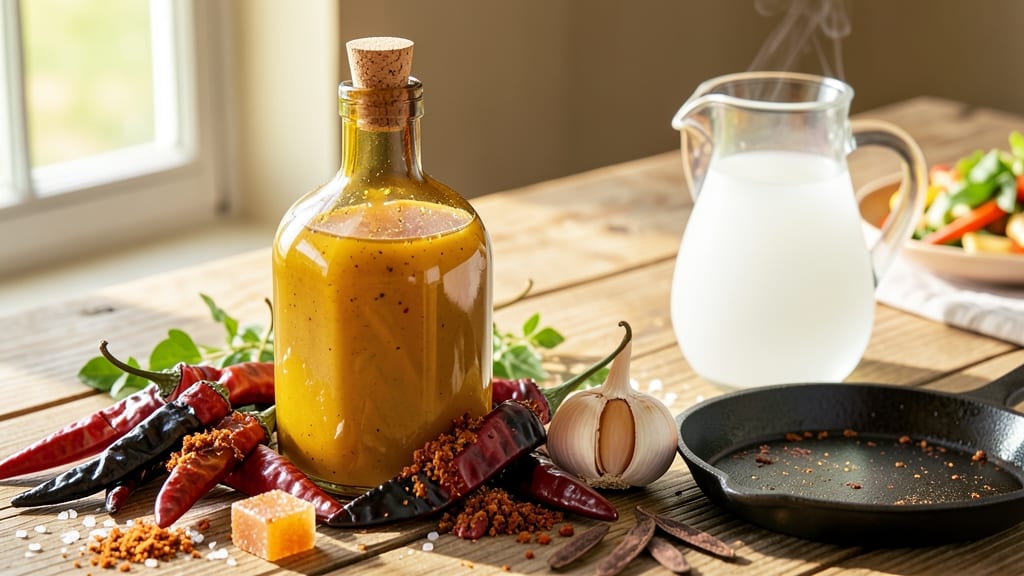
This American hot sauce recipe delivers a bold, smoky cayenne kick that rivals store-bought favorites—but with customizable heat and depth. The secret lies in balancing vinegar’s tang with charred peppers and aromatic spices, creating a sauce that’s both versatile and restaurant-quality.
I’ve perfected this method over years of testing, ensuring every batch delivers that signature American tang with a fiery finish.
The process is straightforward: char your peppers for smoky depth, then blend them with vinegar, garlic, and cayenne for a smooth yet intense sauce. No fermentation required—just a quick simmer to meld flavors and a fine-mesh strain for silky texture.
This recipe adapts effortlessly to traditional Tabasco-style heat or modern smoky-fruity twists, all while keeping prep under 15 minutes.
What you’ll end up with is a vibrant, heat-packed sauce that elevates everything from wings to tacos, with a shelf life of months. The vinegar base ensures long-term freshness, while the cayenne and garlic deliver layers of flavor that grow more complex over time.
Whether you prefer classic heat or a smoky-sweet variation, this sauce is your go-to for adding serious kick.
Perfect for gifting, meal prep, or spicing up any dish, this hot sauce is as practical as it is delicious. Store it in the fridge for up to 3 months, or can it for long-term use. Let’s make sauce that stands out on the shelf—and on your plate.
Ingredients for american hot sauce
Nine ingredients transform into a fiery, restaurant-quality sauce with smoky depth and tangy kick.
| Ingredient | Amount | Notes |
|---|---|---|
| Fresh Cayenne Peppers 🌶️ | ½ cup | Stems removed, charred for smoky depth |
| White Vinegar 💧 | 2 cups | Distilled white vinegar preferred |
| Garlic Cloves 🧄 | 6 whole | Peeled, roughly chopped for bold flavor |
| Cayenne Pepper 🔥 | 1 tbsp | Ground cayenne for consistent heat |
| Smoked Paprika 🌶️ | 1 tbsp | For authentic smoky flavor profile |
| Granulated Sugar 🍬 | 1 tbsp | Balances heat with subtle sweetness |
| Salt 🧂 | 1 tsp | Kosher salt for even seasoning |
| Black Peppercorns 🌶️ | ½ tsp | Freshly cracked for added complexity |
| Fresh Cilantro 🌿 | ¼ cup | Optional, for fresh herbal note |
| Extra-Virgin Olive Oil 🫒 | ¼ cup | For smooth texture and richness |
The cayenne peppers are the heart of this sauce—look for fresh, firm pods at the grocery store or Latin markets. Char them over an open flame or under a broiler for that signature smoky flavor (the skin will blacken, but that’s what you want). Trader Joe’s often carries pre-charred peppers if you’re short on time, though fresh is always better. For extra heat, leave the seeds in; for milder sauce, remove them. The vinegar should be distilled white—apple cider vinegar works too but has a different tang. I always grab a bottle of Heinz white vinegar for consistency, but any good-quality vinegar will do.
No fresh cayenne peppers? Substitute with 1 tbsp red pepper flakes—just know it won’t have that smoky depth. Swap smoked paprika for regular paprika if you’re out, though the flavor will be subtly different. The cilantro is optional but adds a bright, fresh note—dried won’t work here. For a sweeter sauce, increase the sugar to 2 tbsp, or add 1 tsp honey (though this isn’t vegan). If you’re making a large batch, double the vinegar and spices while keeping the peppers and garlic proportional. The olive oil isn’t just for texture—it rounds out the heat beautifully, so don’t skip it.
This sauce keeps for 3 months refrigerated or up to 1 year if canned. Store it in a clean glass jar with a tight seal, shaking before each use to redistribute the spices. For gifting, I love using amber glass bottles—they look stunning and protect the sauce from light. The flavor actually improves over time, so make extra. If it gets too thick, thin it with a splash of vinegar or water. And if you’re feeling ambitious, sterilize jars and can it for long-term storage—just follow proper canning guidelines for acid-based sauces.
Why You'll Love This Recipe
- No-Fuss Blend: I swear by this recipe because it’s literally four ingredients—no fancy techniques, no waiting hours. Toss the cayennes and garlic into vinegar, let it steep, and boom. Done. The smoked paprika adds depth without extra work, and honestly? That’s my kind of magic.
- Smoky Kick: Between us, this sauce is ridiculously good. The fresh cayennes bring the heat, but the smoked paprika? It’s the secret—gives it this warm, campfire-like depth that makes it way more interesting than store-bought. (Yes, even on a Tuesday night.)
- Endless Uses: I keep a jar in my fridge for everything: drizzled over eggs, stirred into chili, or even mixed into mayo for deviled eggs. It’s my go-to for quick meals, game day snacks, or when I’m craving something with a little bite. No rules—just flavor.
- Budget Powerhouse: A single batch costs pennies and lasts forever. I make it in big batches, store it for months, and never regret it. Plus, fresh cayennes are cheap, and vinegar? Always on hand. It’s the kind of recipe that makes me feel like I’m saving money without even trying.
Step-by-step instructions for smoky cayenne hot sauce
Here's how to craft a bold, balanced hot sauce with layers of smoky heat and vinegar brightness.
Char the Fresh Cayenne Peppers
Begin by removing stems from the 0.5 cup fresh cayenne peppers. Heat a dry skillet over medium-high heat until it's very hot. Add the peppers in a single layer and sear for 2-3 minutes per side until they develop deep char marks and blister slightly. The skin should blacken in spots while remaining slightly pliable.
This charring step is essential—it creates that signature smoky depth that sets authentic hot sauces apart. Transfer the charred peppers to a bowl and cover with a kitchen towel to steam for 5 minutes. This softens the skins, making them easier to work with. If any peppers remain uncharred after the first pass, return them to the skillet for another 30 seconds.
Combine Vinegar, Oil, and Dry Seasonings
In a medium saucepan, combine the 2 cups white vinegar, 0.25 cup extra-virgin olive oil, 1 tbsp granulated sugar, 1 tsp salt, 1 tbsp cayenne pepper, 1 tbsp smoked paprika, and 0.5 tsp freshly cracked black peppercorns. Bring the mixture to a gentle simmer over medium heat, stirring occasionally to dissolve the sugar completely.
Let it simmer uncovered for 5 minutes until the sugar dissolves and the mixture becomes slightly syrupy. The vinegar should smell sharp and tangy, with underlying notes of smokiness from the paprika. Keep the heat at a steady simmer—you want the liquid to bubble gently but not boil vigorously, which could cause the oil to separate.
Blend the Charred Peppers and Garlic
While the vinegar mixture simmers, place the charred peppers, 6 whole peeled garlic cloves, and 0.25 cup fresh cilantro (if using) in a blender. Pulse until the peppers are finely chopped, then blend on high for 30-45 seconds until you achieve a smooth, slightly textured purée. The mixture should be vibrant red with visible char flecks.
If the purée is too thick, add 1-2 tablespoons of the simmering vinegar mixture to thin it out. The texture should be smooth enough to blend seamlessly with the vinegar base but still retain some body. Here's the thing—if you skip the charring, your sauce will taste flat. That smoky char is what transforms this into something special.
Merge and Simmer the Sauce
Carefully pour the pepper-garlic purée into the simmering vinegar mixture. Stir well to combine, then return the sauce to a gentle simmer. Let it cook uncovered for 10-12 minutes, stirring occasionally, until the sauce thickens slightly and coats the back of a spoon. You're looking for a consistency that's syrupy but still pourable—somewhere between ketchup and BBQ sauce.
The sauce should smell complex—sharp vinegar cutting through the smoky, garlicky, and slightly sweet notes. Taste as you go: if it needs more heat, add another ½ teaspoon of cayenne pepper. If it's too sharp, a pinch more sugar will balance it. Don't be afraid to adjust—this is your sauce, not someone else's recipe.
Strain, Bottle, and Rest
Line a fine-mesh strainer with cheesecloth or a coffee filter and pour the hot sauce through, pressing gently with a spoon to extract all the liquid. Discard the solids in the strainer. Transfer the strained sauce to clean glass bottles or jars, leaving about ½-inch headspace at the top.
Let the sauce cool completely at room temperature, then refrigerate for at least 24 hours before using. This resting period allows the flavors to meld and the heat to mellow slightly. The sauce will keep in the refrigerator for up to 3 months, developing even deeper flavor with time. Real talk: the first batch might be too hot—don't panic. Dilute with a bit of vinegar or water if needed, but most people find this recipe hits the sweet spot.
Pro Tips For Making American Hot Sauce
- CHAR THE GARLIC LOW: Skip the sizzle—simmer minced garlic in the vinegar for 5 minutes before adding peppers. I used to burn it, but now it mellows into a sweet, deep base that doesn’t overpower the heat. (Yes, even if you’re impatient like me.)
- REMOVE PEPPER SEEDS FIRST: Slit those cayennes lengthwise and scrape out seeds before chopping—every single one. I learned this the hard way when my first batch tasted like a fire alarm went off. Fresh peppers pack more heat than dried, so control matters.
- STRAIN OR DON’T—KNOW WHY: If you want smooth sauce, strain out garlic and peppers after cooking. If you prefer texture, leave them in. I skip straining for a rustic look, but my lazy days prove smoother sauce lasts longer in the fridge. (Your call.)
- SMOKE IT RIGHT: Toast smoked paprika in a dry pan for 30 seconds until fragrant—it deepens the flavor without bitterness. I used to just dump it in, and the sauce never tasted as rich. Do this step, even if you’re in a hurry.
Dietary considerations for these flavors
Gluten-Free Adaptations
This hot sauce is naturally gluten-free because it relies on vinegar, peppers, and spices—no wheat or gluten-containing ingredients. However, always double-check labels on smoked paprika and cayenne pepper, as some brands process them in facilities that handle gluten.
For extra safety, I recommend Penzeys Spices or Simply Organic brands, which clearly label their products as gluten-free. 🌱
Vegan-Friendly Adjustments
The original recipe is already vegan, but if you want to enhance the richness, swap the olive oil for avocado oil—it has a higher smoke point and adds a subtle buttery note.
For a sweeter vegan option, replace granulated sugar with maple syrup or agave nectar (use 1 tbsp instead of sugar). The sauce’s tangy, spicy profile remains intact while keeping it plant-based.
Low-Sodium Options
If you’re watching your sodium intake, reduce the salt to ½ teaspoon or omit it entirely—vinegar and spices provide enough flavor. For extra depth without salt, add 1 tsp onion powder or ½ tsp mustard powder to the simmering vinegar mixture.
The sauce’s heat and acidity will still shine through, just with a lighter hand on the seasoning. 🧂
Heat Level Control
Adjust the cayenne pepper to your tolerance: ½ tsp for mild heat, 1 tbsp for medium, or 2 tbsp for fiery kick. For a milder sauce, replace fresh cayenne peppers with bell peppers (char and blend them instead).
If you love smoky heat but want less burn, reduce the ground cayenne to ½ tsp and add 1 tsp honey or 1 tbsp brown sugar to balance the flavor.
Allergen-Free Tips
This recipe avoids common allergens like dairy, eggs, and nuts, but always verify ingredient labels. For those with nightshade sensitivities, skip the cayenne peppers and smoked paprika, replacing them with ½ tsp turmeric (for color) and 1 tsp ground ginger (for warmth).
The vinegar and garlic will still deliver that signature tang and punch. Always store your sauce in a dedicated bottle to avoid cross-contamination.
Nutrition facts
Frequently asked questions about American hot sauce
Can I make this hot sauce without fresh cayenne peppers?
For a smoky kick without fresh peppers, use 1 tbsp red pepper flakes or 2 tbsp smoked paprika instead. The sauce will still have depth, though the texture will be smoother. For extra heat, add ½ tsp cayenne powder to the simmering vinegar base.
How do I adjust the heat level for picky eaters?
Start by reducing the ground cayenne to ½ tsp and omit fresh cayenne peppers entirely. For a milder sauce, replace them with bell peppers (char and blend them) or skip the cayenne powder. If needed, add 1 tsp honey or 1 tbsp brown sugar to balance the flavor.
Can I use apple cider vinegar instead of white vinegar?
Yes! Apple cider vinegar works perfectly and adds a subtle fruity note. Just know the flavor profile will be slightly sweeter and less sharp. For a traditional tang, stick with white vinegar, but apple cider is a great alternative if you prefer its complexity.
Why does my hot sauce look cloudy after straining?
Cloudiness usually means tiny pepper particles or oil separation. To fix it, reheat the sauce gently, then strain again through a coffee filter. If the oil separates, stir vigorously or add 1 tsp xanthan gum to stabilize it. Store properly in a sealed jar to prevent future separation.
How can I make this sauce last longer than 3 months?
For extended shelf life, can the sauce using proper water-bath canning techniques. Sterilize jars and lids, then process for 10 minutes in boiling water. Store in a cool, dark place—it’ll stay fresh for up to 1 year. Alternatively, freeze in ice cube trays for portion control.