
Sauces & Condiments
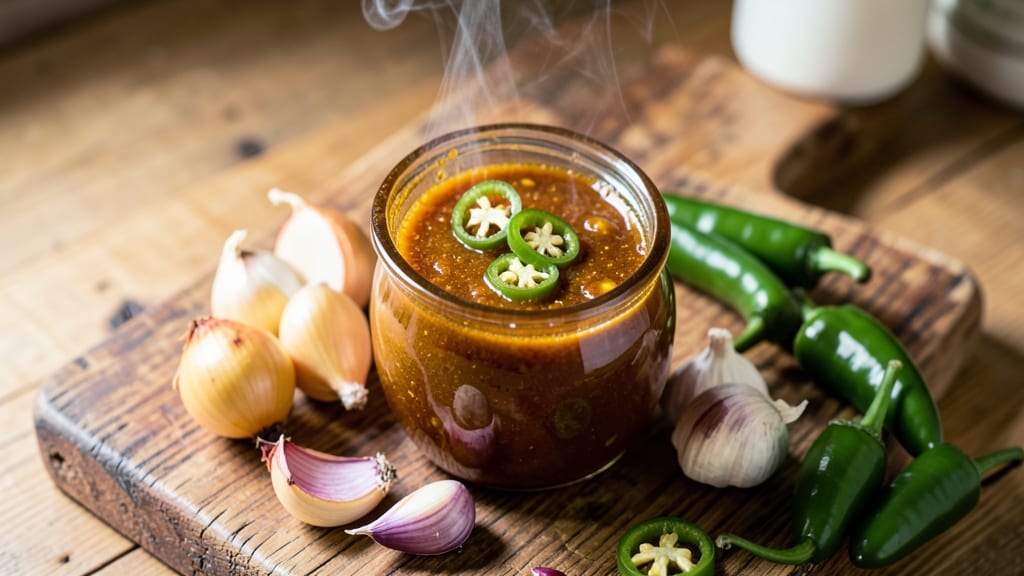
Alton Brown's hot sauce recipe delivers bold, layered heat with a depth that comes from vinegar-braised chilies and carefully balanced spices. The secret lies in fermenting the peppers first—this process develops complex flavors while ensuring a smooth, well-rounded finish.
Unlike store-bought versions, this sauce builds heat gradually, starting with a bright acidity that evolves into lingering spice. Safety is critical when working with capsaicin, so protective gloves and proper ventilation are non-negotiable.
What sets this recipe apart is the two-stage process: first, the peppers ferment in a vinegar brine to mellow their raw bite, then they simmer until tender before blending with aromatic spices.
The result is a sauce with bright, fruity notes from the vinegar and a slow-building heat that lingers without overwhelming. This method also preserves the peppers' natural sweetness, creating a balance that makes every drop addictive.
The recipe scales easily, so you can make a small batch for personal use or enough to share.
By the time you're done, you'll have a versatile hot sauce that elevates everything from tacos to grilled meats. The texture is silky yet slightly textured, with visible flecks of chili for visual appeal.
Unlike many commercial sauces, this one doesn't rely on artificial additives—just high-quality ingredients and precise technique. Whether you're a hot sauce novice or an experienced blender, this recipe delivers professional results with minimal fuss.
For those new to hot sauce making, start with milder peppers like jalapeños before progressing to habaneros or ghost peppers. Always taste as you go, adjusting the vinegar or sweetener to achieve your desired balance of heat and acidity.
Proper storage in sterile bottles ensures the sauce stays fresh for months, ready to transform any dish into something extraordinary.
Ingredients for alton brown hot sauce
Twelve ingredients transform into a sophisticated hot sauce with bright acidity and layered heat.
| Ingredient | Amount | Notes |
|---|---|---|
| Fresh Jalapeño Peppers 🌶️ | 1 lb | Stems and seeds removed, cut into even pieces |
| White Vinegar 💧 | 2 cups | Distilled, 5% acidity preferred |
| Granulated Sugar 🍚 | ½ cup | White or raw cane preferred |
| Garlic Cloves 🧄 | 6 cloves | Peeled and smashed for infusion |
| Yellow Onion 🧅 | 1 whole | Peeled and quartered |
| Apple Cider Vinegar 🍎 | 1 cup | For fruity depth and balance |
| Ground Cumin 🌿 | 1 tbsp | Toasted for deeper aroma |
| Smoked Paprika 🌶️ | 1 tbsp | For subtle smokiness |
| Dried Oregano 🍃 | 1 tsp | Mexican oregano preferred |
| Salt 🧂 | 1 tsp | Diamond Crystal preferred |
| Black Peppercorns 🌶️ | ½ tsp | Freshly cracked for texture |
| Honey 🍯 | 1 tbsp | Local raw honey preferred |
The peppers are the foundation—jalapeños work perfectly for a balanced heat, but serrano or habanero can be substituted for more intensity. Always wear protective gloves when handling fresh peppers, as capsaicin causes irritation. Organic jalapeños from a trusted producer like Whole Foods or local farmers markets ensure vibrant flavor. The vinegar should be white vinegar for fermentation and apple cider vinegar for fruity depth—both are essential for achieving the signature balance of acidity and sweetness. Diamond Crystal kosher salt enhances flavor without overpowering, while Penzeys Spices offers high-quality cumin and paprika for depth.
No jalapeños? Serrano peppers provide similar heat with a slightly fruity note. Running out of white vinegar? Distilled vinegar works, though it lacks the fruity complexity of apple cider. The honey can be swapped for maple syrup if preferred, though it alters the flavor profile slightly. For a smokier finish, liquid smoke (½ tsp) can be added during blending. Pre-ground spices are fine, but toasting whole spices before grinding releases deeper flavors. Always taste the brine before fermenting—adjust sugar or vinegar ratios to achieve a bright, balanced acidity without overwhelming the peppers.
Ferment the peppers in a sterile glass jar for 3-5 days at room temperature, then simmer until tender. Store the finished sauce in a clean, airtight glass bottle in the refrigerator for up to 6 months. For a smoother texture, strain through a fine-mesh sieve before bottling. Label with heat level and date to track potency—heat intensifies over time. Freeze in ice cube trays for single-serving portions, then transfer to a sealed bag for long-term storage.
Why You'll Love This Recipe
- No Chopping Chaos: I swear by this recipe because it’s the only hot sauce I make that doesn’t require dicing onions or mincing garlic—just rough chop and toss. The vinegar and sugar do the work, turning everything into a silky, fiery blend without the mess.
- Garlic-Sugar Magic: That crisp char from the jalapeños and raw garlic? Chef’s kiss. The sugar caramelizes just enough to balance the heat, giving it this addictive sweet-spicy kick that makes me reach for it even when I’m not cooking.
- Pantry Staple Power: Honestly, I keep a jar of this in my fridge at all times—it’s my go-to for tacos, grilled cheese, or even drizzled on eggs. The vinegar base means it lasts forever, and the ingredients? Things I already have.
- Budget-Friendly Fire: Between us, this costs pennies per serving. A few peppers, a bag of sugar, and a bottle of vinegar stretch for months, and I’ve never once regretted making a big batch. My wallet and my taste buds win.
Step-by-step instructions for alton Brown's hot sauce
Here's how to craft a balanced hot sauce with depth and complexity using precise techniques.
Prepare the Jalapeño and Aromatics
Begin by removing stems and seeds from the 1 lb fresh jalapeño peppers and cutting them into even ½-inch pieces. This ensures consistent heat distribution throughout the sauce. Peel and quarter the 1 whole yellow onion, then peel and smash the 6 garlic cloves with the flat side of a knife—this releases their oils for maximum infusion.
In a medium saucepan, combine the jalapeños, onion, and garlic with the 2 cups white vinegar. Bring to a simmer over medium-high heat and cook for 15 minutes until the jalapeños soften and the mixture develops a deep, aromatic color. This braising step extracts flavor and mellows the natural heat of the peppers.
Add Spices and Sweeteners
Reduce heat to medium-low and stir in the 1 tbsp ground cumin, 1 tbsp smoked paprika, 1 tsp dried oregano, 1 tsp salt, and ½ tsp freshly cracked black peppercorns. Toast the spices in the mixture for 2 minutes to deepen their flavors—you'll notice the aroma become more complex and inviting.
Add the ½ cup granulated sugar and 1 cup apple cider vinegar, then increase heat to medium-high again. Bring to a boil and let it simmer vigorously for 10 minutes until the mixture reduces by about one-third. This reduction concentrates the flavors and creates a syrupy base for the sauce.
Incorporate the Honey and Finish
Remove the saucepan from heat and let it cool for 5 minutes to prevent the honey from cooking too aggressively. Stir in the 1 tbsp honey until fully dissolved. The honey adds subtle sweetness that balances the acidity and heat, creating a more complex flavor profile.
Return the sauce to low heat and simmer gently for another 5 minutes to allow all the ingredients to meld together. The sauce should now have a glossy appearance and a rich, layered aroma combining the smokiness of the paprika, the earthiness of the cumin, and the bright acidity of the vinegars.
Strain and Bottle
Line a fine-mesh strainer with cheesecloth or a coffee filter and carefully strain the hot sauce into a clean glass jar or bottle. This step removes the solids while preserving the rich, infused liquid. Press gently on the solids to extract as much liquid as possible without introducing air bubbles.
Let the hot sauce cool completely to room temperature before sealing. Store in the refrigerator for up to 3 months, or process in a water bath for long-term storage. The flavor will continue to develop and deepen over the first week, making it even more complex.
Pro Tips For Making Alton Brown Hot Sauce
- CHAR THE ONION FIRST: I learned this the hard way—sautéing the onion and garlic together leads to a bitter, uneven burn. Get that onion in a hot pan alone for 3-4 minutes until it’s soft and translucent before adding garlic. That’s when the real flavor magic starts.
- REMOVE JALAPEÑO SEEDS LAZYLY: No need to fuss with tweezers—just slice the peppers open, scrape out the seeds with your fingernail, and rinse quickly under cold water. The seeds and membranes hold most of the heat, and this method cuts prep time in half without sacrificing control.
- SIMMER LOW AND SLOW: I used to crank the heat and wonder why my sauce tasted flat. This recipe needs a gentle simmer—about 20-25 minutes—to let the vinegar mellow and the flavors blend. If it boils hard, you’ll end up with a harsh, one-note sauce instead of that balanced tang.
- STRAIN THE GARLIC: After sautéing, mash the garlic into a paste but don’t skip straining it through a fine-mesh sieve before adding to the vinegar. Raw garlic chunks turn to mush and muddy the sauce. A little effort here makes the final product silky smooth—trust me, you’ll notice the difference.
Troubleshooting perfect results
Fermentation Failures
If your peppers develop mold or funky odors during the 3-5 day fermentation, toss them immediately—mold means the batch is unsafe. I’ve ruined batches by using non-sterile jars, so always sanitize containers with hot, soapy water or boiling water.
For extra safety, add a ¼ tsp citric acid to the brine to inhibit bacterial growth. 🧂
Uneven Heat Distribution
If your sauce tastes patchy with some pieces much hotter than others, your peppers weren’t cut evenly. Use a mandoline slicer for consistent ½-inch pieces—this ensures uniform heat.
For extra control, remove only the ribs from jalapeños (not all seeds) to reduce heat while keeping flavor. Always taste-test individual pepper pieces before blending.
Sauce Too Thin or Watery
If your finished sauce lacks body, you likely didn’t reduce it enough. Simmer the mixture uncovered for an extra 10-15 minutes until it thickens to a syrup-like consistency.
For a quicker fix, stir in 1 tsp cornstarch mixed with 1 tbsp water and simmer for 2 more minutes. Avoid over-straining—leave some pepper flecks for texture.
Overpowering Vinegar Taste
Too much vinegar can dominate the flavor. Balance it by adding 1 extra tbsp honey or 1 tsp maple syrup during the final simmer. If the acidity still overpowers, strain the sauce into a clean pot, add ½ cup apple juice, and simmer for 5 minutes to dilute gently.
Taste as you go—this is where patience pays off. 🍎
Muddled or Bitter Flavor
Bitterness often comes from overcooking the peppers or using old vinegar. For future batches, simmer peppers for no more than 15 minutes—they’ll soften further during blending. If bitterness lingers, add ½ tsp baking soda (just enough to neutralize) or a splash of fresh lime juice to brighten the sauce.
Storage Spoilage
If your sauce smells off or develops bubbles after opening, it’s contaminated. Always store in sterile glass bottles (never plastic) and refrigerate within 24 hours of bottling. For long-term storage, process in a water bath for 10 minutes—this extends shelf life to 12 months.
When in doubt, toss it; hot sauce should never smell like vinegar gone bad. ❄️
Nutrition facts
Frequently asked questions
Why does this recipe ferment the peppers first?
Fermenting the peppers for 3-5 days mellows their raw heat while developing complex flavors through natural microbial activity. This process creates a brighter, more balanced sauce where the acidity and sweetness shine through. Without fermentation, the sauce can taste harsh or overly sharp.
Can I adjust the heat level in this hot sauce?
For milder heat, use jalapeños and remove all seeds and ribs. For extra spice, swap in serrano or habanero peppers (wear gloves when handling). Always taste-test individual pepper pieces before blending. The vinegar and honey naturally balance the heat, so adjustments are easy.
How long does the finished hot sauce keep?
Unopened, store in a sterile glass bottle in the fridge for up to 6 months. For longer storage, process in a water bath for 10 minutes—this extends shelf life to 12 months. Once opened, use within 3 months for best flavor. The sauce actually improves with age as flavors meld!
What's the best way to use this hot sauce?
This versatile sauce elevates everything from tacos to grilled meats, but it also shines in marinades or as a dip for fresh chips. Try drizzling it over seared scallops or mixing into mayo for a spicy sandwich spread. The balanced heat works beautifully with rich, fatty foods like fried chicken or burgers.
Can I make this without apple cider vinegar?
Yes, but you'll lose some fruity depth. Substitute with white vinegar (use the full 3 cups) or rice vinegar for a milder acidity. For extra complexity, add 1 tsp citrus zest (like lime or orange) during the final simmer. The white vinegar remains essential for fermentation.