
Sauces & Condiments
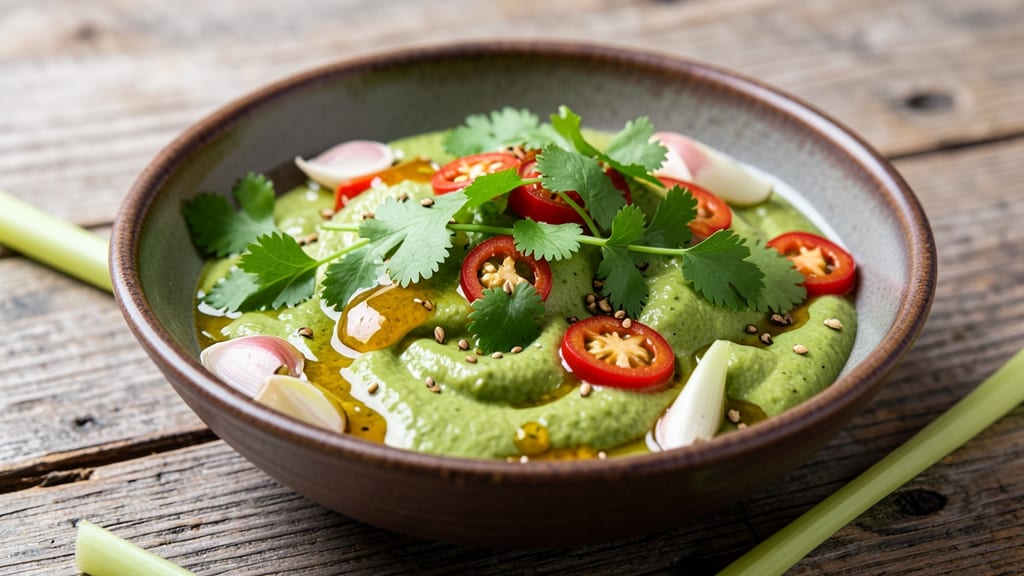
Sophie's Cuban green sauce transforms dry meats into moist, flavor-packed masterpieces with its bright, herbaceous punch. This essential condiment blends fresh cilantro, celery, sour orange juice, and jalapeños into a vibrant green sauce that's the secret behind Cuban roast pork's legendary tenderness.
The acidity and herbs break down proteins while adding layers of complexity that store-bought versions simply can't match.
The magic happens when you pulse fresh cilantro, celery, garlic, and jalapeños with sour orange juice until smooth—no cooking required. This raw preparation preserves the herbs' vibrant flavors while the citrus brightens every bite.
The sauce works as both a marinade (for overnight flavor infusion) and a finishing touch, drizzled generously over roasted pork, black beans, or even grilled shrimp.
What makes this sauce truly special is its ability to elevate simple ingredients into something extraordinary. The sour orange juice cuts through richness while the cilantro and celery provide fresh, herbal notes that keep the palate lively.
Unlike cooked sauces that can turn bitter, this version stays bright and complex, delivering restaurant-quality flavor with minimal effort.
Perfect for meal prep or last-minute cooking, this sauce keeps well in the fridge for up to 5 days. Double the batch—you'll want it on everything from sandwiches to tacos. Here's how to make it perfectly every time.
Ingredients for sophie's cuban green sauce
Nine vibrant ingredients blend into a restaurant-quality sauce that transforms simple meats into moist masterpieces.
| Ingredient | Amount | Notes |
|---|---|---|
| Fresh Cilantro Leaves 🌿 | 2 cups | Tightly packed, stems removed |
| Fresh Celery Stems 🧅 | 1 cup | Leaves included for extra flavor |
| Garlic Cloves 🧄 | 4 cloves | Peeled, for vibrant flavor |
| Jalapeño Peppers 🌶️ | 2 whole | Seeds removed for mild heat |
| Sour Orange Juice 🍊 | ½ cup | Substitute lime juice if unavailable |
| Extra-Virgin Olive Oil 🫒 | ¼ cup | High-quality for richness |
| Diamond Crystal Kosher Salt 🧂 | ½ tsp | Adjust to taste |
| Fresh Lime Juice 🍋 | 2 tbsp | Brightens the sauce |
| Cumin Seeds 🌿 | ½ tsp | Toasted for depth of flavor |
The cilantro and celery form the sauce's aromatic backbone, so prioritize freshness. Latin markets often carry the brightest cilantro, but any grocery store's produce section should have adequate quality. Look for celery with crisp stalks and vibrant green leaves—these indicate freshness. Jalapeños should be firm with a slight give when squeezed, and sour orange juice (or its substitute, lime juice) should be freshly squeezed for optimal acidity. Penzeys Spices offers superior cumin seeds, but any high-quality brand will suffice. Toast the cumin seeds in a dry skillet for 30 seconds before grinding to deepen their flavor profile.
No sour orange juice? Fresh lime juice or a mix of orange and lemon juice works beautifully, though the flavor will shift slightly. Substitute regular celery with fennel bulb for a sweeter, anise-like note, though the texture will differ. If jalapeños are too spicy, remove all seeds and membranes before blending. For a milder sauce, omit the cumin entirely. The olive oil should be extra-virgin—California-grown varieties offer the best balance of peppery notes and smooth mouthfeel. If you prefer a thicker sauce, reduce the olive oil to 2 tablespoons and add an extra tablespoon of lime juice.
Store the sauce in an airtight container in the refrigerator for up to 5 days, though it's best used within 3 days for peak freshness. The sauce thickens slightly when chilled, so give it a stir before using. For longer storage, transfer to a sterile glass jar and freeze for up to 3 months. This sauce doubles as a marinade—simply combine with 2 tablespoons of olive oil and use on chicken, pork, or shrimp for 4-6 hours before cooking. The leftovers make an excellent condiment for tacos, sandwiches, or grilled vegetables.
Why You'll Love This Recipe
- Five-Ingredient Magic: I swear by this combo—cilantro, celery, garlic, jalapeño, and that tangy sour orange juice. No fancy gadgets, no hidden spices, just pure, bright flavor that comes together in minutes.
- Bright Tang Alert: That sour orange juice? Game-changer. It cuts through the garlic’s bite and the jalapeño’s heat, leaving you with this zesty, refreshing kick that makes every bite feel like a little vacation.
- Taco Night Hero: Slather it on grilled fish, drizzle over black beans, or toss with roasted veggies—this sauce is the MVP of any spread. Even my picky-eating partner asks for seconds when it’s on the table.
- Lasts All Week: Make a double batch and store it in the fridge. The flavors only deepen over time, and it’s perfect for quick lunches or last-minute dinner upgrades. No sad, wilted leftovers here.
Step-by-step instructions for sophie's Cuban green sauce
This vibrant sauce delivers the perfect balance of freshness and depth to elevate any grilled meat.
Toast the Cumin Seeds for Depth of Flavor
Heat a dry skillet over medium heat and add the 0.5 tsp cumin seeds. Toast them for 1-2 minutes until they release their aromatic oils and begin to sizzle gently. You'll notice the kitchen fills with a warm, earthy fragrance—this is your cue that they're ready.
Transfer the toasted cumin seeds to a small bowl and let them cool for 2 minutes before grinding them lightly with a mortar and pestle or rolling pin. The goal is to break them down slightly while preserving their texture, which adds subtle complexity to the sauce. Set aside for the next step.
Pulse the Celery and Jalapeño for Fine Texture
In a food processor fitted with the metal blade, combine the 1 cup fresh celery stems and 2 whole jalapeño peppers (seeds removed). Pulse them in 3-4 bursts until you achieve a coarse, sand-like consistency—think finely chopped rather than a smooth paste. This texture ensures the sauce remains vibrant and doesn't turn mushy.
Stop before it becomes too fine, as over-processing releases excess moisture that can dilute the sauce's intensity. Transfer the mixture to a medium bowl and set aside. The celery should now resemble a bright green confetti, ready to absorb the other flavors.
Incorporate the Cilantro and Aromatics
Add the 2 cups fresh cilantro leaves, 4 cloves garlic cloves, and toasted cumin seeds to the food processor. Pulse everything together for 5-6 seconds until the garlic is finely minced but the cilantro remains mostly intact—you want visible leafy pieces for texture and color. This combination creates the signature "green" appearance of Cuban sauce.
Transfer the mixture to the bowl with the celery-jalapeño blend and stir gently with a wooden spoon. The cilantro should brighten the celery's earthy notes while the garlic adds a sharp, vibrant punch. The sauce should look like a fresh, vibrant green salsa at this stage—this is the foundation of its moisture-retaining properties.
Blend with Acid and Oil for Emulsion
Pour in the 0.5 cup sour orange juice and 2 tbsp fresh lime juice, stirring vigorously to combine. The acidity will begin to break down the fibers slightly, creating a silky texture. Add the 0.25 cup extra-virgin olive oil in a slow, steady stream while continuing to stir—this is where the sauce comes together.
The oil should emulsify with the citrus and herbs, creating a glossy, cohesive sauce. If it looks too thick, add 1-2 tablespoons of water to adjust the consistency. The sauce should coat the back of a spoon but still be pourable. Taste and add the 0.5 tsp diamond crystal kosher salt, adjusting to taste—this balances all the bright flavors.
Rest and Adjust for Perfect Balance
Let the sauce sit at room temperature for 10-15 minutes before using. This resting period allows the flavors to meld and the texture to stabilize. The sauce will thicken slightly as the oils and juices fully integrate, creating that signature moist, clingy quality that keeps meats tender.
Give it a final taste and adjust seasoning if needed—more lime for brightness, a pinch of salt for depth, or a touch of sour orange juice for tang. The sauce should be vibrant, slightly spicy, and perfectly balanced. Serve immediately over grilled meats or store in an airtight container in the refrigerator for up to 3 days.
Pro Tips For Making Sophie'S Cuban Green Sauce
- PULSE THE CELERY: Blitz the celery in short bursts—no more than 3 seconds at a time—until it’s finely chopped but not pulpy. Over-blending turns it into mush and ruins the sauce’s texture. Pause between pulses and scrape down the sides if needed.
- STRAIN THE JUICE: Use a fine-mesh sieve or cheesecloth to strain the sour orange juice before adding it to the mix. Bottled juice often has pulp that makes the sauce gritty. If you’re short on time, at least give it a quick press with a spoon to settle the sediment.
- SALT THE GARLIC: Mince the garlic and toss it with a pinch of salt right before adding it to the blender. This softens it slightly and prevents that harsh, raw bite that can overpower the sauce. Yes, it’s an extra step, but it makes a real difference.
- BLITZ COLD INGREDIENTS: Run the cilantro, jalapeño, and garlic through the blender while still slightly chilled—straight from the fridge. Cold ingredients emulsify better and keep the sauce from getting too warm and losing its bright flavor. No need to ice the blender, just work fast.
Common mistakes when making perfect results
Overblending the Herbs
One of the biggest mistakes is turning your food processor into a blender. When you pulse the cilantro and celery too finely, you end up with a mushy, watery sauce instead of the vibrant, textured condiment we want.
I’ve seen this happen when people keep blending past the 5-6 second mark for the cilantro and garlic. The goal is to keep those herbs visible—think chunky salsa, not smooth pesto. 🌿
Skipping the Cumin Toast
Don’t skip toasting those cumin seeds—it’s what gives the sauce its deep, earthy backbone. I’ve made this sauce both ways, and the difference is night and day. Toasting for just 1-2 minutes until fragrant unlocks flavors you won’t get from raw cumin.
If you’re in a rush, at least dry-toast them in the spice drawer for 30 seconds to wake up the flavor.
Using Stale or Low-Quality Ingredients
Wilted cilantro or limp celery will make your sauce taste sad and flat. Always use the freshest ingredients you can find—Latin markets often have the brightest cilantro, and the celery should snap crisply when bent.
If your jalapeños are rubbery, they’ll add bitterness instead of heat. And for heaven’s sake, use extra-virgin olive oil—cheap oil will make the sauce taste dull. 🫒
Ignoring the Resting Time
Rushing to serve the sauce right after blending is a mistake. Let it sit for 10-15 minutes—this lets the flavors meld and the texture stabilize. I’ve had people complain their sauce was too thin or watery, only to realize they skipped this step.
The resting time also helps the oil fully emulsify, giving you that perfect clingy consistency.
Substituting Without Adjusting
If you can’t find sour orange juice, don’t just grab any citrus substitute. A mix of lime and lemon juice works, but you’ll need to add 1 extra tablespoon of lime juice for brightness.
And if you’re using fennel instead of celery, reduce the amount by ¼ cup**—fennel is sweeter and releases more liquid. Always taste as you go and adjust the salt or acidity accordingly.
Over-Salting or Under-Salting
Salt is the glue that ties all the flavors together, but it’s easy to misjudge. Start with the ½ tsp kosher salt and taste before adding more. If your sauce tastes bland, a pinch of salt is all you need.
If it’s too salty, you can’t fix it—so always taste as you blend. Pro tip: Add the salt after incorporating the oil, as the oil mutes saltiness slightly. 🧂
Nutrition facts
Frequently asked questions
Can I make this sauce without a food processor?
Yes! You can achieve a similar texture by finely chopping all ingredients by hand. Use a sharp chef's knife to mince the celery, jalapeño, garlic, and cilantro into a coarse paste. For extra smoothness, pulse the mixture in a mini food chopper or mortar and pestle. The texture will be slightly chunkier but still delicious—just stir everything together with the citrus and oil as directed.
How does this sauce differ from mojo criollo?
While both are Cuban condiments, mojo criollo typically includes vinegar and is more vinegary in flavor. This green sauce relies on citrus juice for acidity and features fresh herbs like cilantro and celery, giving it a brighter, herby profile. Mojo criollo often contains cumin and oregano, while this version highlights the fresh, vibrant green notes. Both work beautifully with grilled meats, but mojo is more versatile for pickling.
What's the best way to use leftover green sauce?
This sauce is incredibly versatile! Use it as a marinade for chicken or pork (add 2 tbsp olive oil and let sit for 4-6 hours before cooking). Drizzle over grilled shrimp, mix into black beans, or spread on sandwiches with roast pork. It also makes an excellent dip for tostones or plantain chips. The sauce keeps well for 5 days in the fridge, so don't hesitate to make extra batches.
Can I adjust the spice level?
For milder heat, remove all seeds and membranes from the jalapeños before blending. For extra spice, keep the seeds in or add ½ tsp red pepper flakes when blending. If you love heat, try adding 1-2 thin slices of fresh serrano pepper along with the jalapeños. Always taste as you go—you can't remove spice once it's in, but you can balance it with more citrus or herbs.
Why does my sauce sometimes separate?
Separation usually happens when the oil and citrus aren't properly emulsified. To fix it, whisk the sauce vigorously or blend it briefly with 1 tbsp water to help re-combine the ingredients. For prevention, add the oil slowly while stirring continuously, and let the sauce rest for 10-15 minutes before using. If it happens again, try reducing the oil slightly (¼ cup instead of ½ cup) next time. The resting period is key for stability!