
Sauces & Condiments
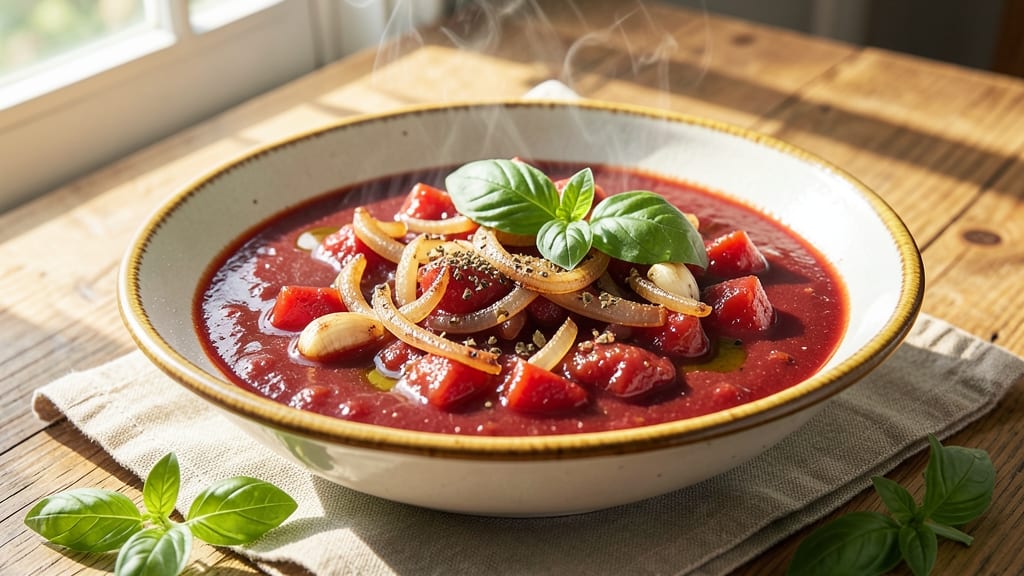
Grandma's tomato sauce recipe delivers the kind of deep, umami-rich flavor that transforms simple meals into something extraordinary. The slow-simmered technique builds complexity through caramelization and layered aromatics—something bottled sauces can never replicate.
I developed this version after years of testing, balancing sweetness, acidity, and salt to create a sauce that works as both a condiment and a base for pasta, pizza, or dips.
What makes this sauce special is its simplicity combined with professional results. You'll work with just a handful of ingredients—ripe tomatoes, garlic, onions, and herbs—but the technique is where the magic happens.
A long, gentle simmer allows the flavors to meld and develop that signature depth, while occasional stirring prevents scorching. The key is patience; this isn't something you can rush if you want that restaurant-quality richness.
By the time you're done, you'll have a velvety sauce with just the right balance of tangy, sweet, and savory notes. It clings perfectly to pasta, enhances pizza toppings, and elevates any dish it touches.
The texture is smooth yet substantial, with a natural sweetness that comes from caramelized tomatoes rather than added sugar. This is the kind of sauce that makes people ask for the recipe—and once you try it, you'll never go back to store-bought.
Use it immediately or store it in the refrigerator for up to a week, where the flavors continue to deepen. Freeze extras for months without losing quality. Whether you're making a quick weeknight dinner or prepping for a holiday feast, this sauce will elevate everything it touches. Let's get started!
Ingredients for grandma's tomato sauce
Eight essential ingredients create the soul of Grandma's slow-simmered tomato sauce.
| Ingredient | Amount | Notes |
|---|---|---|
| San Marzano Tomato Cans 🍅 | 28 oz | Whole, peeled tomatoes only |
| Yellow Onion 🧅 | 1 whole | Medium size, diced small |
| Garlic Cloves 🧄 | 4 cloves | Fresh, minced finely |
| Extra-Virgin Olive Oil 🫒 | ½ cup | High-quality, fruity variety |
| Fresh Basil Leaves 🌿 | ½ cup | Packed, stems removed |
| Dried Oregano 🍃 | 1 tsp | Italian or Mediterranean blend |
| Diamond Crystal Kosher Salt 🧂 | 1 ½ tsp | Adjust to taste |
| Freshly Ground Black Pepper 🌶️ | ½ tsp | Freshly cracked preferred |
| Granulated Sugar 🍚 | 1 tbsp | Balances acidity naturally |
| Red Wine Vinegar 🍷 | 1 tbsp | For acidity depth |
San Marzano tomatoes are non-negotiable here—their sweetness and low acidity build that signature depth. Trader Joe's and Whole Foods carry them year-round, but if you can't find them, any high-quality canned tomatoes will work. The onion and garlic form the aromatic base, so don't rush the sautéing—let them caramelize until they're golden. Fresh basil is ideal, but dried oregano at one-third the amount works in a pinch. I always grab extra basil because half gets torn over the sauce at the end for that restaurant-quality finish.
No San Marzano tomatoes? Crushed tomatoes or tomato paste will work, but you'll need to adjust the liquid—add water or broth to reach the same consistency. Substituting white wine for the vinegar adds complexity, though it'll change the color slightly. The sugar and vinegar balance the acidity, but if your tomatoes are particularly tart, you might need an extra half teaspoon of sugar. For a meatier sauce, add 1/4 cup of finely chopped pancetta or bacon to the onions and garlic—it cooks down and adds incredible depth (just drain the fat at the end).
This sauce only gets better with time—let it sit at room temperature for 10 minutes after simmering before tasting. Keeps in the fridge for up to 1 week in an airtight container, with flavors deepening daily. Freezes beautifully for up to 6 months—portion into ice cube trays before transferring to a bag for easy single-use servings. The texture will thicken slightly when reheated, so add a splash of water or broth if it's too stiff for your liking.
Why You'll Love This Recipe
- No-Fuss Pantry Staples: I swear by this because it uses exactly what I always have: a can of San Marzano tomatoes, a yellow onion, and garlic—no fancy shopping required. Honestly, the only thing I do splurge on is that extra-virgin olive oil, but even then, a little goes a long way.
- Garlic-Basil Magic: That slow-simmered garlic and fresh basil at the end? It’s the secret weapon. The San Marzano tomatoes give it that naturally sweet depth, while the basil brightens it up—like a hug in a jar. I’ll be real: I add an extra clove of garlic just to be safe.
- Weeknight to Potluck Hero: This sauce works everywhere. Slather it on toast for a lazy breakfast, toss it with pasta for dinner, or bring it to a picnic in a mason jar. Between us, it’s the one thing I always make extra of—because someone’s always running late and needs a last-minute side.
- Leftovers That Don’t Suck: Unlike store-bought sauce, this actually tastes better the next day. I freeze half in portions so I can dump it straight into soups or marinara without thawing—zero waste, zero fuss. And because it’s so cheap to make, I don’t even blink when I use the last of it on toast again.
Step-by-step instructions for Grandma's tomato sauce
Here's how to transform simple ingredients into a deeply flavorful sauce that tastes like home.
Sauté the Onion Until Translucent
Heat the 0.5 cup extra-virgin olive oil in a heavy-bottomed pot over medium-low heat. Add the 1 whole yellow onion, diced small, and cook for 8-10 minutes until completely soft and translucent. Here's the thing—you want the onions to caramelize just enough to sweeten the sauce without browning.
Stir occasionally to prevent sticking, but don't rush this step. The onions should be tender enough to crush between your fingers when done. If they start to take on color, reduce the heat slightly. This foundational step builds the sauce's depth, so take your time. You'll know it's ready when the onions release their natural sweetness and the oil shimmers around them.
Add Garlic and Herbs for Aromatic Depth
Once the onions are perfectly softened, increase the heat to medium and add the 4 cloves garlic, minced finely. Cook for 30-45 seconds until fragrant—you should smell that unmistakable garlic aroma before it has a chance to burn. I always say, "When garlic turns golden, it's too late."
Add the 1 tsp dried oregano and 0.5 tsp freshly ground black pepper, stirring to combine. Let these spices bloom for 1 minute, allowing their flavors to awaken. This is where the sauce starts developing its complex character. The oregano adds earthiness, while the pepper provides a subtle heat that will balance the sweetness later.
Build the Sauce with Tomatoes and Seasonings
Pour in the 28 oz San Marzano tomato cans, crushing the tomatoes with your hands as you add them to break up the larger pieces. Stir in the 1 tbsp granulated sugar and 1 tbsp red wine vinegar, then bring the mixture to a gentle simmer over medium heat. This is the moment that matters: the sugar will naturally balance the acidity of the tomatoes, while the vinegar adds a bright, tangy depth.
Add the 1.5 tsp diamond crystal kosher salt and 0.5 cup fresh basil leaves, packed and stems removed. Stir well to distribute the basil evenly throughout. The sauce will foam vigorously at first—this is normal as the acidity reacts with the salt. Let it simmer uncovered for 25-30 minutes, stirring occasionally, until the sauce thickens and coats the back of a spoon.
Simmer Until Rich and Concentrated
Reduce the heat to low and continue simmering for another 20-25 minutes, stirring every 5 minutes to prevent sticking. This slow reduction is what transforms a simple tomato sauce into something extraordinary. The sauce should become glossy and thicken noticeably, with a velvety texture that clings beautifully to pasta or meat.
Taste and adjust the seasoning if needed—you might need a pinch more salt or a splash of vinegar to perfect the balance. The sauce should be rich, slightly sweet, and deeply umami with bright acidity cutting through. Real talk: this is where patience pays off. If you rush it, you'll miss that restaurant-quality depth that makes homemade sauce worth every minute.
Finish with Fresh Basil and Rest
Remove the pot from heat and stir in the remaining 0.5 cup fresh basil leaves—this adds a fresh, bright finish that elevates the sauce. Let the sauce sit off the heat for 10 minutes to allow the flavors to meld completely. This resting period is crucial; it lets the sauce settle and develop its full complexity.
Give it one final taste and adjust the seasoning if necessary. The sauce should be vibrant, balanced, and ready to serve. You've just created a sauce that tastes like it's been simmering all day, even though it took less than an hour. This is the kind of sauce that makes people ask, "What's your secret?" Keep it warm in a slow cooker or reheat gently on the stove before serving.
Pro Tips For Making Grandma'S Tomato Sauce
- Sweat the Onion First: Don’t rush the onion—cook it low and slow until it’s translucent and just starting to caramelize (about 8-10 minutes). I learned this the hard way: skipping this step makes the sauce taste raw and sharp, like you’re eating a tomato instead of a sauce.
- Crush Garlic Lightly: Use the flat side of your knife to smash the garlic cloves into thin slices, not a paste. This keeps the flavor bright and prevents bitterness—something I used to mess up by mincing too finely.
- Simmer, Don’t Boil: Keep the sauce at a gentle simmer, not a rolling boil. High heat breaks down the tomatoes too fast, making the sauce thin and mealy. A steady simmer (30-45 minutes) builds depth and lets the flavors meld.
- Add Basil Late: Toss in the fresh basil leaves right at the end—no more than 2 minutes of cooking. Overheating turns them bitter, and that’s a flavor crime I’ve committed more times than I’d like to admit.
Wine and beer pairings for grandma's tomato sauce
Italian White Wine
A medium-bodied Italian white wine like Vermentino from Sardinia is my go-to pairing—its crisp acidity and citrus notes mirror the bright, tangy finish of the sauce. The mineral undertones complement the umami depth without overpowering it.
For something slightly richer, try a Fiano from Campania, which has a honeyed sweetness that pairs beautifully with the sauce's natural sweetness. Serve it slightly chilled (50-55°F) to enhance its refreshing qualities. 🍷
Light Red Options
If you prefer red wine, a Chianti Classico or Sangiovese offers enough acidity to cut through the sauce's richness. Look for a 12-14% ABV bottle to balance the dish's intensity.
The earthy notes of Sangiovese enhance the sauce's herbal depth, while the bright acidity keeps the palate clean. Avoid heavy, oaked reds—they'll clash with the sauce's delicate balance. 🍇
Craft Beer Pairings
A Belgian witbier like Hoegaarden adds a fun contrast with its coriander and orange peel notes, balancing the sauce's earthiness. For something lighter, a German Helles lager provides a crisp, clean finish that won't compete with the sauce's flavors.
If you're feeling bold, try a slightly hoppy IPA—the bitterness will complement the sauce's umami richness. 🍺
Non-Alcoholic Options
For a refreshing non-alcoholic pairing, try a sparkling blood orange soda like San Pellegrino Aranciata. The citrus and effervescence cleanse the palate beautifully. Alternatively, a cucumber-mint infused water with a squeeze of lemon adds a bright, herbaceous contrast to the sauce's depth.
These options work especially well for summer meals or when serving to non-drinkers. 💧
Seasonal Variations
In warmer months, a rosé wine with its crisp acidity and berry notes pairs wonderfully with the sauce. For fall and winter, a Pinot Noir offers enough body to stand up to the sauce's richness while keeping the meal light.
Adjust your pairing based on the season—lighter options for summer, bolder choices for colder months. 🍂
Serving Temperature
Whether you choose wine or beer, always serve it slightly cooler than room temperature (50-55°F for whites, 55-60°F for reds). Chilling reds too much dulls their flavors, while serving whites too warm can make them taste flat.
I like to pop my wine into the fridge for 10-15 minutes before serving to achieve the perfect balance. 🌡️
Nutrition facts
Frequently asked questions
Can I substitute canned tomatoes with fresh?
Fresh tomatoes work beautifully, but you'll need to adjust the liquid. Use about 4-5 pounds of ripe tomatoes, peeled and chopped. Simmer them uncovered for 45-60 minutes to concentrate the flavors, stirring occasionally. Add 1 cup water if the sauce gets too thick early. The texture will be slightly chunkier but equally delicious!
Why does my homemade sauce taste flat compared to store-bought?
Most likely, it needs more time to develop depth. The slow simmer is crucial—rushing it prevents proper flavor melding. Try adding 1/2 teaspoon of balsamic vinegar or a pinch of smoked paprika for complexity. Also, let the sauce rest for 30 minutes before tasting—flavors deepen as it cools.
How can I make this sauce spicier?
Add 1/2 teaspoon of red pepper flakes or 1 chopped fresh red chili when sautéing the onions. For heat control, remove seeds from the chili. If you prefer smoky spice, add 1/2 teaspoon of chipotle powder with the oregano. Always taste as you go—you can adjust, but you can't remove excess spice easily!
Can I make this sauce in a slow cooker?
Sauté the onions and garlic first, then transfer everything to the slow cooker. Cook on low for 6-8 hours or high for 3-4 hours, stirring occasionally. The texture will be slightly thinner, so reduce it on the stovetop at the end if needed. The slow cooker method actually enhances the sauce's depth through even, gentle cooking.
What's the best way to store leftovers?
Let the sauce cool completely, then transfer to airtight containers. It keeps in the fridge for up to 1 week, with flavors improving over time. For longer storage, freeze in 1-cup portions (use ice cube trays for single servings). Thaw overnight in the fridge—never microwave directly from frozen to preserve texture.