
Sauces & Condiments
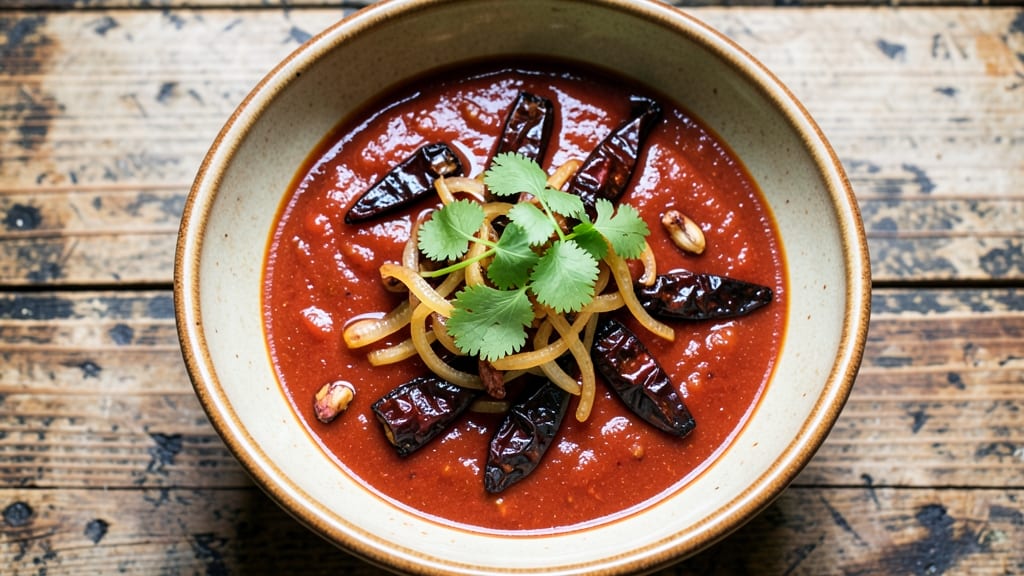
This chile sauce recipe transforms simple pantry staples into a smoky, complex sauce that elevates everything from tacos to soups. The secret lies in slow-cooked chiles and aromatics that develop deep, layered flavors over time—something store-bought versions can’t replicate.
I’ve perfected this blend to deliver that perfect balance of heat, sweetness, and earthiness that makes it irresistibly versatile.
The process is straightforward but requires patience: dried chiles rehydrated in broth, blended with tomatoes and spices until silky smooth. No special equipment is needed—just a pot, blender, and about 45 minutes of simmering time.
The result? A sauce so rich and aromatic it turns ordinary meals into something special, with just the right amount of bold heat that lingers without overpowering.
What sets this chile sauce apart is its adaptability—use it as a dip for tortilla chips, a topping for grilled meats, or a base for hearty stews. The smoky depth comes from charring the chiles (or using smoked paprika for convenience), while the acidity from tomatoes keeps the flavors bright.
Store it in the fridge for up to 10 days or freeze for months, ensuring you always have bold flavor at your fingertips.
For an extra layer of complexity, toast the spices before blending—this deepens the aroma and balances the heat. Whether you’re serving a crowd or meal prepping for the week, this sauce delivers restaurant-quality results with minimal effort. Let’s make it together.
Ingredients for chile sauce
Pantry staples with a smoky kick—this sauce transforms simple ingredients into bold, versatile heat.
| Ingredient | Amount | Notes |
|---|---|---|
| Dried Ancho Chiles 🌶️ | 4 whole | Stemmed and seeded |
| Dried Guajillo Chiles 🌶️ | 4 whole | Stemmed and seeded |
| Yellow Onion 🧅 | 1 whole | Chopped, medium size |
| Garlic Cloves 🧄 | 6 cloves | Peeled, rough chopped |
| Canned Tomato Sauce 🍅 | 1 cup | San Marzano preferred |
| Beef Broth 💧 | 2 cups | Low-sodium preferred |
| Smoked Paprika 🌶️ | 1 tbsp | High-quality for smokiness |
| Ground Cumin 🌿 | 1 tbsp | Toasted for depth |
| Extra-Virgin Olive Oil 🫒 | ¼ cup | For richness |
| Lime Juice 🍋 | 1 tbsp | Freshly squeezed |
The chiles are the heart of this sauce. Ancho and guajillo give you that perfect balance of earthy sweetness and mild heat—avoid anything moldy or shriveled. Most grocery stores carry these, but Mexican markets have fresher stock. Toast them lightly in a dry pan first to deepen the flavor (30 seconds per side). If you can't find dried chiles, smoked paprika plus a pinch of cayenne works in a pinch, though it won't have the same depth. The onion and garlic? Yellow onion for sweetness, garlic for that aromatic punch—don't skip the rough chopping for the garlic, it toasts faster and adds more flavor.
No beef broth? Vegetable broth or even water with a bouillon cube keeps things going, though the flavor will be milder. The tomato sauce can be swapped for canned crushed tomatoes if that's what you've got—just add an extra pinch of salt. For the olive oil, avocado oil works too, but stick with extra-virgin for that fruity richness. If you're worried about the heat level, remove the seeds from half the chiles before blending. The lime juice is key for brightness—bottled works, but fresh is always better. And if you're short on time, skip the toasting, but trust me, it's worth the extra minute.
This sauce keeps beautifully. Store it in a glass jar in the fridge for up to 10 days—the flavors actually get better as they meld. For longer storage, freeze in ice cube trays and transfer to a bag—perfect for adding to dishes later. If it thickens too much, just stir in a splash of water or broth. I make a double batch every time—one for the fridge, one for the freezer. The smoky aroma alone makes it worth having on hand for any meal.
Why You'll Love This Recipe
- No Chopping Nightmare: I’ll admit, I used to dread the onion prep—until I realized you can just pulse it in a food processor. Three minutes max, and the sauce still gets that deep, caramelized sweetness from the onions. Honestly, that’s the move.
- Smoky Depth Without Effort: Those dried ancho and guajillo chiles? They bring a slow-cooked smokiness that’s ridiculously hard to replicate with fresh peppers. Just toast them, soak them, blend—no babysitting a grill needed. The tomato sauce ties it all together with that familiar, comforting base.
- Weeknight Superhero: This sauce turns a sad bowl of rice into a full meal in 10 minutes. Drizzle it over eggs for breakfast, toss it with chicken for dinner, or slather it on grilled fish. I’ve even used it as a marinade—once you’ve made it, you’ll wonder why you didn’t do this sooner.
- Budget Magic Maker: A single batch stretches across three meals, and the ingredients cost pennies. Canned tomato sauce? Check. Dried chiles? Last me months. Onions and garlic? Always on hand. It’s the kind of recipe that makes you feel fancy without breaking the bank—or the grocery budget.
Step-by-step instructions for chile sauce recipe
Here's how to build a rich, smoky chile sauce that works for everything from tacos to grilled meats.
Toast and Rehydrate the Dried Chiles
Heat a dry skillet over medium heat. Add the 4 whole dried ancho chiles and 4 whole dried guajillo chiles. Toast them for 30 seconds per side until fragrant and slightly darkened—this deepens their natural smoky flavor. Immediately transfer to a bowl and cover with hot water for 15 minutes to soften.
While they soak, chop the 1 whole yellow onion into small dice and rough-chop the 6 cloves garlic. The onions should be uniformly sized so they cook evenly, and the garlic should be coarse enough to release flavor but not turn to paste. Keep these separate for now.
Build the Sauce Base
In a medium saucepan, heat the 0.25 cup extra-virgin olive oil over medium heat. Add the chopped onion and cook for 5 minutes until soft and translucent. Add the rough-chopped garlic and cook for another 30 seconds until fragrant—don't let it brown or it'll turn bitter.
Drain the rehydrated chiles, reserving the soaking liquid. Add the chiles to the pan along with the 1 tbsp smoked paprika and 1 tbsp ground cumin. Stir constantly for 2 minutes until the spices bloom and the mixture smells rich and earthy. This is where all the deep flavors develop.
Simmer and Thicken
Pour in the 1 cup canned tomato sauce and 2 cups beef broth. Stir well to combine, then bring to a gentle simmer. Let it cook uncovered for 15 minutes, stirring occasionally, until the sauce thickens slightly and the flavors meld together. You'll see the mixture reduce and darken—this is perfect.
Taste and adjust seasoning if needed. If it's too thick, add 2-3 tablespoons of water to reach your desired consistency. The sauce should coat the back of a spoon but still be pourable. Here's the thing—this sauce gets better as it sits, so don't rush it.
Finish with Lime and Rest
Remove the pan from heat and stir in the 1 tbsp freshly squeezed lime juice. This brightens the deep, smoky flavors and balances the richness. Let the sauce sit for 10 minutes before using—this resting period allows all the components to fully integrate and develop maximum flavor.
The finished sauce should have a thick, velvety texture with visible chile flecks and a rich, smoky aroma. It keeps well in the refrigerator for up to 5 days, making it perfect for batch cooking. Use it as a marinade, dipping sauce, or topping for grilled proteins and roasted vegetables.
Pro Tips For Making Chile Sauce
- TOAST CHILES UNTIL DARK: I learned this the hard way—skipping the toasting step leaves your sauce tasting bitter and raw. Spread the ancho and guajillo chiles on a dry skillet over medium-high heat for 30 seconds per side until they darken and smell smoky. Watch them like a hawk; they burn faster than you think.
- STRAIN OUT SKINS: After soaking and blending your chiles, strain the mixture through a fine-mesh sieve to remove skins and seeds. I used to skip this, and my sauce always had a weird texture. Takes 30 seconds but makes a real difference in smoothness.
- SWEAT ONIONS LOW AND SLOW: Don’t rush the onions—cook them over low heat for 8-10 minutes until they’re translucent and just starting to caramelize. High heat turns them bitter, and that’s the last thing you want in your sauce.
- ACIDIFY THE TOMATO SAUCE: Add a splash of apple cider vinegar (about 1 tablespoon) to your canned tomato sauce before blending. It brightens the flavor and cuts through the richness of the chiles—something I only figured out after tasting a dull sauce twice.
Storing and reheating this dish
Fridge Storage Tips
Store your chile sauce in a clean, airtight glass jar—I prefer mason jars because they’re reusable and preserve flavor better than plastic. Keep it refrigerated at 40°F or below for up to 10 days, though I’ve found the flavors actually deepen after 3-4 days as the spices meld.
Always let the sauce cool completely before sealing to prevent condensation, which can dilute the intensity. 💧
Freezer Preservation
For long-term storage, freeze the sauce in ice cube trays—this makes portion control easy for later use. Once frozen, transfer the cubes to a ziplock freezer bag, squeezing out excess air to prevent freezer burn.
Label with the date, as it stays fresh for up to 3 months. Thaw overnight in the fridge before using, or add frozen cubes directly to hot dishes like soups or stews. 🧊
Reheating Methods
To reheat, transfer the sauce to a small saucepan and warm over low heat for 5-7 minutes, stirring occasionally. Avoid high heat, which can make the sauce too thin or bitter.
If it thickens too much, stir in 1-2 tablespoons of water or broth to restore consistency. For quick fixes, microwave on 50% power for 30-second intervals, stirring between each. 🔥
Adjusting Consistency
If your sauce separates or thickens after storage, simply whisk in 1 tablespoon of warm water or broth at a time until smooth. The texture should be velvety but pourable—like a thick syrup.
For extra richness, add a dash of olive oil before serving. I often thin mine slightly before using as a dip to make it easier to drizzle. ✨
Reviving Flavor
After refrigeration, the sauce may lose some brightness. Revive it by adding ½ teaspoon of lime juice or a pinch of smoked paprika to restore depth. If the heat fades, stir in ¼ teaspoon of cayenne pepper for a quick kick.
The beauty of this sauce is how adaptable it is—even after storage, it’s always ready to elevate your meals. 🌶️
Nutrition facts
Frequently asked questions
Can I use fresh chiles instead of dried?
Yes, but you'll need more—about 1 pound of fresh jalapeños or serranos (seeds removed for milder heat) to match the flavor intensity of 4 dried chiles. Roast them first to develop smoky depth, then blend with the other ingredients. The texture will be slightly thinner, so reduce the broth by ½ cup to compensate.
How do I adjust the heat level?
For milder heat, remove all seeds and membranes from the chiles before toasting. For extra spice, add ½ teaspoon cayenne pepper or 1-2 chipotle peppers in adobo sauce to the simmering mixture. Always taste before serving and adjust gradually—heat builds as the sauce rests.
What's the best way to use this sauce?
This versatile sauce works as a marinade for grilled meats, a dip for tortilla chips, or a topping for tacos, enchiladas, and roasted vegetables. Thin with broth for soups or leave it thick for drizzling. The smoky depth makes it perfect for breakfast burritos or bowl toppings too—just drizzle and enjoy!
Why did my sauce turn out too thin?
This usually happens if you didn't simmer long enough or used too much broth. Next time, reduce the broth by ¼ cup or simmer uncovered for 5 extra minutes to thicken naturally. For immediate fixes, whisk in 1 tablespoon cornstarch mixed with 2 tablespoons water and cook for 2 minutes until thickened.
Can I make this sauce without a blender?
After simmering, let the sauce cool slightly, then carefully mash the chiles and onions with a potato masher or fork. Strain through a fine-mesh sieve if you want a completely smooth texture. The flavor will be slightly less refined, but still delicious—just expect some texture variations.