
Sauces & Condiments
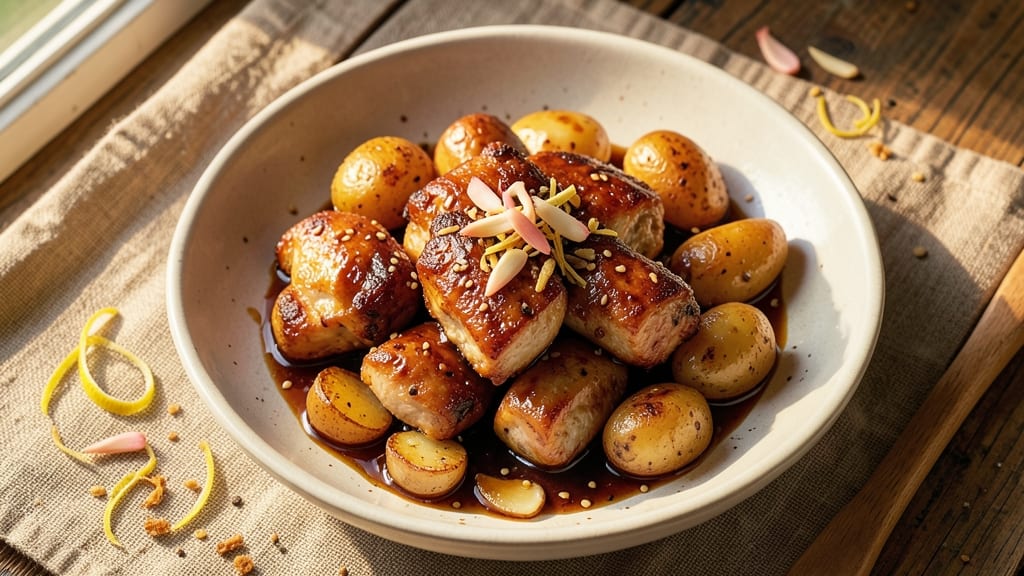
This chicken potato soy sauce recipe delivers restaurant-quality bites with minimal effort—crispy edges, tender meat, and a glossy glaze that ties everything together. The secret lies in balancing high-heat searing with slow braising, creating texture that's impossible to resist.
I developed this after years of testing one-pan methods, and it never fails to impress. What makes this dish special is its versatility—adapt it to Japanese nikujaga style with sweet miso or Korean dakgalbi heat, or keep it simple with classic soy, ginger, and garlic.
The potatoes absorb the savory sauce while staying fluffy inside, and the chicken develops a caramelized crust that holds up to every bite.
By the time you're done, you'll have a dish that's foolproof yet feels like a chef's creation: golden-brown chicken, perfectly seasoned potatoes, and a sauce so rich it coats every forkful. The best part?
It all comes together in one pan, with cleanup that's almost as satisfying as the meal itself. Serve with steamed rice to soak up every last drop of sauce, or pair with pickled vegetables for brightness. The technique works for weeknight dinners or holiday gatherings—just scale the ingredients accordingly.
Let's get cooking!
Ingredients for chicken potato soy sauce
These carefully selected ingredients transform simple chicken and potatoes into restaurant-worthy bites.
| Ingredient | Amount | Notes |
|---|---|---|
| Boneless, Skinless Chicken Thighs 🍗 | 1 ½ lb | Cut into 1-inch pieces, trimmed |
| Baby Potatoes 🥔 | 1 ½ lb | Halved, unpeeled for texture |
| Japanese Soy Sauce 🍶 | ½ cup | Kikkoman preferred for depth |
| Sesame Oil 🫒 | 1 tbsp | Toasted, not flavored |
| Fresh Ginger 🌿 | 2 tbsp | Finely grated, aromatic |
| Garlic Cloves 🧄 | 6 cloves | Minced, not powdered |
| Honey 🍯 | 2 tbsp | Wildflower preferred |
| Rice Vinegar 🍶 | 2 tbsp | Seasoned, not unseasoned |
| Neutral Vegetable Oil 🫒 | 2 tbsp | High smoke point |
| Diamond Crystal Kosher Salt 🧂 | 1 ½ tsp | Adjusts to taste |
| Ground Black Pepper 🌶️ | ½ tsp | Freshly cracked |
| Toasted Sesame Seeds 🌾 | 1 tbsp | For garnish |
| Green Onion 🧅 | 2 whole | Sliced, white and green parts |
| Dried Shiitake Mushrooms 🍄 | 2 pieces | Rehydrated, chopped |
The chicken thighs are non-negotiable here—their fat content renders beautifully for crispy edges while staying tender inside. Look for Kikkoman soy sauce at any major grocery store, or San-J brand for an even deeper umami profile. Fresh ginger and garlic should be vibrant and aromatic—Costco or Whole Foods carry excellent quality in bulk. For the potatoes, baby Yukon Golds are ideal, but any small red or fingerling variety works. The dried shiitakes add earthy depth; rehydrate them in hot water for 20 minutes before using—discard the soaking liquid to avoid bitterness. Toast your sesame seeds in a dry pan for 30 seconds until fragrant for maximum flavor.
No Japanese soy sauce? Substitute with a mix of 3 tbsp regular soy sauce plus 1 tsp mirin—it won't be identical, but it works in a pinch. Fresh ginger too pungent? Use 1 tbsp ginger paste at half the amount, but fresh is always superior. The honey can be swapped for maple syrup, though it will affect the sauce's balance slightly. For extra umami, add 1 tbsp fish sauce if you're comfortable with it, or 1 tsp mushroom powder for a vegetarian alternative. The rice vinegar is crucial for brightness—substitute with apple cider vinegar if needed, but adjust to taste as it's slightly milder. If you can't find toasted sesame oil, regular sesame oil at half the amount works, though it lacks the nutty depth.
This dish reheats beautifully—simply cover with foil and warm in a 350°F oven for 10-15 minutes. The sauce thickens upon reheating, so a splash of water or broth may be needed to loosen it. Store leftovers in an airtight container for up to 4 days in the fridge, or freeze for 3 months by portioning into single-serving containers. For meal prep, cook the chicken and potatoes separately, then combine with sauce when ready to serve. The sauce can be made ahead and stored separately for 1 week—simply reheat gently before combining with the chicken and potatoes.
Why You'll Love This Recipe
- One-Pan Magic: I swear by this for nights when I’d rather not wash a million dishes—just toss the chicken, potatoes, and ginger into one skillet, let the soy sauce work its savory magic, and finish with a drizzle of sesame oil. That’s it. No fuss, no stress, just golden-brown edges and tender bites.
- Umami Bomb: The Japanese soy sauce here isn’t just seasoning—it’s the star. It caramelizes into a glossy, slightly sticky glaze that clings to the chicken and potatoes, while the ginger adds a bright, zesty kick. Honestly, the first bite makes me want to eat it straight from the pan.
- Lunchbox Hero: Between us, this is my go-to for meal prep. The flavors only get better the next day, and it reheats like a dream—perfect for packing in containers or serving at potlucks. (Yes, even on a Tuesday night, when I’m already exhausted.)
- Budget Win: Chicken thighs and baby potatoes are cheap, and a little sesame oil goes a long way. I make this for four people for under $10, and it’s the kind of dish that disappears faster than my willpower when I’m hungry. Not the prettiest, but the taste makes up for it.
Step-by-step instructions for crispy tender chicken potato bites
Master this one-pan technique for perfectly balanced textures and bold umami flavors.
Prepare the Chicken and Potatoes for Even Cooking
Pat the 1.5 lb boneless, skinless chicken thighs completely dry with paper towels—this ensures maximum crispiness. Cut them into 1-inch pieces and season immediately with 1.5 teaspoons Diamond Crystal kosher salt and 0.5 teaspoon ground black pepper. Toss gently to coat evenly.
Halve the 1.5 lb baby potatoes lengthwise, leaving the skins intact for texture. Soak them in cold water for 10 minutes to remove excess starch, then drain and pat dry. This step prevents them from turning gummy during cooking. Arrange both chicken and potatoes in a single layer on a rimmed baking sheet—don't overcrowd, or they won't crisp properly.
Build the Flavor Base with Aromatics and Sauce
In a small bowl, whisk together the 0.5 cup Japanese soy sauce, 2 tablespoons honey, 2 tablespoons rice vinegar, 2 tablespoons finely grated fresh ginger, and 6 minced garlic cloves. Taste and adjust seasoning if needed—this sauce is the heart of your dish. Set aside while you prepare the mushrooms.
Rehydrate the 2 pieces dried shiitake mushrooms by soaking them in warm water for 20 minutes, then drain and chop finely. Heat 2 tablespoons neutral vegetable oil in a large skillet over medium-high heat until shimmering. Add the mushrooms and cook for 3-4 minutes until golden brown and fragrant. Remove from heat and set aside.
Sear the Chicken for Maximum Crispiness
Working in batches if needed, add the seasoned chicken pieces to the same skillet (no need to wipe out the pan—those browned bits add flavor). Sear for 3-4 minutes per side until deeply golden brown and cooked through to 165°F internally. Transfer the chicken to the prepared baking sheet, arranging it in an even layer alongside the potatoes.
Here's the thing—don't overcrowd the pan. You want each piece to develop that perfect crust. If your skillet is too small, work in two batches. The residual heat from the skillet will help crisp the potatoes later in the oven.
Roast Until Crispy and Tender
Preheat your oven to 425°F. Drizzle the chicken and potatoes evenly with the 1 tablespoon sesame oil, then pour the prepared sauce over everything, making sure it coats all surfaces. Scatter the cooked shiitake mushrooms on top for extra depth of flavor.
Roast for 25-30 minutes, stirring halfway through, until the potatoes are golden brown and tender when pierced with a fork, and the chicken reaches 175°F internally. The edges should be crispy while the centers remain juicy. If the sauce starts to bubble vigorously, reduce heat to 400°F to prevent burning.
Finish with Garnish and Serve Immediately
Remove from the oven and let rest for 5 minutes. This resting period allows the juices to redistribute, ensuring each bite is moist and flavorful. Sprinkle generously with 1 tablespoon toasted sesame seeds and 2 sliced green onions (white and green parts) for fresh contrast and visual appeal.
Serve immediately while the chicken remains crispy and the potatoes are piping hot. The sauce should cling to every piece, delivering a perfect balance of sweet, salty, and umami flavors with each bite. Pair with steamed jasmine rice to soak up every last drop of that glorious soy-honey glaze.
Pro Tips For Making Chicken Potato Soy Sauce
- Sear Chicken First: Skip the slow start—pat those chicken thighs very dry, then hit them with a screaming-hot pan for 3-4 minutes per side before adding anything else. I learned this the hard way after making mushy, pale chicken that just absorbed sauce instead of building flavor. The crust locks in juices and gives that deep, caramelized base the soy sauce clings to.
- Parboil Potatoes 10 Minutes: Baby potatoes need a head start—boil them whole for 10 minutes before cutting into quarters. This guarantees they’ll soften evenly without turning to mush later. (Yes, even if they’re small.) I used to chop them raw and they’d either stay rock-hard or fall apart—this fixes both problems.
- Use Ginger Paste for Consistency: Fresh ginger is great, but grating it yourself can be a pain. Keep a small jar of ginger paste in your fridge—it’s pre-measured and blends seamlessly into the sauce. If you’re using fresh, zest and finely grate the peel (yes, the peel) for extra depth. I was skeptical until I tried it—now I never go back.
- Deglaze with Soy Sauce Early: As soon as you pull the chicken out, pour all the Japanese soy sauce into the pan while it’s still hot. Let it bubble for 30 seconds before adding potatoes or ginger—this pulls every last bit of flavor from the browned bits. I used to add sauce later and missed half the taste. (Your future self will notice the difference.)
Perfect pairings for chicken potato soy sauce
Rice Pairings
Steamed jasmine rice is my go-to pairing—its delicate floral aroma complements the dish's bold soy sauce without overpowering it. Use a 1:1.5 ratio of rice to chicken/potato mixture, so each bite has ample sauce to soak up.
For extra fluffiness, rinse the rice 3-4 times before cooking to remove excess starch. 💛
Pickled Vegetables
Quick-pickled cucumbers or radishes add refreshing acidity that cuts through the richness. Thinly slice 1 cup cucumbers and ½ cup radishes, then toss with ¼ cup rice vinegar, 1 tbsp sugar, and ½ tsp salt.
Let sit for 20 minutes before serving alongside. The crunch contrasts beautifully with the tender chicken and potatoes.
Miso Soup
A warm bowl of miso soup transforms this dish into a complete meal. Use 1 cup dashi stock, 2 tbsp red miso paste, and ¼ cup silken tofu>.
Simmer for 5 minutes and top with green onions and seaweed flakes. The umami depth of the miso enhances the soy sauce flavors while adding comforting warmth. ✨
Sesame Soba Noodles
For a lighter option, serve the chicken and potatoes over chilled soba noodles tossed with 1 tbsp toasted sesame oil, 1 tbsp soy sauce, and 1 tsp grated ginger.
The noodles' slight chewiness balances the crispy textures. Garnish with extra sesame seeds and thinly sliced scallions for brightness.
Kimchi Side
Fermented kimchi brings tangy spice that elevates the dish to new heights. Store-bought or homemade works—just ½ cup per serving. The heat and funk complement the sweet-savory sauce perfectly. Serve alongside rice for a Korean-inspired twist that feels authentic yet approachable.
Green Tea Garnish
Finish your plate with a sprinkle of matcha powder or a few drops of green tea-infused honey drizzled over the top. The earthy notes harmonize with the soy sauce, adding an unexpected depth. For presentation, use a small spoon to create delicate patterns on the sauce before serving.
Nutrition facts
Frequently asked questions
Can I use chicken breast instead of thighs?
Chicken thighs work best here because their fat content renders beautifully for crispy edges while staying tender. If you must use breast, cut it into ½-inch thick pieces and pound them lightly to ensure even cooking. However, breast tends to dry out faster, so reduce oven time by 5 minutes and check for doneness at 165°F.
How do I make the sauce thicker for glazing?
Simmer the sauce uncovered for 5-7 minutes on the stovetop to reduce the liquid. For extra thickness, add 1 teaspoon cornstarch mixed with 1 tablespoon water, then stir in and cook until it reaches a glossy consistency. This works especially well if you prefer a sticky glaze rather than a light coating.
Can I prep this dish ahead of time?
Cook the chicken and potatoes separately, then store them in an airtight container for up to 4 days. Reheat the sauce separately and combine everything when ready to serve. For meal prep, freeze the sauce in ice cube trays—just thaw and reheat before using. The potatoes reheat best in the oven at 375°F for 15 minutes.
What if my potatoes turn out mushy?
Mushy potatoes usually happen from overcrowding or insufficient drying. Next time, pat them extra dry after soaking, and arrange them in a single layer. Also, reduce oven temperature to 400°F if you notice them browning too quickly. For extra insurance, parboil them for 3 minutes before roasting to pre-cook slightly.
How can I make this dish spicier?
Add ½ teaspoon red pepper flakes or 1 teaspoon gochujang (Korean chili paste) to the sauce for heat. For smoky depth, include ½ teaspoon smoked paprika in the chicken seasoning. For a Korean-style twist, serve with extra kimchi on the side—it adds natural spice and tanginess that pairs perfectly with the soy glaze.