
Sauces & Condiments
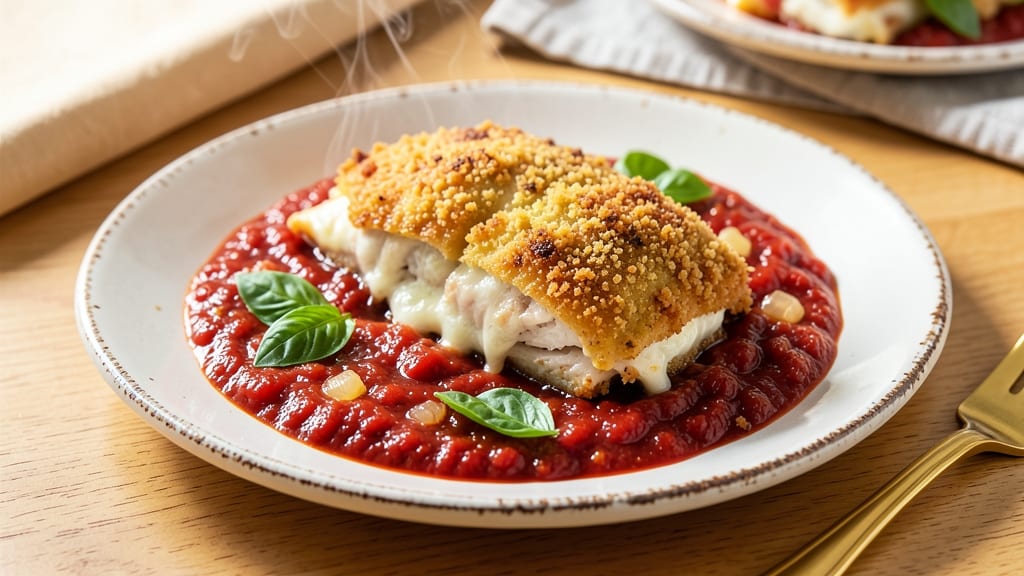
This chicken parm marinara sauce recipe delivers the deep, umami-rich foundation that makes crispy breaded chicken unforgettable. The secret lies in slow-cooked tomatoes, caramelized garlic, and a splash of red wine that builds complexity without overpowering.
I developed this sauce after years of perfecting the balance between sweetness and acidity—critical for cutting through fried breading while complementing tender chicken.
The sauce starts with a simple soffritto of onion, garlic, and celery, cooked until the vegetables melt into the pot. Canned San Marzano tomatoes provide natural sweetness, while a splash of dry red wine adds depth that simmers into the sauce.
Fresh basil and a pinch of red pepper flakes finish with brightness and just enough heat. The result? A sauce that clings perfectly to crispy chicken parm while standing up to its rich, golden crust.
What makes this marinara special is its versatility—it works just as well on crispy chicken parm as it does tossed with pasta or drizzled over garlic bread. The sauce thickens beautifully over time, developing even more flavor as it sits.
Store it in the fridge for up to 5 days or freeze for 3 months, making it perfect for meal prep or holiday gatherings.
For the best results, let the sauce reduce until it coats the back of a spoon—this ensures it clings to every crispy bite.
The sauce's rich tomato base pairs beautifully with the buttery, golden breading of chicken parm, creating a balance that turns a simple weeknight dinner into a restaurant-worthy meal.
Ingredients for chicken parm marinara sauce
This sauce delivers restaurant-quality depth with just ten simple, quality ingredients.
| Ingredient | Amount | Notes |
|---|---|---|
| Extra-Virgin Olive Oil 🫒 | ½ cup | High-quality, fruity variety preferred |
| Yellow Onion 🧅 | 1 whole | Medium size, finely diced |
| Celery Stalks 🌿 | 2 whole | Trimmed, finely chopped |
| Garlic Cloves 🧄 | 4 cloves | Peeled, minced finely |
| Canned San Marzano Tomatoes 🍅 | 28 oz | Crushed or whole, no salt added |
| Dry Red Wine 🍷 | ½ cup | Bold variety like Cabernet Sauvignon |
| Fresh Basil Leaves 🌿 | ¼ cup | Packed, finely chopped |
| Red Pepper Flakes 🌶️ | ½ tsp | Adjust to taste for heat |
| Salt 🧂 | 1 ½ tsp | Diamond Crystal kosher salt |
| Black Pepper 🌶️ | ½ tsp | Freshly ground preferred |
The tomatoes make or break this sauce. San Marzano is the gold standard—sweeter, meatier, and less acidic than regular canned tomatoes. Whole Foods or Trader Joe's carry them, and they're worth the splurge for this recipe. If you can't find them, any high-quality crushed tomatoes will work, but avoid brands with added salt or preservatives. The red wine adds depth that's hard to replicate—any bold, dry red works here, but Cabernet Sauvignon or Merlot are my go-tos. For the soffritto base, freshly chopped onion, celery, and garlic develop more flavor than pre-minced versions. I always chop these myself because the extra minute of prep makes a noticeable difference in the final sauce.
No red wine? Beef broth with a splash of balsamic vinegar gets you close, though the flavor will be slightly different. Fresh basil is ideal, but dried oregano at one-third the amount works in a pinch. For the olive oil, extra-virgin is non-negotiable—it adds fruity notes that cheap oil can't match. The pepper flakes can be adjusted to taste, but start with the half teaspoon and add more if you like heat. If you're making this ahead, the sauce actually improves as it sits—let it reduce on the stove until it coats the back of a spoon for that perfect consistency. This sauce works beautifully with crispy chicken parm, but it's also fantastic over pasta or as a dip for garlic bread.
This sauce keeps beautifully. Store it in an airtight container in the fridge for up to 5 days, or freeze for 3 months for later use. I always make a double batch because it disappears fast. The sauce thickens as it cools, so if it's too thick after refrigerating, just add a splash of water or broth when reheating. For meal prep, portion it into containers with a layer of olive oil on top to preserve freshness. The basil wilts quickly, so if you're prepping ahead, add it fresh just before serving or use a small amount of dried basil instead.
Why You'll Love This Recipe
- No-Chop Night: I swear by this sauce—just a quick dice of onion and celery (or even pre-chopped mirepoix if you’re really tired), then toss it all in a pot with San Marzano tomatoes. The garlic sizzles in olive oil for 30 seconds, and boom: you’ve got a simmering pot of magic while the chicken breads.
- Umami Bomb: That first spoonful of sauce—where the sweetness of San Marzano tomatoes meets the deep, toasty garlic and onion—is chef’s kiss. I’ll be real: I’ve tried fancy store-bought marinara, but this? It’s the kind of flavor that makes you pause mid-bite, like, “Wait, I made this?”
- Leftovers That Don’t Suck: This sauce actually improves the next day. (Yes, really.) The flavors meld into something richer, and it’s perfect for tossing with pasta, drizzling over grilled veggies, or even slathering on a sandwich. My freezer’s always stocked with jars of it—because who has time to make sauce from scratch twice in a week?
- Pantry Staple Power: Honestly, you’re probably already using these ingredients. Olive oil, onion, celery, garlic—basic stuff that costs next to nothing. The San Marzano tomatoes? Worth the splurge, but even a budget canned tomato works in a pinch. It’s the kind of recipe that turns “I don’t feel like cooking” into “I’ll make this instead.”
Step-by-step instructions for chicken parm marinara sauce
This sauce delivers deep umami flavor and perfect texture—essential for that iconic crispy chicken parm experience.
Sauté the Aromatic Base
Heat the 0.5 cup extra-virgin olive oil in a large saucepan over medium heat. Add the finely diced yellow onion and finely chopped celery stalks, cooking for 5-6 minutes until softened and translucent. The vegetables should release their moisture but not brown.
Add the minced garlic cloves and cook for an additional 30 seconds until fragrant—this prevents the garlic from burning, which would create bitterness. Stir constantly to distribute the aromatics evenly. This foundational step builds the sauce's depth of flavor through proper caramelization of the vegetables.
Deglaze with Wine and Tomatoes
Pour in the 0.5 cup dry red wine and scrape up any browned bits from the bottom of the pan using a wooden spoon. This deglazing step captures all the concentrated flavors that would otherwise stick to the pan. Let the wine simmer for 2-3 minutes until it reduces by about half.
Add the 28 oz canned San Marzano tomatoes, crushing them by hand if they're whole. Stir in the 1.5 tsp salt and 0.5 tsp black pepper, then bring the mixture to a gentle boil. Reduce heat to low and let it simmer uncovered for 20 minutes, stirring occasionally. The sauce should thicken slightly and develop a rich, velvety texture.
Build Depth with Spices and Herbs
Stir in the 0.5 tsp red pepper flakes and simmer for another 5 minutes. This step adds subtle heat and complexity to the sauce. Taste and adjust seasoning if needed—San Marzano tomatoes are naturally sweet, so you may need to add more salt or pepper to balance the flavors.
Remove the sauce from heat and stir in the 0.25 cup fresh basil leaves, allowing them to wilt and infuse the sauce with their bright, aromatic flavor. Cover the saucepan and let it rest for 10 minutes to allow the flavors to meld. This resting period ensures the sauce reaches its full potential before serving.
Finish and Serve
The sauce is now ready to pair with crispy chicken parm. If you need to reheat it later, do so over low heat to prevent it from breaking or separating. The sauce should coat the back of a spoon with a smooth, glossy consistency, balancing acidity, sweetness, and umami.
For the best results, serve the sauce immediately over your crispy chicken parm. The sauce's rich texture and deep flavor complement the golden, breaded chicken perfectly, creating a dish that's both comforting and restaurant-quality.
Pro Tips For Making Chicken Parm Marinara Sauce
- SWIM THE TOMATOES: Start your sauce with a quick simmer of crushed San Marzano tomatoes—no chopping needed—over medium-high heat for 5-7 minutes before adding anything else. This breaks down the skins and mellows the acidity, so the sauce doesn’t taste like canned tomatoes later. (I used to skip this and always wondered why my sauce never tasted as rich as my nonna’s.)
- SWEAT THE AROMATICS LOW: Cook your onions, celery, and garlic together in olive oil over low heat until the celery is completely tender—about 10 minutes. High heat burns garlic before it releases its flavor, and mushy celery means your sauce will taste raw. I learned this the hard way after a batch that smelled like charred regret.
- SALT THE TOMATOES FIRST: Add a pinch of salt (about ½ teaspoon) to the crushed tomatoes before simmering, then let it sit for 5 minutes before stirring in the other ingredients. This draws out excess water and concentrates the flavor, so your sauce doesn’t turn watery later. (Yes, even if you’re impatient like me.)
- SKIP THE STIRRING FRENZY: Let the sauce bubble gently without stirring for the first 15 minutes—just give it an occasional nudge with a wooden spoon. Over-stirring introduces oxygen, which can make the sauce oxidize and turn cloudy. My grandmother swore by this, and she was right: the sauce stays bright and velvety.
Troubleshooting this dish
Sauce Too Thin?
If your marinara turns out too thin, don't panic—it's an easy fix. Simmer uncovered for an extra 10-15 minutes to reduce the liquid. For faster results, mash 1-2 tablespoons of tomato paste into the sauce and cook for another 5 minutes.
I've found that San Marzano tomatoes naturally thicken as they simmer, but adding a cornstarch slurry (mix 1 tsp cornstarch with 2 tbsp water) works in a pinch. Just stir it in at the end and heat for 1 minute to avoid a starchy texture. 🔥
Sauce Too Thick?
Thick sauce happens when you over-reduce or use too many tomatoes. Thin it with warm water or broth—start with 2 tablespoons at a time while stirring constantly. For a richer option, add a splash of red wine or chicken stock to maintain flavor depth.
I once made a double batch and ended up with a sauce so thick it was almost paste-like. Adding ¼ cup warm water brought it back to perfect consistency for my chicken parm. The key is to thin gradually and taste as you go.
Flat or Bland Flavor?
Bland sauce usually means under-seasoning or skipping key flavor layers. First, check your salt—San Marzano tomatoes are naturally sweet but need proper seasoning. Add ½ teaspoon more salt and let it simmer for 5 minutes to meld.
For depth, stir in 1 teaspoon fish sauce or 1 tablespoon balsamic vinegar to amplify umami. I also keep a small bowl of freshly grated Parmesan cheese nearby to stir in at the end—it adds a salty, nutty dimension that transforms the sauce. Fresh basil is non-negotiable for brightness.
Sauce Separating?
Separation occurs when the sauce cools too quickly or is reheated too aggressively. To fix it, whisk vigorously over low heat while adding 1-2 tablespoons of olive oil to help emulsify. For prevention, always reheat on low-medium heat and stir constantly.
I've seen this happen when people microwave marinara—never do that! The sauce's natural oils and acids need gentle heat to stay cohesive. If it's still separating, blend it briefly with an immersion blender for a silky texture. 💫
Burnt or Bitter Taste?
Burnt flavor comes from letting the garlic or onions cook too long. Next time, keep heat at medium-low and stir frequently. For immediate fixes, stir in 1 teaspoon of honey or sugar to balance bitterness, then add a splash of lemon juice to brighten.
I once had this happen when I got distracted—adding ½ teaspoon of smoked paprika actually covered the bitterness while adding depth. The key is to taste as you go and adjust with complementary flavors rather than forcing it to "work."
Preventing Common Mistakes
Most marinara mishaps start with the wrong ingredients or technique. Always use high-quality olive oil and San Marzano tomatoes—they're worth the investment. Never rush the simmering process; 30-40 minutes of gentle cooking builds layers of flavor. I recommend using a heavy-bottomed pot to prevent scorching.
And remember: taste as you go! Adjust seasoning gradually rather than trying to fix it all at the end. This sauce is forgiving, but these small steps make all the difference. 💡
Nutrition facts
Frequently asked questions
Can I substitute wine with something else in this marinara? For a non-alcoholic version, use ½ cup beef or chicken broth plus 1 tablespoon balsamic vinegar to mimic the wine's depth. Or try ½ cup tomato paste plus 1 teaspoon sugar for a concentrated tomato flavor. The wine adds complexity, but these alternatives work beautifully in a pinch. Just
How do I make this sauce ahead of time for meal prep?
Make the sauce up to 3 days in advance and store it in an airtight container in the fridge. The flavors actually improve as it sits! For longer storage, freeze it in 1-cup portions with a layer of olive oil on top to preserve freshness. When reheating, warm over low heat and stir in fresh basil at the end. I always double the batch—this sauce disappears fast! For best results, let it come to room temperature before reheating to prevent separation.
What's the secret to getting that perfect sauce consistency?
The magic happens during the 30-40 minute simmer. Cook it uncovered until it reduces enough to coat the back of a spoon—this creates that velvety texture perfect for chicken parm. If it's too thick, add warm water or broth gradually. For extra richness, stir in 1 tablespoon butter at the end. The sauce should be thick enough to cling to crispy breading but still flow smoothly. Think of it like a perfect sauce-to-chicken ratio: 2:1 sauce to chicken works beautifully.
Can I use this sauce for anything other than chicken parm?
This versatile sauce works perfectly on pasta, as a dip for garlic bread, or even as a topping for baked potatoes. The rich tomato base pairs well with grilled meats, seafood, or even as a pizza sauce. For pasta, toss with fresh mozzarella and basil for a quick meal. The sauce's balanced flavors make it adaptable—just adjust seasoning to match your dish. I've used it as a marinade for chicken too!
Why does my homemade marinara sometimes separate?
Separation usually happens when the sauce cools too quickly or is reheated too aggressively. To fix it, whisk vigorously over low heat while adding 1 tablespoon olive oil. For prevention, always reheat gently and stir constantly. Never microwave—this disrupts the sauce's natural emulsifiers. The key is patience: let the sauce cool gradually after cooking. If it separates while cold, blend briefly with an immersion blender for a silky texture. This sauce is forgiving, but gentle heat is crucial!