
Sauces & Condiments
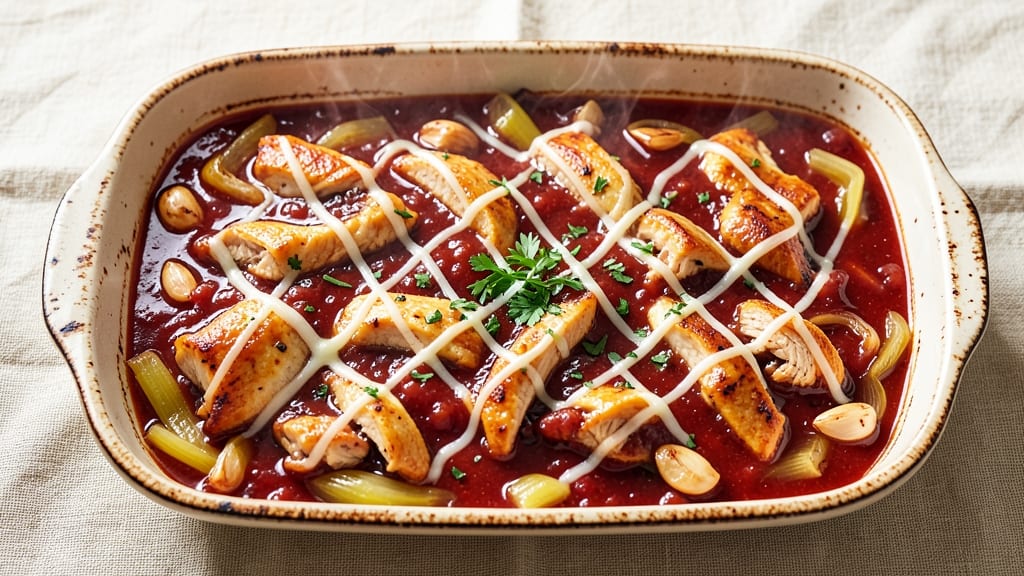
This chicken casserole sauce recipe delivers the velvety, deeply flavorful base that transforms ordinary chicken casseroles into comfort food masterpieces. The secret lies in simmering a rich tomato foundation with celery, onions, and garlic—creating a subtle depth that elevates every bite.
What sets this sauce apart is its foolproof thickening technique, ensuring a luscious consistency without lumps or separation.
The sauce begins with a classic soffritto of celery, onions, and garlic, caramelized until sweet and aromatic. A blend of tomato paste, broth, and cream builds the foundation, while herbs like thyme and bay leaf infuse layers of savory complexity.
The sauce thickens naturally as it simmers, developing a rich, velvety texture that clings perfectly to chicken and vegetables.
What you'll end up with is a sauce so versatile it works equally well for baked chicken casseroles, stuffing, or even as a dipping sauce for roasted chicken.
The subtle celery depth adds a sophisticated touch without overpowering the dish, while the creamy tomato base ensures every forkful is rich and satisfying. This is the kind of sauce that turns simple ingredients into something extraordinary.
Best of all, this sauce keeps beautifully in the refrigerator for up to five days, making it perfect for meal prep. Whether you're preparing a classic chicken pot pie or a hearty casserole, this recipe will become your go-to for creating restaurant-quality sauces at home.
Let's get started on building that perfect base.
Ingredients for chicken casserole sauce
Eleven ingredients transform into the velvety, celery-infused sauce that makes casseroles extraordinary.
| Ingredient | Amount | Notes |
|---|---|---|
| Extra-Virgin Olive Oil 🫒 | ¼ cup | High quality, fruity variety |
| Yellow Onion 🧅 | 1 whole | Medium size, finely diced |
| Celery Stalks 🥬 | 3 whole | Fresh, stringy parts trimmed |
| Garlic Cloves 🧄 | 4 cloves | Fresh, minced finely |
| Tomato Paste 🍅 | ½ cup | High-quality, no sugar added |
| Chicken Broth 💧 | 1 ½ cups | Low-sodium preferred |
| Heavy Cream 🥛 | ½ cup | Full-fat for richness |
| Fresh Thyme 🌿 | 1 tbsp | Leaves only, chopped fine |
| Bay Leaves 🌿 | 2 whole | Fresh preferred |
| Salt 🧂 | 1 ½ tsp | Diamond Crystal kosher |
| Black Pepper 🌶️ | ½ tsp | Freshly ground |
| All-Purpose Flour 🌾 | 1 tbsp | For thickening |
The celery is the secret weapon here—fresh, crisp stalks add that subtle depth that elevates everything. Trader Joe's has the best pre-washed celery bundles, but any store's celery works if it's vibrant and firm. For the tomato paste, San Marzano is ideal (it's sweeter and smoother), but any quality brand will do. The heavy cream is non-negotiable for that luxurious texture—full-fat only, trust me on this. Fresh thyme and bay leaves make all the difference, so grab them from the grocery store's produce section if they're fresh.
No fresh thyme? Dried thyme at one-third the amount works in a pinch, but fresh is ideal. Running low on chicken broth? Vegetable broth plus a splash of soy sauce mimics that savory depth. The tomato paste can be substituted with crushed tomatoes (1 cup) if you prefer, though it'll be slightly thinner. For a dairy-free version, swap the heavy cream for half-and-half or coconut milk. And if you're worried about lumps, whisk the flour into a cold splash of broth before adding it to the sauce—foolproof trick.
This sauce keeps beautifully in the fridge for 5 days, so make extra for leftovers. For longer storage, freeze in airtight containers for up to 3 months. The flavor actually improves after a day or two as everything melds together. Perfect for meal prep—just reheat gently on the stove or microwave until warm. The celery flavor becomes even more pronounced after chilling, so if you're serving it cold, let it sit for at least an hour.
Why You'll Love This Recipe
- Sofa-Ready Sauce: I swear by this for lazy nights—just sauté onions, celery, and garlic in olive oil until soft, stir in tomato paste, and simmer. No peeling, no stress, just flavor that makes a simple casserole feel like a restaurant dish.
- Garlic Bomb: That first hit of fresh garlic cloves caramelizing in the olive oil? Chef’s kiss. The tomato paste deepens it into something rich and savory, not too sweet, not too tangy—just perfectly balanced. Honestly, I’ve made this sauce for everything from chicken to potatoes, and the garlic never lets me down.
- Meal Prep MVP: Double the batch, freeze half, and thank me later. This sauce keeps for weeks in the fridge and reheats like a dream—no weird textures, just that same bold, comforting taste. I use it for weeknight dinners, potlucks, or even as a quick pasta sauce when I’m in a rush.
- Budget Magic: Olive oil, onions, celery, garlic, and tomato paste? That’s it. No fancy ingredients, no markup—just real, affordable flavor that stretches across multiple meals. Between us, this is how I feed my family without breaking the bank, and no one ever complains.
Step-by-step instructions for chicken casserole sauce
This velvety tomato base builds layer by layer—let's create depth with celery and garlic first.
Sauté Aromatics Until Fragrant
Heat the 0.25 cup extra-virgin olive oil in a large saucepan over medium heat. Add the 1 whole yellow onion and 3 whole celery stalks, cutting them into small dice as you go. Cook for 8-10 minutes until the vegetables soften and their edges turn translucent. This slow cooking releases their natural sweetness and removes any bitterness.
Next, add the 4 cloves garlic cloves and 1 tbsp fresh thyme, stirring constantly for 30 seconds until the garlic becomes golden and fragrant. Here's the thing—don't let the garlic brown or it'll turn bitter. The moment you smell that aromatic punch, it's time to move on. Remove the pan from heat briefly to prevent burning.
Build the Tomato Foundation
Return the pan to medium heat and stir in the 0.5 cup tomato paste, spreading it evenly over the bottom to create a smooth layer. Cook for 2-3 minutes, stirring constantly, until the paste darkens slightly and sticks to the pan. This caramelization deepens the flavor—don't rush this step.
Pour in the 1.5 cups chicken broth and scrape up any browned bits from the bottom of the pan with a wooden spoon. These bits are pure flavor, and you want every drop incorporated. Add the 2 whole bay leaves and bring the mixture to a gentle simmer. Let it cook uncovered for 10 minutes until slightly reduced and thickened.
Thicken and Season to Perfection
Reduce heat to low and sprinkle the 1 tbsp all-purpose flour over the sauce. Stir vigorously for 1-2 minutes until completely dissolved and smooth. This creates a natural thickening without altering the sauce's delicate balance. If you see any lumps, strain the sauce through a fine-mesh sieve for a silky texture.
Season with 1.5 tsp salt and 0.5 tsp black pepper, then stir in the 0.5 cup heavy cream. Simmer gently for another 5 minutes until the sauce reaches your desired consistency—it should coat the back of a spoon but still be pourable. Taste and adjust seasoning if needed, remembering that the cream adds richness that may slightly mute the saltiness.
Finish and Prepare for Layering
Remove the sauce from heat and let it cool for 5 minutes to allow the flavors to meld. Discard the bay leaves before using the sauce in your casserole. The sauce should now have a velvety texture with a perfect balance of sweetness from the caramelized vegetables, acidity from the tomato, and richness from the cream.
This sauce is now ready to layer with your choice of chicken and vegetables in your casserole. The celery and onion provide subtle depth that enhances any protein you pair it with, while the tomato base ensures a rich, cohesive flavor throughout every bite. Keep it warm until ready to assemble your casserole.
Pro Tips For Making Chicken Casserole Sauce
- Sweat, Don’t Burn: The onion and celery need to soften, not turn to mush. Use medium-low heat and stir every 30 seconds—if it starts sticking, you’ve gone too far. I learned this the hard way when my sauce tasted bitter from overcooked veggies.
- Salt the Tomato Paste: Skip the salt in the tomato paste unless you’re using unsalted. Most brands are packed with it, and you’ll end up with a gloppy, unbalanced sauce. A pinch of sugar here balances acidity better than extra salt ever will.
- Deglaze Aggressively: After browning garlic, splash in ¼ cup water or broth immediately—don’t let those fond bits harden. Scrape the pan like your life depends on it. This adds depth without extra effort.
- Cook the Paste Low: Tomato paste burns faster than you think. Once you stir it in, drop the heat to the lowest setting and let it bloom for 2–3 minutes. I used to rush this, and the sauce always tasted raw and sharp.
Wine and beer pairings for this chicken casserole sauce
White Wine Pairings
This creamy tomato sauce pairs beautifully with crisp white wines that cut through its richness. I love Chardonnay from California or Burgundy—its buttery notes complement the heavy cream while the acidity balances the sauce's depth.
For a lighter option, try a Sauvignon Blanc from New Zealand, which brings bright citrus that refreshes your palate between bites. 🍷
Avoid overly oaky whites like Chablis, as their minerality clashes with the sauce's velvety texture. Instead, opt for wines with subtle fruitiness—like a Viognier from Rhône Valley—that enhance the celery and thyme notes without overpowering them.
Red Wine Options
For red wine lovers, a Pinot Noir from Oregon or Burgundy works surprisingly well. Its red fruit flavors and silky tannins harmonize with the tomato base, while the sauce's creaminess softens any harsher edges. Serve it slightly chilled to highlight its bright acidity. 🍇
If you prefer bolder reds, a Grenache from Spain or a Zinfandel from California can stand up to the sauce's richness. Just ensure the wine has enough acidity to balance the cream—look for labels indicating "fruit-forward" or "medium-bodied."
Beer Pairings
A crisp Belgian Witbier like Hoegaarden is my go-to beer pairing—its coriander and citrus notes play beautifully with the celery and thyme in the sauce. The effervescence also cleanses your palate between bites.
For a more robust option, try a German Helles Lager, which provides a malty backbone that complements the tomato depth. 🍺
Avoid heavy stouts or IPAs, as their bitterness can overpower the sauce's delicate flavors. Instead, opt for beers with a balance of sweetness and acidity, like a Belgian Saison or a German Kölsch. These styles enhance the sauce's complexity without competing for attention.
Non-Alcoholic Options
For a refreshing non-alcoholic pairing, serve this sauce with sparkling apple cider or a ginger beer>. The effervescence and slight tartness mirror the sauce's acidity, while the ginger adds a subtle kick that complements the celery notes. 🍏
Another great option is a cucumber-mint infused water>, which cools the palate and highlights the sauce's herbal undertones. For a more indulgent pairing, try a vanilla chai latte**>—the warm spices echo the thyme and bay leaf flavors in the sauce.
Nutrition facts
Frequently asked questions
Can I make this sauce without heavy cream for a lighter version?
Replace the 0.5 cup heavy cream with 0.5 cup whole milk or 0.25 cup half-and-half for a lighter texture. For extra richness without dairy, try 0.25 cup coconut milk (full-fat). The sauce will still thicken beautifully, though the flavor profile will be slightly different. Simmer for an extra 2-3 minutes to help the sauce cling to your casserole ingredients.
How do I prevent lumps when thickening the sauce?
Whisk the 1 tbsp flour into a cold splash of broth or milk before adding it to the saucepan—this creates a smooth slurry. Stir constantly over low heat for 1-2 minutes until fully dissolved. For extra-smooth results, strain the sauce through a fine-mesh sieve after thickening. If you see small lumps, simply press them through the sieve with a spoon.
Can I use this sauce for dishes other than chicken casseroles?
This versatile sauce works beautifully with stuffed chicken breasts, baked pasta, or even as a dipping sauce for roasted chicken. The celery depth adds sophistication to pot pies or lasagna, while the creamy tomato base pairs well with seafood like shrimp or scallops. Just adjust seasoning slightly—add a pinch of paprika for seafood or extra garlic for pasta.
Why does my sauce taste too salty after adding cream?
The heavy cream dilutes the salt concentration, making the sauce taste saltier than it is. Taste before adding the cream and adjust salt gradually—1/4 tsp at a time. If the sauce is already too salty, balance it with a splash of lemon juice or tomato juice (about 1 tbsp) to brighten the flavors. For future batches, reduce salt by 1/4 tsp when using cream.
How can I make this sauce ahead of time for meal prep?
This sauce keeps perfectly in the refrigerator for 5 days and freezes well for 3 months. Cool it completely before storing in airtight containers. For freezing, portion into 1-cup servings for easy use. Thaw overnight in the fridge and reheat gently on the stove—never microwave directly from frozen. The flavors actually deepen after chilling, making it ideal for prepping ahead!